The Carry
Bags, Carts & Travel
Cart bag or stand bag, push cart or shoulder strap, and the genuinely stressful one — how to get your clubs on a plane without paying a fortune or breaking a shaft.
We earn a commission when you buy through our Amazon links, at no extra cost to you. It never changes our rankings — and we'll tell you when the cheaper ball or club is the better buy. How this works.
How you get your clubs around the course and onto a plane is a set of small decisions with real money attached — and, unlike the ball or the driver, the “best” bag depends almost entirely on how you play rather than on how well. We split this category the honest way: by whether you ride or walk, and by whether you fly with your clubs. Match the bag to that, not to what a tour caddie carries.
The one decision that comes first: do you ride or walk?
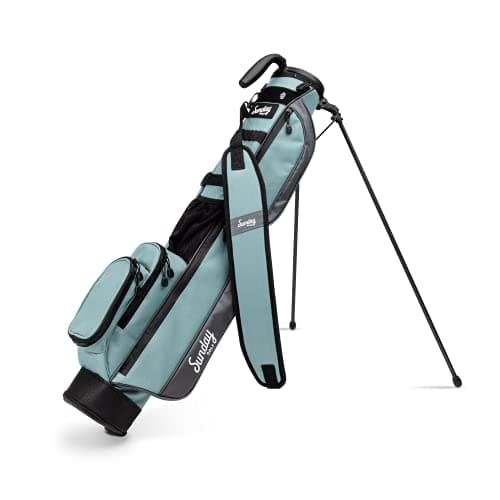
Everything else follows from this. If you ride a cart or push a trolley, a cart bag is the right tool — a big, heavy, deeply pocketed bag with a 14-way top that keeps every club in its own slot and never has to sit on your shoulder. If you walk and carry, a stand bag is the one to buy — lighter, with legs that pop out and a dual strap you can wear all day. Carrying a cart bag is a punishment; strapping a light carry bag to a cart wastes its whole advantage. Our cart bag vs stand bag guide walks through the trade-offs, the best golf bags roundup ranks both camps by who each is for, and the best stand bags roundupzeroes in on the walker’s pick — our Titleist Players 4 review covers the premium carry bag (and Titleist Players 4 vs TaylorMade FlexTech puts that premium carbon bag against the value all-rounder), the TaylorMade FlexTech vs Sunday Loma comparison weighs a full-featured lightweight bag against an ultralight one for a quick nine (with the Sunday Golf Loma reviewed in full), and Sun Mountain C-130 vs Callaway Org 14 settles the cart-bag choice for riders. Each of those cart bags gets a full write-up of its own in our Sun Mountain C-130 review and Callaway Org 14 review, and if you want to see a rider’s cart bag and a walker’s stand bag weighed directly against each other, Sun Mountain C-130 vs Titleist Players 4 makes the ride-or-walk trade concrete.
Push carts: three wheels or four
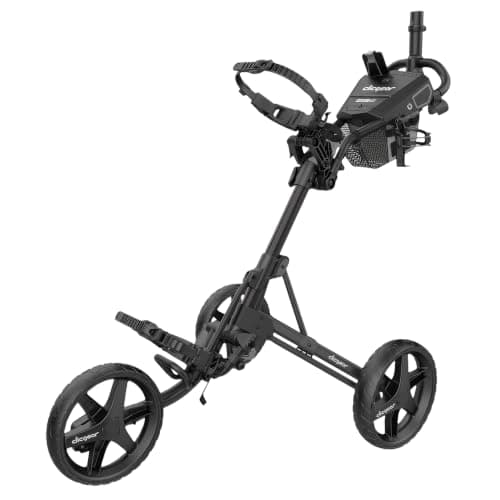
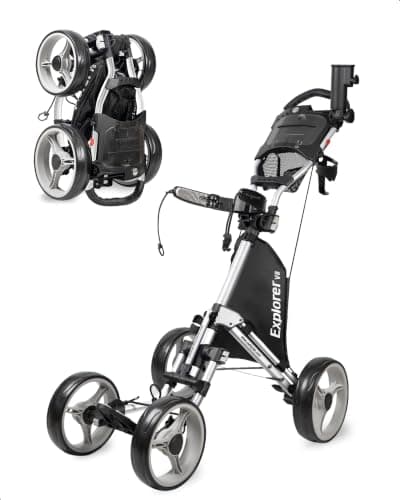
If you walk but would rather not carry, a push cart takes the weight off entirely. The real fork is three wheels versus four: three-wheel carts (Clicgear, Bag Boy) tend to fold more compact and steer more nimbly; four-wheel carts (CaddyTek) sit a touch more planted, especially parked on a slope, and usually cost less. None of it is complicated, and the premium carts earn their price on durability and easy setup rather than on any secret feature. We compare the field in the push cart roundup, settle the wheel-count decision in three-wheel vs four-wheel, cover the value four-wheeler in the CaddyTek Explorer V8 review, and put the two premium three-wheelers head to head in Clicgear vs Bag Boy Nitron. If the real question is value versus premium — a loaded four-wheeler against a durable, compact-folding three-wheeler — CaddyTek Explorer V8 vs Clicgear settles it. The durability-and-accessories benchmark gets a full Clicgear Model 4.5 review, and if your fork is easiest-setup versus most-loaded-value, Bag Boy Nitron vs CaddyTek Explorer V8 puts the air-assisted three-wheeler against the value four-wheeler head to head.
The genuinely stressful one: flying with clubs
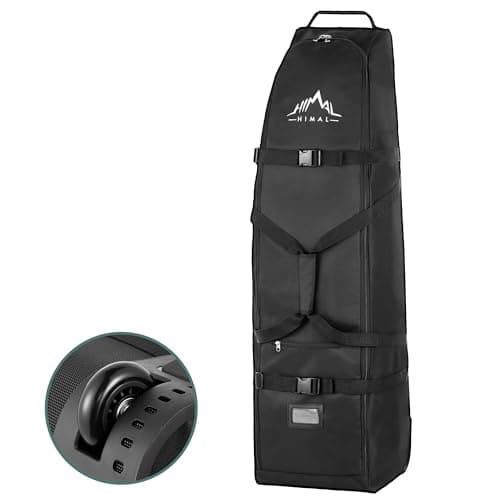
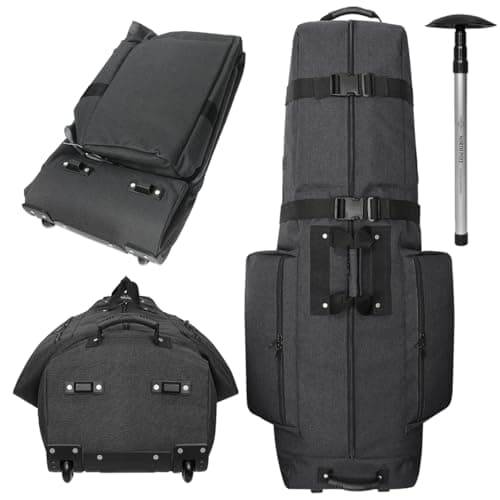
Getting your clubs to a golf trip in one piece is where this category stops being about comfort and starts being about protection and cost. A soft, padded travel bag is easier to store and handle; a hard case protects best against the worst baggage handling — our hard vs soft travel bag guide weighs that choice in full, and the best hard case travel bags roundupranks the rigid shells and hard-top hybrids for anyone the guide sends that way. Either way, a cheap “stiff arm” support rod that takes the impact off your shafts is the best few dollars you can spend — it’s the difference between a scare and a snapped driver. The clubs most at risk are your longest ones, because a bag dropped on its end loads all of that force straight into the shafts. Start with the travel bag roundup, then read how to fly with golf clubsfor the packing routine. If you’re torn between the premium leg-glider bag and a value padded one, Sun Mountain ClubGlider vs CaddyDaddy Constrictor weighs frequent-flyer handling against occasional-trip value, and the value padded pick gets a full write-up in our CaddyDaddy Constrictor review.
The reference nobody else publishes: airline golf-club fees
The question that surprises golfers at check-in is what the airline will charge to fly a bag of clubs. Most major US carriers treat a golf bag as a standard checked bag — normal checked-bag fee, normal weight limit — and several quietly waive the oversize fee that its dimensions would otherwise trigger. But the details differ by airline and they change often; Southwest, famously, ended its free-checked-bag perk for bookings made on or after 28 May 2025. We keep a dated, cited table of how each major carrier treats golf clubs in our airline golf-club fee reference — verify your own airline before you fly, because a policy that was true last season may not be this one.
Where to start
Not sure which bag you even need? Answer the ride-or-walk question first, then start with the best golf bags roundup. Walking and carrying full rounds? The value all-rounder is covered in our TaylorMade FlexTech Carry review. Walking but would rather not carry? The easiest push cart to set up is the one in our Bag Boy Nitron review. Flying on a budget? We put the two cheapest travel bags head to head in Himal vs OutdoorMaster, and the fee table and the how-to-fly guidewill save you a fee and a broken shaft. Every roundup below names a “skip this” pick, shows a live price, and is honest about the bag you don’t need to buy.
Start here
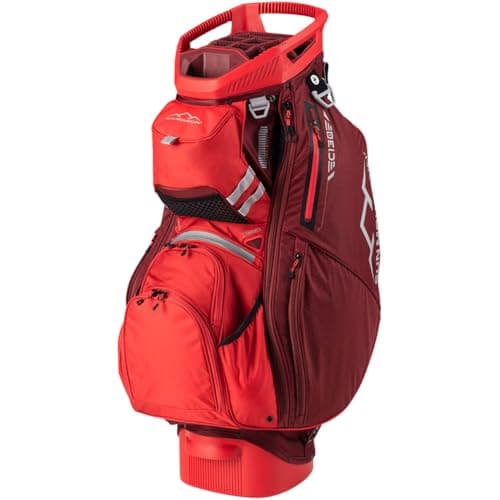
The Best Golf Bags
Cart bags and stand bags ranked by whether you ride or walk, with the ride-or-walk decision explained and a live price on every pick.
Read the guide →
Everything in this hub
All bags, carts & travel guides
Model review
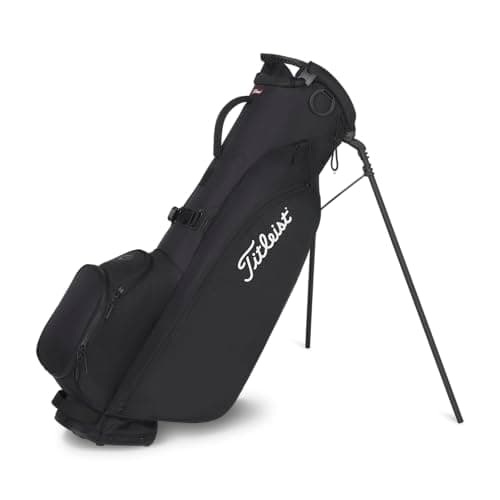
Titleist Players 4 Carbon Stand Bag Review
An honest, spec-based look at the Players 4 Carbon — the light carry, dual-strap comfort and Titleist build, against the 4-way-top storage trade and the premium price — with a clear verdict for walkers.
Top pick · Titleist Players 4 Carbon Stand Bag
Head to head
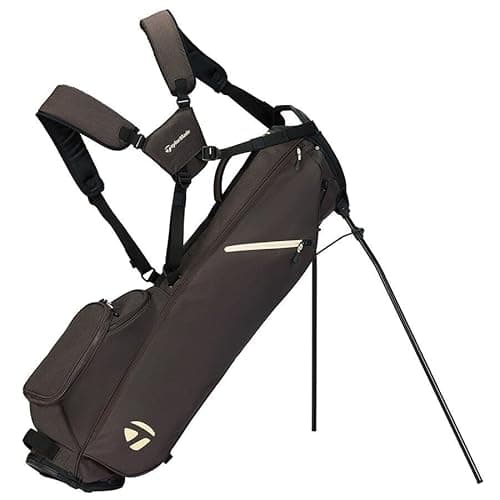
TaylorMade FlexTech Carry vs Sunday Golf Loma
A full-featured lightweight carry bag vs an ultra-minimalist Sunday bag — compared on weight, storage and the round each is built for, with a clear pick for the full-18 walker and the quick-nine golfer.
Top pick · TaylorMade FlexTech Carry Stand Bag
Head to head
Titleist Players 4 vs TaylorMade FlexTech Carry
A premium carbon-leg stand bag against a value carry bag — compared on weight, build, storage and price, with a clear pick for the walker who wants the lightest bag and the one who wants the best balance.
Top pick · Titleist Players 4 Carbon Stand Bag
Head to head
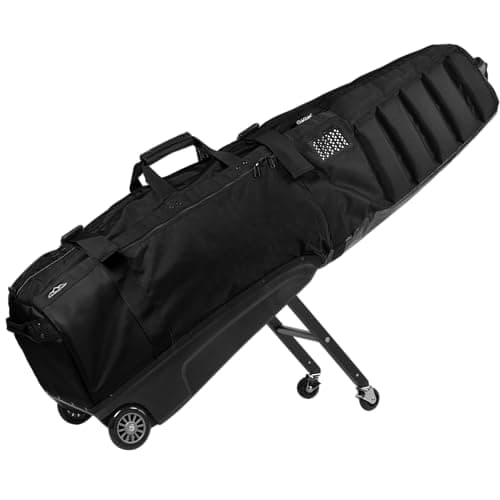
Sun Mountain ClubGlider vs CaddyDaddy Constrictor
The premium leg-glider travel bag against a value padded one with lockable zippers — compared on handling, protection, storage and price, with a clear pick for the frequent flyer and the occasional traveler.
Top pick · Sun Mountain ClubGlider Meridian
Model review
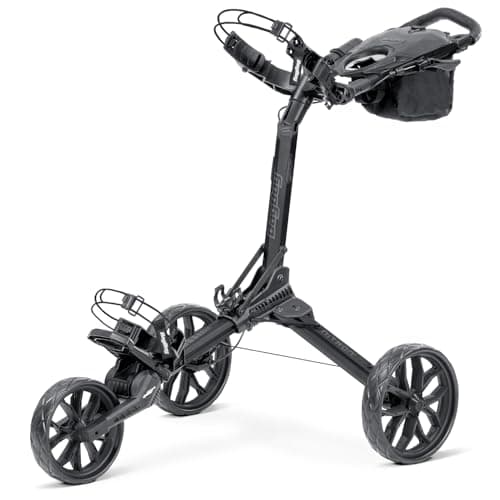
Bag Boy Nitron Push Cart Review
A close look at the Nitron — the air-assisted one-push open, the three-wheel handling and top-console storage, against the premium price and slope stability — with a clear verdict on who should buy it and who should skip it.
Top pick · Bag Boy Nitron Push Cart
Model review
TaylorMade FlexTech Carry Stand Bag Review
An honest, spec-based look at the FlexTech Carry — the light carry weight, the self-adjusting stand base, the dual-strap comfort and the value price, against the premium-carbon and ultralight bags either side of it — with a clear verdict for walkers.
Top pick · TaylorMade FlexTech Carry Stand Bag
Model review
Sun Mountain C-130 Cart Bag Review
A close look at the C-130 — the 14-way top, the well-planned pocket storage and the clean cart-strap pass-through, against the weight and the afterthought carry strap — with a clear verdict on who should buy it and who should skip it.
Top pick · Sun Mountain C-130 Cart Bag
Model review
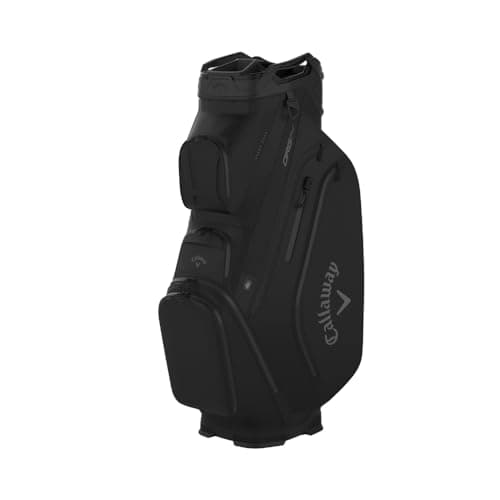
Callaway Org 14 Cart Bag Review
A close look at the Org 14 — the full-length 14-way dividers, the external putter well and the generous pockets, against the weight and the ride-only carry — with a clear verdict on who should buy it and who should skip it.
Top pick · Callaway Org 14 Cart Bag
Roundup
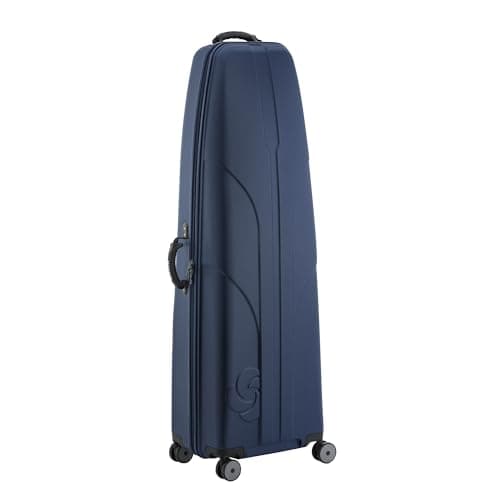
The Best Hard Case Golf Travel Bags
Full hard shells and hard-top hybrids ranked on what a rigid case really buys you — with the checked-weight math, the fit trap that catches modern cart bags, and an honest case for buying soft instead.
Top pick · Samsonite Tour Classic Hardside Golf Travel Case
Buyer's guide
When an Airline Loses or Damages Your Golf Clubs
The domestic liability ceiling, the fragile-item exclusion that applies to graphite shafts, what to file at the airport before you leave it, and the prevention that actually works.
Top pick · Samsonite Tour Classic Hardside Golf Travel Case