01
Most golfers who want data without a subscription
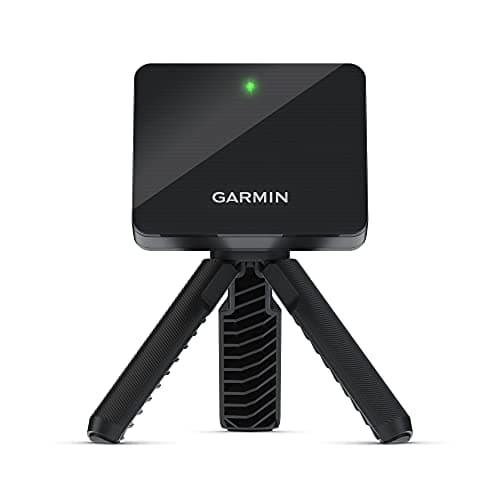
Garmin Approach R10
Doppler radarUp to ~10 hr batteryFree Garmin Golf basic appOptional paid sim (Home Tee Hero)
8.0/10
The portable radar that made launch data affordable — and its basic app is genuinely free.
- Accuracy
- 7
- Data depth
- 7
- Ease of use
- 8
- Portability
- 9
- Value
- 9
Pros
- About the lowest-cost way into real launch numbers, and the basic Garmin Golf app is free to use
- Small, battery-powered and tripod-mounted — set up in about a minute indoors or at the range
- Covers the metrics most improving golfers actually use: ball speed, club speed, launch and estimated carry
Cons
- Radar estimates some numbers (spin in particular) rather than measuring them directly, so treat those as guidance
- The at-home simulator courses need a paid subscription — the free tier is data, not a full simulator
Skip this if…
…you want measured spin and a library of simulator courses without ever paying a subscription. The R10 leans on estimated spin and gates the sim behind a yearly fee — a camera unit or a bundled-sim monitor may suit you better.
$499.99View on Amazon
Price as of October 17, 2026. Prices change — Amazon's is the one that counts.
#ad · we may earn a commission from this link to Garmin Approach R10