01
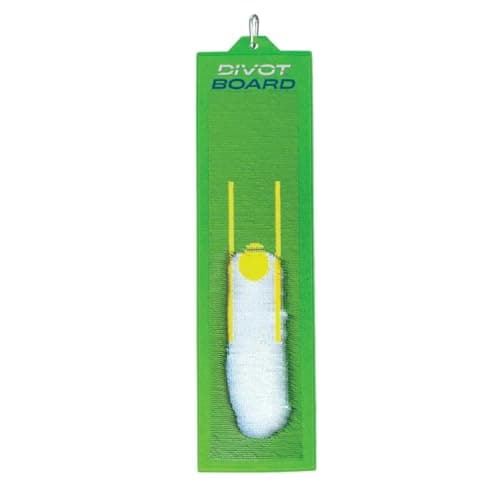
Low point and strike feedback
Divot Board
Strike-feedback boardShows low point + pathDivot mark reads the strikeReusable surface, resets instantly
7.8/10
Swing over it and the mark shows your low point and club path — blunt, honest feedback on the two things that decide your strike.
- Effectiveness
- 8
- Feedback quality
- 9
- Durability
- 7
- Ease of use
- 8
- Value
- 7
Pros
- The mark it leaves shows exactly where your club bottomed out and which way it traveled — you can't argue with it
- Diagnoses fat and thin strikes and an over-the-top path in a single swing, no electronics
- Immediate, repeatable feedback that transfers straight to ball-striking
Cons
- It reads low point and path, not clubface — a slice from an open face won't show up here
- The surface wears with heavy use, and you swing over a tee or foam ball rather than a real one
Skip this if…
…your miss is a face problem, not a strike or path one. The Divot Board is superb for fat, thin and over-the-top path, but it says nothing about the open face behind a lot of slices — pair it with The Hanger if the face is your issue.
$99.99View on Amazon
Price as of October 18, 2026. Prices change — Amazon's is the one that counts.
#ad · we may earn a commission from this link to Divot Board