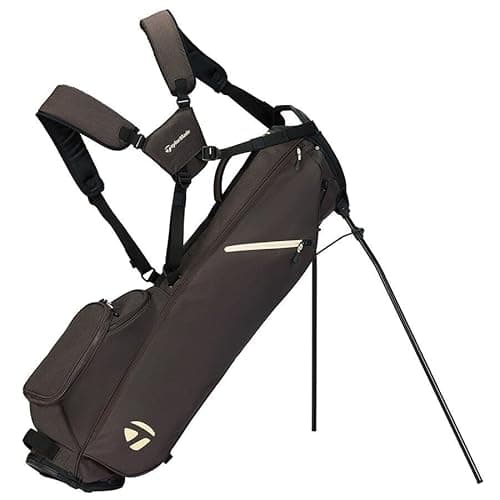
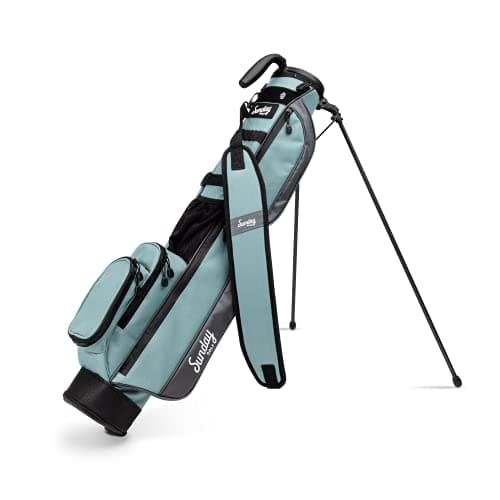
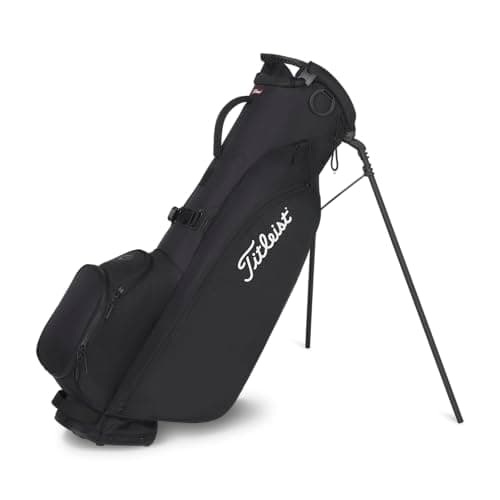
A stand bag is the right tool for one kind of golfer: the one who walks and carries. If that’s you, the “best” bag is the one that’s light on your shoulders for 18 holes, carries what you actually need, and stands up reliably on uneven ground — in that order. The Titleist Players 4 Carbon leads here because it nails the first of those better than anything at the price, but read the “best for” on every pick, because the value all-rounder below suits more golfers than the premium one does.
The dividing line inside stand bags is weight versus storage. The lightest bags use a 4- or 5-way top and trim the pockets; the roomier ones add weight you carry every step. A cart bag’s huge 14-way top and deep pockets are a rider’s luxury — carry one and you’ll feel every ounce. So we ranked these on carry comfort and weight first, storage and stand reliability second, and we’re blunt about which is a do-everything bag and which is a specialist.
How we ranked these
Four things decide a stand bag for a walker, in this order. First, carry comfort and weight — a dual-strap system and a genuinely light build are the whole point, because a bag that hurts by the 14th is a bag you stop walking with. Second, the stand mechanism — legs that deploy reliably on a slope or in the rough, not just on a flat range. Third, storage that matches the round— enough pockets and club separation for a full 18, without piling on weight you don’t need. Fourth, build quality, because straps, zippers and stand hinges are what fail first on a cheap carry bag. Price sets expectations but doesn’t buy a place in the ranking.
Skip a stand bag entirely if… you ride every round
The one honest caveat: if you ride a cart or push a trolley every time out, a stand bag’s advantages vanish. Strapped to a cart, a light carry bag just gives up the storage and organization a cart bag would give you for the same money. Walkers buy the weight savings; riders should buy a cart bag instead. If you’re not sure which camp you’re in, our cart bag vs stand bag guide settles it in a couple of questions, and the best golf bags roundup ranks both camps together.
How much should a walker spend on a stand bag?
Think in tiers, not brands. A premium carbon-leg carry bag like the Players 4 buys you the lowest weight and the best build — worth it if you walk often and want the bag to disappear on your back. A mid-tier all-rounder like the FlexTech Carry gets you most of the carry comfort and plenty of storage for markedly less, which is why it’s the pick for most walkers. An ultralight minimalist bag like the Loma is a specialist — brilliant as a second bag for a quick nine or a par-3 course, short on storage for a full round with a complete set. We show the live price on every pick so you can buy on today’s number; match the tier to how often you actually walk, not to the logo.
Weight, the top, and the stand — what actually matters
Three specs decide how a stand bag feels in use. Weightis the big one: a pound or two saved is a pound or two you’re not carrying up every hill for four hours, so a dual-strap system that spreads the load matters as much as the number on the spec sheet. The divider topis a trade — a 4-way top is lighter but crowds the clubs; a 14-way is a cart-bag feature you don’t want to carry. And the stand mechanism is the part that quietly fails on cheap bags: you want legs that deploy on a slope and in the rough, not only on a flat driving-range mat. Storage matters, but for a walker it comes after not hurting.
The accessory that saves your round
Whatever bag you carry, keep it light on the day: a walker who empties last week’s range balls, spare layers and half a shop of accessories out of the pockets is carrying a lighter bag than the spec sheet suggests. And if you walk hilly courses often and find carrying wears you down, the honest upgrade isn’t a lighter bag — it’s a push cart, which takes the weight off entirely while you still walk. A stand bag and a push cart aren’t rivals; plenty of walkers own both and choose by the day and the course.
The other half of walking comfort isn’t on your shoulders at all — it’s on your feet. Four hours and five miles over soft turf punish a stiff, heavy shoe long before a well-carried bag starts to hurt, which is why golfers who walk regularly tend to end up in something lighter and more flexible: the best spikeless golf shoes are built for exactly that, and they walk from the parking lot to the first tee without needing a change of footwear at either end.