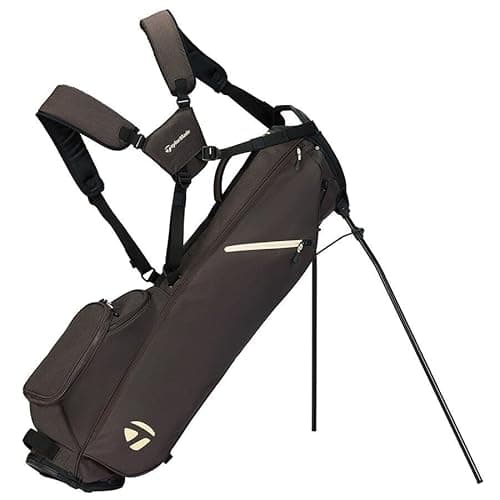
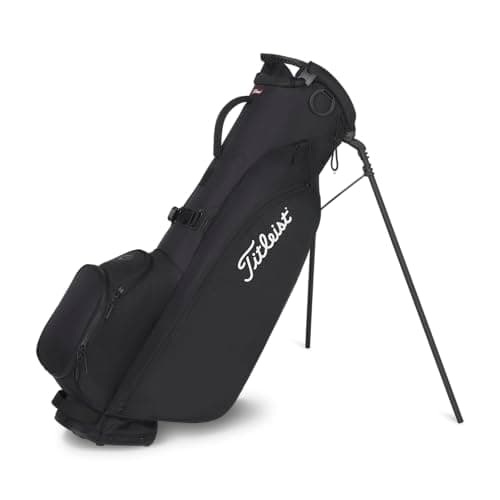
The best golf bag for walking is the TaylorMade FlexTech Carry Stand Bagfor most people — a genuinely light carry bag with a dual strap and a one-piece stand base, at a price that is not a premium for being light. But the honest answer to the question is a question back: are you carrying, or pushing? Those are two different purchases with two different bags, and getting that wrong is why so many walkers end up with a bag they resent by the twelfth hole. This page ranks both. Picks one to three are carry bags, in order of how little weight they put on your back. Picks four and five are push carts, which is what you buy when the answer is “I want to walk, I just don’t want to carry it.”
Walking is a weight problem, and weight is not where you think it is
A loaded golf bag is almost never the bag. A fourteen-club set is in the region of twenty pounds before you add a bag, balls, a bottle, a rain jacket and whatever lives in the pocket you never empty. So the difference between a two-and-a-half pound ultralight and a five pound full-featured stand bag is real, but it is a smaller share of the load than the marketing implies. What decides whether you enjoy the back nine is how the load sits: whether the straps actually spread it across both shoulders, whether the bag hangs level when you walk rather than swinging into your back, and whether the stand base opens on a slope without a kick.
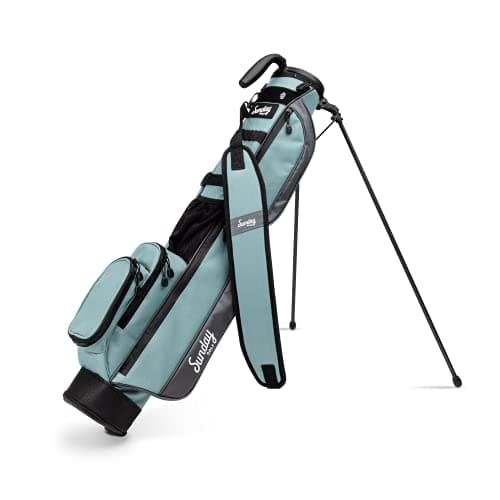
That is why a dual strap is non-negotiable for anyone carrying a full set. A single strap loads one shoulder and twists your spine for four miles; it is fine on a par-3 course with six clubs and nothing else. Every carry bag below has a dual-strap carry system except the Sunday Golf Loma, which is deliberately not a full-set bag and is ranked on that basis.
How we ranked these (the criteria)
- Carried weight, and how it is distributed.Empty weight class first, then strap design — because a lighter bag that hangs badly is worse on the back nine than a slightly heavier one that sits level.
- Club organization that survives a walk. A 4-way divider top with full-length separation keeps grips apart and stops the clatter and tangle that makes you stop walking to pull a club.
- The stand. A one-piece base and legs that kick out reliably on a slope is the difference between setting the bag down and fighting it. Carbon legs save grams; a stable base saves irritation.
- Storage you will actually use walking.A full-length apparel pocket, a cooler pocket and a glove-friendly valuables pocket — four big pockets you can reach beat nine you cannot.
- What it costs, honestly. Price sets expectations here rather than buying a place in the order. The carbon-leg premium bag is first on weight, not on value.
Scores are judgments from published manufacturer specifications, listing details and aggregated owner feedback against our rubric— not lab measurements. We have not weighed these bags on our own scale; we do not run a lab and we say so.
Carry or push: the decision before the bag
Here is the division that this category never states plainly. Carrying is lighter, cheaper, faster round the course and has nothing to store in the trunk. Pushing removes the load from your body entirely, which matters enormously if you have a bad back, bad shoulders, play more than once a week, or walk 36 on a golf trip — and it costs you a cart purchase, trunk space and about thirty seconds of setup per round.
| What matters walking | Carry bag | Push cart |
|---|
| Load on your body | All of it, on both shoulders | None, beyond pushing |
| Pace of play | Fastest — you can cut any line | Fast, but you follow cart-friendly routes |
| What you can bring | What you are willing to carry | Cooler, umbrella, rangefinder, 18 holes of water |
| Cost | One bag | A cart plus a bag (a cart bag works fine) |
| Storage | Lives in the trunk, flat | Folds, but takes real trunk space |
| Best for | Fit walkers, quick nines, firm courses | Bad backs, frequent rounds, hilly or wet courses |
If you are still undecided, read our cart bag vs stand bag guide, which covers the bag side of the same decision, and the push cart roundup if the table above pushed you toward wheels. The three vs four wheel question is the next one you will hit.
The specs that matter, side by side
Built from each listing’s own published specification, not from our own measurements:
| Pick | Type | Top / wheels | The reason it is here |
|---|
| Titleist Players 4 Carbon | Carry stand bag | 4-way divider, carbon-fiber legs | Lightest premium carry bag of the three |
| TaylorMade FlexTech Carry | Carry stand bag | One-piece stand base, dual-strap carry | Carry comfort without the carbon premium |
| Sunday Golf Loma | Minimalist stand bag | 31in height, carry strap + stand | Ultralight, for a partial set |
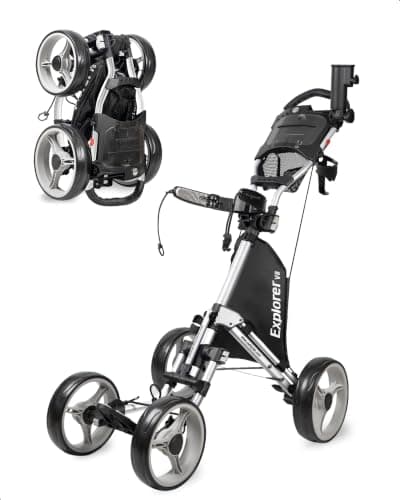
| CaddyTek Explorer V8 | Push cart | 4 wheels, aluminum frame, foot brake | The value way to stop carrying |
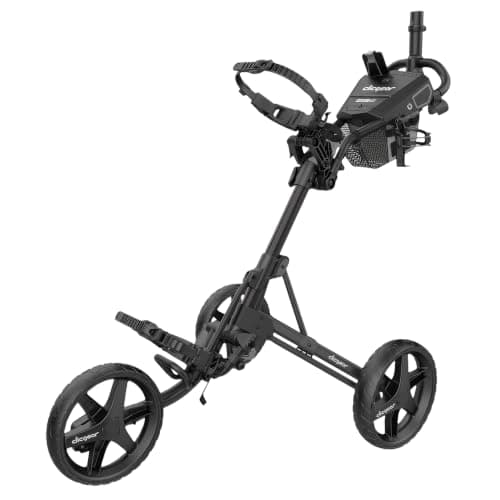
| Clicgear Model 4.5 | Push cart | 3 wheels, compact fold, accessory-ready | The one that is still going in ten years |
Two things to check before you buy a carry bag
Does your course let you walk every day?Plenty of resort and cart-path-only courses restrict walking at peak times or in carts-only conditions after rain. Before you spend on a carry bag, confirm your home course actually permits walking when you play — it is a two-minute phone call and it has decided this purchase for more than one reader.
Do you carry fourteen clubs or nine?The Loma exists because a lot of walking is not a full round with a full set. If most of your walking is a twilight nine or a par-3 course, an ultralight bag with a 31-inch body is a better buy than a full stand bag you will carry half-empty. If you play 18 with a full set, skip it — it is not a full-set bag and we do not pretend it is.
If you are walking because of your back, buy the cart
This is the one piece of advice on the page we would give without caveat. If you have decided to walk for the exercise or because the round is better on foot, but your back or shoulders are the reason you have stopped, no carry bag solves that — it just reduces the load by a pound or two. A push cart removes the load entirely, and on a hilly course it is the difference between walking 18 and walking 12 and taking a ride in. The CaddyTek Explorer V8 is the cheapest sensible way to test whether pushing suits you, and the Clicgear 4.5 is what you buy if you already know it does.