Skip to content
Divot&Draw

The Ball · Golf Balls

The Best Golf Balls for Cold Weather

Cold costs you distance twice: once through denser air, and again because a cold ball is harder to compress. Only the second one is fixable, and a softer ball is how you fix it.

By Stephen V.Updated How we rank
#ad

We earn a commission when you buy through our Amazon links, at no extra cost to you. It never changes our rankings — and we'll tell you when the cheaper ball or club is the better buy. How this works.

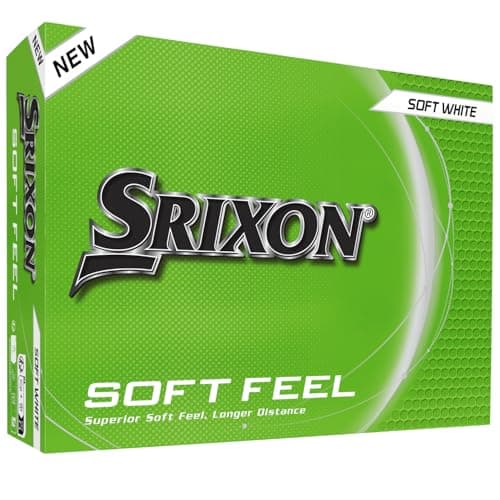
The best golf ball for cold weather is the Srixon Soft Feel— a low-compression, two-piece ball that a moderate swing can still flatten when the temperature drops, at a price that does not hurt when a winter round swallows a couple. It is the pick for most golfers playing through the cold months. The reasoning is simple and it applies to every pick on this page: when the ball is cold it is harder to compress, and a ball you cannot compress does not go anywhere.

Cold costs you distance twice, and only one of them is fixable

First, the air.Cold air is denser, so drag rises and every shot is more affected by friction. Nothing you buy changes that — it is physics acting on the ball in flight, identical for a tour ball and a range rock.

Second, the ball. A cold golf ball is literally stiffer. Its core compresses less for the same strike, so less of your clubhead energy is stored and returned, and ball speed drops. This one is fixable, and it is the entire argument for switching in winter: a ball with a lower compression rating to begin with is still compressible once it has cooled, where a firm tour ball may not be.

How much are we talking about? The published figure we found and checked is roughly two yards of distance per 10 degreesbelow the optimum, which sits around 23C. That is a real loss over a winter round and a modest one per shot — worth managing, not worth panicking about. Treat anybody promising you twenty yards back from a ball swap with suspicion.

The storage habit that recovers some of it for free

A box of golf balls that has lived in a car trunk or an unheated garage is already cold before you tee off, so you start the round at a disadvantage you did not need to accept. Keep them indoors between rounds. On the course, the trick that costs nothing is to play two balls alternately — one in play, one in a trouser pocket warming up — and swap them at each tee. Note that you cannot deliberately warm a ball with an artificial heat source during a round under the Rules of Golf; a pocket is fine, a hand warmer in the bag is not.

The four, on the one spec that matters in the cold

PickConstructionCompression classThe swing it suits
Srixon Soft Feel2-piece, ionomerLowModerate — the best all-round winter pick
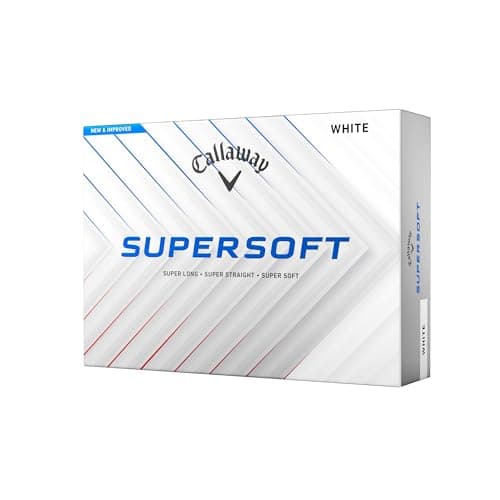
Callaway Supersoft2-piece, ionomerVery lowSlow to moderate
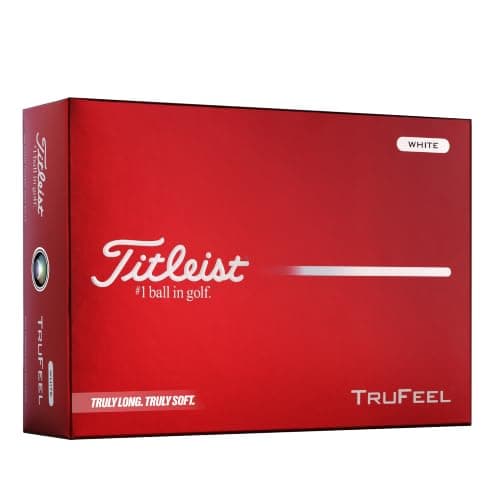
Titleist TruFeel2-piece, ionomerLowModerate, for a Titleist player
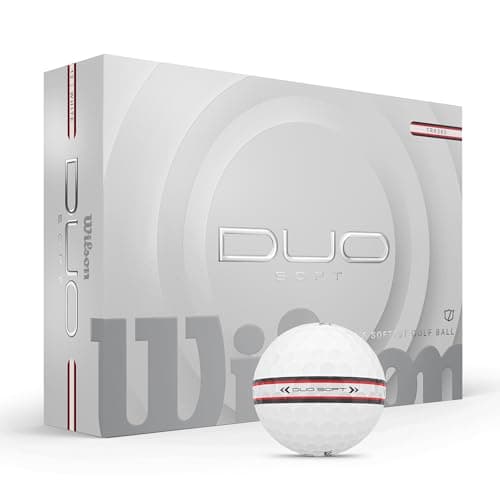
Wilson Duo Soft2-piece, ionomerUltra-lowThe genuinely slow swing

All four are value-tier balls, which is deliberate twice over. A low compression rating is what you are buying, and that is where it lives. And winter golf is wet, muddy and hard on golf balls — a round on a soaked course is not the time for a premium urethane ball at four times the price. Our balls under $30 a dozen page ranks the whole value shelf, and are expensive golf balls worth it takes the broader question.

The short answer

Quick picks

#ProductBest forScorePrice
01
Srixon Srixon Soft Feel
Srixon Soft Feel

The value ball we'd actually buy. Soft, straight, durable, and priced to be lost.

The best all-round winter ball
7.8
$24.99Amazon
02
Callaway Callaway Supersoft
Callaway Supersoft

The value default. Very low compression, very soft, and it goes straight for most people.

A moderate swing that drops further in the cold
7.6
$26.97Amazon
03
Titleist Titleist TruFeel
Titleist TruFeel

Titleist's softest, cheapest ball — the value pick for players who want the swoosh.

Winter golf without leaving Titleist
7.2
$24.97Amazon
04
Wilson Wilson Duo Soft
Wilson Duo Soft

About the lowest compression in golf — the softest-feeling ball for the slowest swings.

The slowest swings, in the coldest weather
7.2
$24.99Amazon

#ad · Live prices from the Amazon Product API, as of October 18, 2026. Where we have no verified live price, we show none — we would rather leave a gap than print a number that has rotted.

In detail

The picks, in full

01
Srixon Srixon Soft Feel

The best all-round winter ball

Srixon Soft Feel

2-pieceIonomer coverLow compressionValue tier
7.8/10

The value ball we'd actually buy. Soft, straight, durable, and priced to be lost.

Distance
8
Greenside spin
5
Feel
8
Durability
8
Value
10

Pros

  • Low compression that a moderate swing can flatten for real distance
  • A slightly firmer, more responsive feel than the very softest value balls — a good middle ground
  • Consistently one of the best price-per-dozen in the category

Cons

  • Ionomer cover, so limited full-spin greenside control
  • Nothing about it is exciting — which is exactly right for a value ball

Skip this if…

…you genuinely spin your wedges and play to a single-digit handicap. You'll feel the missing greenside bite; step up to the Q-Star Tour or a Pro V1.

$24.99View on Amazon

Price as of October 18, 2026. Prices change — Amazon's is the one that counts.

#ad · we may earn a commission from this link to Srixon Soft Feel

02
Callaway Callaway Supersoft

A moderate swing that drops further in the cold

Callaway Supersoft

2-pieceIonomer coverVery low compressionValue tier
7.6/10

The value default. Very low compression, very soft, and it goes straight for most people.

Distance
8
Greenside spin
5
Feel
8
Durability
8
Value
9

Pros

  • One of the lowest compressions in golf — easy to compress for a slower swing, which is where distance actually comes from for most amateurs
  • Straight ball flight that flatters a slice or hook
  • Priced so losing a few doesn't sting

Cons

  • The ionomer cover can't produce tour-level greenside spin — it releases more on chips and pitches
  • Very soft feel isn't for everyone; some players want more click

Skip this if…

…you're a low handicapper whose short game lives on one-hop-and-stop spin. The soft cover releases instead of biting — a urethane ball is the right tool for you even though it costs more.

$26.97View on Amazon

Price as of October 18, 2026. Prices change — Amazon's is the one that counts.

#ad · we may earn a commission from this link to Callaway Supersoft

03
Titleist Titleist TruFeel

Winter golf without leaving Titleist

Titleist TruFeel

2-pieceIonomer coverLow compressionValue tier
7.2/10

Titleist's softest, cheapest ball — the value pick for players who want the swoosh.

Distance
7
Greenside spin
5
Feel
8
Durability
8
Value
8

Pros

  • The softest ball Titleist makes, at value-tier pricing
  • Straight, low-spin-off-the-driver flight that helps a slice
  • The brand name a lot of players want without the tour-ball price

Cons

  • Same limitation as any ionomer value ball — modest greenside spin
  • A Soft Feel or Supersoft does the same job, sometimes for less

Skip this if…

…the Titleist script on the side isn't important to you. Functionally this competes with the Soft Feel and Supersoft; buy on whichever is cheapest the week you shop.

$24.97View on Amazon

Price as of October 18, 2026. Prices change — Amazon's is the one that counts.

#ad · we may earn a commission from this link to Titleist TruFeel

04
Wilson Wilson Duo Soft

The slowest swings, in the coldest weather

Wilson Duo Soft

2-pieceIonomer coverUltra-low compressionValue tier
7.2/10

About the lowest compression in golf — the softest-feeling ball for the slowest swings.

Distance
7
Greenside spin
4
Feel
9
Durability
7
Value
9

Pros

  • One of the lowest compression ratings on the market, which a genuinely slow swing can compress where a firm ball just sits there
  • Extremely soft feel off putter and irons
  • Value pricing

Cons

  • The soft, low-spin design that helps a slow swing costs you greenside control
  • Faster swings can over-compress it and lose the benefit

Skip this if…

…your swing speed is average or above. Above roughly 90 mph of driver speed you'll compress this too easily and give up control for a softness you didn't need. Play a mid-compression ball instead.

$24.99View on Amazon

Price as of October 18, 2026. Prices change — Amazon's is the one that counts.

#ad · we may earn a commission from this link to Wilson Duo Soft

What you give up, stated plainly

Every pick here has an ionomer cover, which means limited greenside spin compared with a urethane tour ball. In summer that is a genuine trade-off. In February, on a soft green that holds anything, it is close to irrelevant — and the distance you keep by playing a ball you can actually compress is worth more than spin you were not going to use. That is the honest case for a seasonal ball change.

If you are a low single-digit whose short game depends on one-hop-and-stop spin, do not make this switch. Play your usual ball, keep it warm, and accept the two yards. Our balls for low handicappers page is the right one for you.

Do golf balls go bad in the cold?

Not from a winter in a cold garage, no — a modern ball is far more durable than the wound balls that gave rise to that belief. What a cold ball does is perform worse while it is cold, and recover when it warms up. Storage temperature matters for the round you are about to play, not for the ball’s long-term life. Our do golf balls go bad page covers shelf life properly.

Club up, and expect less roll

The last part of winter golf is not equipment at all. You are carrying less, the ground is soft so you are rolling out less, and you are wearing an extra layer that shortens your swing. Take one more club than the yardage says, play for the front of the green, and stop blaming the ball for all of it. Our compression explained page covers the mechanism behind every recommendation here.
How we ranked this

We don't run a testing lab — and we say so

We compiled published manufacturer specifications, official standards and aggregated owner reviews, computed the running costs the big test-labs leave out, and scored each pick against a published rubric. The scores are judgments from documented research — they are not lab measurements we took, because we don't have a lab and we're not going to pretend we do. You can check every number we publish.

Questions

Frequently asked

What golf ball is best in cold weather?
A low-compression ball, because a cold ball is stiffer and harder to compress — the Srixon Soft Feel is the all-round pick, with the Callaway Supersoft and Wilson Duo Soft sitting lower still on compression for slower swings. The ball you play in July may simply be too firm to compress at 40 degrees, which is where the distance goes.
How much distance do you lose in cold weather golf?
Around two yards per 10 degrees below the roughly 23C optimum, on the published figure we checked. That comes from two separate effects: denser cold air increases drag, and a cold ball compresses less so ball speed drops. Only the second one responds to changing your ball — the air is the air.
Should I keep golf balls warm during a round?
Keeping them indoors between rounds is the big one — a box that has lived in a car trunk starts the round cold. During play, alternating two balls with one warming in a pocket is a legitimate and free way to keep the ball in play closer to temperature. You cannot deliberately warm a ball with an artificial heat source during a round under the Rules of Golf.
Do golf balls go bad if stored in the cold?
No. A modern multi-layer ball is not damaged by a winter in an unheated garage — it just performs worse while it is actually cold, and recovers as it warms. The old warning comes from wound balls, which no longer exist at retail. Our do golf balls go bad page covers real shelf life.
Should a low handicapper switch balls for winter?
Usually not. If your scoring depends on urethane greenside spin, a two-piece ionomer ball takes away more than the compression gain gives back, and the loss we are talking about is around two yards per 10 degrees. Keep your usual ball, store it indoors, club up and play for the front of the green. The low-handicapper ball guide is the right page for you.

Keep reading

Receipts

Sources

We do not run a testing lab, and we do not pretend to. Every spec number here comes from a manufacturer's published sheet or an official standard, cited above. Where we could not verify something, we say so on the page rather than quietly leaving it out. Read our full method.