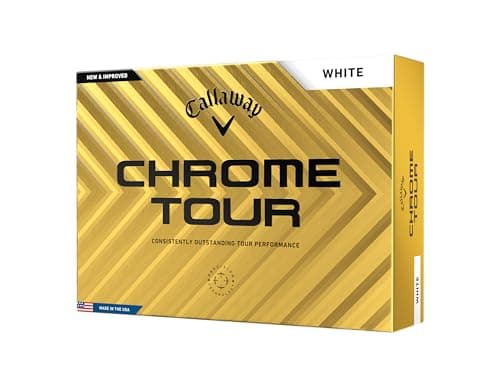
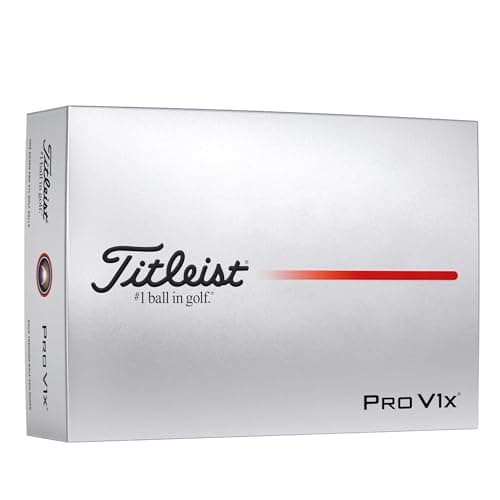
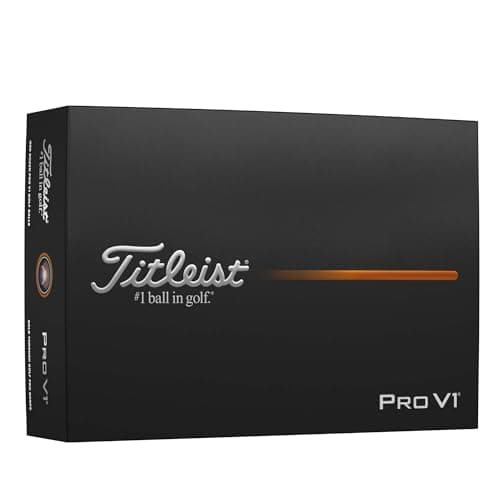
The best golf ball for a low handicapper is the Titleist Pro V1— not because it is the most expensive, but because it is the most consistent flight window and the most predictable greenside spin in the category, and consistency is the only thing a good player actually needs from a ball. If you want the same money spent harder, the Callaway Chrome Touris the one to try: Callaway’s own comparison grid puts it at maximum short-game spin with mid long-game spin, which is precisely the combination a single-figure player is looking for, and it generally sits below the Pro V1 on the same shelf.
The honest framing first, because this page is the one part of the ball hub where the expensive answer is genuinely the right one. Every other handicap band on this site gets told to stop overspending on balls, and the arithmetic backs it up. Below roughly a single-figure handicap, that advice flips: you hit enough greens, play enough short-game shots and lose few enough balls that the spin you are paying for actually turns into shots. If you are reading this and you shoot in the eighties, read the mid-handicap page instead — it is a better fit and it will cost you less.
What changes when you get good enough for a tour ball
A urethane-covered ball is not simply a better version of an ionomer one. It is a different trade, and the trade only pays off if you can hold up your end of it.
Greenside spin is the whole product.A cast or thermoset urethane cover is soft enough to grip the grooves of a wedge and generate spin on a short shot in a way a firmer ionomer cover cannot. That shows up as a pitch that takes one hop and stops, a half-wedge that checks, and a bunker shot you can land on a flag. It also shows up as a chip that bites when you did not want it to, which is why urethane is not automatically “easier.”
You have to compress it to get the rest.Tour balls are firm by design. Deliver enough clubhead speed and the multi-layer core does what it is engineered to do: low spin off the driver, full spin off the wedge. Deliver less and you get the firm feel and the price without the payoff — which is exactly what our compression explainer works through, and why the slow-swing page ranks a completely different set of balls.
You pay for it, every round.A premium ball costs roughly double a very good value ball, and that gap compounds with how many you lose. A low handicapper loses fewer, so the real annual cost is lower than the shelf price suggests — but it is not zero, and we do the arithmetic below rather than hand-waving it.
How we ranked these (the criteria)
- Greenside spin consistency, not peak spin. Weighted first. A good player does not need the single highest spin figure; they need the same spin on the same shot every time, so they can commit to a landing spot. Balls whose published construction and aggregated owner feedback point to a repeatable short-game response rank above balls with a higher ceiling and more variance.
- Flight window off the long clubs. The second half of the trade. A tour ball should keep driver spin down while still holding a mid-iron into a green. We score what each maker publishes about its long-game spin profile and flag the balls aimed deliberately higher or lower.
- Cover durability. Urethane is soft, and soft covers scuff. A ball that shows a wedge mark after four holes is a hidden cost, because you will take it out of play. Published cover technology plus aggregated owner reports on scuffing.
- Feel, reported honestly as a preference. Soft, medium or firm off the face is a taste, not a performance tier, and we score it as one. The only place feel becomes performance is on long putts, where it genuinely changes your judgment of pace.
- Real cost per round. Price sets expectations rather than buying rank. The direct-to-consumer and mid-tier urethane balls get credit for costing less without giving up the cover, and lose credit where the saving only appears in bulk.
Scores are judgments from published manufacturer specifications, listing details and aggregated owner feedback against our rubric— not lab measurements. We have not put these on a launch monitor or in a spin-rate rig. We do not run a lab, and every page on this site says so.
The six balls, side by side
Construction below is each maker’s own published figure. Where a maker publishes no compression number — Callaway does not, for the Chrome Tour — the cell says so rather than guessing one:
| Ball | Layers | Cover | Feel (maker’s word) | The reason to play it |
|---|
| Titleist Pro V1 | 3-piece | Cast urethane | Firm, tour | The most consistent flight and spin in the category |
| Callaway Chrome Tour | 4-piece | Tour urethane soft cover | Medium (no compression published) | Maximum short-game spin with mid long-game spin |
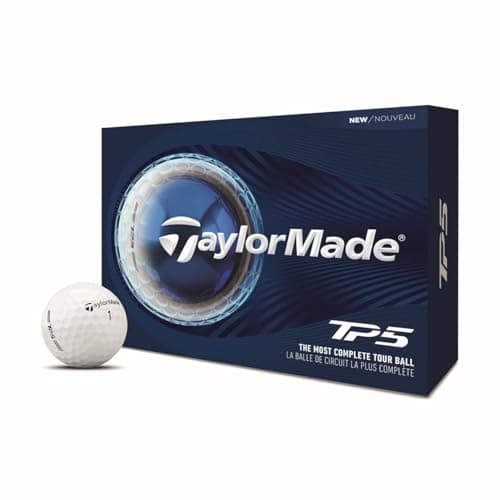
| TaylorMade TP5 | 5-layer | Urethane | Firm, tour | The most layers in the class, for about the same money |
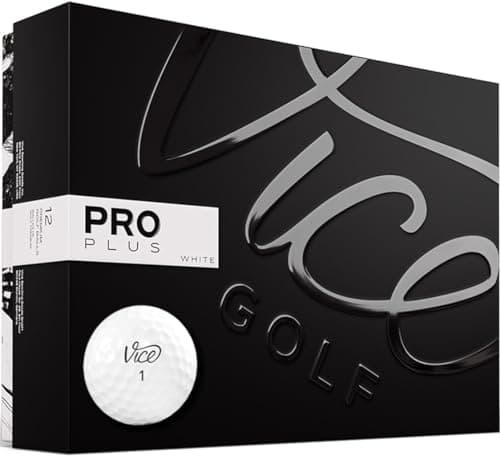
| Vice Pro Plus | 4-piece | Cast urethane | Firm | Tour construction at a lower per-dozen price, bought by the box |
| Titleist Pro V1x | 4-piece | Urethane | Firmer than Pro V1 | Higher flight and more spin for a faster swing |
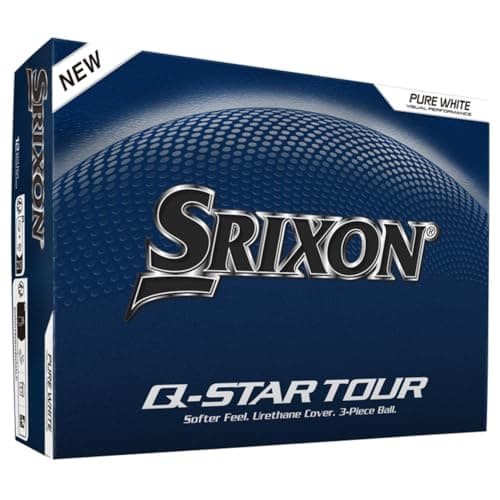
| Srixon Q-Star Tour | 3-piece | Urethane | Mid compression | A real urethane cover at a mid-tier price |
Pro V1 or Pro V1x: the only fitting question that matters
Two of the six balls here are the same ball in two flight windows, and more low handicappers get this wrong than get the brand choice wrong. Titleist publishes the Pro V1 as a three-piece ball and the Pro V1x as a four-piece, firmer, higher-flying, higher-spinning one. That is the entire decision:
- Play the Pro V1 if your natural ball flight is already high enough, if you want the softer feel, or if you spin your mid-irons plenty and do not need more height to hold a green.
- Play the Pro V1x if you flight the ball low, if you struggle to stop a long iron, or if you have the swing speed to use the extra spin without ballooning it.
If you cannot tell which you are, that is useful information in itself: play a sleeve of each on consecutive rounds and watch your long irons into greens, not your drives. Our Pro V1 vs Pro V1x comparison works the whole thing through in detail, and the ball selector tool narrows it in four questions.
The cheaper urethane balls, and when they are the right answer
Two picks here are not premium-priced, and both earn their place honestly. The Vice Pro Plusis a genuine four-piece cast-urethane tour ball sold direct-to-consumer, so it undercuts the majors per dozen — with the real caveat that most of that saving appears when you buy several boxes at once, not one. The Srixon Q-Star Tour is the more interesting case: a three-piece urethane ball at a mid-tier price and a mid compression, which makes it the one ball on this page a low-handicapper with a moderate swing speed should actively consider over a firmer tour ball.
The honest summary is this: the gap between the best ball on this page and the cheapest one is smaller than the gap between any of them and a two-piece distance ball. If you are a scratch player chasing the last half-shot, buy the Pro V1. If you are a six handicap who plays three times a week and loses two balls a round, a urethane ball at two-thirds the price is a better use of the money, and no part of your scoring will notice. That is the same reasoning as our are expensive golf balls worth it analysis, applied to a player for whom the answer is closer to yes.
One tour ball, all season
The most common mistake good players make with golf balls is not buying the wrong one. It is buying several. Playing whatever was on offer, or whatever you found in the rough, means your wedge distances and your chipping release are being recalibrated every round against a different cover and a different compression. Short-game feel is the thing a tour ball is sold on, and feel only compounds if it is the same ball every time.
So pick one, buy it in the biggest quantity you are comfortable with, and stay on it until the end of the season. If you want to experiment, do it deliberately in the off-season and over several rounds, not on the eighth tee because your playing partner has a spare. And if you are stocking up, note that a urethane ball stored sensibly does not deteriorate on any timescale that matters — our do golf balls go bad page covers the actual shelf life, which is far longer than the internet believes.
The cost-per-round arithmetic, done properly
The premium-ball argument is almost always made on the wrong number. What matters is not the price of a dozen; it is how much the ball costs you per round, which depends entirely on how many you lose. Work it out for yourself with one honest input: your balls lost per round.
| Balls lost per round | Premium urethane | Mid-tier urethane | What it means |
|---|
| Under 1 | Roughly the price of a coffee per round | About two-thirds of that | Play whatever you putt and chip best with. The cost gap is noise. |
| 1 to 2 | A meaningful line item over a season | Noticeably less | The bracket most single-figure players are in. Worth playing the premium ball, worth buying it on offer or by the box. |
| 3 or more | The most expensive habit in your bag | Still significant | Losing three a round is a ball-striking or course-management problem, and solving that is worth more than any ball on this page. |
We deliberately do not print dollar figures in that table. Ball prices move constantly and a number written into prose goes stale within weeks — every price on this site is pulled live and timestamped instead, which is why each pick above shows a current price or tells you plainly that it could not be verified. Multiply the live per-dozen price by your own losses and you have a real answer rather than ours.
Three things that matter more than which tour ball you pick
- Playing the same one. Consistency beats specification. A six handicap on one ball all year will chip and pitch better than the same player on four different balls, whichever four they are.
- Matching the flight window, not the brand.The Pro V1 versus Pro V1x decision — low-flight player takes the higher-flying ball — moves more shots than switching manufacturer ever will. Every maker sells the same two options under different names.
- Retiring scuffed balls. A urethane cover with a visible wedge mark has lost the thing you paid for. Good players keep a shag bag; the scuffed premium ball goes in it, not back in the bag.
What not to buy, and why
Two things to avoid at this level. First, refinished or “recycled” tour balls— a refinished ball has had its cover stripped and repainted, which is precisely the layer that generates the spin you are buying, and a lake ball that sat in water for a season is not the ball on the box. Second, last year’s model bought on deep discount without checking the model year. That is often a genuinely good buy and we would not talk you out of it — but tour balls are revised on a two-year cycle, so know which generation you are getting before you buy six dozen of it.
Beyond that, the field here is honest. Every ball on this page is a real urethane-covered multi-layer ball from a maker that publishes what is in it, and none of them is a bad purchase for the player this page is written for.