A tempo trainer won’t fix your slice and it won’t add ten yards — but for the golfer who gets quick, snatches the club back and lunges from the top, grooving a smooth, in-sequence swing is one of the most useful things you can practice, and a weighted, flexible stick is the honest way to do it. The Orange Whip tops this list because it is the best-built, best-balanced tempo trainer made: the counterweight in the handle gives it a smoother, more in-sequence load than anything else here, and it doubles as one of the finest warm-up tools in the game. Read the whole list, though, because the cheaper stick gives you most of the benefit — and the third pick isn’t a tempo trainer at all. It’s here to answer a question tempo trainers can’t.
How we ranked these
Tempo, speed and strength get lumped together on the training-aid rack, and they are three different jobs. We ranked these on what they actually deliver, and stayed honest about which tool does which:
- Tempo and sequence.The core job of a weighted, flexible trainer. Does swinging it build the feel of a patient, ground-up motion — body leading, arms following, the head releasing last? This is what the Orange Whip and the Gold Flex are for, and it’s the main axis of the ranking.
- Warm-up value.A weighted stick swung before a round loosens the golf-specific muscles and sets a rhythm far better than a couple of stiff practice swings. It’s arguably the most reliable benefit any of these deliver, so we weighed it heavily.
- Speed versus strength.A separate axis entirely. Overspeed training — swinging lighter-than-normal clubs faster than you can swing a real one — is a genuinely well-supported way to add clubhead speed, and it’s a different mechanism from tempo. Only one tool here does it, and we keep the two honest rather than pretend a tempo trainer adds speed or a speed system grooves rhythm.
- Who it’s for. These tools overlap less than the shelf implies, so we matched each to the player who genuinely benefits rather than pretending one stick suits everyone.
We didn’t test these in a lab. We frame each maker’s own description of the tool — the Orange Whip and Gold Flex are pitched as tempo, balance and sequencing tools, SuperSpeed as an overspeed system — and add our judgment of how they’re used, attributing a claim when we lean on one. Sources are at the foot of the page; the method is in how we rank.
The two tempo trainers: Orange Whip and Gold Flex
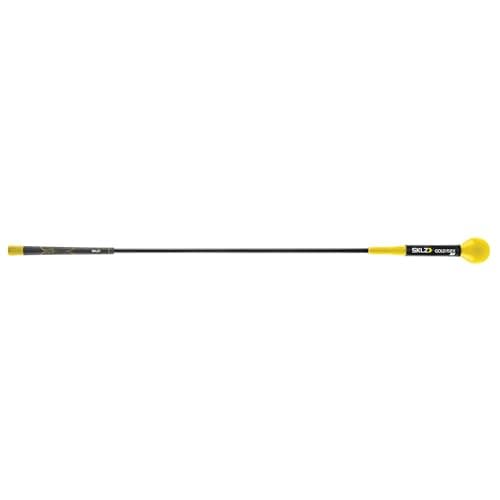
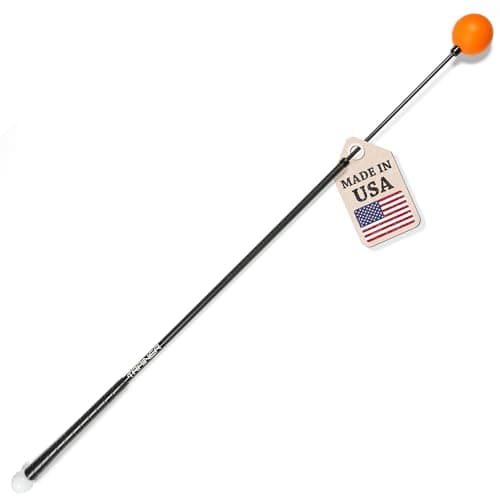
The first two picks do the same job at very different prices. The Orange Whip is a counterweighted, flexible-shafted trainer: a heavy head on a whippy shaft with a counterweight built into the grip, so the whole thing wants to move in sequence — rush the transition and it fights you, sequence it and it feels effortless. It’s beautifully made, it lasts, and it’s a long-standing warm-up favorite on tour range tees. The SKLZ Gold Flexis the value answer: stiffer, plainer, no counterweight, but it loads and unloads in much the same way and gives you most of the tempo benefit for a small fraction of the price. Neither is a feedback tool — they groove a feel, not a fault fix — so the honest choice between them comes down to how much you value build and balance, and how sure you are you’ll still be swinging it in a year. We put them side by side in the Orange Whip vs Gold Flex comparison, and review each in full — the Orange Whip and the Gold Flex.
The odd one out: SuperSpeed and the overspeed question
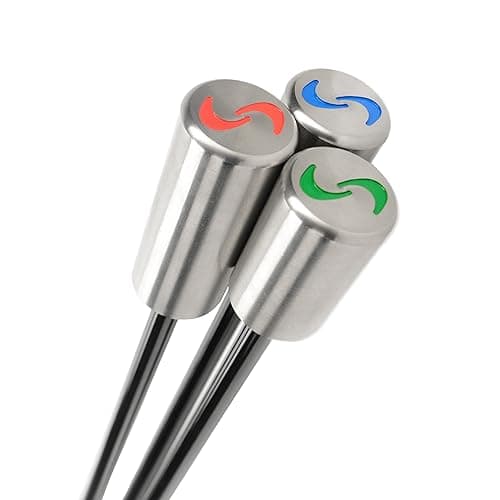
The third pick is deliberately a different animal, and it’s worth being honest about that. SuperSpeedis not a tempo trainer — it’s a set of three graduated speed sticks and a structured overspeed protocol, built to do the one thing the other two can’t: add clubhead speed. Overspeed training works by swinging a lighter-than-normal club faster than you can move a real one, teaching your nervous system to fire quicker, and it’s one of the better-supported methods for adding distance if you follow the schedule. We include it here because “tempo trainer” is where a lot of speed-curious golfers start looking, and they deserve to know that rhythm and speed are separate goals with separate tools. If you want a smoother swing, the weighted sticks are your answer; if you want a faster one, SuperSpeed is — and swinging a tempo trainer harder will not turn it into a speed trainer. It adds speed and only speed, too: it does nothing for face, path or strike, and for a player whose face and path are off, more speed can make a slice worse, not better.
Which one is right for you
Match the tool to the honest goal. If your swing gets quick and out of sequence — you snatch it back, lunge from the top, and everything feels rushed — a weighted, flexible trainer is the right buy, and the only real question is budget: the Gold Flex if you want the benefit cheaply or aren’t sure you’ll stick with it, the Orange Whip if you value the smoother, counterweighted feel and know you’ll swing it for years. If all you want is a genuinely excellent pre-round warm-up and you don’t care about the last word in refinement, either weighted stick does that job well, so let price decide. And if your goal is distance rather than rhythm — you strike it well enough but simply lack clubhead speed — skip the tempo trainers entirely and go to the overspeed system, because no amount of smooth, weighted swinging adds the speed a structured overspeed protocol is built to develop. The one buyer none of these suits is the golfer chasing a fix for a slice, hook or chunk: that’s a feedback-aid problem, and a weighted stick, however smooth, can’t see the fault.
Skip this: swinging a tempo trainer flat out, and expecting rhythm to add speed
The most common mistake with a weighted, flexible trainer is to swing it as hard as you can. These tools reward smooth sequencing, not effort — swing one violently and you groove exactly the quick, out-of-sequence tempo you were trying to cure, and you risk the shaft into the bargain. Slow and smooth is the entire point; if you’re not swinging it in balance, you’re training the wrong thing. The second mistake is the mirror image: buying a tempo trainer expecting it to add distance. It won’t — adding speed is a different job with a different tool, and that tool is an overspeed system, not a heavier stick swung faster. And the honest ceiling under both: a tempo trainer builds rhythm, not a fault fix. If your scores are being wrecked by a slice, a hook or a chunk, none of these is the answer — a feedback aid that shows you the fault is.
Tempo versus speed training, explained
These get confused constantly, so here’s the plain version. Tempo training is about sequence and rhythm— the order your body parts move in and the smooth, unhurried timing that lets the clubhead release last and fastest. A weighted, flexible stick like the Orange Whip or Gold Flex teaches this because it physically punishes a quick, out-of-order swing: rush the transition and the whippy shaft lags and feels wrong, so you learn, by feel, to be patient. The goal is a repeatable, in-balance motion, not a faster one. Speed training is the opposite intent: deliberately teaching your body to swing faster, usually through overspeed work — swinging a lighter-than-normal club above your normal top speed so your nervous system recalibrates what “fast” feels like. That’s what SuperSpeed’s graduated sticks and protocol are built for. The two can complement each other — a smoother, in-sequence swing that’s also faster is the dream — but they are trained with different tools, in different ways, for different reasons. Buying a tempo trainer to gain distance, or a speed system to smooth your rhythm, is buying the wrong tool.
How to use a flexible trainer: warm-up versus practice tool
A weighted, flexible trainer has two honest jobs, and most people only use it for one. The first is warm-up: a dozen smooth, full swings before a round stretch the golf-specific muscles and set an unhurried tempo far better than a couple of stiff practice swings with a club. If loosening up on the first tee were the only thing you ever used it for, it would still earn its keep — and swinging it both left- and right-handed is a genuinely good, balanced stretch. The second job is as a rhythm practice tool: used little and often, most days, to groove the feel of a patient, ground-up swing until it becomes your default. That’s the mode that actually changes your on-course tempo, and it only works through repetition — rhythm is a habit you build, not a thing you buy in one session. Start each use with slow, deliberate swings to feel the shaft load and unload, then build to smooth full swings, letting the weight release the head last. Never try to hit balls with it: it’s a swing trainer, not a club, and striking anything defeats the point and risks the shaft.
Realistic expectations
Be clear-eyed about what these do. A tempo trainer, swung consistently, can genuinely smooth a quick, handsy, out-of-sequence swing, and a smoother transition helps strike and consistency across the bag — that is a real, worthwhile benefit. What it will not do is diagnose or fix a ball-flight fault: it gives no feedback on your face, path or low point, so it can’t straighten a slice or cure a chunk, and swinging it smoothly can occasionally mask a fault without curing it. An overspeed system, followed properly for weeks and ideally measured with a radar, can add real clubhead speed — but it demands commitment and does nothing for accuracy. The honest summary: buy a weighted stick for tempo and warm-up and you’ll be happy; buy one expecting a swing fix or free distance and you’ll be disappointed. Match the tool to the goal and every pick here does its narrow job well.
Do these build strength or flexibility too?
A little, and it’s a genuine side benefit rather than the main event. Because a weighted, flexible trainer is heavier than a normal club and you swing it in both directions, it gently works the golf-specific muscles and range of motion that a stiff, sedentary player tends to lack — which is part of why SKLZ pitches the Gold Flex as a flexibility and warm-up tool as much as a tempo one. Swinging it lead-handed and trail-handed a few times each is a balanced stretch that loosens the torso and shoulders before a round, and over time that mobility work quietly helps a fuller, freer turn. Be realistic about the ceiling, though: this is mobility and warm-up work, not strength training, and it won’t build power the way resistance work or a dedicated speed protocol does. Treat the flexibility as a bonus that comes free with the tempo and warm-up work you were doing anyway — a smoother, looser, more in-sequence swing, with a bit of gentle golf-specific conditioning thrown in — and you’ll value it correctly rather than expecting it to do a gym’s job.