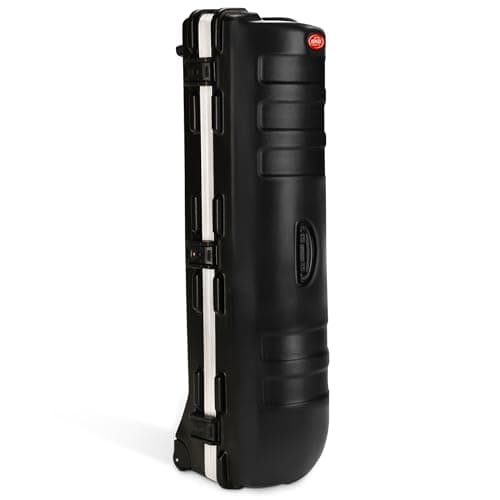
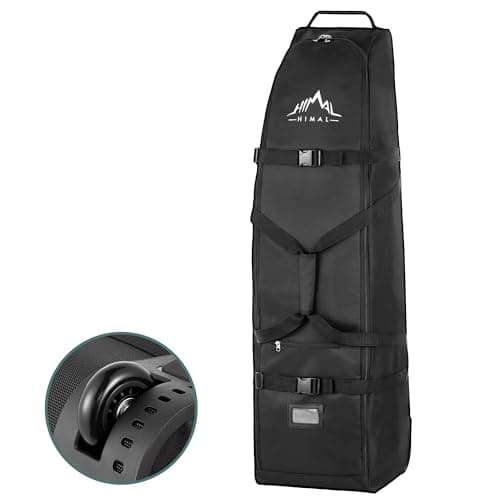
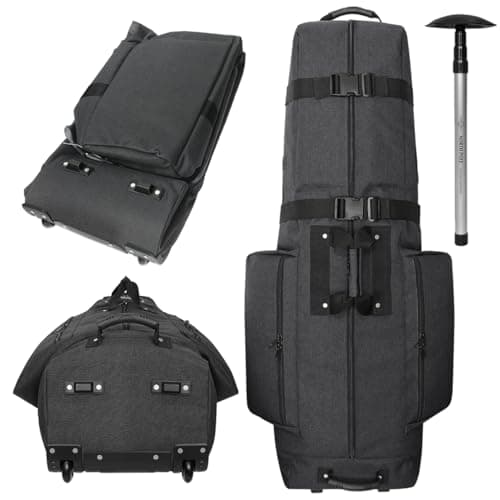
For most golfers on most trips, checking your clubs is the right answer: it costs a standard checked-bag fee rather than a shipping invoice, it needs no advance planning, and the clubs travel on the same aircraft you do. Shipping wins in one specific situation — a long trip, an expensive set, multiple connections, or a schedule where a one-day baggage delay would cost you a round you have already paid for. If you are checking, the CaddyDaddy Constrictor is the travel bag to own, and it is first in the picks below.
What each option actually costs you
We are not going to publish a shipping price we have not verified for your route and dates, because club shipping is quoted per route, per weight and per service level, and a number we invented would be worse than no number. What we can tell you is the shape of the comparison, and where the costs that people forget actually sit.
On the airline side, the published position is simple and we have checked it: American Airlines and Delta both treat a golf bag as an ordinary checked bag. You pay the standard checked-bag fee for your fare and status, the overweight charge begins above 50 lb, American will not carry it at all above 70 lb, and Delta will not accept an item outside 115 linear inches. There is no golf surcharge on either carrier. Our airline golf club fees page has the carrier detail.
On the shipping side, the costs that catch people are not the headline quote. They are the round trip — you are paying twice, outbound and return, and the return leg has to be arranged from wherever you are staying. They are the timing buffer, because a shipment has to arrive several days before you do, which means being without your clubs at home for most of a week. And they are the destination requirement: the resort or hotel has to accept, store and hand back the shipment, which most golf resorts do cheerfully and most city hotels do grudgingly.
The comparison, side by side
| What matters | Checking them | Shipping them |
|---|
| Cost shape | One standard checked-bag fee each way | A quoted shipment each way, usually the more expensive option |
| Planning needed | None beyond packing | Days of lead time at both ends |
| If something breaks | Airline liability, capped and with fragile-item exclusions | Declared-value coverage you buy with the shipment |
| Airport effort | You wheel a 40 lb bag through two terminals | None — you travel with hand luggage |
| Worst case | Bag arrives a day late, you rent clubs for a round | Shipment is late or misrouted and nobody at the hotel can help |
| Best for | Most trips, most golfers, most sets | Long trips, expensive sets, tight schedules, multiple connections |
The coverage question, which is the real one
This is where the decision usually gets made, and it is worth being precise. On a domestic US flight, the maximum liability a carrier may impose on itself for a lost, damaged or delayed checked bag is $4,700— the figure rose from $3,800 and has applied to all flights on or after January 22, 2025. That is a ceiling, not a payout: it is the limit of what the airline is on the hook for, and carriers are permitted to exclude fragile items from liability entirely. Graphite shafts are exactly the kind of item that sits in that grey area.
A shipment, by contrast, carries the declared value you paid for when you booked it. That is a cleaner promise, and for a genuinely expensive set it is the strongest argument for shipping. For a set worth less than the airline ceiling, it is an argument for a support rod and a better travel bag instead. The full liability detail, and what to do when a claim goes wrong, is on our lost-or-damaged clubs page.
You need a travel bag either way
A point that gets lost: shipping does not remove the need for a travel bag. Carriers will not take a bare golf bag, and the clubs still need protecting inside the box or case. What shipping changes is which travel bag makes sense — a lightweight cover is fine inside a shipping carton, where a checked bag wants padding and a rigid top. That is why the three picks below span the range rather than ranking one winner: the right bag depends on the decision you just made.
The rule we would actually use
Ship if two or more of these are true: the trip is a week or longer; the set is worth more than you would be comfortable claiming for; you have two or more connections; you land and tee off the same day or the next morning. Otherwise check them, buy a support rod, pack the bag properly, and spend the difference on the round.
There is a third option people forget, and on a short trip it is often the best one: rent at the destination. Resort rental sets are usually current-model game-improvement clubs, they cost a fraction of either option for a single round, and nothing can be lost or broken in transit. It is a poor idea for a golf trip built around four rounds with your own gamers. It is a perfectly sensible idea for one round bolted onto a business trip.
If you are checking, buy the rod before the bag
We will keep saying this because it is the highest-leverage twenty dollars in golf travel. A telescopic support rod takes the end-drop load that would otherwise go through your driver shaft. It works in a soft bag, it works in a hard case, and it addresses the actual way clubs break. The full packing method is in our guide to packing clubs for a flight.