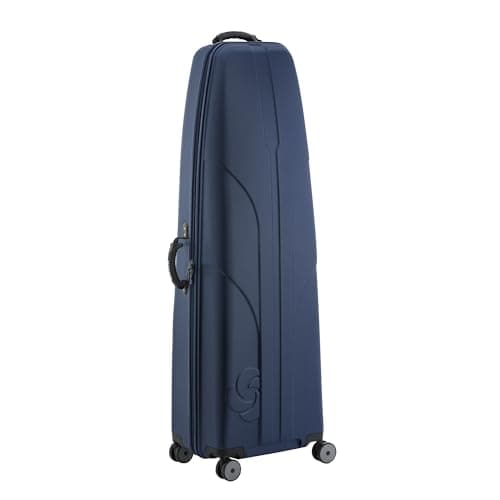
File the claim at the airport, before you leave it.That is the single most important thing on this page, and it is the step most people skip because they are tired and the counter has a queue. Everything that follows — the liability ceiling, the exclusions, the evidence — gets much harder to argue once you have walked out of the terminal with the bag. If you are here before a trip rather than after one, skip to the prevention section: the Samsonite Tour Classic hard case is the pick for most frequent flyers, and it is first in the picks below.
What a US airline actually owes you
On a domestic US flight there is a published ceiling. The maximum liability a US carrier may impose on itself for a lost, damaged or delayed checked bag is $4,700 per passenger. That figure was raised from $3,800 by a Department of Transportation final rule published in October 2024, and it applies to all flights on or after January 22, 2025. The rule is a periodic inflation adjustment to 14 CFR 254.6, so expect it to move again.
Two things that number is not. It is not a payout — it is the most the carrier can be held to, and what you receive depends on depreciated value and what you can evidence. And it is not universal: carriers are permitted to exclude categories of item from liability, and fragile items are the standard exclusion. Golf clubs sit awkwardly in that space. A graphite shaft is both expensive and genuinely fragile, which is exactly the combination a liability exclusion is written for. Read your carrier’s current conditions of carriage before you fly, not after.
What to do, in order, on the day
- Do not leave the airport. Go to the baggage service office in the arrivals hall and report it there, whether the bag is missing or damaged. A report filed at the airport with a reference number is a different kind of document from a phone call made the next morning.
- Get a written reference number for the file, and a copy of what was recorded. Check that the damage described matches what you can see.
- Photograph everything before it moves. The travel bag as it came off the belt, the damage from several angles, the broken club, the baggage tag, and the tag number. If you took a photograph of the packed bag on a scale before you flew, you now have a before and after.
- Keep the travel bag and the broken club. Do not throw either away and do not get the club repaired until the claim is resolved. The damaged item is the evidence.
- Ask about interim expensesif the bag is delayed rather than damaged. Reasonable costs incurred because your bag did not arrive — including club rental for a round you had already paid for — are the kind of thing a delay claim is for. Keep the receipts.
- Follow the written claim process within the carrier’s deadline. Every airline publishes one and they are short. Missing the window is the most common way a legitimate claim dies.
The four places coverage can come from
| Source | What it typically covers | The catch |
|---|
| Airline liability | Up to $4,700 on a domestic US flight | Fragile-item exclusions; depreciated value; short claim windows |
| Travel insurance | Baggage and sports-equipment cover, per policy | Often a per-item cap well below a full set’s value |
| Credit card benefit | Baggage delay and damage, if you paid with that card | Only if the fare was charged to the card; registration may be required |
| Home contents policy | Specified high-value items, away from home | Usually needs the set scheduled in advance, with receipts |
The practical reading: if your set is worth less than the airline ceiling, your energy is better spent on prevention and documentation than on stacking policies. If it is worth meaningfully more, schedule it on a policy before the trip — or read our comparison of shipping versus flying, because a declared-value shipment is a cleaner promise than a liability ceiling.
Prevention, ranked by how much it actually helps
First, a support rod.Twenty dollars, and it addresses the specific failure — an end-drop loading the driver shaft — that causes most in-transit breakage. Nothing else on this list has that ratio.
Second, photographs. Free. A dated photograph of the clubs laid out and the packed bag on a scale converts a disputed claim into a documented one.
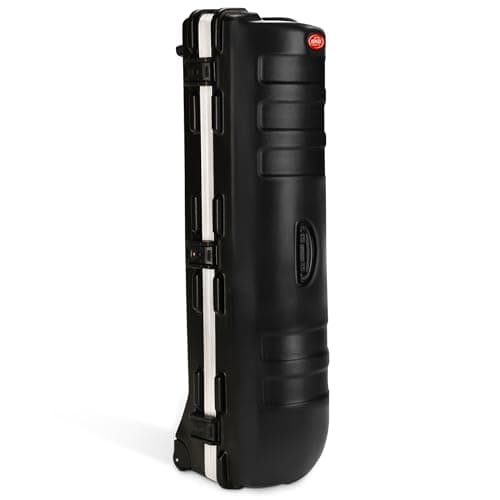
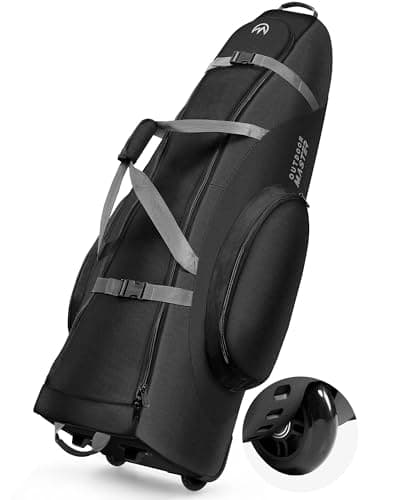
Third, the right travel bag.This is where the picks below come in. The Samsonite Tour Classic gives you a genuine molded ABS shell on spinner wheels without ATA money or ATA weight, and it is the pick for most people who fly with clubs several times a year. The SKB Staff ATA case is the maximum: built to ATA 300 Category I, TSA locking latches, 18 lb empty by SKB’s own published figure — which is weight you will pay for against the 50 lb line on every leg. The OutdoorMaster is the budget way to add genuine padding rather than a bare cover.
Fourth, packing method. Covered in full in our packing guide; the short version is clothing around the heads, driver head lowered, compression straps fastened.
One honest caveat about hard cases
A hard case reduces the chance of damage. It does not eliminate it, and it does not make a claim unnecessary — SKB itself publishes the caveat that bags with molded top handles over 12 inches will not fit its case, which is the sort of detail that turns a careful purchase into a returned one. Measure your golf bag before you buy any case, and read our size guide first.