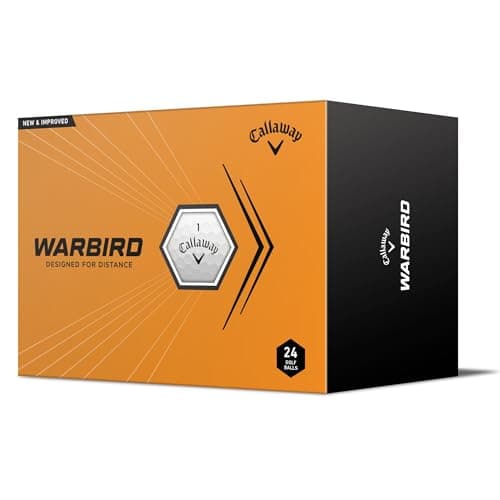
The blunt truth about a distance golf ball is that it buys yards by giving something up, and the something is almost always greenside spin. A ball marked for distance is built firm and low-spinning so it launches hot, flies straight and runs on landing — and that same recipe is why it skids instead of biting when you pitch it. So before we rank a single one: the biggest distance gains in amateur golf come from swing speed and a solid strike, not from the ball. No ball turns a 90 mph driver swing into a 105 mph one. What the right ball does is stop leaking the distance you already have, and for a lot of players that is worth a real handful of yards. Our top pick for pure, no-nonsense distance-per-dollar is the Callaway Warbird — but read the “best for” on every row, because the fastest way to more carry might be four spots down this list.
How we ranked these
Distance is the easiest ball category to oversell, so we ranked on the four things that actually decide whether a “distance ball” helps your game, in this order:
- Real distance for a normal swing.Not robot-tested tour distance — carry and roll for an ordinary amateur who does not compress the ball perfectly every time. A firm ball that only rewards a fast, centered strike is not a distance ball for most people.
- Straightness and forgiveness of flight. Distance you cannot find is not distance. Low-spin construction flattens sidespin, so a distance ball usually flies straighter, which for a slicer is worth more yards in play than any raw ball-speed claim.
- What you give up around the green. Every ball here trades greenside bite for a hotter flight. We were honest about how much, because if you lose your strokes chipping and putting, that trade can cost you more than the tee shot gains.
- Price per dozen.Distance balls live at the value end for a reason — you are buying flight, not a urethane short game — so a high sticker price makes no sense here. We weighted honest cost heavily.
We did not lab-test these and we do not print measured yardages we did not record. Every construction claim below is attributed to the manufacturer, and every source is listed at the bottom of the page.
There are two ways a ball adds distance — pick yours
“Distance ball” hides two different designs aimed at two different swings, and buying the wrong one costs you the yards you came for.
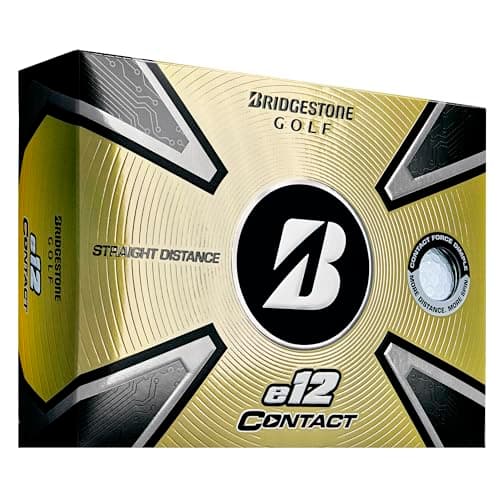
The first is the firm, hot two-piece— the Callaway Warbird and, in a slightly softer three-piece form, the Bridgestone e12 Contact. These have a firmer feel and a fast ionomer cover built to leave the face with low spin and high ball speed. They reward a moderate-to-fast swing that can compress a firmer ball; feed one enough clubhead speed and it flies low-spinning, straight and long, and runs out on a firm fairway. Give the same ball a slow swing and it just sits there.
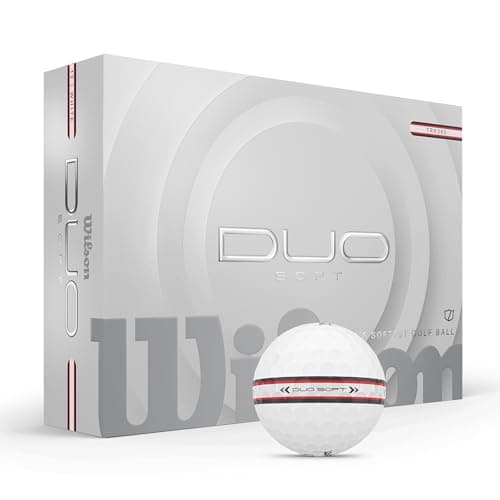
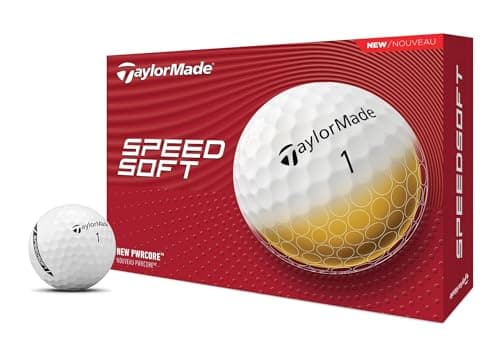
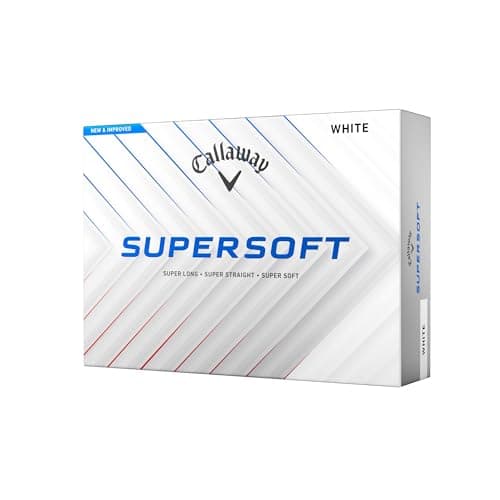
The second route is low compression— the Wilson Duo Soft, TaylorMade SpeedSoft and Callaway Supersoft. These feel soft because they are easy to squash, and for a slower swing that ease isthe distance: a ball you can actually compress launches and carries, where a firm tour ball would never load up. The paradox that trips people up is that the softest-feeling balls on this list are here for distance too — just for the golfer at the other end of the speed range. Callaway describes the Supersoft as one of the lowest- compression balls it makes; Wilson pitches the Duo Soft the same way. Match the mechanism to your swing and you get the yards; mismatch it and you leave them on the tee.
The picks, and who each is for
The Callaway Warbird takes the top spot as the honest distance-per-dollar champion: a firm two-piece sold in big packs, built for a fast-ish swing that wants a hot, running ball and does not care what it feels like off the putter. The Bridgestone e12 Contactis the more civilized version of that idea — a three-piece that Bridgestone builds around straight, efficient distance, with a touch more feel than a hard two-piece rock and a dimple design the brand markets hard; treat it as a solid straight-distance ball, not a breakthrough. The Wilson Duo Soft is the pick for genuinely slow swings, one of the lowest compressions in golf, so it loads up and carries where a firm ball would die. The TaylorMade SpeedSoft and Callaway Supersoft round it out as soft, low-compression balls that a moderate swing can flatten for real distance while flying straight enough to flatter a slice — and between the two, the honest tiebreak is whichever is cheaper the week you shop.
Where the ball ranks against the free stuff
Before you spend anything, three things add more distance than any ball, and two of them are free. A centered strike is the biggest — a shot off the toe or heel loses ball speed no cover can give back. Tee height and launch are next: most amateurs tee it too low and hit down on the driver, turning a distance ball’s low spin into a low, diving flight instead of a carrying one. And swing speed, which you can build, dwarfs the lot. The ball is the last couple of percent, not the first. That is not a reason to ignore it — the last couple of percent is real, and a low-spin ball that flies straight keeps more shots in the short grass — but it is the reason we refuse to promise a distance ball will transform your game. It won’t. It will stop you leaking yards to sidespin and a mismatched compression, which is a genuine, modest gain, honestly described.
Skip this: a rock-hard distance ball if you score around the green
The mistake to skip is buying the firmest, hardest distance ball you can find because it promises the most yards, when most of your strokes are lost inside 50 yards. A hard, low-spin ball skids across the green and releases on chips and pitches instead of stopping, so every yard it adds off the tee it can hand straight back with a pitch that runs 20 feet past. If your scorecard bleeds around the green, a softer ball that holds the putting surface — or a proper urethane ball — will shoot a lower number than the longest ball in the shop. Distance is only the right priority once your short game is not the thing costing you strokes. Buy the hot ball to bomb it; do not buy it to score with it if scoring is where you actually lose.
Does a distance ball actually add yards?
Yes, but less than the box implies, and mostly in one specific way: by not losing the distance you already have. Two balls struck identically at the same speed will not differ by 30 yards — the USGA and R&A cap ball speed, launch and total distance under their equipment rules, so every conforming ball you can buy lives inside the same ceiling. What varies is spin, and spin is where a distance ball earns its name. A lower-spinning ball off the driver flies flatter and rolls further, and it curves less, so a slice or hook finishes closer to the fairway. For a player who spins the driver too much or slices it into trouble, switching to a low-spin distance ball can be worth a meaningful number of yards in play— not because the ball is faster, but because it stops wasting your speed on backspin and sidespin. For a player who already flights it low and straight, that same ball adds almost nothing.
Compression vs swing speed — the match that matters
Compression is not a quality rating; it is a fit. It measures how much the ball squashes at impact, and the whole game is matching it to your clubhead speed. A slower swing cannot deform a firm, high-compression ball enough to release its energy, so the ball feels hard and flies short — the fix is a low-compression ball like the Duo Soft or Supersoft that a gentle swing can actually flatten. A faster swing over-compresses a very soft ball, which can spin up and balloon, so it wants a firmer ball like the Warbird that stands up to the hit. There is no universally “longest” ball, only the longest ball for your speed. If you do not know your driver speed, our compression explained guide shows how to estimate it, and the golf ball selector matches a ball to it in three questions.
Carry, roll and the course you actually play
Distance is carry plus roll, and a low-spin distance ball wins much of its advantage on the ground. On a firm, dry course a hot, low-spinning ball can run out well after landing, which is where a lot of the “distance ball” feeling comes from — and on a soft, wet course that run stops dead, so the same ball gains far less. It is worth knowing which course you play most. If your home track is firm and open, a running distance ball is a genuine weapon and the extra roll is free yardage. If it is soft, tree-lined and demands carry over trouble, straightness matters more than run, and the anti-slice, low-sidespin balls here — led by the e12 Contact — keep more shots in play than a ball chosen purely for a hot number. Buy for the conditions you face on most Saturdays, not for a launch-monitor readout on a perfect indoor day.
When the premium ball is the real distance play
Here is the counterintuitive part: for a faster player, the longest ball off the tee is often a premium urethane tour ball, not a dedicated distance ball. Modern tour balls are engineered to spin low off the driver and high off the wedges — the best of both — so a strong swing can get distance-ball flight off the tee and keep a short game the value ball can never offer. That is why our best golf balls roundupputs urethane balls at the top for faster players even when distance is the goal. The distance balls on this page are the right buy in two cases: your swing is slow enough that a soft, low-compression ball simply carries further than a firm tour ball you cannot compress; or you lose enough balls that a urethane short game is money at the bottom of a pond. If you keep the ball in play and swing hard, price the premium ball before you assume the “distance” label is your fastest route to yards — and see whether it is worth it in our are expensive golf balls worth it breakdown.
Fix the strike before you blame the ball
If you want the cheapest distance gain available, it is not on this page — it is a centered strike, and it is free. A drive caught off the toe or heel loses ball speed that no cover technology can hand back, and most amateurs scatter their contact across the face far more than they realize. Spend a bucket hitting the middle of the clubface with a slightly teed-up, ascending strike before you spend a penny switching balls, and you will find yards a new dozen never could. Then, once your contact is repeatable, a low-spin ball matched to your speed adds its honest slice on top. The order matters: ball last, strike and speed first. A distance ball rewards a good swing; it cannot rescue a poor one, and any marketing that suggests otherwise is selling you the wrong hope.
What a distance ball costs, and buying it right
This is a value-tier category and it should stay one. You are buying flight and durability, not a urethane cover, so a distance ball that costs premium money is mispriced — the Warbird’s bulk packs put the per-ball cost about as low as a new ball gets, and the e12 Contact, Duo Soft, SpeedSoft and Supersoft all sit comfortably in the budget-to-mid range. Because none of them spins enough to reward babying, buy them by the box and stop thinking about it: the money you would spend agonizing over a sleeve of tour balls is better spent on a big enough supply that a lost ball is a shrug, not a wince. Live prices for every pick are on the cards above and refreshed daily — we never print a remembered figure, so when a price cannot be verified you will see “check price” rather than a stale one. If your swing is on the slower side, the same balls framed for your speed are in our best golf balls for slow swing speeds roundup.