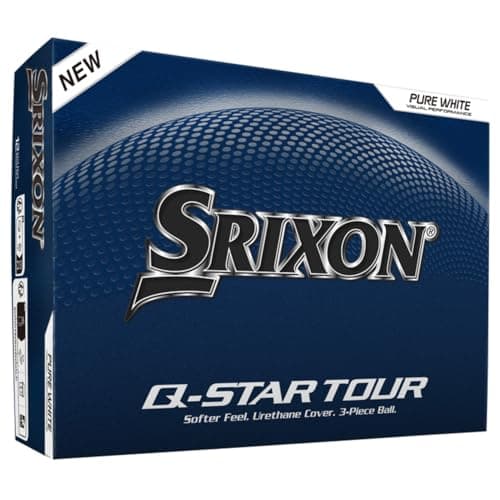
The mid-handicap years are where the golf ball finally starts to matter. Somewhere around a 10 to 20 handicap, your swing gets repeatable enough and your wedge game sharp enough that a soft urethane cover is no longer wasted on you — you can feel a ball check on the green, and you lose few enough that paying for that cover stops being a donation to the pond. This roundup is built for that band, and it is led by the Srixon Q-Star Tour, because it is the ball that gives a mid-handicapper the thing they have started to earn — real greenside spin — for meaningfully less than a full tour ball. Read the “best for” on every row, because the right pick depends on whether you value the last few percent of control, a lower price, or a flight that fights a lingering slice.
How we ranked these
A mid-handicapper is buying control they can now use without over-paying for control they can’t. So we ranked on four questions, in this order:
- Usable greenside spin and control. The whole reason to leave a distance ball is to stop your pitches and chips running out. We ranked first on how much genuine short-game control each ball offers a swing that can now, at least sometimes, deliver it.
- Forgiveness off the tee. A mid-handicapper still hits crooked ones. A ball that spins low off the driver and holds a reasonably straight line keeps the round alive, so we weighted tee-shot behavior alongside the short game.
- Price for what you get.The point of this band is value — getting most of the tour-ball benefit without the full tour-ball price. A ball that costs as much as a Pro V1 has to justify it, and we said so where it does not.
- Loss-rate reality. Mid-handicappers still lose balls. We favored picks whose price survives losing a sleeve now and then, and flagged when a ball only makes sense if you keep it in play.
We did not lab-test these. Every construction claim is attributed to the manufacturer and every source is listed at the foot of the page.
What changes at the mid-handicap level
It helps to know why the ball suddenly matters now when it barely did as a beginner. As a high handicapper, your misses are large and frequent enough that no cover material moves your score — a topped drive is a topped drive on any ball, and the money is better spent on lessons and a value ball you can lose cheaply. By the mid-handicap band, the picture inverts: your good shots outnumber your wild ones, you reach greens in something like regulation often enough to have real pitch and chip shots left, and you have enough control to shape a flight and hold a line. That is the moment a ball that spins on command and flies a predictable window starts turning your improving swing into lower numbers. It is also the moment the differences between the balls on this list become findable — a beginner cannot feel the gap between a Q-Star Tour and a Chrome Soft, but a 14-handicap with a decent wedge game absolutely can. Spend here now because, for the first time, you will get your money back on the card.
The value-tour sweet spot
The single most useful idea for a mid-handicapper is the value-tour ball: a real urethane cover — the thing that actually separates a tour ball from a value ball — at a mid-tier price. The Srixon Q-Star Tour is the cleanest example and our top pick. It pairs a urethane cover with a mid compression that suits a wider range of swing speeds than a firm tour ball, so a mid-handicapper gets genuine greenside bite without the premium sticker and without needing tour clubhead speed to compress it. If you have started to notice your value ball skidding past the flag on pitches, this is the ball that fixes it for the least money.
When to pay up, and the direct-to-consumer angle
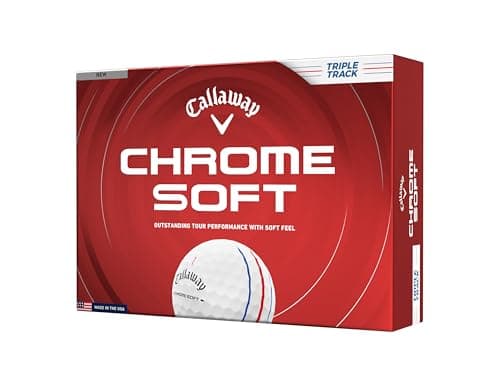
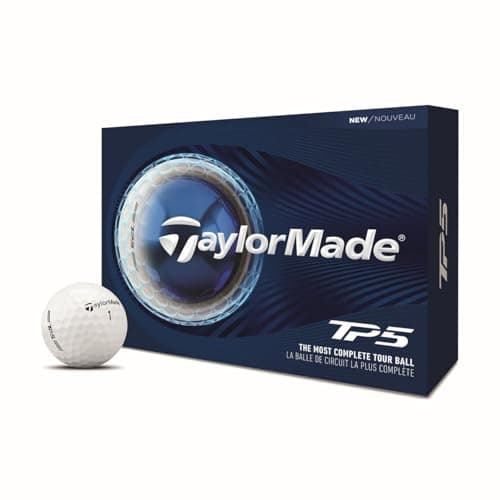
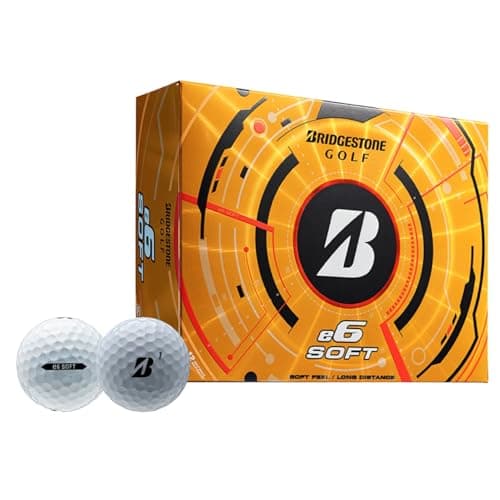
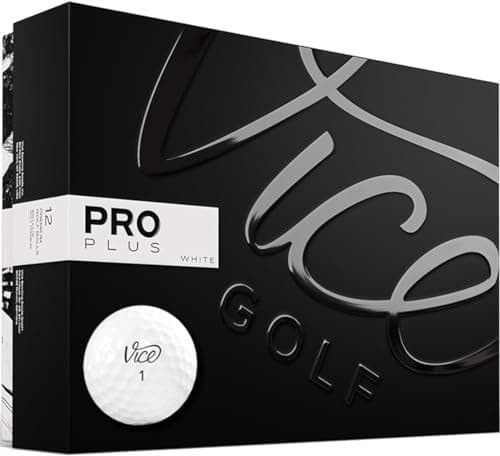
Above the Q-Star Tour sit the premium-control balls. The Callaway Chrome Soft is the soft-feeling premium — urethane spin with a softer strike than a firm tour ball, plus the Triple Track alignment lines Callaway includes as a free putting aid — and the TaylorMade TP5is the five-layer tour ball built, in TaylorMade’s words, to spin less off the driver and more on the wedges. Both are excellent; both cost premium money, and a mid-handicapper should buy them only once the short game can bank the extra control. The Vice Pro Plusis the clever middle path: a genuine cast-urethane tour ball sold direct to consumer, so the per-dozen price undercuts the majors — best of all bought by the box, which happens to suit exactly the buyer this list is for. And the Bridgestone e6 is the honest outlier: not a urethane ball at all, but a soft, low-spin, straight-flight ball for the mid-handicapper who still fights a slice and would gain more from a ball that flies straight than from spin they cannot yet control.
Skip this: premium-ball money before your wedges can use it
The mistake to skip is buying a Pro V1–priced ball because your handicap crossed some number, when your scoring still comes from getting the ball on the green rather than from spinning it back to a tucked pin. Greenside spin is only worth paying for if your technique can produce it — a descending, clean strike on a decent lie — and if you cannot yet, the extra spin sits unused while you pay for it every dozen. Worse, a firm premium ball can feel harder and less forgiving off the tee than the value ball you left behind. The honest move is to step up one rung at a time: go from a distance or value ball to the mid-priced Q-Star Tour first, prove your wedge game actually uses the spin, and only then decide whether the last few percent of a full premium ball is worth the tax. Buy the control you can use today, not the control the marketing says a “mid-handicapper” should own.
The short answer
Quick picks
| # | Product | Best for | Score | Price |
|---|
| 01 | Srixon Q-Star TourA urethane-covered tour ball at a mid-tier price — the smart bridge from value to premium. | The best urethane value | | $39.99·Amazon |
| 02 | | Mid handicaps who prize soft feel | | $57.99·Amazon |
| 03 | TaylorMade TP5A five-layer tour ball that gives up nothing to the Pro V1 and costs about the same. | Tour-ball shoppers who want an alternative to Titleist | | $46.49·Amazon |
| 04 | | Fighting a slice or hook | | $23.97·Amazon |
| 05 | Vice Pro PlusA direct-to-consumer urethane ball that undercuts the majors — if you buy it by the box. | Tour performance on a budget (in bulk) | | $35.30·Amazon |
#ad · Live prices from the Amazon Product API, as of Sep 17, 2026. Where we have no verified live price, we show none — we would rather leave a gap than print a number that has rotted.
In detail
The picks, in full
The best urethane value
Srixon Q-Star Tour
3-pieceUrethane coverMid compressionMid-price tier
A urethane-covered tour ball at a mid-tier price — the smart bridge from value to premium.
- Distance
- 8
- Greenside spin
- 8
- Feel
- 8
- Durability
- 7
- Value
- 8
Pros
- +A real urethane cover — the thing that separates tour balls from value balls — for meaningfully less than a Pro V1
- +Mid compression suits a wider range of swing speeds than a firm tour ball
- +The genuine sweet spot for a mid-handicapper who wants greenside spin without the top-tier price
Cons
- −Not quite the durability or the very last few percent of spin of the $50 balls
- −Still costs more than a two-piece value ball you might lose just as fast
Skip this if…
…you lose two or three balls a round. The urethane cover is wasted money if it spends its life at the bottom of a lake — play a Soft Feel or Supersoft until your ball-in-play rate climbs.
Mid handicaps who prize soft feel
Callaway Chrome Soft
Urethane coverSofter than a Pro V1Triple Track optionPremium tier
The premium ball for players who want tour spin without the tour-firm feel.
- Distance
- 8
- Greenside spin
- 9
- Feel
- 9
- Durability
- 8
- Value
- 5
Pros
- +Genuinely soft off the face while still holding urethane greenside spin
- +The Triple Track alignment lines are a real, free putting aid
- +A better feel match than the Pro V1 for a lot of moderate swing speeds
Cons
- −Priced right alongside the Pro V1 — this is not the value play
- −Slightly lower full-swing spin than the firmest tour balls
Skip this if…
…you want the maximum greenside bite and don't care about a soft feel. The Pro V1x spins more; the Chrome Soft's whole pitch is feel, and if that's not what you value you're paying premium money for the wrong strength.
Tour-ball shoppers who want an alternative to Titleist
TaylorMade TP5
5-layerUrethane coverFirm (tour) compressionPremium tier
A five-layer tour ball that gives up nothing to the Pro V1 and costs about the same.
- Distance
- 9
- Greenside spin
- 9
- Feel
- 8
- Durability
- 8
- Value
- 5
Pros
- +The extra layers are aimed at spinning less off the driver and more on wedges — a genuine design goal, not marketing
- +Full tour-grade greenside performance
- +A real, established alternative if you don't want to play what everyone else plays
Cons
- −Premium price with the same swing-speed requirement as any tour ball
- −The differences from a Pro V1 are small enough that brand loyalty usually decides it
Skip this if…
…you're a higher handicap chasing the '5-layer' spec. Layer count is a tour-player refinement; it does nothing for a 95-shooter that a $25 ball wouldn't do better for the money.
Fighting a slice or hook
Bridgestone e6 Soft
2-pieceSoft coverLow compressionLow sidespin design
A soft, low-spin ball built to fly straight — aimed squarely at the slice.
- Distance
- 7
- Greenside spin
- 5
- Feel
- 8
- Durability
- 8
- Value
- 8
Pros
- +Low-spin construction genuinely reduces the sidespin that turns a slice into a lost ball
- +Soft feel through the bag
- +A sensible value-tier price
Cons
- −The same low-spin design limits how much you can work the ball or stop it on a green
- −Distance is fine, not remarkable
Skip this if…
…you already hit it straight and want to shape shots or spin wedges. The low-spin design is a fix for a fault you don't have, and it'll feel unresponsive around the green.
Tour performance on a budget (in bulk)
Vice Pro Plus
4-pieceUrethane coverFirm compressionDTC value
A direct-to-consumer urethane ball that undercuts the majors — if you buy it by the box.
- Distance
- 8
- Greenside spin
- 8
- Feel
- 8
- Durability
- 7
- Value
- 8
Pros
- +Cast-urethane cover and a firm tour construction at a lower per-dozen price than the Titleist/Callaway premiums
- +The value gets dramatically better buying multiple dozen at once
- +A genuine high-flight, high-spin tour ball, not a value ball in disguise
Cons
- −The savings mostly show up at bulk quantities, not a single dozen
- −Not stocked in the pro shop, so you're committing to a mail-order supply
Skip this if…
…you want to try one sleeve before committing. The value case is a multi-box order; a single dozen isn't dramatically cheaper than a sale-price Pro V1.
How to tell you’ve outgrown a distance ball
There is a simple test, and it happens around the green, not off the tee. Hit a handful of pitches from 30 to 40 yards onto a green with your current ball and watch the second bounce. If the ball releases and rolls out well past where it landed every time, and you are making clean, ball-first contact, your ball is the limiter — a urethane cover would let those shots check and sit. If the ball is already stopping reasonably, or your contact is still thin-and-fat roulette, the ball is not what is costing you; keep the cheaper one. The other tell is your loss rate: once you are losing fewer than a couple of balls a round, the arithmetic that keeps a mid-handicapper in value balls starts to flip, because you are no longer feeding urethane covers to the water. When both are true — clean wedge contact and a low loss rate — you have outgrown the distance ball and a value-tour ball like the Q-Star Tour is the upgrade that will actually show on your card.
The spin you can use, and the spin you can’t
Not all spin is equal, and this is where mid-handicappers waste money. Greenside spin — the check-and-stop on a pitch or chip — is the spin worth paying for, and by the mid-handicap band most players can produce at least some of it on a clean strike from a good lie, which is exactly what a urethane ball rewards. Driver spin is the opposite: more of it is usually your enemy, turning a gentle fade into a slice and a strong swing into a balloon, which is why the balls here are built to spin low off the tee and highoff the wedges. The trap is buying a ball for spin you cannot yet create — if your wedge contact is inconsistent, the urethane cover gives you nothing on the shots you chunk or thin, so the premium is money spent on a benefit that only appears on your good swings. Match the ball to the spin your swing genuinely produces today, not to the spin you hope to have next season.
Do you need the full premium ball yet?
For most mid-handicappers, honestly, not yet — and that is the good news, because it saves you money. The gap between a mid-priced value-tour ball and a full premium tour ball is the last few percent: a fraction more greenside spin, a slightly more consistent flight window, marginally better durability. Those refinements are real, and a low mid-handicapper with a sharp short game will feel them and may well prefer a Chrome Soft or TP5. But a 15-to-20 handicapper who has just stepped off a value ball will get almost all of the available benefit from the Q-Star Tour or a direct-to-consumer ball like the Vice Pro Plus at a lower price, and will not lose a single shot to the ball for it. Buy up to the full premium only when you have played a value-tour ball long enough to feel specifically what it is not giving you. If you cannot name the thing you are missing, you are not missing it yet.
Buying by the box, and the loss-rate maths
Once you have decided a urethane ball is worth it, the smart way to buy is by the box rather than the sleeve, and the reason is the whole logic of this band. A mid-handicapper who has genuinely stopped spraying it into hazards loses few enough that a dozen lasts real rounds, so the per-round ball cost of a value-tour or direct-to-consumer ball becomes trivial — and the direct-to-consumer route, like the Vice Pro Plus, is designed to reward exactly that box-quantity buyer with a lower per-dozen price. If you are still losing three or four a round, do the honest thing and stay one rung cheaper until your ball-in-play rate climbs; there is no shame in it, and our are expensive golf balls worth it breakdown does that arithmetic in full. Live prices for every pick sit on the cards above and refresh daily, so you can see the real per-dozen cost of trading up rather than guessing at it.
One ball, one model — then stop shopping
The last piece of advice is the least glamorous: once you find the ball that matches your game, play it and only it. A mid-handicapper’s scoring improves more from knowing exactly how far a pitch flies and rolls with one ball than from chasing a slightly better model every season, because feel and distance control are built on repetition. Pick from this list on the honest basis of usable spin, flight and price — the Q-Star Tour for value-tour control, the Chrome Soft or TP5 for premium feel and spin, the Vice Pro Plus for direct-to-consumer value, the e6 if a slice is still your real problem — then commit. Where these land against the whole field, including the value balls and the tour balls, is laid out in our best golf balls roundup, and the two premium options go head to head in Chrome Soft vs TP5.
How we ranked this
We don't run a testing lab — and we say so
We compiled published manufacturer specifications, official standards and aggregated owner reviews, computed the running costs the big test-labs leave out, and scored each pick against a published rubric. The scores are judgments from documented research — they are not lab measurements we took, because we don't have a lab and we're not going to pretend we do. You can check every number we publish.
Questions
Frequently asked
What golf ball is best for a mid-handicapper?+
For most, a value-tour ball like the Srixon Q-Star Tour: a real urethane cover for genuine greenside spin, at a mid-tier price, with a mid compression that suits a wide range of swing speeds. It gives an improving golfer the control they have started to earn without the full premium price — and only once your wedge game and loss rate justify it should you consider stepping up to a Chrome Soft or TP5.
Is a Pro V1 too much ball for a mid-handicapper?+
Often, yes — not because you can't play it, but because you may not yet get your money's worth. The gap between a value-tour ball and a full premium ball is the last few percent of spin and flight consistency, which only shows up for a sharp, repeatable short game. Play a Q-Star Tour first; step up only when you can name what it isn't giving you.
Do mid-handicappers need a urethane ball?+
Not need, but many can finally use one. By the mid-handicap band most players make clean enough wedge contact to produce real greenside spin, which is exactly what a urethane cover rewards — and they lose few enough balls that paying for that cover stops being a donation to the pond. If your contact is still inconsistent or you lose several a round, a value ball is still the smarter spend. Our
cost breakdown does the maths.
Is the Vice Pro Plus worth it for a 15 handicap?+
It can be, if you buy it by the box. The Vice Pro Plus is a genuine cast-urethane tour ball sold direct to consumer, so the per-dozen price undercuts the majors — best value at box quantities, which suits a mid-handicapper who has stopped losing sleeves. Buy a single dozen and the saving is smaller; commit to a box and it's one of the better-value urethane balls going.
Keep reading
Related
- Best golf balls overallThe full field, from tour balls down to value, ranked by who each is for.
- Chrome Soft vs TP5The two premium picks on this list, head to head.
- Are expensive golf balls worth it?When trading up to urethane actually pays, and when it's too soon.
- Srixon Q-Star Tour reviewA full review of our top value-tour pick for this band.
- The Best Golf Balls for High HandicappersThe soft, straight, cheap-to-lose field ranked for a game that still loses a few — criteria-first, with honest cons on every pick and a 'skip this' call.
- The Best Golf Balls for BeginnersForgiving, low-compression value balls that fly straight and cost little to lose — ranked for a new swing, with a slice-fighter and a stock-up pick, priced live.
Receipts
Sources
We do not run a testing lab, and we do not pretend to. Every spec number here comes from a manufacturer's published sheet or an official standard, cited above. Where we could not verify something, we say so on the page rather than quietly leaving it out. Read our full method.