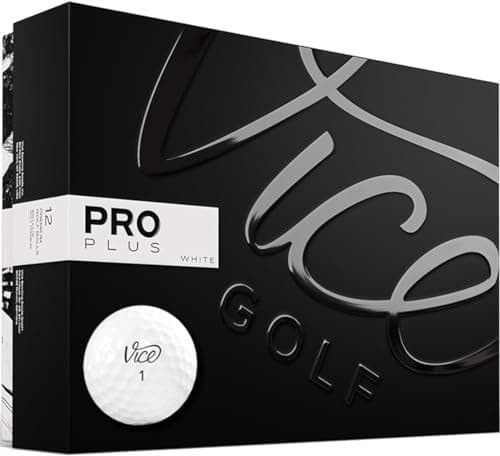
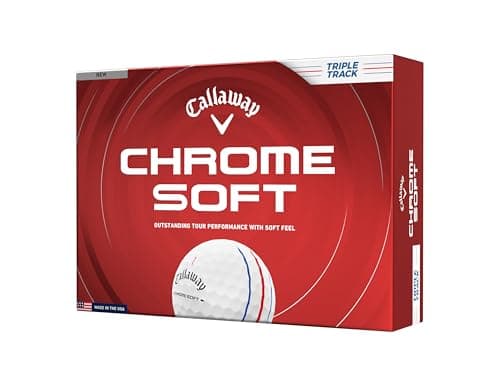
Both of these are premium, urethane-covered balls that bite a wedge and stop on the green, but they come at the tour-ball idea from opposite directions. The Callaway Chrome Soft is the soft-feel premium you can buy in any pro shop, built around a genuinely soft strike and the Triple Track alignment lines. The Vice Pro Plusis a firm, high-flying, four-piece cast-urethane tour ball sold direct-to-consumer that undercuts the majors on price — if you buy it by the box. So this is really two questions at once: soft-and-available versus firm-and-cheaper-in-bulk, and which of those two profiles suits your game and the way you actually buy golf balls.
What they share
The common ground first. Both wear a cast urethane cover, so both deliver the greenside spin that separates a tour ball from a value ball— the pitch that checks, the wedge that sits, the flighted chip you can stop. Both are premium-tier balls aimed at players who can produce real clubhead speed and use spin around the green. Neither is a value ball in disguise. If your game can’t bank urethane spin or you lose a lot of golf balls, the choice between them is moot — the shared premium cover is the thing you would be overpaying for. Once you have established you should play a tour ball, though, these two diverge more than most premium rivals, which makes the decision unusually clear-cut.
Choose the Chrome Soft if…
You want the softest feel of the two off every club, or the Triple Track alignment lines help you start putts on line. The Chrome Soft’s whole pitch is holding urethane greenside spin in a noticeably softer-feeling package than the firm tour balls, which a lot of moderate swing speeds prefer — it feels less like a rock off the putter and irons while still checking a wedge. The Triple Track lines are a real, free putting aid, not marketing. And you can walk into essentially any golf shop and buy a sleeve the day you need one, with no waiting on a delivery. If feel off the face and convenience matter to you, the Chrome Soft is the ball. It is the softer alternative to the Titleist benchmark, too — we compare those in Chrome Soft vs Pro V1.
Choose the Vice Pro Plus if…
You want a genuine high-flight, high-spin tour ball for less money, and you are happy to buy it by mail order in multiple dozens. Vice’s direct-to-consumer model is where the value case lives: the per-dozen price drops meaningfully when you buy in bulk, so a golfer who goes through balls at a steady rate and plans ahead can play tour-grade cast urethane for less than a Chrome Soft. It is a firmer, higher-flying ball than the Callaway — a four-piece build aimed at faster swings who want height and spin — and it is a real tour ball, not a value ball dressed up. If you like a firm strike, you have the speed to use it, and the buying model suits you, the Vice saves real money. We also put it against the Titleist benchmark in Vice Pro Plus vs Pro V1.
How they actually differ
Feel is the biggest on-course difference: the Chrome Soft is soft and muted, the Vice Pro Plus firm and clicky. That is a genuine fork — softness is a preference, not a performance grade, and it is the fastest way to tell these two apart in your own hands. Flight is the next: the Vice Pro Plus is the higher-launching, firmer ball built for faster swings, while the Chrome Soft flies a touch lower and softer. The Chrome Soft adds the Triple Track alignment lines as a free putting aid; the Vice answers with its lower price at bulk quantities. Both spin plenty around the green; neither is dramatically longer or straighter than the other for a player who isn’t on a launch monitor.
The other real difference isn’t about the ball at all — it is about how you buy it. The Chrome Soft is a retail ball: stocked everywhere, easy to grab a single sleeve, priced like a major-brand premium. The Vice Pro Plus is a direct-to-consumer ball: you order it online, the savings arrive when you commit to a multi-box quantity, and a single dozen isn’t dramatically cheaper than a sale-price Chrome Soft. If you like trying one sleeve before committing, that favors the Callaway. If you know what you play and you buy in bulk, that favors the Vice. For a lot of golfers the buying model decides this more than the on-course performance does.
Skip the decision entirely if…
You shoot in the 90s and lose more than a sleeve a round. Both of these are premium urethane balls priced accordingly, and the spin you are paying for only matters if your wedge game can use it and your golf balls stay out of the water. Buying tour balls in bulk to lose them is the most expensive habit in the game, and paying up for a soft premium you can’t spin isn’t much better. For most golfers the real decision is urethane versus value, not Chrome Soft versus Vice — start with the best golf balls roundup and run the numbers in are expensive golf balls worth it first.
The bottom line
These two rarely lose to each other on performance — they lose to your own priorities. If you value soft feel, a putting alignment aid, and the ability to buy a sleeve on the way to the first tee, the Chrome Soft is built for you. If you value a firmer, higher-flying strike and the lowest price on genuine tour urethane, and you will commit to a bulk order to get it, the Vice Pro Plus is the smarter spend. Both are excellent; the right one is whichever matches how you play and how you shop. Just make sure you have earned the tour ball first.