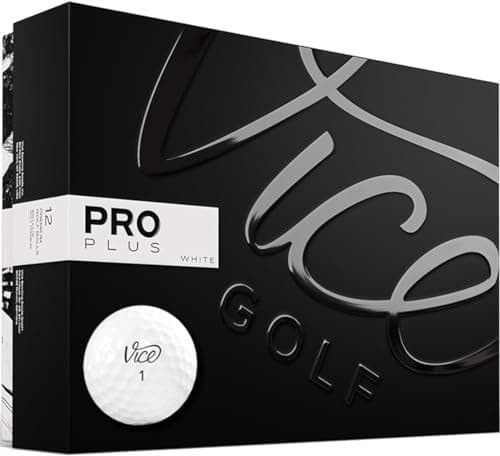
The Vice Pro Plus is the ball that made a lot of golfers ask an awkward question: if a direct-to-consumer brand can sell a real urethane tour ball for less than a Pro V1, why is anyone paying the premium? The honest answer is more interesting than either the hype or the backlash. The Pro Plus is a genuine high-flight, high-spin tour ball — not a value ball dressed up as one — and it does undercut the majors. But the savings that make the case are a bulk-order story, not a single-sleeve one, and it comes with a trade the pro-shop balls don’t: you have to commit to a mail-order supply. This review is about whether that trade is worth it for your game.
What the Vice Pro Plus actually is
Vice builds the Pro Plus as a four-piece ball with a cast-urethane cover — the soft, grippy cover that separates a tour ball from a value ballin the first place, the same material class the Pro V1 and Chrome Soft use. Vice positions it as their high-launch, high-spin tour model: a firm, tour-level compression built for a fast swing, a high ball flight, and the one-hop-and-stop greenside bite that urethane exists to deliver. Those are Vice’s published construction claims, not numbers we measured — we don’t run a lab, and we say so on how we rank— but they line up with how the ball behaves for the players it suits: a strong, carrying flight and a wedge that checks.
The short version of the spec sheet: this is a firm, premium-tier, cast-urethane tour ball in the same performance class as the Pro V1x and the Chrome Soft, sold direct to your door rather than through a pro shop. The whole reason it exists is price — Vice cuts out the retail markup and passes some of it on — and the whole reason it’s complicated is that the discount scales with how many boxes you order at once.
Where it shines
Start with the thing people doubt: the performance is real. The cast-urethane cover grips a wedge and produces genuine greenside spin, and the ball flies high and carries — this is a tour ball, and it plays like one. A fast-swinging player who spins wedges on purpose gets the checking pitch, the flighted approach that holds a green, and the height off the driver that a firm tour ball rewards. On pure ball flight and greenside behavior, the Pro Plus belongs in the conversation with the majors, not a tier below them — which is exactly why we rate it as a genuine alternative rather than a compromise in Vice Pro Plus vs Pro V1.
Then the reason to actually buy it: the value, at volume. Bought by the box — and better still by multiple boxes — the Pro Plus lands well under the per-dozen price of a Pro V1 or a Chrome Soft for performance in the same class. For a golfer who plays a lot and goes through tour balls, that per-ball saving compounds fast across a season, and it quietly softens the one number that makes tour balls painful: the cost of losing them. A drowned tour ball always stings, but a drowned tour ball you paid noticeably less for stings less — the arithmetic we run in are expensive golf balls worth it bends in the Pro Plus’s favor the more you buy at once. If you’ve already decided you want a urethane ball and you play enough to buy in bulk, this is one of the cheapest honest ways to do it.
Where it falls short (honestly)
The first caveat is the one Vice’s marketing glosses over: the savings mostly show up at bulk quantities, not on a single dozen. Buy one box and the gap to a sale-price Pro V1 is real but modest — not the dramatic undercut the headline price implies. The Pro Plus’s value case is a multi-box commitment, so if you want to buy twelve balls and see how you get on, the math is far less compelling than if you’re stocking up for the year.
The second is supply. This isn’t a ball you grab from the pro-shop rack on the first tee or replace mid-trip from a resort shop — it’s mail-order, so playing it means committing to ordering ahead and keeping stock at home. For some golfers that’s a non-issue; for anyone who likes to try a sleeve before switching, or who hates managing a supply, it’s a genuine friction the retail brands don’t have.
The third isn’t a Pro Plus flaw so much as a tour-ball fact: the firm compression needs real clubhead speed to compress fully. Feed it a slower swing and it won’t squash the way a low-compression balldoes, so you leave distance on the tee and never see the spin you paid for. As with any tour ball, matching compression to your speed matters more than the badge on the box — our compression explainer lays out why.
The value math: bulk is the whole argument
It’s worth being blunt about how to think about the price, because it’s the entire reason to consider the Pro Plus over a retail tour ball. On a single dozen, you are paying a small discount for the inconvenience of mail-order — a wash for most people, and arguably not worth the hassle when a Pro V1 goes on sale. On a stock-up order of several boxes, the per-ball price drops into value-ball territory while the ball still performs like a premium, and that is where the Pro Plus is genuinely hard to beat. So the honest buying rule is simple: if you’re committing to a season’s supply of a urethane ball, the Pro Plus is smart money; if you’re cross-shopping one dozen, buy whichever premium is cheapest that week and don’t overthink it.
Who should buy it
Buy the Vice Pro Plus if three things are true. You have the clubhead speed to compress a firm tour ball and a short game that spins wedges on purpose, so a urethane cover actually earns its keep. You want a high, carrying flight rather than the lower, boring trajectory of a standard Pro V1. And — the one that really decides it — you play enough, and lose enough, to buy in bulk, because that’s where the value lives. Tick all three and the Pro Plus is a tour ball that costs less than the pro-shop premiums, with no meaningful drop in performance. For the obsessive golfer who has already settled on urethane and just wants to spend less getting it, it’s one of the best-value ways into a genuine tour ball.
Who should skip it
Skip it if you want to try one sleeve before you commit — the value case is a multi-box order, and a single dozen isn’t dramatically cheaper than a sale-price Pro V1, so there’s little upside to a cautious trial. Skip it if you’d rather grab balls off a shelf than manage a mail-order supply. And skip it — like any firm tour ball — if your swing is slow or moderate, or you lose a lot of golf balls and can’t yet spin wedges: you’d be paying for performance your game can’t bank, and a soft value ball will score the same or better for less. If you want the urethane cover at a lower compression and a retail supply, the mid-priced Srixon Q-Star Tour is the smarter step.
How it stacks up against the field
Against the majors, the Pro Plus’s case is price-for-performance, not any single standout number. The Pro V1 is the more widely calibrated-to benchmark with a lower, more boring flight and pro-shop convenience; the Chrome Softis the softer-feeling premium with alignment aids; the Pro Plus matches their performance class and undercuts them on price when you buy in volume. It sits high on our value metric precisely because it delivers tour performance for less — with the honest asterisks that the discount is a bulk-order one and the supply is mail-order. Where it lands against the full field is near the top for performance-per-dollar in bulk, and mid-pack for convenience.
The bottom line
The Vice Pro Plus is exactly what it claims to be: a real, high-flight, high-spin urethane tour ball that costs less than the pro-shop premiums — provided you buy it the way it’s meant to be bought, by the box. The performance is genuine, the value is genuine, and both are strongest for the fast-swinging golfer who plays a lot, spins wedges, and is happy to keep a season’s supply at home. Buy one dozen to dabble and the savings barely justify the mail-order friction; buy in bulk with the swing and short game to use it, and it’s one of the smartest tour-ball purchases you can make. Match the ball to your game and your buying habits, not to the price on the headline, and the Pro Plus is either a quietly excellent value or a ball you didn’t need to mail-order — your swing speed, your short game and how you like to buy decide which.