Skip to content
Divot&Draw

The Ball · Golf Balls

Callaway Supersoft vs Wilson Duo Soft

Two of the softest, lowest-compression balls in golf, at the same value price. The choice comes down to just how slow your swing is — here's how to pick.

By Stephen V.Updated How we rank
#ad

We earn a commission when you buy through our Amazon links, at no extra cost to you. It never changes our rankings — and we'll tell you when the cheaper ball or club is the better buy. How this works.

These two are the softest end of the value market — both built around some of the lowest compression ratings in golf, both priced to lose without pain. Neither is a tour ball and neither pretends to be; this is a straight swing-speed decision between two soft, straight, forgiving value balls. In short: the Wilson Duo Soft is the softer, lower-compression ball built for the genuinely slow swing, and the Callaway Supersoft is the slightly more all-round of the two, still very soft but a touch more versatile across swing speeds.

The one thing that separates them: compression

Both use a soft ionomer cover over a low-compression core, so the greenside story is the same for each: modest spin, more release than a urethane ball, straight flight that flatters a slice. The real difference is how low the compression goes. The Duo Soft sits at about the lowest compression on the market, which a genuinely slow swing can flatten where a firmer ball just sits there. The Supersoft is also very low, but not quite as low, which makes it a little more tolerant of a swing that has some speed to it. Compression is a swing-speed match, not a measure of quality — our compression explainer covers exactly why.

Choose the Duo Soft if…

Your swing is genuinely slow — think a driver comfortably under about 85–90 mph, or a senior or beginner whose speed has eased off. At that speed the Duo Soft’s ultra-low compression flattens where a firmer ball wouldn’t, turning effort into carry, and its extremely soft feel off the putter and irons is about as soft as golf gets. It is the softest-feeling ball for the slowest swings, and for that player it is superb. The slow-swing-speed roundup is built around exactly this logic.

Choose the Supersoft if…

Your swing is slow-to-moderate rather than genuinely slow, or you want one soft value ball that plays well across a range of speeds. The Supersoft is very soft and very straight, but its slightly higher compression makes it a bit more forgiving of a swing with some speed — you’re less likely to over-compress it. It is the more universal of the two, which is a big part of why it is one of the best-selling balls in golf. We cover it end to end in the Callaway Supersoft review.

Skip this: whichever one your swing over-compresses

The mistake with both of these balls is playing them at a swing speed that’s too fast for them. Above roughly 90–95 mph of driver speed you can over-compress an ultra-low-compression ball and give up control for a softness you didn’t need — and the Duo Soft, as the softer of the two, is the easier one to over-compress. If you have average-or-above speed, skip both and play a mid-compression ball like the Srixon Soft Feel instead; it’ll give you more control without costing you the distance you’d gain from a soft ball at a slow speed. Match the compression to your actual speed rather than defaulting to the softest thing on the shelf.

The honest verdict

There is no better ball here, only a better match. If your swing is genuinely slow, the Duo Soft is the more specialized, softer-feeling tool and the one we’d point you to. If your swing has some speed or you want one ball that copes with a range of days, the Supersoft is the safer, more all-round pick. And because both sit in the same value tier, price and feel preference are perfectly good tie-breakers — buy a sleeve of each, hit some putts and pitches, and let your hands decide. Whichever you choose, you’re spending value money on a ball that flatters a slower swing, which is exactly the right call for that game.
The short answer

Quick picks

#ProductBest forScorePrice
01
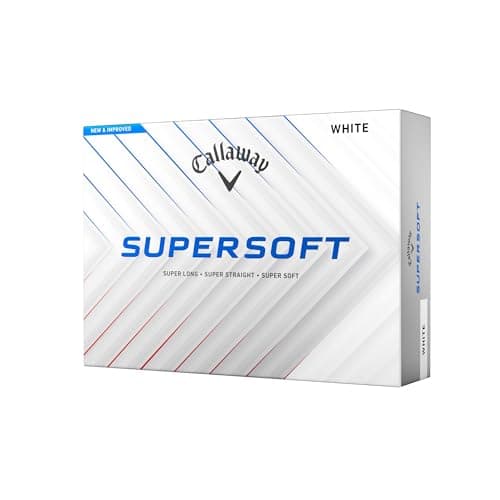
Callaway Callaway Supersoft
Callaway Supersoft

The value default. Very low compression, very soft, and it goes straight for most people.

Slow-to-moderate swings
7.6
$26.97Amazon
02
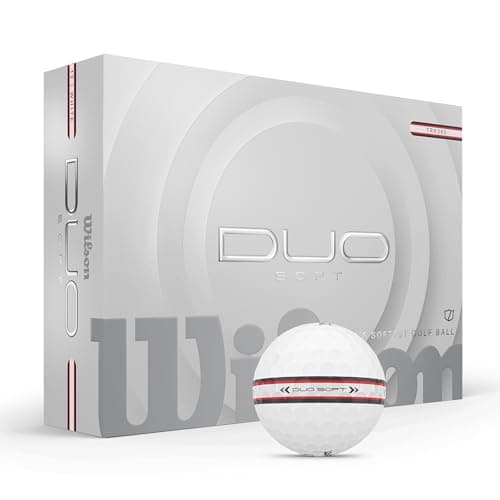
Wilson Wilson Duo Soft
Wilson Duo Soft

About the lowest compression in golf — the softest-feeling ball for the slowest swings.

The slowest swing speeds
7.2
$24.99Amazon

#ad · Live prices from the Amazon Product API, as of Jul 31, 2026. Where we have no verified live price, we show none — we would rather leave a gap than print a number that has rotted.

In detail

The picks, in full

01
Callaway Callaway Supersoft

Slow-to-moderate swings

Callaway Supersoft

2-pieceIonomer coverVery low compressionValue tier
7.6/10

The value default. Very low compression, very soft, and it goes straight for most people.

Distance
8
Greenside spin
5
Feel
8
Durability
8
Value
9

Pros

  • One of the lowest compressions in golf — easy to compress for a slower swing, which is where distance actually comes from for most amateurs
  • Straight ball flight that flatters a slice or hook
  • Priced so losing a few doesn't sting

Cons

  • The ionomer cover can't produce tour-level greenside spin — it releases more on chips and pitches
  • Very soft feel isn't for everyone; some players want more click

Skip this if…

you're a low handicapper whose short game lives on one-hop-and-stop spin. The soft cover releases instead of biting — a urethane ball is the right tool for you even though it costs more.

$26.97View on Amazon

Price as of Jul 31, 2026. Prices change — Amazon's is the one that counts.

#ad · we may earn a commission from this link to Callaway Supersoft

02
Wilson Wilson Duo Soft

The slowest swing speeds

Wilson Duo Soft

2-pieceIonomer coverUltra-low compressionValue tier
7.2/10

About the lowest compression in golf — the softest-feeling ball for the slowest swings.

Distance
7
Greenside spin
4
Feel
9
Durability
7
Value
9

Pros

  • One of the lowest compression ratings on the market, which a genuinely slow swing can compress where a firm ball just sits there
  • Extremely soft feel off putter and irons
  • Value pricing

Cons

  • The soft, low-spin design that helps a slow swing costs you greenside control
  • Faster swings can over-compress it and lose the benefit

Skip this if…

your swing speed is average or above. Above roughly 90 mph of driver speed you'll compress this too easily and give up control for a softness you didn't need. Play a mid-compression ball instead.

$24.99View on Amazon

Price as of Jul 31, 2026. Prices change — Amazon's is the one that counts.

#ad · we may earn a commission from this link to Wilson Duo Soft

How we ranked this

We don't run a testing lab — and we say so

We compiled published manufacturer specifications, official standards and aggregated owner reviews, computed the running costs the big test-labs leave out, and scored each pick against a published rubric. The scores are judgments from documented research — they are notlab measurements we took, because we don't have a lab and we're not going to pretend we do. You can check every number we publish.

Questions

Frequently asked

Is the Wilson Duo Soft or Callaway Supersoft softer?
The Duo Soft is the softer, lower-compression ball — it sits at about the lowest compression on the market, which is why it suits the slowest swings. The Supersoft is also very soft but a touch higher in compression, which makes it a little more forgiving of a swing with some speed.
Which is better for a slow swing speed?
For a genuinely slow swing — a driver comfortably under about 85–90 mph — the Duo Soft’s ultra-low compression is the better match, because it flattens where a firmer ball just sits there. For a slow-to-moderate swing, the Supersoft is a bit more versatile. Both are covered in the slow-swing-speed roundup.
Do either of these balls spin around the green?
Not like a urethane tour ball. Both have soft ionomer covers that release more on chips and pitches, which is the normal trade for a soft, low-compression value ball. If your short game genuinely needs greenside bite, step up to a urethane ball instead.

Keep reading

Receipts

Sources

We do not run a testing lab, and we do not pretend to. Every spec number here comes from a manufacturer's published sheet or an official standard, cited above. Where we could not verify something, we say so on the page rather than quietly leaving it out. Read our full method.