The best golf clubs under $500 depend on a question the price tag doesn’t ask: is this your first bag, or your fifth? If you’re starting out, $500 buys a genuinely good complete set— the Wilson Profile SGI covers the whole bag, from a real brand, and still leaves change. If you already own clubs, spreading $500 across a whole new set is the worst thing you can do with it; concentrating it on the one club that’s actually costing you shots — a forgiving driver, an easier set of irons, a hybrid to replace the long irons you hate, or a wedge that stops the chunked chip — will lower your scores far more. Below are six ways to spend under $500 well, ranked, each with a live price and an honest “skip this if.”
What $500 actually buys in golf clubs
$500 sits on an interesting line in golf. It’s enough for a complete, current, brand-name beginner set with money to spare — everything from driver to putter, plus a bag, in one box. It’s also enough for one excellent single club: a current game-improvement driver, a full set of super-game-improvement irons, or two or three specialist clubs. What it is notenough for is a full bag of individually-bought premium clubs — a single premium driver alone can eat the whole budget. So the honest framing isn’t “which $500 of clubs is best,” it’s “what’s the best thing to do with $500,” and the answer forks depending on where you are. Our how much to spend on golf clubs guide walks the whole budget ladder; this page is the $500 rung.
First bag or upgrade? That’s the whole decision
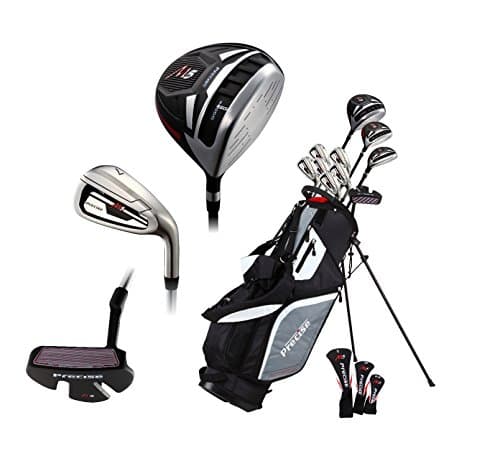
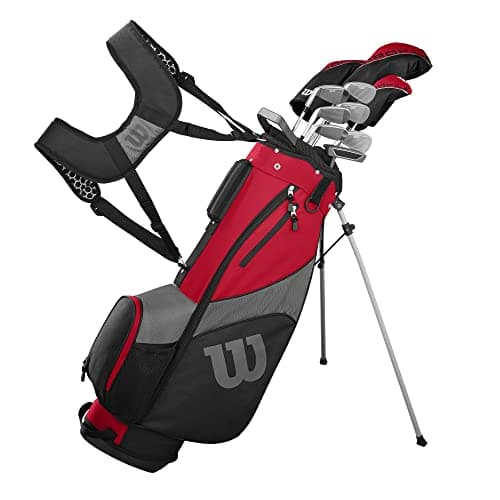
If this is your first set, buy a complete set and stop.A set like the Wilson Profile SGI or the cheaper Precise M5 gets you every club you need, matched, in one purchase, for well under the ceiling — and it’s the correct buy until you can consistently strike it. Trying to assemble a first bag one premium club at a time is how you spend $500 and end up with a driver and no irons. See the best beginner sets, ranked by who each suits, and what clubs a beginner actually needs for how few it takes to play.
If you already own a set, do the opposite.Spend the whole $500 on the single weakest link. For most golfers that’s the driver — the club that decides whether you’re playing from the fairway or the trees — or the long irons, the hardest clubs in the bag and the easiest to replace with a hybrid. Buying a whole new set to get one better club means paying for eleven clubs you didn’t need to replace. Concentrate, don’t spread.
How we chose these (the criteria)
We ranked on four things that matter when a hard budget is the constraint, in this order:
- Forgiveness per dollar.At this budget the buyer is almost always a higher handicapper or improver, so the clubs that hide a mishit — game-improvement and super-game-improvement heads — earn their place over anything that rewards a tour swing.
- Completeness of the answer. A complete set that covers the whole bag under the ceiling is worth more to a first-time buyer than a single brilliant club. For upgraders, we favored the clubs that fix the most common, most scoring-relevant faults.
- Real, current availability under $500.Every ranked pick is a currently-sold club whose live price sits under the ceiling as we publish — not a last-year clearance ghost or a “was $500” listing. We show the live price on each; check it before you buy, because prices move.
- Room to grow, or a job well done.Where two clubs were close, we preferred the one from a real brand with resale value and fitting options — you can trade it in — over a no-name that’s worth nothing the day it arrives.
We did not rank on feel or workability, because at this price and for this buyer, forgiveness and value matter more, and pretending a budget club feels like a tour club would be dishonest. Scores are judgments from published specs and aggregated owner reviews against our rubric, not lab measurements — we don’t run a lab.
The complete-set answer: the whole bag, under budget
For a first bag, the two picks at the top of this list are the entire recommendation. The Wilson Profile SGIis our winner: a super-game-improvement set built to get a beginner’s ball airborne and pointed straight, sold in fitted lengths so a taller or shorter player isn’t stuck with one-size clubs, and priced comfortably under $500. The Precise M5 does the same job for less if the budget is tighter — just order the exact hand and height it ships in, because it’s sold in fixed configurations and the wrong one is unusable. Either way, a complete set is the correct first purchase, and the money you save versus buying clubs individually is money for balls, a glove and lessons, which will do more for your scores than any single club.
The upgrade answer: one club, chosen well
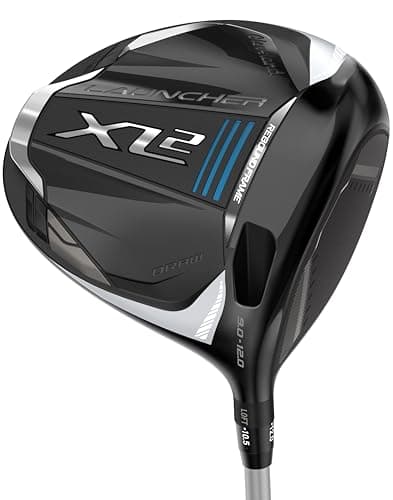
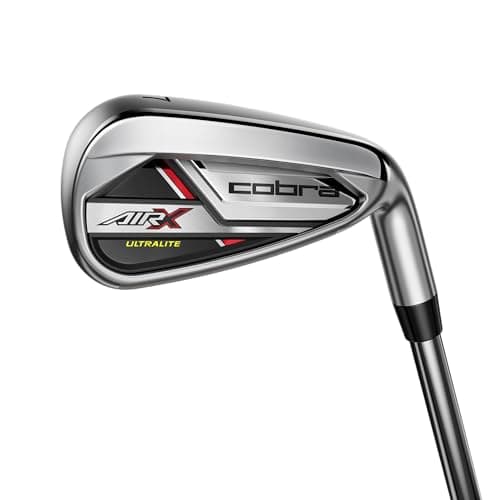
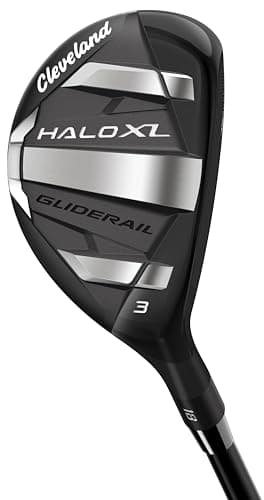
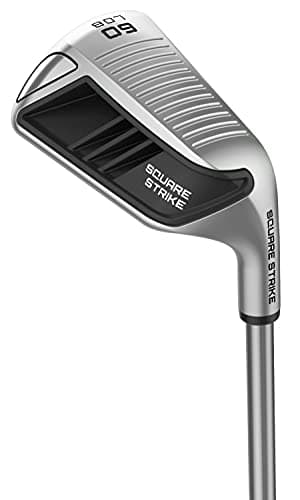
If you already play, the other four picks are where $500 goes furthest. The Cleveland Launcher XL 2 driveris the single upgrade that changes the most rounds — the biggest forgiveness gain for a developing swing, and it fits the budget several times over. If your long irons are the problem, the Cleveland Launcher Halo XL hybridreplaces the hardest clubs in the bag with the easiest, for around two hundred dollars. If it’s your whole iron set holding you back, the Cobra Air-X 2 irons are the best full set that sneaks in under the ceiling — a lightweight, draw-biased, slice-fighting set — though at a live price hovering right at the $500 line, check today’s number before you commit. And if you’re losing shots around the green, the Square Strike wedge is the cheapest way to save real strokes: a specialist anti-chunk club that makes the short chip almost foolproof, for the price of a few sleeves of balls.
Skip this: don’t buy a whole new set to replace one club
The tempting move when you’ve outgrown a starter set is to buy another complete set — it feels like the natural next step. For most improving golfers it’s a mistake. Once you can strike the ball, you don’t outgrow every club at the same rate: the wedges, putter and short irons in a decent set stay useful long after the driver and long irons feel short. Buying a second complete set to fix one or two clubs means paying again for the ones that were still fine. Spend the $500 on the actual weak link instead — the driver, the long-iron replacement, or the wedge — and you’ll get more improvement for the money. The one time a second set makes sense is a genuine super-game-improvement set for someone still fighting to get the ball airborne; otherwise, concentrate the budget.
The real budget math: where $500 goes furthest
The reason “first bag or upgrade” decides everything is that a golf set is not one purchase — it’s fourteen, and they don’t wear out or hold you back at the same rate. A beginner needs breadth: any club in every slot beats a great club in half the slots, which is why a complete set is unbeatable value for a first bag. An improver needs depth in one place: the gap between a good driver and a bad one is worth more shots than the gap between a good 8-iron and a bad one, so the same $500 buys more improvement when it’s aimed at a single club. Match the shape of the spend to the shape of your need. Our how much to spend guide runs the full ladder from starter set to fitted bag.
When used beats new under this budget
$500 of new clubs is not always the best $500 of clubs. A one- or two-generation-old premium driver or iron set, bought used, can cost the same as a new budget club and outperform it — the technology in golf clubs moves slowly, and last year’s flagship is this year’s bargain. If you’re an upgrader and you’re patient, the used market is where a fixed budget stretches furthest, especially on drivers and irons. We lay out exactly when used is the smart buy, and when new is worth it, in used vs new golf clubs. For a first-timer, new complete sets still win on simplicity and matched components; for an improver chasing one great club, don’t ignore used.
The cheapest upgrade of all: check your grips first
Before you spend anything, hold your current clubs. If the grips are hard, shiny or slick, you may not need new clubs at all — you need new grips. A full-bag regrip costs a fraction of any club on this page and can transform how the clubs you already own feel and hold; it ’s the single most cost-effective thing you can do to a set. It won’t add distance, but it will stop the subtle grip-pressure problems a worn grip causes. Read when to replace your gripsbefore you assume the clubs are the problem — sometimes the best way to spend under $500 is to spend $40 and keep the rest.