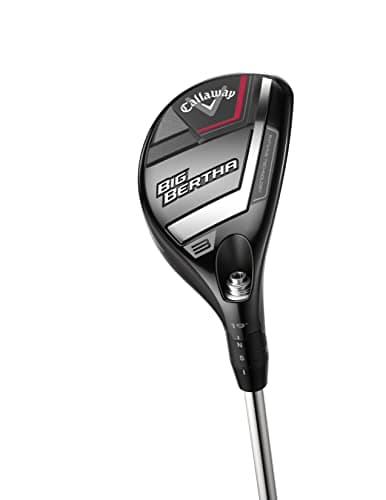
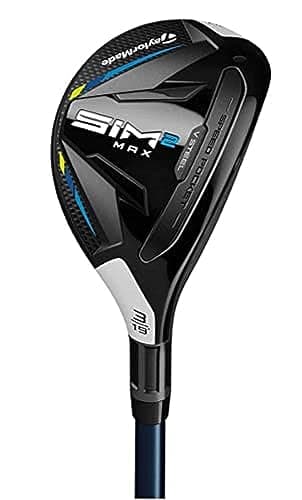
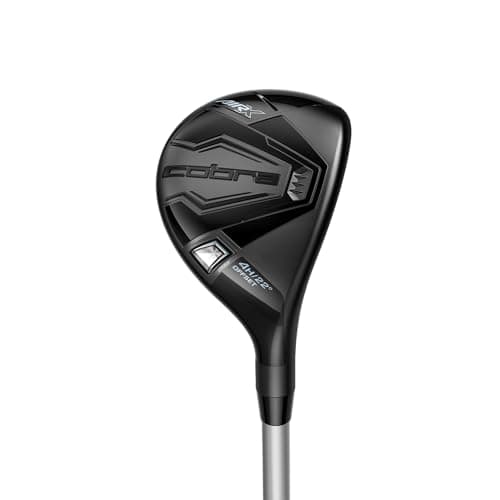
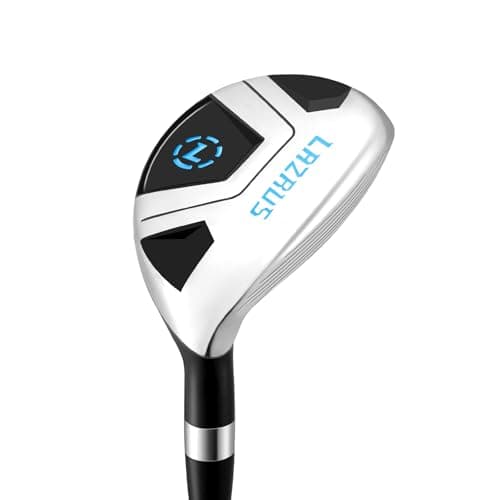
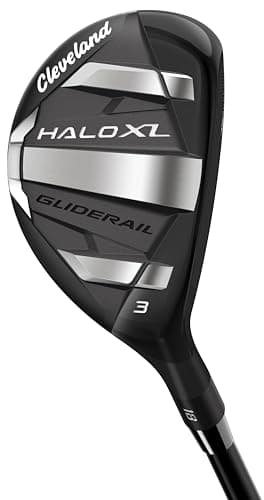
For most golfers the best hybrid is a Cleveland Launcher Halo XL, and the reason is the whole point of the club: a hybrid exists to replace the clubs almost nobody hits well — the long irons — and a big, high-launching game-improvement head does that better than anything else here. If there is one easy upgrade that makes a real difference to a mid-to-high handicapper, it is pulling the 3, 4 and 5 irons out of the bag and putting hybrids in their place. The long iron is the hardest club in golf to hit; the hybrid is the club that makes that shot playable.
How we ranked these
Hybrids are a category where the marketing chases tour pros and the buyer needs the opposite of a tour club. So we ranked on the three questions that actually decide the purchase, in this order:
- How easily does it launch, and how much does it forgive? A hybrid earns its place by getting a long-iron-distance shot up in the air off any lie. Launch and forgiveness are the whole job, and they decide the pick for most people.
- Does it fight your miss? The golfer reaching for a hybrid is usually fighting a slice or a low, weak long iron. An offset, draw-leaning head fixes the first; a high-launch head fixes the second. The right hybrid matches your actual miss.
- What does it honestly cost? A single hybrid ranges from budget to premium-brand money, and you may want two or three. We priced the real job — the loft, or the two lofts, that fill the gap — not just the cheapest sticker.
We did not rank on tour usage, looks, or how compact the head is, because none of those help the golfer this club is for. And we did not test these in a lab — we compiled the manufacturers’ own published design claims and stated which golfer each head is built for. Every claim in the picks below is attributed; every source is listed at the bottom of the page.
What a hybrid actually replaces
A hybrid is sold by loft, and the loft tells you which long iron it takes out of the bag. Match the number roughly like this, and remember it is the loft that matters, not the number stamped on the sole:
| Hybrid loft | Replaces roughly | Who reaches for it |
|---|
| 18-19° (2-3 hybrid) | 3 iron / 5 wood | Faster swings wanting a long, stopping approach club |
| 21-22° (4 hybrid) | 4 iron | The most-bought hybrid — the long iron most people miss |
| 24-25° (5 hybrid) | 5 iron | Slower swings replacing the whole top of the iron set |
| 27°+ (6 hybrid and up) | 6 iron and up | Higher handicaps going to a full hybrid-iron combo set |
Most golfers should start with a 4 hybrid (around 21°), because the 4 iron is the club that leaves the bag first. If you already avoid your 5 iron too, add a 5 hybrid and keep the lofts about three to four degrees apart so you do not leave a gap in your distances. The clubs above are listed at specific lofts, but every one is sold across the range — buy the loft that fills your gap, not the one in the photo.
Game-improvement or players’ hybrid — pick the honest one
Like irons, hybrids divide into two camps. Game-improvement heads are larger, with a lower, deeper center of gravity and often some offset — they launch high, forgive mishits and, frequently, lean the ball left to fight a slice. Players’ hybrids are more compact, spin a little less, and let a good ball-striker flight and shape the shot at the cost of forgiveness. The honest truth is that almost everyone buying a hybrid wants the game-improvement head, which is why four of the five picks here are exactly that. Cleveland, Callaway and Cobra all build the heads on this list around forgiveness and launch; the TaylorMade rescue is the one that leans a touch more towards control for a slightly better player.
Skip this: a 2- or 3-hybrid you can’t launch
The mistake to skip is buying the strongest, lowest-lofted hybrid because it looks like the longest club. An 18° 2-hybrid needs real clubhead speed to launch, and in slower hands it flies low and runs out exactly like the long iron you were trying to replace — so it solves nothing. If your swing is moderate or slow, the honest longest club in your bag is a lofted fairway wood or a higher-lofted hybrid you can actually get airborne, not a driving iron in disguise. Buy the loft you can launch, not the one with the smallest number.
The other thing to skip: paying premium-brand money for a head that fights your swing. An offset, draw-biased hybrid is the right answer for a slice and the wrong answer for a player who already draws the ball, however good the badge. There is no best hybrid in the abstract — there is only the loft and the head that suit your swing speed and your miss, which is why this list ranks five of them instead of naming one.
How many hybrids, and which lofts
Start with one, in the loft that replaces the long iron you like least — for most golfers that is a 4 hybrid around 21°. Hit it for a few rounds before adding another; many players find one hybrid quietly becomes the club they trust from the fairway, the rough and off the tee on a tight hole. If you skip more than one long iron, build a small ladder: a 4 and a 5 hybrid about three to four degrees apart, so your distances step down evenly and you never have two clubs that go the same yardage. Higher handicaps can go further and run a hybrid-iron combo set, replacing everything from the 4 iron up — the same logic that drives the forgiving sets in our best irons for beginners roundup.
What a hybrid actually costs
The honest range is wide. A value-brand single hybrid sits in the budget tier — cheap enough to try the concept without commitment — while a current major-brand rescue runs into the low hundreds, and a two-hybrid ladder from a premium brand is a real spend. The good news is that this is one category where a prior-generation or value head gets you most of the performance: the physics of a big, low-CG hybrid have not changed much in years, so last season’s model or a budget brand launches nearly as high as this year’s. Live prices for each pick are shown on the cards above and refreshed daily — we do not print a remembered number, so when a price cannot be verified you will see “check price” instead of a stale figure. For where a hybrid ranks against the rest of the bag, our guide to how much to spend on golf clubs puts it in context.
Hybrid, fairway wood or long iron — which club wins
A hybrid sits between a fairway wood and a long iron, and it beats both for most amateurs. It launches higher and lands softer than a long iron, so it actually holds a green; it is shorter, heavier and more controllable than a fairway wood, so it is easier to hit from the rough and off a tight lie. Keep a lofted fairway wood if you want maximum distance from the fairway and off the tee — our best fairway woods roundup ranks those heads, and makes the case that most amateurs should be carrying a 5- or 7-wood rather than a 3 — keep a long iron only if you are a consistent ball-striker who wants a lower, more workable flight, and let a hybrid cover the ground in between, which for most bags is the 3, 4 and 5 iron slots.
Shaft and flex — match it to your speed
Hybrids come in graphite almost across the board, and the flex matters more than the badge. A shaft that is too stiff for your speed keeps the ball low and robs you of the launch that makes a hybrid worth carrying; too soft and it can fly high and left. Slower swings should look hard at the lightest builds — the featherweight, draw-biased Cobra Air-X hybrid here is aimed squarely at that golfer — while a faster player wants a stiffer, heavier shaft for control. The trade-off is the same one we lay out for the rest of the bag in graphite vs steel shafts; with hybrids the choice is which graphite, not whether to play it.