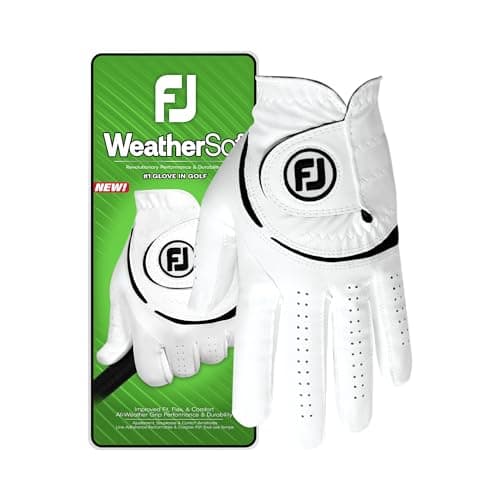
For most golfers the best glove is a FootJoy WeatherSof, and the reason is unglamorous: it grips, it breathes, it lasts, and it costs a fair price. The glove is the only thing between your top hand and the grip — the one connection you rely on to hold the club without strangling it — and a slick, worn-out glove quietly wrecks that hold, adding tension to a swing you are trying to keep loose. A fresh glove is one of the cheapest fixes in golf, and it changes how every club in the bag feels.
How we ranked these
Gloves are a category where the marketing and the buying decision barely overlap. The ads sell leather grades and tour usage; buyers actually need to answer three questions, and we ranked on those, in this order:
- What does the glove need to survive? Heat, sweat, rain, and how often you play. The material decides this, and for most people it decides the pick.
- How much feel do you want? A thin cabretta glove reports the grip and the strike; a durable synthetic mutes that a little. It is a genuine trade against durability, not a free upgrade.
- What does it cost to stay in gloves?A glove is a consumable, not a one-time buy. A “cheap” premium glove that glazes over in a month is not cheap. We priced the habit, not the part.
We did not rank on color, on which tour player wears what, or on leather snobbery, because none of those survive contact with a real buying decision. And we did not test these in a lab — we compiled the manufacturers’ own published material claims and the equipment rules, and said which golfer each design is built for. Every claim in the picks below is attributed; every source is listed at the bottom of the page.
Leather, synthetic or rain — the only material choice that matters
Ignore the model names. There are three real families, and picking the right one gets you most of the way to the right glove.
| Family | What it feels like | Who it is for |
|---|
| Premium cabretta leather (Players, StaSof) | Thin, soft, maximum feel — and delicate | Feel players in fair weather who will look after a glove |
| Synthetic / hybrid (WeatherSof, Weather Spann) | Durable, breathable, a touch less soft | Most golfers, most of the time; sweaty hands and hot rounds |
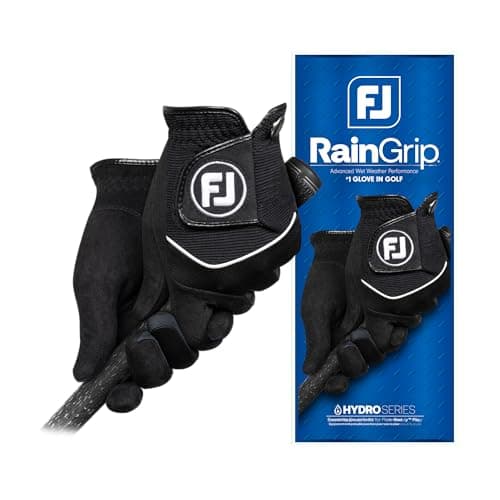
| Rain / knit (RainGrip pair) | Grips harder as it gets wetter; vague when dry | Playing in the rain — kept in the bag for the day it turns |
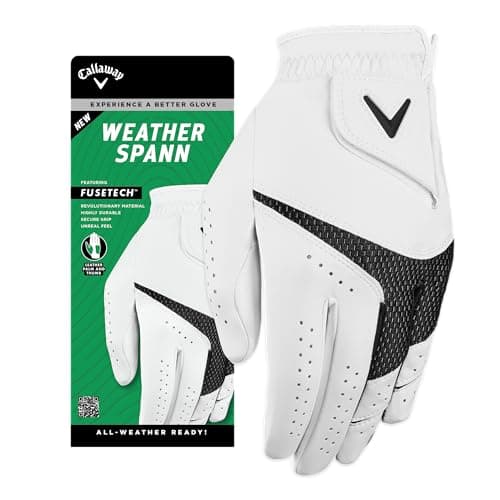
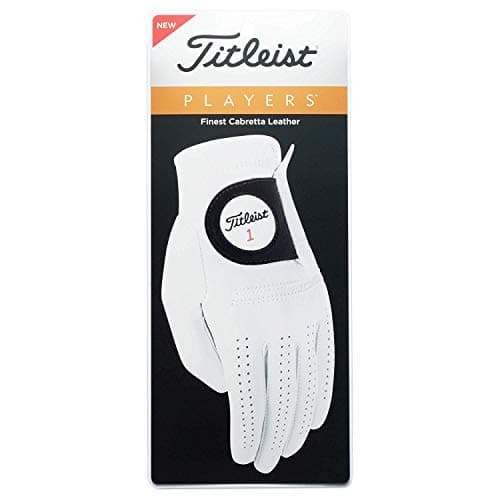
FootJoy builds the WeatherSof around a “FiberSof” leather-and-synthetic blend it describes as “the most advanced combination of a consistent fit, soft feel and a secure grip” — the standard all-rounder. Titleist builds the Players from “the finest cabretta leather with the thinnest feel,” which is a feel-first glove for a better ball-striker. Callaway builds the Weather Spann from a durable “FUSETECH” synthetic with micro-ventilation, aimed at all-weather life for the least money. Those three claims describe three genuinely different products pointed at three genuinely different golfers. Pick the one that describes your golf.
Which hand — and why almost everyone gets it half-right
A right-handed golfer wears one glove, on the lefthand — the top hand on the grip. A left-handed golfer reverses it and wears the glove on the right. That is the standard because the top hand does most of the holding while the bottom hand stays more relaxed, and a bare bottom hand keeps feel on and around the greens. So when a listing reads “worn on left hand,” that is the glove for a right-handed player. The one exception on this page is the RainGrip, which is sold as a pair — in the rain you want both hands gripping, so you wear two. Buy the hand that matches you, and do not pay pair money expecting one glove, or single-glove money expecting two.
Size is the decision most golfers get wrong
A glove that is too big bunches across the palm and slides on the club; one that is too small splits at the seams and stops you closing your hand. It should fit like a second skin — snug across the palm, no loose fingertips, the closure doing up without straining. Most brands offer Cadet sizes (shorter fingers, a wider palm) alongside the regular run: if your fingers are short relative to your palm, a Cadet fits better than sizing up. Try your normal size in the brand you are buying, because leather stretches a little with wear and synthetic barely does — a cabretta glove that feels snug new is about right, while a synthetic wants to fit from the first round.
Skip this: wearing one glove into the ground
The mistake to skip is the false economy of a single dead glove. A glove is a consumable — the palm and the heel pad glaze, the leather hardens, the tack fades, and you start gripping tighter to compensate, which is the exact tension you were trying to keep out of the swing. Cheap gloves kept in rotation beat one expensive glove worn smooth. Keep two or three going, let each dry fully between rounds (a wet glove dried hard is a ruined glove), and replace on wear rather than on the calendar. That, more than anything, is why a durable synthetic in a multipack is smarter money for most golfers than a single premium cabretta glove babied to death.
The other thing to skip: buying a premium leather glove for conditions that will destroy it. Cabretta is a feel-first material, and heat, sweat and rain harden it fast. If that is your golf, a synthetic like the Weather Spann or a proper rain glove is not a compromise — it is the right tool, and it will still feel good on the last hole. There is no best glove in the abstract; there is only the glove that suits the hands wearing it and the weather it plays in, which is why this list ranks six of them instead of naming one.
Leather vs synthetic: what you are actually paying for
Here is the honest arithmetic. A premium cabretta glove costs several times what a synthetic does, and it wears faster — so the real cost per round is higher still. What the extra money buys is feel: the thinnest cabretta reports the grip and the strike in a way synthetic cannot quite match, which is exactly what a better ball-striker is paying for. What synthetic buys is durability and breathability for very little. There is no universally “best” — a feel player who plays in fair weather and looks after a glove is right to buy cabretta, and a golfer who sweats, plays in all weather, or simply gets through gloves quickly is right to buy synthetic. Live prices for every pick are shown on the cards above and refreshed daily; we do not print a remembered number, so when a price cannot be verified you will see “check price” instead of a stale figure. For where a glove ranks against every other spend, our guide to how much to spend on golf clubs puts it in context.
The grip under the glove matters as much as the glove
A glove and a grip are the two halves of the same job — the connection between your hands and the club — and a fresh glove on a slick, worn grip is only half a fix. If you find yourself holding on tighter than you used to, it is as often the grip as the glove. Fresh grips are the cheapest genuine upgrade in golf: we rank them by hands and weather in the best golf grips roundup, and cover the signs a grip is finished in when to replace your golf grips. Sort both the glove and the grip and the whole club feels new for the price of a sleeve of balls.
How to make a glove last
Three habits roughly triple a glove’s life. First, rotate — try not to play consecutive rounds in the same glove, and let each one dry fully in between. Second, dry it flat and slowly, not balled up in a side pocket and not on a radiator, because heat is what hardens leather. Third, on a hot day, peel it off between shots so sweat does not soak the palm. A glove that is allowed to dry naturally and rest holds its tack far longer than one left wadded up wet. None of this applies to the RainGrip, which is built to be wet — but it applies to every leather and synthetic glove on this list. For the wear signs that mean a glove is genuinely finished — and the quick test for whether it is the glove slipping or the grip underneath — see when to replace a golf glove.
The rules bit: is a glove even legal?
Yes, with room to spare. Under the Rules of Golf a player may wear a plain glove to help grip the club — gloves are explicitly permitted equipment. The only real limits are that the glove must be “plain” (no built-in aids that do more than help you hold the club normally) and otherwise conform to the general equipment rules. Every glove on this page is a standard, plain playing glove and legal for competition; you only need to think about this if you are tempted by something with molded aids or training attachments built in.