Skip to content
Divot&Draw

The Distance · Rangefinders & GPS

The Best Budget Golf Rangefinders

Cheap lasers that nail the one job that matters — a fast, accurate number to the flag. Ranked by value, with the slope-legal question and the one to skip.

By Stephen V.Updated How we rank
#ad

We earn a commission when you buy through our Amazon links, at no extra cost to you. It never changes our rankings — and we'll tell you when the cheaper ball or club is the better buy. How this works.

The best budget rangefinder is the cheap laser that locks the flag fast enough that you trust the number, and hands it the same job a laser three times the price would — no more, no less. For most golfers that laser is the TecTecTec VPRO500: a genuine slope-compensating laser with 6x glass and a listed one-yard accuracy, at a price low enough that it can live at the bottom of a bag without a second thought. The rest of this list is the handful of budget lasers worth buying instead, and the one step up worth stretching for if your budget flexes.

How we ranked these

A rangefinder has exactly one core job — put an accurate number on whatever you aim at, quickly enough that you commit to the shot — and a budget laser lives or dies on doing that job without the price creeping toward the premium field. So we ranked on four questions, in this order:

  1. Does it nail the core job? A fast, confident lock and a listed one-yard accuracy to the flag. If a cheap laser is slow to grab the pin or wobbles on the read, nothing else about it matters.
  2. Can it be made tournament-legal? Either a slope toggle you can switch offfor a counting round, or no slope at all so there’s nothing to disable. A budget laser with slope you can’t cleanly turn off is a liability the day you play an event.
  3. Is the read stable and clear?A steady view, legible optics, and ideally some pin-lock feedback — a pulse or vibration that tells you it took the reading.
  4. What does it honestly cost? The whole point of the category. We ranked the least money that buys the three things above, not the cheapest sticker regardless of whether it works.

We did not rank on magnification beyond the 6x these all share, on a maximum range you’ll never shoot, or on badge. And we did not test these in a lab — we compiled the manufacturers’ own published specs and stated who each laser is for. Every claim below is attributed; every source is listed at the foot of the page.

What you can safely skip under budget — and what you can’t

The good news about buying cheap here is that the thing that matters most — the yardage — is the thing budget lasers get right. A value laser rated to about a yard puts the same number on the same flag as a flagship; what you’re paying extra for at the top of the market is polish, not accuracy. So you can safely skip the features that don’t change the number: 7x magnification (6x is plenty for the distances you play), temperature-and-altitude compensation (a tour-player refinement most amateurs never see on the card), and the flashiest displays. None of those finds the flag any better on a par four.

What you should not skip, even on a budget, is a laser you can make tournament-legal and a read you can actually trust. A slope feature with no clean way to switch it off will sit you out of a counting round — or worse, get you penalised — so a budget laser needs either a real off-toggle or no slope at all. And a stable, lockable read matters more than any spec: a cheap laser that mis-reads or won’t settle on the pin is worse than no laser, because it hands you a confident wrong number. Those two things — legality and a trustworthy lock — are where even the cheapest pick has to deliver.

The picks, in order

The list runs from the cheapest real laser worth owning up to the one step-up we’d stretch for, and each row’s “best for” matters as much as its rank — the right budget laser is the one whose trade-offs match how you play, not simply the one at the top.

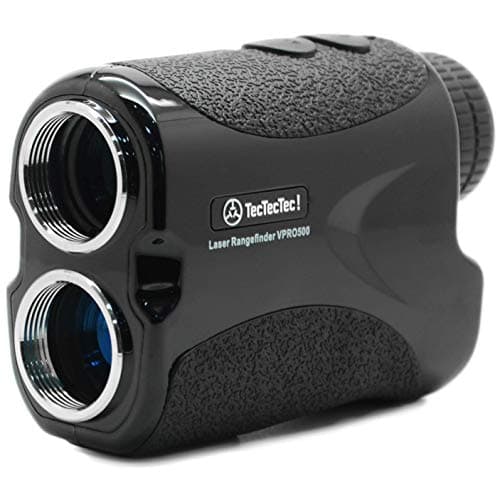
The TecTecTec VPRO500tops the list because it is the most laser for the least money: a real slope mode, 6x magnification and a listed one-yard accuracy, at a price that doesn’t sting. It gives up a magnetic mount and a lock-confirmation jolt, and its slope isn’t flipped by a quick external switch, so a tournament-legal mode is fiddlier — but for casual golf it is the value benchmark, and our full VPRO500 review covers exactly what you get and give up.

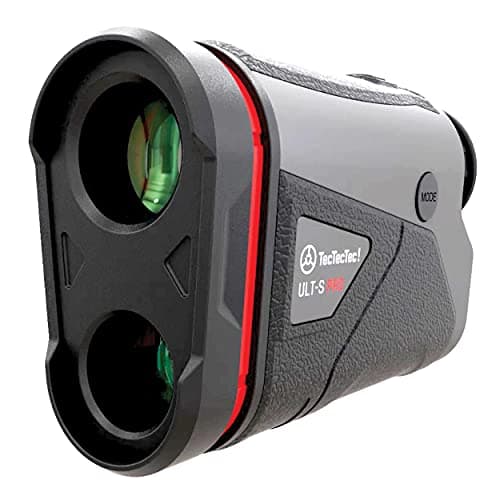
The TecTecTec ULT-S Proranks second because it adds the one premium trick that genuinely helps a budget buyer — optical image stabilization, which steadies the view for anyone whose hands shake on the lock — plus a switchable slope you flip via a pull-out faceplate. It costs a little more than the VPRO500 and, stabilization aside, doesn’t match a flagship on glass; but for shaky hands it’s the budget laser to beat, and it’s reviewed in full in our ULT-S Pro review.

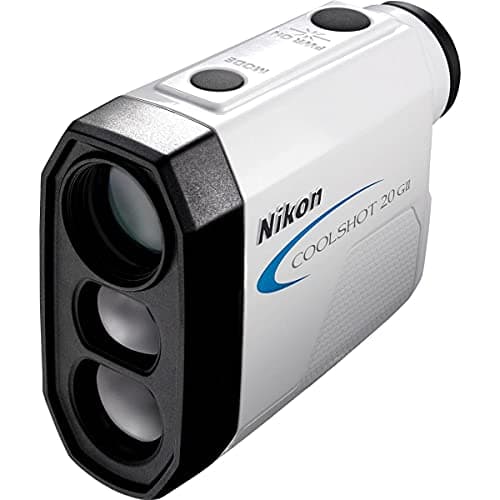
The Nikon Coolshot 20 GIIis third, and it’s the budget pick for anyone who plays competition. It has no slope function at all, which makes it always tournament-legal — nothing to switch off, nothing to forget — and Nikon’s multilayer-coated 6x optics and First Target Priority give a clean, bright read from one of the smallest, lightest bodies here (Nikon lists roughly 4.6 oz). The trade is deliberate: no slope means no elevation help in a practice round.

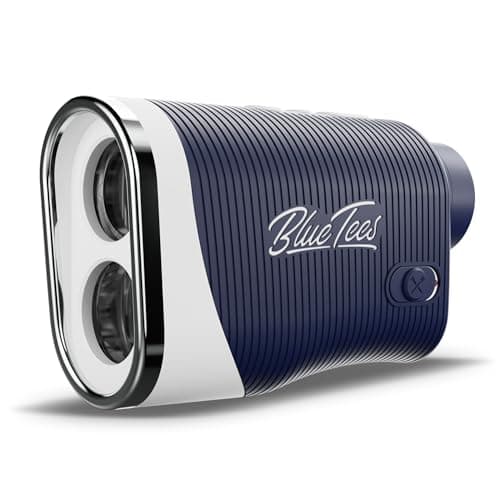
The Blue Tees Series 3 Max+sits fourth not because it’s worse — in features it’s the most complete value laser here — but because it costs a notch more than the rock-bottom TecTecTecs, which is what a budget ranking rewards. For that small step up you get a genuine slope switch you can flip off for the rules, built-in magnetic plates for the cart bar, and a pulse on a locked reading. If your budget stretches to it, it’s arguably the value laser to own, and it’s covered in our Series 3 review.

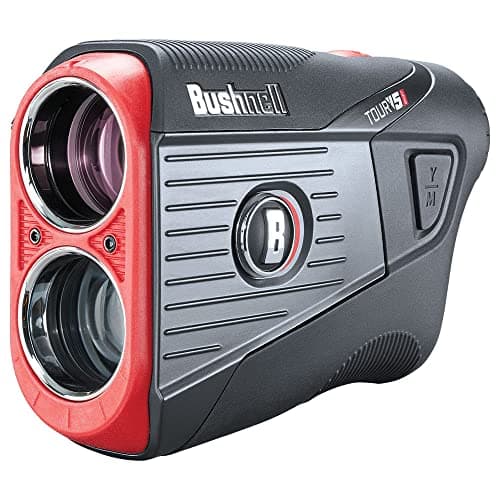
The Bushnell Tour V5 Shiftis the one worth stretching for. It isn’t a budget laser — it’s priced well above the field here — but it’s the step up most golfers who outgrow a value laser eventually buy: a fast visual-JOLT lock that flashes red the instant it grabs the flag, switchable slope, and the BITE magnet. If you know you’ll want the nicer instrument and the budget can flex, it’s the honest place the extra money goes; the head-to-head against the value picks is in the full rangefinder roundup.

Skip this: a no-name laser with no legal slope-toggle or a wobbly lock

The mistake to skip is the cheapest possible laser from a brand you’ve never heard of, sold on a big magnification number and a slope feature with no clean way to switch it off. Two things go wrong. First, if the slope can’t be reliably disabled, you can’t legally use the laser in any counting round — the elevation feature is a breach of the Rules of Golf, and a device you can’t switch to distance-only is one you have to leave in the bag on competition day (see are rangefinders legal). Second, and worse, is a wobbly, hard-to-lock read. A cheap laser that mis-reads — grabbing the trees behind the pin, or refusing to settle — hands you a confident wrong number, and a wrong number you trust is more damaging than no number at all. Spend a little more and buy one of the picks above, all of which lock cleanly and can be made legal, rather than the rock-bottom laser that does neither.

The short answer

Quick picks

#ProductBest forScorePrice
01
TecTecTec TecTecTec VPRO500 (Slope)
TecTecTec VPRO500 (Slope)

The budget laser that started the value category — real slope, a quick pin lock, and a price that doesn’t sting if it lives at the bottom of a golf bag.

The budget slope laser
7.6
$89.99Amazon
02
TecTecTec TecTecTec ULT-S Pro
TecTecTec ULT-S Pro

The value laser with the premium trick that matters most for shaky hands — optical image stabilization — plus switchable slope.

Steadier lock for unsteady hands
7.8
$149.99Amazon
03
Nikon Nikon Coolshot 20 GII
Nikon Coolshot 20 GII

The tiny, no-slope Nikon — always tournament-legal, genuinely pocketable, with the clean optics you’d expect from the name.

The always-legal compact laser
7.2
$183.99Amazon
04
Blue Tees Blue Tees Series 3 Max+
Blue Tees Series 3 Max+

The value laser we’d point most golfers to first — a slope switch, 6x glass, a real magnet and a pulse lock, for a lot less than the big brands.

The best value laser
8.0
$199.98Amazon
05
Bushnell Bushnell Tour V5 Shift
Bushnell Tour V5 Shift

The laser most serious players actually end up buying — a fast, trustworthy lock, honest switchable slope, and a magnet that sticks to the cart bar.

The best all-round laser
8.0
$259.99Amazon

#ad · Live prices from the Amazon Product API, as of Jul 31, 2026. Where we have no verified live price, we show none — we would rather leave a gap than print a number that has rotted.

In detail

The picks, in full

01
TecTecTec TecTecTec VPRO500 (Slope)

The budget slope laser

TecTecTec VPRO500 (Slope)

Laser6x magnificationSlope modeBudget tier
7.6/10

The budget laser that started the value category — real slope, a quick pin lock, and a price that doesn’t sting if it lives at the bottom of a golf bag.

Accuracy
8
Speed/UX
7
Features
6
Ergonomics
8
Value
9

Pros

  • A genuine slope-compensating laser for a fraction of a Bushnell’s price
  • 6x magnification and a 1-yard rated accuracy — the specs that decide a yardage are all present
  • Light, simple and cheap enough that losing or knocking it about isn’t a wallet event

Cons

  • No magnetic mount and no lock-confirmation jolt, so you steady it yourself and trust the reading
  • Slope isn’t flipped by a quick external switch the way the premium units are, so getting to a tournament-legal mode is fiddlier

Skip this if…

you play a lot of competition golf and want to switch slope on and off between shots. Its slope is legal only with the feature disabled, and there’s no convenient toggle — a switch-equipped laser like the Blue Tees or Tour V5 Shift is worth the step up for you.

$89.99View on Amazon

Price as of Jul 31, 2026. Prices change — Amazon's is the one that counts.

#ad · we may earn a commission from this link to TecTecTec VPRO500 (Slope)

02
TecTecTec TecTecTec ULT-S Pro

Steadier lock for unsteady hands

TecTecTec ULT-S Pro

Laser6x magnificationImage stabilizationSlope (switchable)
7.8/10

The value laser with the premium trick that matters most for shaky hands — optical image stabilization — plus switchable slope.

Accuracy
8
Speed/UX
8
Features
7
Ergonomics
8
Value
8

Pros

  • Optical image stabilization steadies the view, which is the single biggest help for anyone who struggles to hold a laser still on the flag
  • Slope toggles via a pull-out faceplate, so it drops into a tournament-legal mode
  • 6x magnification and a listed fast read — mid-tier performance without a top-tier price

Cons

  • Stabilization aside, it doesn’t match a Pro X3+ on glass, display brightness or elements compensation
  • Uses a CR123 battery rather than the rechargeable cell some rivals now include

Skip this if…

you already hold a rangefinder rock-steady. Stabilization is the whole reason to pay over a plain VPRO500 or Blue Tees; if a jittery view isn’t your problem, you’re paying for a fix you don’t need.

$149.99View on Amazon

Price as of Jul 31, 2026. Prices change — Amazon's is the one that counts.

#ad · we may earn a commission from this link to TecTecTec ULT-S Pro

03
Nikon Nikon Coolshot 20 GII

The always-legal compact laser

Nikon Coolshot 20 GII

Laser6x magnificationNo slope (tournament-legal)~4.6 oz compact
7.2/10

The tiny, no-slope Nikon — always tournament-legal, genuinely pocketable, with the clean optics you’d expect from the name.

Accuracy
8
Speed/UX
7
Features
5
Ergonomics
9
Value
7

Pros

  • No slope function at all, so it is always tournament-legal — nothing to switch off or forget
  • One of the smallest and lightest lasers here (Nikon lists roughly 4.6 oz), easy to pocket
  • Nikon’s multilayer-coated 6x optics give a bright, clear view, and First Target Priority favors the flag over the trees behind it

Cons

  • No slope means no practice-round elevation help — a deliberate trade, but a real limitation if you want it
  • No magnetic mount, and only IPX4-rated rainproofing rather than full waterproofing

Skip this if…

you want slope for practice or for the courses you play casually. This model deliberately omits it; if elevation-adjusted numbers appeal, a switchable-slope laser gives you both modes in one unit.

$183.99View on Amazon

Price as of Jul 31, 2026. Prices change — Amazon's is the one that counts.

#ad · we may earn a commission from this link to Nikon Coolshot 20 GII

04
Blue Tees Blue Tees Series 3 Max+

The best value laser

Blue Tees Series 3 Max+

Laser6x magnificationSlope switchMagnetic + pulse lock
8.0/10

The value laser we’d point most golfers to first — a slope switch, 6x glass, a real magnet and a pulse lock, for a lot less than the big brands.

Accuracy
8
Speed/UX
8
Features
7
Ergonomics
8
Value
9

Pros

  • A genuine slope switch you can flip off to comply with the rules — the premium feature at a value price
  • Built-in magnetic plates hold it to a cart bar, which the cheaper lasers skip
  • Pulse vibration on a locked reading and 6x magnification cover the fundamentals well

Cons

  • The pulse fires on almost any ranged object, not specifically the flag, so it confirms a reading rather than proving it’s the pin
  • Glass and display aren’t quite as crisp as a Bushnell’s at longer range

Skip this if…

you want the absolute fastest, most decisive flag lock at distance and the clearest optics — that’s where the Tour V5 Shift and Pro X3+ still pull ahead. For most golfers, though, this does the same job for far less.

$199.98View on Amazon

Price as of Jul 31, 2026. Prices change — Amazon's is the one that counts.

#ad · we may earn a commission from this link to Blue Tees Series 3 Max+

05
Bushnell Bushnell Tour V5 Shift

The best all-round laser

Bushnell Tour V5 Shift

Laser6x magnificationSlope (switchable)BITE magnetic mount
8.0/10

The laser most serious players actually end up buying — a fast, trustworthy lock, honest switchable slope, and a magnet that sticks to the cart bar.

Accuracy
9
Speed/UX
9
Features
8
Ergonomics
8
Value
6

Pros

  • Visual JOLT flashes a red ring the instant it locks the flag, so you trust the number instead of re-shooting it
  • Slope toggles off with the Shift switch, so the same unit is tournament-legal when you flip it
  • The integrated BITE magnet holds it on a cart bar between shots — a small convenience you use every hole

Cons

  • Priced well above the value lasers that lock nearly as fast for most players
  • 6x magnification and no temperature/altitude compensation — the pricier Pro X3+ adds both

Skip this if…

a value laser locks the flag just as fast for the way you play. The Tour V5 Shift is the nicer instrument, but a Blue Tees or a VPRO500 hands you the same yardage — put the difference toward a lesson if your lock speed is already fine.

$259.99View on Amazon

Price as of Jul 31, 2026. Prices change — Amazon's is the one that counts.

#ad · we may earn a commission from this link to Bushnell Tour V5 Shift

What you give up under budget — and what you don’t

Buy at the value end and you give up conveniences, not accuracy. Against a premium laser, a budget unit typically loses the crispest 7x glass, the fastest and most decisive flag-specific lock at long range, temperature-and-altitude compensation, and sometimes a magnetic mount or a lock-confirmation flash. Those are real, and a premium buyer is paying precisely to close them. What you do notgive up is the number itself: the value lasers here range to roughly the same listed one-yard accuracy as the flagships, so the yardage you commit to on a normal approach is the same. Decide honestly which of the missing conveniences you’d actually use, because everything else is the same job done for a fraction of the money.

Slope on, slope off — and staying legal

Slope adjusts the yardage for uphill and downhill, and on a hilly course it’s genuinely useful in a casual round or a practice session — it turns a guess into a “plays like” number. But using slope in a counting round is a breach of the Rules of Golf, so on a budget you have two legal routes. Either buy a slope laser you can switch off cleanly for competition — a real external toggle, as on the Blue Tees Series 3 Max+ — or buy a no-slope laser like the Nikon Coolshot 20 GII, which is always legal because there’s nothing to disable. The one to avoid is a budget slope laser with no convenient way to reach a distance-only mode: it’s fine for casual golf but a headache the day you play an event. What slope actually calculates is in what is slope on a rangefinder.

Laser or GPS on a budget?

At the budget end the money buys different things depending on the tool. A cheap laser gives you a pinpoint number to the flag but nothing else; a cheap GPS watch gives you front, middle and back distances to the green at a wrist-glance, plus hazards, but never the exact number to the pin. If precise approach yardages are what you want for the least money, a value laser like the picks here is the buy. If you’d rather have speed, the whole green at a glance and no aiming — and you’re happy reading to the mapped green rather than the flag — a budget GPS is the better spend. Neither is wrong; they fix different weaknesses. Our rangefinder vs GPS guide walks the choice in full, and a budget laser is the value answer if you land on the laser side.

Which budget laser is right for you?

The value field splits along one axis: how much you play competition, and how steady your hands are. If your golf is purely casual and price is everything, the TecTecTec VPRO500 is the floor — a real slope laser for the least money. If your hands shake on the lock, the TecTecTec ULT-S Pro adds image stabilization, the one upgrade that fixes an actual problem rather than adding polish. If you play any events, buy a laser you can make legal with one move: the Blue Tees Series 3 Max+ for a clean slope switch and a magnet, or the no-slope Nikon Coolshot 20 GII for a laser that’s always legal with nothing to remember. And if you know you’ll want the nicer instrument for years, the Tour V5 Shift is the honest step up. There’s no single best budget laser — there’s the one whose one trade-off you can live with, which is why this list ranks five instead of naming one.
How we ranked this

We don't run a testing lab — and we say so

We compiled published manufacturer specifications, official standards and aggregated owner reviews, computed the running costs the big test-labs leave out, and scored each pick against a published rubric. The scores are judgments from documented research — they are notlab measurements we took, because we don't have a lab and we're not going to pretend we do. You can check every number we publish.

Questions

Frequently asked

Are cheap golf rangefinders accurate enough?
For the shots you actually hit, yes. Value lasers like the TecTecTec VPRO500 and Blue Tees Series 3 Max+ are rated to about a yard — the same claim the premiums make — so the number they put on the flag is the number a far pricier laser would. What you give up is a little lock speed at range, glass clarity, and extras like a confirmation jolt, not the yardage itself.
Can I use a budget rangefinder in a tournament?
Yes, if it’s distance-only or its slope can be switched off, and if the committee allows devices for that event. A no-slope laser like the Nikon Coolshot 20 GII is always legal; a budget slope laser is legal only with slope disabled, so buy one with a clean off switch if you play competition. See are rangefinders legal.
What's the cheapest golf rangefinder worth buying?
For most golfers it's the TecTecTec VPRO500 — the laser that started the value category, with a real slope mode, 6x glass and a listed one-yard accuracy at a rock-bottom price. It skips a magnet and a lock jolt and its slope is fiddlier to switch off, but for casual golf it does the core job for the least money.
Do I need slope on a budget rangefinder?
Only for casual play on hilly courses, where slope turns an uphill or downhill guess into a number. It must be switched off in competition, so if you play events, either buy a budget slope laser with a clean off switch or a no-slope model like the Nikon Coolshot 20 GII that's always legal. On flat courses you'll rarely see a meaningful adjustment either way.

Keep reading

Receipts

Sources

We do not run a testing lab, and we do not pretend to. Every spec number here comes from a manufacturer's published sheet or an official standard, cited above. Where we could not verify something, we say so on the page rather than quietly leaving it out. Read our full method.