The best budget golf GPS is the cheapest device that gives you reliable front, middle and back distances to the green — with no yearly subscription quietly eating the savings — in the format you’ll actually carry. For most golfers that device is the Garmin Approach S12: 42,000+ preloaded courses, no subscription, up to a listed 30 hours of battery, and a wrist-glance that puts the number in your eyeline. This roundup is GPS-focused and deliberately distinct from two neighbors: our best GPS watches roundup ranks the whole watch field including pricier picks, and our best budget rangefinders roundup covers cheap lasersinstead. Here we rank the cheapest GPS — watches, a clip-on and a handheld — that nail the core distance job for the least money.
How we ranked these
A golf GPS has one core job — hand you a trustworthy distance to the green with a glance and no aiming — and a budget GPS lives or dies on doing that without a fee or a fuss. So we ranked on four questions, in this order:
- Is the course data genuinely subscription-free?This is the whole trap at the budget end. A cheap unit that then charges a yearly fee for its maps isn’t cheap — it’s a recurring bill. Every pick here carries its course data with no subscription, so the price you see is the price you pay.
- Does it nail the core distances?Reliable front, center and back yardages to the mapped green, plus basic hazards, on a big preloaded course database. If a budget GPS can’t give you a distance you trust, nothing else about it matters.
- Is the format right for how you carry it?A wrist watch, a clip-on or a handheld each suit a different golfer — and the best budget GPS is the one whose form matches whether you walk or ride, wear a watch or won’t, and see a small screen well or don’t.
- What does it honestly cost — and does it add anything free?The whole point of the category is the least money that buys the three things above. A device that adds genuine value at no extra cost — like free-for-life shot tracking — earns a higher spot than its sticker alone would suggest.
We did not rank on color touchscreens, smartwatch features or maximum bells and whistles — those push the price up and out of the budget bracket. And we did not test these in a lab; we compiled the manufacturers’ own published specs — course counts, battery claims, subscription policies — and stated who each unit is for. Every claim below is attributed, and the sources are listed at the foot of the page. The way we actually score devices is set out in how we rank.
What you can safely skip under budget — and what you can’t
The good news is that the thing that matters most in a GPS — a reliable distance to the green — is the thing the budget units get right. Every pick here reads front, center and back yardages that a recreational golfer can trust, so buying cheap doesn’t cost you the core number. What you can safely skip at this end is the polish: a bright color touchscreen, full hole maps, smartwatch notifications and activity tracking. Those are lovely, and if you’ll wear the watch every day they earn their keep — but on the course they give you the same yardage as a plain monochrome screen for meaningfully more money and shorter battery. None of them helps you pick a club.
What you should notskip, even on a budget, is the subscription-free promise and a format you’ll actually use. A cheap GPS that charges a yearly fee for its maps is a trap; insist on no subscription, as every pick here does. And a device in the wrong format — a watch for someone who won’t wear one, a tiny clip-on screen for someone who can’t read it — is money wasted no matter how cheap it was. Those two things, no fee and the right form, are where even the cheapest pick has to deliver, and where a bad budget buy usually goes wrong.
The picks, in order
The list runs from the best-value all-rounder to the more specialized picks, and each row’s “best for” matters as much as its rank — the right budget GPS is the one whose format and trade-offs match how you play, not simply the one at the top.
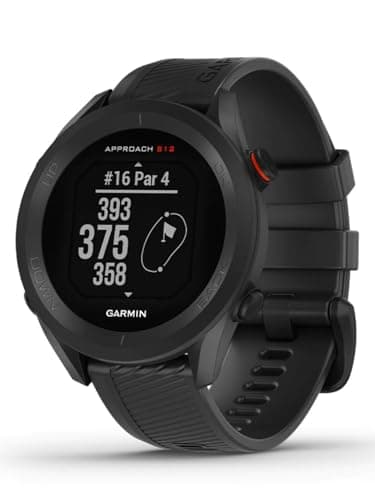
The Garmin Approach S12tops the list because it is the most sensible budget GPS for the most golfers: a wrist-glance watch with 42,000+ preloaded courses, no subscription, and one of the longest batteries in the range at a listed up-to-30 hours in GPS mode. It does the one job a golf GPS exists for — front, middle and back to the green — with nothing to fit and nothing to babysit. Its honest cons are a basic monochrome screen with button navigation and no color maps, and the fundamental GPS limit of reading to the green, not the flag. For most players that’s the whole pitch and a good one; our full Garmin S12 review covers it in detail.
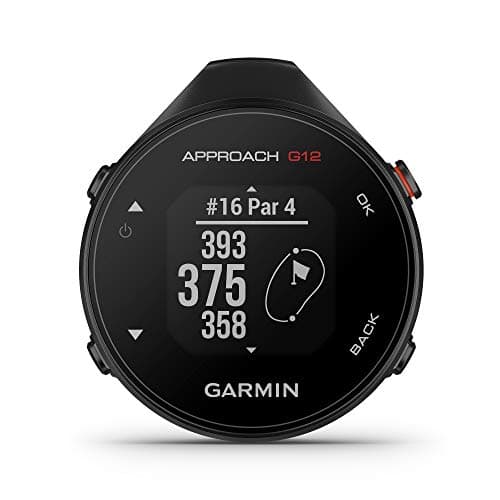
The Garmin Approach G12ranks second because it’s the same sensible Garmin backbone in a different body: a tiny clip-on with the same 42,000+ courses, the same no subscription, and the same up-to-30-hour battery, for players who simply won’t wear a watch. It clips to a belt, pocket or bag and shows the same numbers when you glance down. Its honest cons are a small, numbers-only screen with no hole graphics, and — like every GPS — it reads to the green, not the flag. It ranks below the S12 only because a wrist-glance is the more convenient format for most golfers; if you won’t wear a watch, it’s the pick, and our full Garmin G12 review covers it. We weigh the two directly in Garmin S12 vs G12.
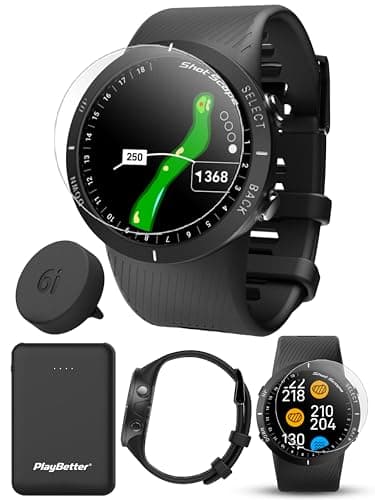
The Shot Scope V5is third, and it’s the value standout for anyone who wants to improve. It does the budget GPS job — front/middle/back distances plus hazards on 36,000+ courses, no subscription — and then adds the thing nothing else here does: automatic shot tracking via included grip tags that feeds strokes-gained and handicap-benchmark stats to a dashboard that’s free for life. That’s a genuine feature added at no recurring cost, which is why it out-ranks its sticker. Its honest cons are that you have to screw the tags into your grips to get the tracking, and it costs a little more than a plain S12. If you’ll actually use the stats, it’s the smartest budget buy here; our full Shot Scope V5 review covers it, and Garmin S12 vs Shot Scope V5 weighs it against the simple pick.
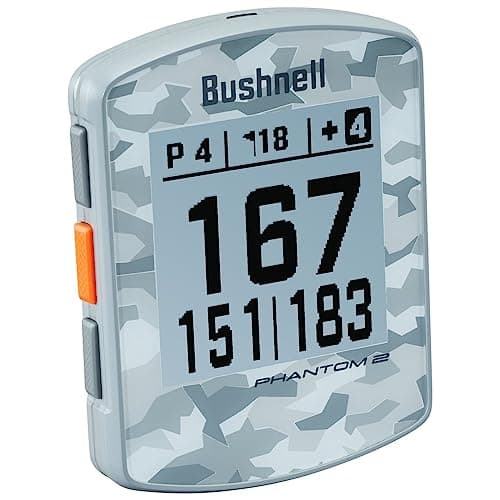
The Bushnell Phantom 2rounds out the list as the handheld for players who want the biggest, most legible screen and a magnet. It carries 38,000+ preloaded courses with no subscription for the basics, adds GreenView with a movable pin and auto hole advance, and its integrated BITE magnet sticks it to a cart bar. Its big, clear front/center/back numbers are the friendliest display here for aging eyes. Its honest cons are that it’s a screen of numbers rather than a full mapping experience, and — like every GPS — it reads to the green, not the flag. For an older player, or anyone who rides and wants a legible glance-and-go device on the rail, it’s the pick; our full Bushnell Phantom 2 review covers it, and Phantom 2 vs Garmin G12 weighs it against the tiny clip-on.
Skip this: a “cheap” GPS that charges a yearly subscription
The mistake to skip is the budget GPS unit — or, more often, the free-looking phone app — that hooks you with a low or zero sticker price and then charges a yearly subscription to unlock the course maps, the good features or the stats. It’s the launch-monitor trap creeping into GPS, and it quietly turns a one-time purchase into a recurring bill that out-costs any of the picks above within a couple of seasons. Every device on this list carries its course data with no subscription, and the Shot Scope throws in its stats free for life — so the honest advice is simple: check the subscription question before you buy anything, and if a “budget” GPS wants an annual fee to do its core job, it isn’t budget at all. Buy one of the subscription-free picks here instead, and the price you pay is the price you pay.
Watch, clip-on or handheld — which budget format?
There are three ways to carry a budget GPS, and the cheapest right answer is the one that fits how you get around the course. A watchlike the Garmin Approach S12 or the Shot Scope V5 is the fastest — the number’s always in your eyeline, nothing to hold or pull out — which is why the wrist is the most popular format. A clip-onlike the Garmin Approach G12 is for the golfer who won’t wear a watch: it attaches to a belt or pocket, weighs almost nothing, and you glance down for the number. A handheldlike the Bushnell Phantom 2 trades the wrist-glance for a bigger, more legible screen and a magnet that sticks to the cart bar — the friendliest option for aging eyes or anyone who rides. None is better in the abstract; the budget winner is the format you’ll actually use every hole.
The subscription question — the one that really decides value
At the budget end, the subscription question matters more than the sticker, because a yearly fee compounds. A device that costs a little more up front but carries its maps for free will beat a cheaper one with an annual charge inside a season or two — and the gap only widens the longer you own it. Every pick in this roundup is subscription-free for the core course data, and the Shot Scope V5 goes further by making its entire performance dashboard free for life, which is exactly where app-based rivals usually start charging. So when you compare a budget GPS against something that looks cheaper, do the two-year math: sticker plus any subscription. Nine times out of ten, a subscription-free device is the real budget buy, and that’s the single rule that keeps a “cheap” GPS from turning into a recurring bill.
Getting the most from a budget GPS
Two habits make a budget GPS pay off. First, trust the middle number: GPS reads to the front, center and back of the green, and for most amateurs playing to the center is the smart, score-lowering default — chasing a front-pin number you can’t carry is how you find the bunker. Second, charge it the night before, not the morning of; the long batteries here mean you’ll rarely think about it, but a full charge guarantees a full day. And if you buy the Shot Scope, actually fit the grip tags and open the dashboard — the free shot tracking only pays off if you use it, and it’s the whole reason to choose it over a plainer watch.
Budget GPS or a budget laser?
At the budget end the money buys different things depending on the tool, and it’s worth being honest about the trade. A cheap GPS gives you front, middle and back distances to the green at a wrist-glance, plus hazards, with no aiming — but never the exact number to the pin, because it reads to the mapped green. A cheap laser gives you a pinpoint number to the flag but nothing else. If you want speed, the whole green at a glance and no aiming, a budget GPS from this list is the buy. If you want a precise approach yardage for the least money, a value laser is the better spend — ranked in our best budget rangefinders roundup. Neither is wrong; they fix different weaknesses, and our rangefinder vs GPS guide walks the choice in full.