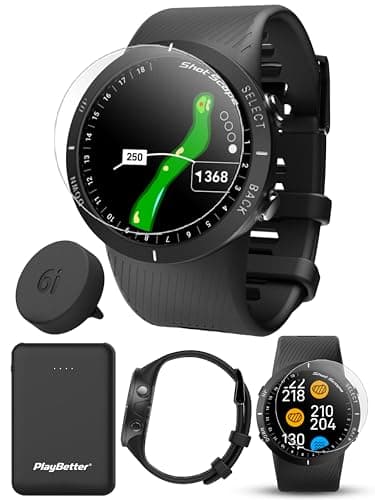
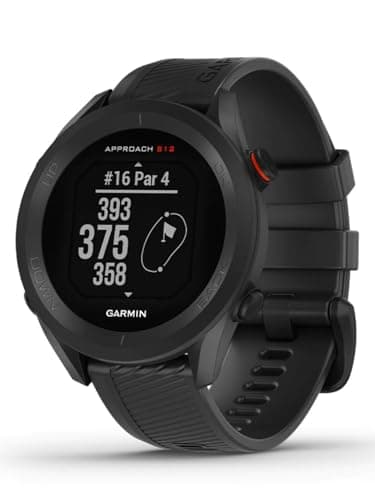
The best no-subscription golf GPS watch for most golfers is the Garmin Approach S12— preloaded worldwide course maps, front, middle and back yardages, a battery that lasts, and no annual fee for the course data that is the entire reason you bought it. If you also want your shots tracked and your stats kept, the Shot Scope V5 is the pick, because Shot Scope publishes its performance statistics as part of the product rather than as a tier. The question behind this page is narrow and worth being precise about: in this category, almost nothing charges you for basic yardages. What the paid tiers buy is everything around them.
What a golf GPS subscription actually paywalls
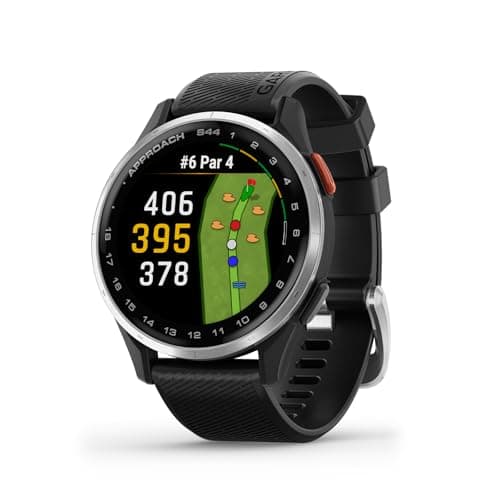
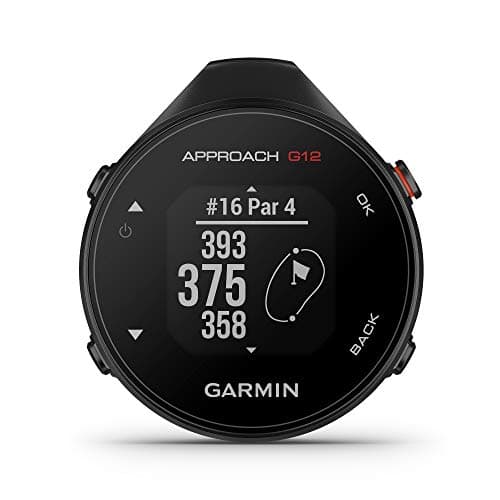
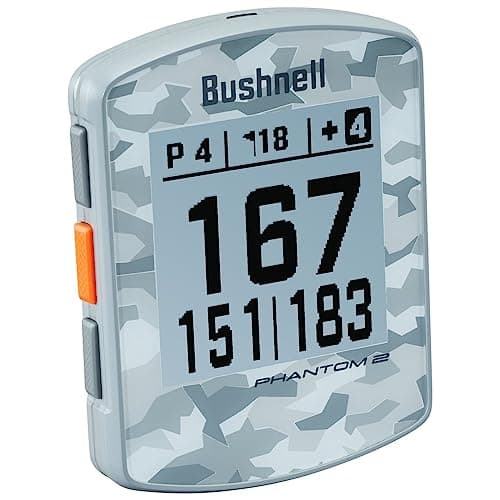
Here is the distinction that gets lost in forum arguments. Garmin publishes preloaded course maps on the Approach S12, S44 and G12 and does not charge an annual subscription for golf course data — you buy the device and it knows the courses. What sits behind Garmin’s paid tier on its app platform is the extra layer: advanced analytics, certain contest and tournament features, and some cloud statistics history. Shot Scope goes further and includes automatic shot tracking and its performance statistics with no subscription fee at all. Bushnell’s Phantom 2 ships with preloaded courses and no fee for basic distances.
So the honest version of “no subscription” is: yardages are free everywhere; analytics sometimes are not. If all you want is the number to the middle of the green, every pick on this page gives it to you forever for the purchase price. If you want your round history, strokes-gained style analysis and club averages, read the column in the table below before you buy, because that is where the models genuinely differ.
How we ranked these (the criteria)
- Is the core function free forever? Course maps and front/middle/back yardages with no recurring fee is the entry requirement for this page. Everything here meets it.
- What the paid tier withholds, if anything. Stated per device. A device that includes its analytics outranks one that charges for them, other things equal.
- Course coverage.Published preloaded course counts, as the manufacturer states them — and all five are in the tens of thousands, so this is rarely the deciding factor.
- Battery in golf mode. A watch that needs charging before every round gets left at home. Published golf-mode figures only.
- Readability and bulk. A monochrome screen you can read in direct sun has a real advantage over a brighter one you cannot, and a watch you will wear all week beats one you remember to put on.
Scores are judgments from published manufacturer specifications and aggregated owner feedback against our rubric— not measurements we took. We have not walked a course with all five on one wrist.
The five, side by side
| Device | Form | Published courses | Subscription position |
|---|
| Garmin Approach S12 | GPS watch, monochrome | 42,000+ | No subscription for course data |
| Shot Scope V5 | GPS watch + shot tracking | 36,000+ | No subscription, statistics included |
| Garmin Approach S44 | GPS smartwatch, AMOLED touchscreen | 43,000+ | No subscription for course data |
| Garmin Approach G12 | Clip-on handheld | 42,000+ | No subscription for course data |
| Bushnell Phantom 2 | Magnetic handheld | 38,000+ | No fee for basic distances |
Picks four and five are deliberately not watches. They are on a “GPS watch” page because a significant share of golfers asking this question do not actually want something on their wrist — they want yardages without a subscription, and a clip-on unit on the bag or a magnetic puck on the cart rail does that for less money and with a bigger, easier screen. We would rather say so than pad the list with a fourth watch.
GPS or laser, if you are only buying one
A GPS gives you distances to the front, middle and back of the green without needing a line of sight, works in fog and on blind tee shots, and never needs you to hold steady. A laser gives you an exact distance to anything you can see, including the flag itself, and is more precise when you can use it. The honest split: GPS suits golfers who want a number quickly on every shot and play unfamiliar courses; a laser suits golfers who want precision to the pin and have steady hands. Our rangefinder vs GPS guide works the decision through, and the rangefinder roundup is the other half of the shelf.
The rule you need to know before you play a competition
A distance-measuring device may be used to measure distance only. Using one to measure elevation change, wind, or other conditions affecting your shot, or to get a recommended line of play or club, breaches Rule 4.3a(1). The device may havethose functions as long as they are not used during the round — so a slope-capable laser with slope switched off is fine, and a GPS that shows plays-like distances needs that feature turned off. None of the devices on this page measures slope, which is one reason a basic GPS watch is an easy competition companion. Full detail in are rangefinders legal and what slope actually is.
Who should pay for a subscription anyway
One group: golfers who will genuinely use the analytics. If you are going to look at your club averages, your proximity from a hundred yards and your putting distribution, and change your practice because of what you see, a platform fee is cheap next to a lesson. If you are not — and most golfers are not — the fee buys you a dashboard you will open twice. The Shot Scope V5 is the pick that sidesteps the question entirely, because its tracking and statistics come with the device. For the shot-tracking-plus-practice-data route, our no-subscription launch monitor roundup applies the same test to a different category.