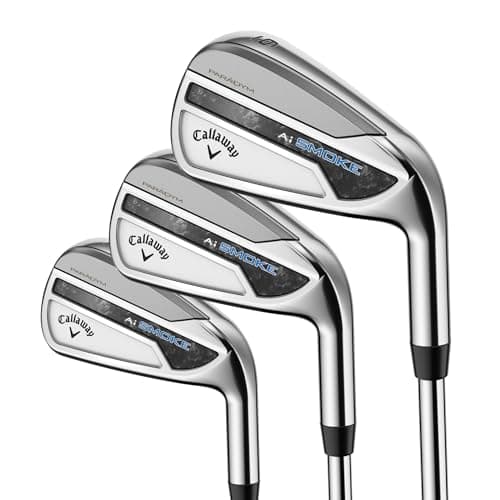
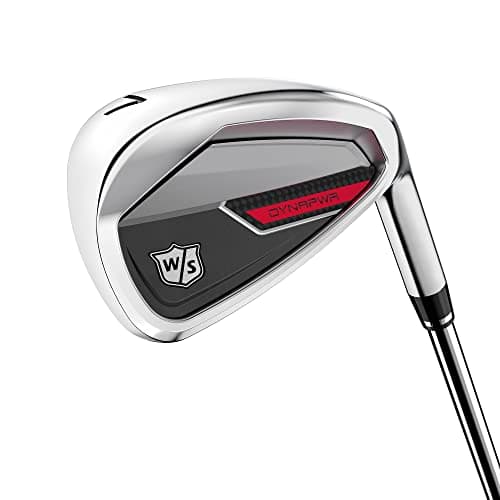
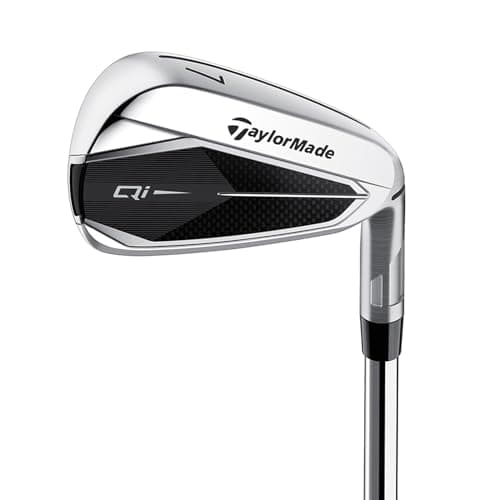
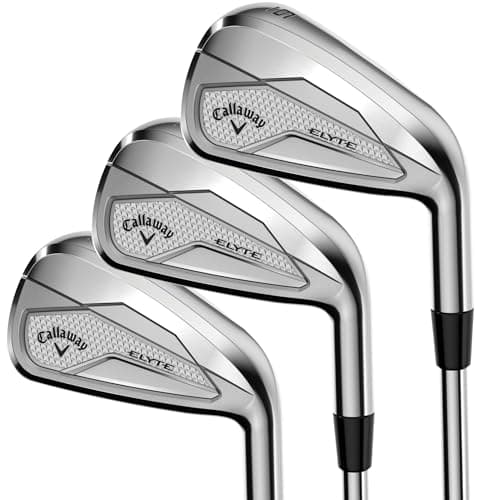
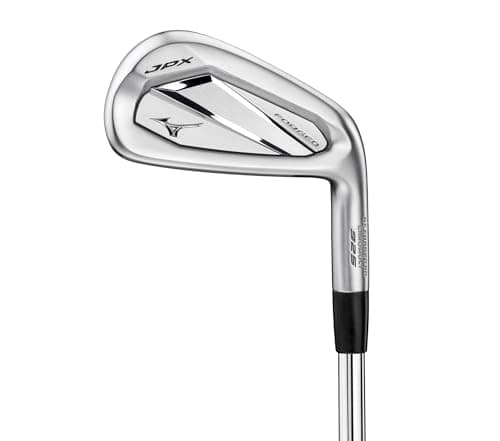
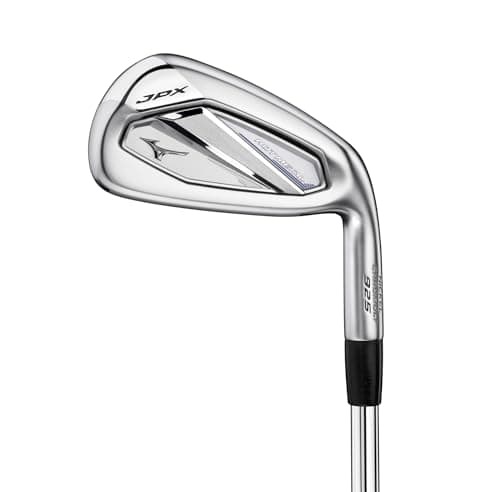
The best irons for most mid-handicappers are the Mizuno JPX925 Hot Metal in the 5-GW steel regular build we rank here — and the reason is not that they are the most expensive set on the page. It is that Mizuno publishes who the head is for in plain words (“mid to high handicappers”), puts tungsten low in the long irons where this band loses its height, and lofts the set honestly enough that it still gaps into a wedge. That is the whole brief for this handicap range: forgiveness you can still use, without the strong lofts and shovel soles that make a super-game-improvement set hard to control. Below are six sets ranked on that trade, each with a live price, honest cons and a plain “don’t buy if.”
What “mid-handicap” means here, and why it needs its own page
We use roughly 10 to 18 for the mid band, the same definition as our handicap bands guide. It is the biggest group of golfers who own a measured handicap and the worst-served by iron marketing, because it sits exactly between the two sets of clubs the industry actually builds for. Below you, a high handicapper or beginner wants maximum launch and maximum help, which is what our game-improvement irons and beginner iron rankings cover. Above you, a single-digit wants feedback, a compact head and the ability to work the ball.
A mid-handicapper is in the awkward middle: you find the center of the face most of the time but not every time, you can flight a 7-iron on purpose, and your real scoring problem is the long irons and the gaps at the bottom of the bag rather than getting the ball airborne at all. That combination asks for a specific iron — a cavity-back or cap-back head with real perimeter weighting and a sole that still slides, in lofts that don’t leave a 25-yard hole under the pitching wedge. Buy a super-game-improvement set and you will fight a ballooning long iron and a wedge gap you can’t fill; buy a players’ iron and the heel strike you still hit twice a round will cost you 20 yards.
How we ranked these (the criteria)
We scored every set against five things, in this order:
- Forgiveness you can still use. Perimeter weighting, a low and deep center of gravity and tungsten in the long irons — help where this band loses strokes. We did not reward a wider sole or more offset past the point where it starts taking away the control a 12-handicap already has.
- Honest loft gapping. Every maker in this category strengthens lofts to win a distance test. We read the published loft table on every set and rank a sensibly lofted pitching wedge above a jacked one, because a 43° pitching wedge creates a hole in your short game that you then have to spend money filling.
- What you pay for what you get. This is the most over-bought category in golf, so the value picks are ranked on merit, not pity. A set that does 90% of the job for 60% of the money is a better buy for most readers than a flagship, and we say so.
- Set composition. Seven clubs with the gap wedge in the box beats six clubs plus an awkward purchase later, and we treat that as a real price difference rather than a footnote.
- Longevity and resale. Irons last five to ten years, so the ability to trade the set in, add a matching single iron or get it bent to your lie matters. Major brands earn a premium here and value brands pay for it.
Every ASIN on this page is one specific build— hand, set composition, shaft material and flex — stated in the specs on each pick, because every one of these families ships two or three near-identical siblings at very different prices. Scores are judgments from published manufacturer specifications and spec tables against our published rubric, not lab measurements: we don’t run a testing lab and won’t pretend to.
The decision that sorts this list: how much help can you still use?
Iron categories are marketing names, but the physics behind them is real, and there are only three steps on the ladder a mid-handicapper should consider. A game-improvement cavity back— the Wilson Dynapower and the Callaway sets here — pulls mass to the heel and toe so an off-center strike loses less ball speed, and widens the sole so a slightly fat strike still slides. A cap-back or hollow-bodied iron, which is what the TaylorMade Qi is, puts a light composite badge where the steel back would be and spends the saved mass low and wide: the forgiveness of a cavity back with the thinner topline and the sound of a players’ iron. A forged multi-material set like the Mizuno JPX925 Forged shrinks the head for control and accepts the penalty on mishits.
The honest test is the one you can run for free at the range: hit twenty 7-irons and look at the face. If your strike marks cluster inside a coin-sized area, you are ready to move toward the forged end and give up some forgiveness for control. If they spread across the face from heel to toe — which is normal at 15 — buy the help, because distance lost on a mishit costs you far more strokes per round than the feel you are missing. The wider argument about where feedback stops being worth the forgiveness is in cavity-back vs blade irons.
Lofts: the spec nobody checks and everybody should
Two sets can both call a club a 7-iron and be three degrees apart, which is most of a club’s worth of distance. That matters twice over for a mid-handicapper. First, strong lofts flatter a launch-monitor demo and tell you nothing: a 28° 7-iron hits it further than a 31° 7-iron because it is, functionally, a 6-iron. Second, and much more expensively, a strong pitching wedge creates a gap. If your set’s pitching wedge is 43° and your sand wedge is 56°, there are thirteen degrees between them — two clubs’ worth of yardage with nothing in it.
The published numbers on this page: the Mizuno JPX925 Hot Metal runs 22° at the 5-iron, 28° at the 7-iron and 42° at the pitching wedge, with a 48° gap wedge in the box. The Callaway Paradym Ai Smoke matches it at 22/28/42. The Callaway Elyte is a touch weaker through the middle at 22/29/42. The TaylorMade Qi is the strongest of the group with a 21° 5-iron and a 43° pitching wedge, and ships an approach wedge partly because it has to. The Wilson Dynapower runs 21° to a 47° gap wedge. None of these is wrong; they are simply different, and the right one for you is the one that slots into the wedges you already own. If you are buying wedges at the same time, our wedge rankings set out the four-degree spacing to aim for.
Steel or graphite, and the shaft-weight question
Most mid-handicappers should play steel irons, and every pick on this page is a steel build for that reason: steel is more consistent club to club, cheaper, and the weight is not a problem for a swing that still generates reasonable speed. The exception is a genuinely slower or achier swing, where a light graphite shaft buys back launch and reduces the hand shock — our graphite vs steel guide works through it club by club, and the senior-specific picks live in best golf clubs for seniors.
Within steel, shaft weight is the spec that quietly decides whether you like the set. The Wilson ships on an ultralight 80 g KBS Max Ultralite, which is light for steel and suits a smooth tempo; the Callaway family’s stock steel is the heavier True Temper Vector 90 or Elevate 95 class. A fast, aggressive transition tends to want the heavier shaft and will feel the lighter one get loose at the top. This is the single easiest thing to get right and the thing stock-build buyers most often ignore — and it is the best argument for hitting two of these sets side by side before you spend this kind of money.
Current model or last year’s: where the real money is
Iron technology moves slowly. The honest version of the last decade is that faces got thinner, lofts got stronger and the sound got better — genuine progress, but not the kind that shows up in a 14-handicap’s scorecard inside a season. What does show up is the price gap between this year’s set and last year’s, which in irons is routinely large enough to pay for the gap wedge and a fitting with the change.
That is why two of the six picks here are deliberately a generation behind. The Callaway Paradym Ai Smoke was the 2024 flagship, and Callaway launched the Elyte that replaced it at a slightly lower list price than the Ai Smoke carried — but the live price on the older set sits well below both. The TaylorMade Qi is a 2024 set that TaylorMade ran for two seasons before replacing it with the Qi Max for 2026. In both cases you are buying the same head that was the brand’s best iron eighteen months ago at a discount the current model will not see for another year. The counter-argument is real and is why the Elyte is also ranked: current sets hold resale value better and are easier to extend with a matching single iron. If you are weighing new against used more broadly, that is the subject of used vs new golf clubs, and the whole-bag budget math is in how much to spend on golf clubs.
Skip this: the forged set you probably aren’t ready for
The Mizuno JPX925 Forged is ranked last and it is not because it is a bad set — it is one of the best-feeling iron sets sold, a Grain Flow Forged HD head with a Chromoly face and a mild-carbon short-iron body. We rank it last because Mizuno itself states the band: pro to mid handicap. That makes it a defensible buy at 10 and a bad one at 16. It costs substantially more than the Hot Metal above it, the blade length drops from 85.4 mm to 79.5 mm, and the tungsten-assisted launch that gets a mid-handicapper’s 5-iron in the air goes away. The build actually in stock on this listing is a 4-iron-through-PW set in stiff flex, which tells you who Mizuno expects to buy it.
If you want that set, the honest route is to earn it: play one of the five above for two seasons, and if your strike marks have tightened and you are flighting the ball on purpose, buy the Forged then — it will be a generation old and considerably cheaper. In the meantime, the money a forged upgrade would cost is better spent on the long-iron problem this band actually has, which is what our hybrid rankings and fairway wood rankings are for.
What you actually gain moving up from a game-improvement set
Less than the marketing implies, and more than nothing. The real gains, in the order you will notice them: a thinner topline and less offset, which is mostly a confidence and aiming change but a genuine one if a chunky head bothers you; a better sound and feel at impact, which is how you learn where on the face you struck it, and therefore how you improve; and a little more control of trajectory, because a smaller, less strongly lofted head is easier to flight down into wind. What you generally do not gain is distance. Super-game-improvement sets are often the longest irons on paper precisely because their lofts are strongest and their faces are hottest.
What you give up is forgiveness on the strikes you still miss, and that is not a small thing at this handicap. The practical rule we would apply to ourselves: if you are moving up because your ball-striking genuinely improved, go. If you are moving up because the set you own looks like a beginner’s, spend the money on a wedge gap or a fitting instead — both will take more strokes off your card.
Six clubs or seven: the gap-wedge trap
Two of the sets ranked above are 5-iron-through-pitching-wedge builds and three include a gap or approach wedge. That difference is worth real money and it is easy to miss when comparing prices. A matching gap wedge bought separately is a meaningful add-on cost, and buying a non-matching one leaves you with a club whose sole grind, finish and feel are different from the set it sits next to. If two sets are close on price and one includes the gap wedge, that set is cheaper than it looks.
The deeper point is that a mid-handicapper’s most expensive unforced error is a hole in the bag between the pitching wedge and the sand wedge. With a 42° pitching wedge and a 56° sand wedge, a 48° gap wedge is not optional equipment; it is the club you will hit from 90 to 110 yards more often than you hit your 5-iron all season. Work out those three numbers before you choose between these sets, not after.
Should you get fitted, or just buy the stock build?
A full fitting is worth it and we will not pretend otherwise. But there are two honest answers depending on where you are. If you are near the bottom of the band, playing a lot, and buying a set to keep for five years, get fitted — lie angle and shaft weight are where a stock set quietly costs you accuracy, and a fitter will also stop you buying a 4-iron you cannot hit. If you play twenty rounds a year and your swing is still changing shape, a stock regular-flex steel build in the right hand is a perfectly sensible purchase, and the money saved on the fitting buys the gap wedge.
The one spec you can and should check yourself either way is grip size, because it is the cheapest thing on the club and the only part you touch. Measure the top hand against the published grip-size chart and, if the stock grip is wrong, have the set built with the right one at purchase rather than paying to regrip a new set. The grip options themselves are ranked in best golf grips.
When the irons are not the problem
Before you spend four figures, or close to it, on a set, it is worth being blunt about where a 10-to-18 handicap actually loses shots. It is rarely the 8-iron. It is the three long clubs at the top of the bag that go sideways, the wedge distances inside 100 yards that are guesses, and three-putts. A new iron set improves the middle of your bag, which is the part that was already working. If your 4- and 5-irons are the holes in your game, replacing them with hybrids costs a fraction of a set and will drop your score faster — see best golf hybrids for which loft replaces which iron. If the budget is the binding constraint, our best golf clubs under $500 page ranks where that budget concentrates best. And if you are re-examining the whole bag, the ball is the cheapest change of all: the mid-band picks are in best golf balls for mid-handicappers.