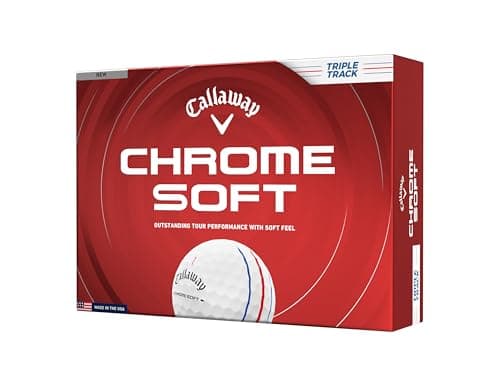
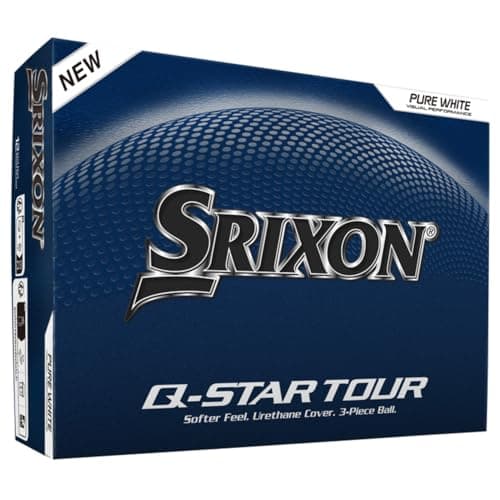
Both of these are urethane-covered golf balls that a mid-handicapper can genuinely use, which makes the choice between them a question of price and feel rather than quality. The Srixon Q-Star Tour is the value-tour ball: a real urethane cover at a mid-tier price, with a mid compression that suits a wide range of swing speeds. The Callaway Chrome Softis the premium play: urethane spin wrapped in a notably softer feel, priced right alongside a Pro V1. One is about getting most of the tour-ball benefit for less; the other is about a specific soft feel and the last few percent of premium polish. Neither is a mistake — the question is which trade fits your hands and your wallet.
Choose the Q-Star Tour if…
You want the thing that actually separates a tour ball from a value ball — a urethane cover that grips a wedge — without paying the full premium tax. Srixon builds the Q-Star Tour with a real urethane cover and a mid compression, and that mid compression is the quiet advantage: it does not demand tour clubhead speed to compress, so a moderate swing can flatten it and feel it work, where a firm premium ball can leave a slower player cold. For the mid-handicapper stepping off a value ball for the first time, this is the sweet spot — genuine greenside spin, a soft-enough feel, and a price that survives losing the odd one. It is the ball we point most improving golfers to first, because it delivers the benefit they have started to earn for the least money. If your priority is “most of the tour ball, less of the cost,” this is your ball.
Choose the Chrome Soft if…
You value a soft feel and you have the short game to bank the extra control. Callaway’s pitch for the Chrome Soft is urethane greenside spin with a softer strike than a firm tour ball, and for a lot of moderate swing speeds that softer feel off the face and the putter is the whole appeal — it is the premium ball for players who find a Pro V1 too firm. It also carries Callaway’s Triple Track alignment lines, a genuinely useful free putting aid, and it sits at the premium price tier, which it justifies only if your wedge game can use the control and you prize that soft feel. If you are a lower mid-handicapper with clean wedge contact who has played a value-tour ball long enough to want a touch more feel and polish, the Chrome Soft is the step up. If you want the maximum greenside bite of anything, note Callaway’s own line-up puts firmer, higher-spin balls above it — the Chrome Soft’s pitch is feel, not the last degree of spin.
How they’re actually different
Three things separate them. Priceis the loudest: the Chrome Soft sits at the premium tier alongside a Pro V1, while the Q-Star Tour lives a clear rung below, so a season of golf on the Srixon costs noticeably less — and if you lose a few, a lot less. Feel and compressionare the second: the Chrome Soft leans on a soft, low-compression feel as its signature, while the Q-Star Tour’s mid compression feels a touch firmer and more responsive and suits a broader band of swing speeds — the softest-feeling ball is not automatically the best ball for you, it depends on your speed and taste. The last few percent is the third: the premium ball puts its extra money into marginally more consistent flight, a little more durability and refinements a sharp short game can feel, while the value-tour ball gives up a small slice of that polish to hit its price. Match the feel to your hands, the price to your loss rate, and the choice makes itself.
The spin question — how much do you actually need?
Because both balls wear urethane, the greenside gap between them is smaller than the price gap, and that is the crux of the whole decision. A urethane cover is a step change over the ionomer cover on a value ball — it grips the grooves and checks — and both of these clear that bar. What separates a value-tour ball from a full premium ball is the last increment of spin consistency and how tightly the flight repeats, and that increment only shows up for a player who strikes wedges cleanly enough to notice it. If your short game is developing, the Q-Star Tour gives you essentially all the spin you can currently use; you will not leave shots on the course by playing it. If your short game is genuinely sharp and you want the flight to repeat to the yard, the Chrome Soft’s premium polish is findable. Be honest about which player you are, because the more expensive ball only pays back a short game that can cash the check.
Match it to your swing speed
Swing speed should nudge this as much as budget. The Q-Star Tour’s mid compression is deliberately forgiving of speed — a slower or moderate swing can compress it and feel it work, and a faster swing is served fine too, which is a large part of why it suits such a wide range of players. The Chrome Soft’s calling card is a soft, low-compression feel, which many moderate swings love off the face and the putter, though a very fast player chasing maximum spin may find firmer premium balls give a touch more. If you do not know your driver speed, our compression explained guide shows how to estimate it, and the golf ball selector matches a ball to it in three questions. As a rough rule: if you are unsure and want one ball that does not care much about your speed, the Q-Star Tour is the safer default; if you specifically crave a soft feel and can afford the premium, the Chrome Soft rewards it.
The honest cost over a season
Run the numbers over a year rather than a sleeve and the gap becomes concrete. The Chrome Soft is premium-tier, so a season of golf on it — especially if you lose the occasional ball, as every amateur does — adds up to a real number, and it is the same order of spend as playing a Pro V1. The Q-Star Tour sits a clear rung below per dozen, so the same season costs less, and the cheaper you are to replace, the less every splash into a hazard stings. For a mid-handicapper who has stopped spraying it but still loses a few, that difference funds a lot of range balls or a lesson. This is not an argument that cheaper is always better — it is an argument to buy the ball whose price matches your loss rate, so the cover you are paying for spends its life in play rather than at the bottom of a pond. Live prices for both sit on the cards above and refresh daily, so you can see the real per-dozen gap before you decide rather than trusting a remembered figure.
The short version for most golfers
If you strip the decision to one line: the Q-Star Tour is the ball more mid-handicappers should be playing, and the Chrome Soft is the upgrade you earn. The Srixon gives an improving golfer a genuine urethane cover, a forgiving mid compression and a price that does not punish a lost ball, which is the right combination for the vast majority of players trading up from a value ball. The Chrome Soft is the better ball in absolute terms — softer, a touch more consistent, wrapped in the Triple Track putting aid — but “better in absolute terms” only turns into lower scores once your short game is sharp enough to spend the extra control and your loss rate is low enough to justify the extra cost. Buy the Q-Star Tour to get most of the way there for less; buy the Chrome Soft when you can feel, and name, the specific thing the cheaper ball is not doing. If you genuinely cannot tell the two apart on the course, that is your answer — play the cheaper one and spend the difference on lessons.
Skip the decision entirely if…
Neither is your ball if you are still losing several a round or your wedge contact is not yet clean, because both are urethane balls whose whole value is a short game you can produce on demand — spend that money on a value ball and some lessons until your ball-in-play rate climbs, and see the full arithmetic in our are expensive golf balls worth it breakdown. And if you are cross-shopping the very top of the market rather than the value-versus-premium line, this is the wrong pair — weigh the Chrome Soft against the other five-layer premium in Chrome Soft vs TP5, or measure the Q-Star Tour against the benchmark it is built to undercut in Q-Star Tour vs Pro V1. For where both land against the whole field, our best golf balls roundup ranks them by who each is for.