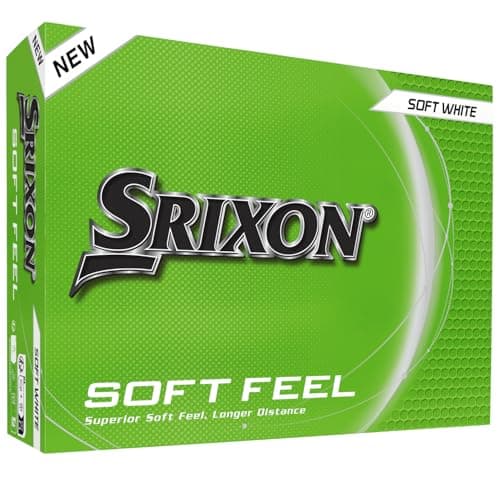
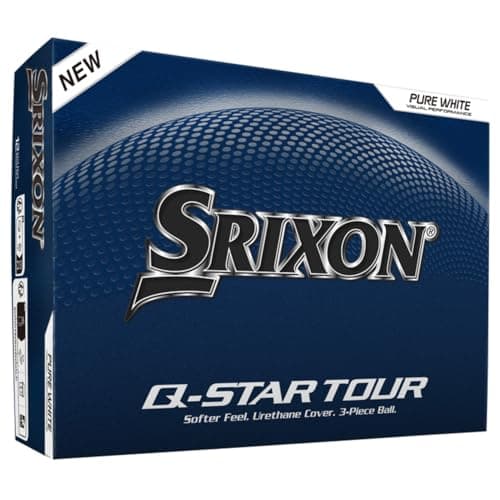
This is the single most useful comparison in Srixon’s lineup, because it is the exact moment most improving golfers decide whether to step up. Both are excellent balls, but they sit on opposite sides of the one line that matters: the Q-Star Tour has a soft urethane cover that grips a wedge and stops the ball on a number, while the Soft Feel has a firmer ionomercover that releases more and costs less. That cover difference — not layers, not dimples — is the whole decision, and the right answer depends entirely on whether your short game can use greenside spin.
The one difference that matters: the cover
The Q-Star Tour’s urethane cover is the thing that separates a tour ball from a value ball. It grips the grooves of a wedge and produces one-hop-and-stop greenside spin — the pitch that checks, the half-wedge that sits. The Soft Feel’s ionomer cover is more durable and cheaper, but it releases more on chips and pitches, so the ball runs out rather than biting. If your scoring depends on stopping wedges on a target, the Q-Star Tour is a real upgrade. If your short game runs the ball onto the green anyway, that upgrade has nowhere to show up on your scorecard. The best golf balls roundup lays out the full urethane-versus-ionomer split.
Compression and feel
Both are approachable balls, not firm tour rocks. The Soft Feel is a low-compression value ball with a soft, responsive feel that a moderate swing flattens easily for distance. The Q-Star Tour runs a mid compression — higher than the Soft Feel but far softer than a firm tour ball like the Pro V1 — which is a big part of its appeal: it suits a wider range of swing speeds than a premium ball, so you get urethane spin without needing tour-level clubhead speed to compress it. Feel is close enough that it won’t decide this for you; the cover and the price will.
Choose the Q-Star Tour if…
You keep most of your golf balls in play and your wedge game can genuinely use spin. The Q-Star Tour gives you a real urethane cover for meaningfully less than a Pro V1, which makes it the smart bridge from value to premium and, for a lot of mid-handicappers, the sweet spot of the whole category. If you’ve started hitting pitches you want to stoprather than release, this is the ball that rewards you for it — and it does so without the top-tier price. We review it on its own in the Srixon Q-Star Tour review.
Choose the Soft Feel if…
You lose more than a ball or two a round, or your short game releases the ball onto the green rather than spinning it. The Soft Feel is soft, straight, durable and cheaper, and for a moderate or high handicapper it is exactly the right amount of ball — the urethane cover of the Q-Star Tour is wasted money if it spends its life at the bottom of a lake or delivering spin you never call on. It is also the better pure-value play: it’s one of the cheapest good balls per dozen, and we review it in full in the Srixon Soft Feel review.
The honest verdict
The Q-Star Tour is the better ball on paper — it can do everything the Soft Feel does and add greenside spin on top — but “better ball” and “better buy” are not the same thing. The spin only counts if your short game and your ball-in-play rate can bank it, and until they can, the Soft Feel scores the same for less. Our rule of thumb: play the Soft Feel until you consistently keep golf balls in play and you’re trying to stop wedges on a number, then step up to the Q-Star Tour. If you shoot in the 90s and lose a sleeve a round, the honest answer is the Soft Feel — and are expensive golf balls worth it does the cost math behind that call.