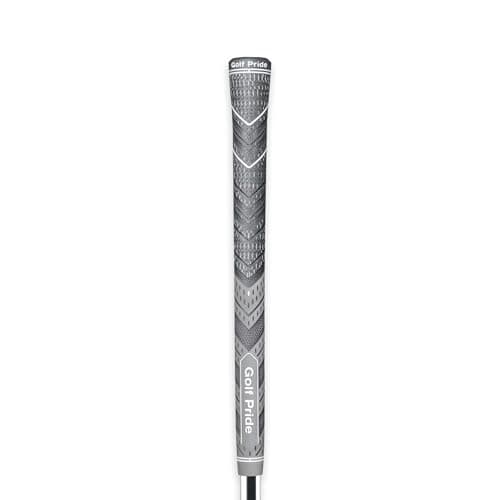
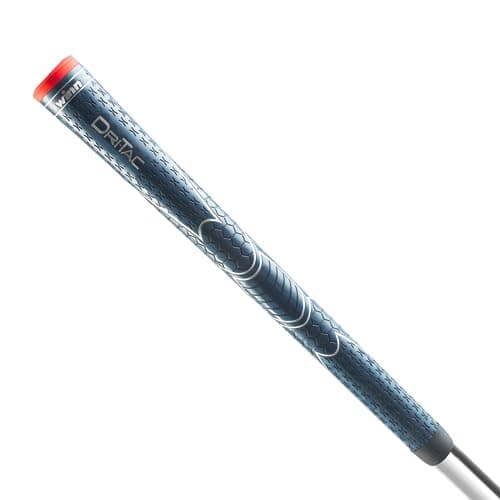
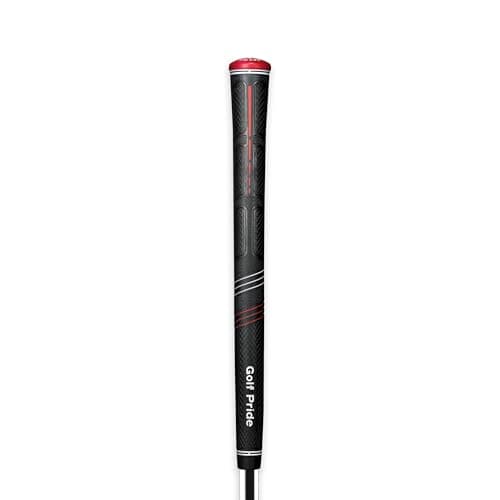
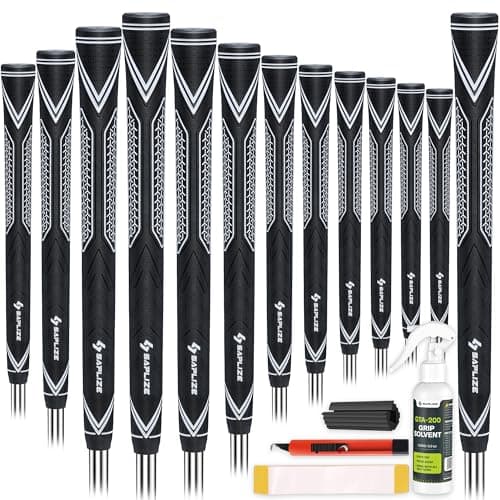
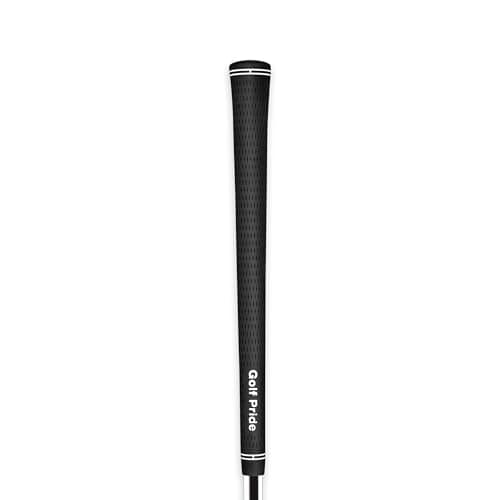
For most golfers the best grip is a Golf Pride Tour Velvet, and the reason is dull: it costs the least of the major-brand grips, it is available in every size, and it does nothing badly. That matters more than it sounds, because the grip is the only part of the club you actually touch — and a worn grip quietly makes you hold on tighter, which puts tension into a swing faster than any swing fault you are working on. Fresh grips are the cheapest genuine upgrade in golf. New ones cost a fraction of a wedge and they change how every club in the bag feels.
How we ranked these
Grips are the one category where the marketing and the buying decision barely overlap. Ads sell texture patterns and tour usage; buyers actually need to answer three questions. So that is what we ranked on, in this order:
- What do your hands need? Sweaty, sore, gloveless and callused hands each want a different material. This is the criterion that decides the pick for most people, and it is the one nobody asks about.
- What weather do you actually play in?A plain rubber grip that is excellent in a dry autumn is the worst grip on this list in August humidity. Traction in the wet is a material property, not a texture pattern — if that is your whole problem, we rank the field for it in best golf grips for sweaty hands.
- What does the whole bag cost?A grip is never bought once. Thirteen clubs need thirteen grips, so a “cheap” premium grip is thirteen times cheap and a “small” premium is thirteen times the premium. We priced the job, not the part.
We did not rank on feel preference, color, or what the world number one has on their irons, because none of those survive contact with a real buying decision. And we did not test these in a lab — we compiled the manufacturers’ own published material claims and the equipment rules, and said which player each design is built for. Every claim in the picks below is attributed; every source is listed at the bottom of the page.
Rubber, cord or polymer — the only material choice that matters
Ignore the pattern names. There are three real families, and picking the right one gets you 90% of the way to the right grip.
| Material | What it feels like | Who it is for |
|---|
| Rubber (Tour Velvet, CP2 Pro) | Firm to soft, smooth-ish, quiet | Most golfers, most of the time; anyone who wears a glove and plays in normal weather |
| Cord / hybrid (MCC Plus4) | Abrasive, grippy, very positive | Sweaty hands, humidity, rain, and players who swing hard and feel the club move |
| Polymer (Winn Dri-Tac) | Soft, tacky, cushioned | Sore or arthritic hands, older players, anyone who wants to hold on lightly |
Golf Pride builds the MCC Plus4 with a brushed cotton cord upper hand that, in their words, “fuses moisture-wicking cotton fibers” with rubber in the lower hand — that is the category’s standard answer to a grip going slick in the heat. Winn, which pioneered polymer grips, builds the Dri-Tac to be slip-resistant in all weather while staying soft enough to damp vibration. Those two claims describe two genuinely different products, and they point at two genuinely different golfers. Pick the one that describes your hands.
Size is the decision most golfers get wrong
A grip that is too small makes you hold on harder and encourages the hands to flip through impact; one that is too big deadens the hands and can leave the face open. Both faults get blamed on the swing. Golf Pride’s own sizing method is to measure your top hand from the crease of the wrist to the tip of the middle finger, and its published chart reads: 5 to 6.5 inches is undersize, 6.6 to 7.5 inches standard, 7.6 to 9 inches midsize, and over 9 inches jumbo. Glove size is the cross-check — a men’s M or M/L corresponds to standard, a men’s L or XL to midsize. The full chart, both cross-checks and what each size does through impact are in our golf grip size chart and fitting guide.
There is also a useful feel test once the grip is on: take your normal hold and look at where the fingers of your top hand sit. Barely touching the heel pad is about right. Digging into the palm means the grip is too small; not reaching at all means it is too big. Note that the layers of tape underneath change the finished size too, so a “standard” grip built up with extra wraps is no longer standard — which is exactly the trick the Plus4 designs reproduce in the molding.
Skip this: re-gripping only the clubs you notice
The upgrade to skip is the half-job — putting two fresh grips on the driver and the pitching wedge and leaving the rest. It is a false economy in the most literal way. Grips wear where you use them, so the clubs you hit most go first and the ones you rarely pull stay tacky. Fit two new grips and you now have a bag with two different diameters and two different textures in it, and your hands have to renegotiate the hold every time you change clubs. Because grips are the cheapest thing in golf by a distance, doing the whole bag at once costs very little more than doing it piecemeal, and it is the only way the set feels like a set. Do all thirteen, or wait until you can.
The other thing to skip: paying premium money for a grip that fights your hands. A cord grip is the correct answer for sweat and the wrong answer for arthritis, however good it is. There is no best grip in the abstract — there is only the grip that suits the hands holding it, which is why this list ranks six of them instead of naming one.
What a full re-grip actually costs
Here is the honest arithmetic, and it is the reason this page exists. A single major-brand grip sits in the single-digit to low-double-digit dollar range — the cheapest of the majors is at the bottom of that band and the cord hybrids near the top. Multiply by thirteen and a full-bag re-grip in premium rubber still lands well under the price of one new wedge, and a long way under a driver. A budget 13-grip set with the tape and solvent included, like the SAPLIZE set above, brings the whole job down again. Add a modest per-club labor charge if a shop fits them for you.
Set that against what the same money buys elsewhere in the bag and the case makes itself: no driver on the market gives most amateurs a change they can feel on every single club, and this one does. Live prices for each pick are shown on the cards above and refreshed daily — we do not print a remembered number, so when a price cannot be verified you will see “check price” instead of a stale figure. If you want the wider budget picture, our guide to how much to spend on golf clubs puts grips against every other upgrade.
Doing it yourself, or paying someone
Re-gripping is one of the few genuine DIY jobs in golf. You need double-sided grip tape, grip solvent, a hook blade and something to hold the shaft steady. The work is straightforward: strip the old grip, clean off the tape residue, wrap fresh tape, soak it with solvent, and push the new grip on in one motion before the solvent flashes off. The whole bag takes an unhurried evening the first time and about an hour once you have done it before, which is why kits that bundle the tape and solvent with the grips are worth a look for a first attempt.
Two things worth paying for instead: graphite shafts you are nervous about clamping, and any club where you want the alignment rib or logo set precisely. A shop charges a modest amount per club for labor and will not damage a shaft. If you are buying second-hand clubs, budget for a re-grip as part of the purchase price — a cheap set with dead grips is not as cheap as it looks, which our used vs new guide covers in detail.
The rules bit: what makes a grip legal
Grips are one of the few pieces of equipment where the Rules of Golf are specific about shape, so it is worth knowing before you buy something unusual. Under the Rules of Equipment, the grip on any club other than a putter must be circular in cross-section — with one exception: a continuous, straight, slightly raised rib may run along the full length of the grip. That is why “reminder” grips with a ridge down the back are legal, and why anything molded to the shape of your fingers is not.
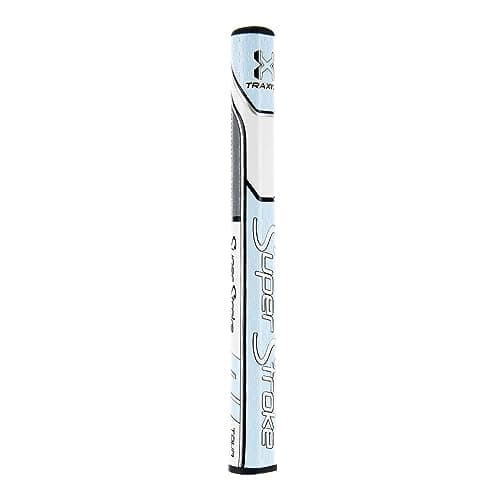
Putters get more freedom. A putter grip is allowed a non-circular cross-section provided it has no concavity, is symmetrical, and stays generally similar in shape along its length. That is the rule that makes the flat-fronted, oversized putter grips — including the SuperStroke above — entirely legal for competition. Every grip on this page is a standard conforming design; you only need to think about this if you are tempted by something molded or contoured.
When to replace them
The working rule is roughly once a year or every 40 rounds, whichever comes first, and sooner in heat and humidity or if your clubs live in a hot car. Grips age on the shelf as well as in use, so even an occasional golfer should be replacing them on the calendar rather than waiting for a crack. The clearest signals are shiny smooth patches, a hard glazed feel, and the sense that you are gripping tighter than you used to. We go through the full checklist, plus a quick slick test, in how often to replace golf grips.