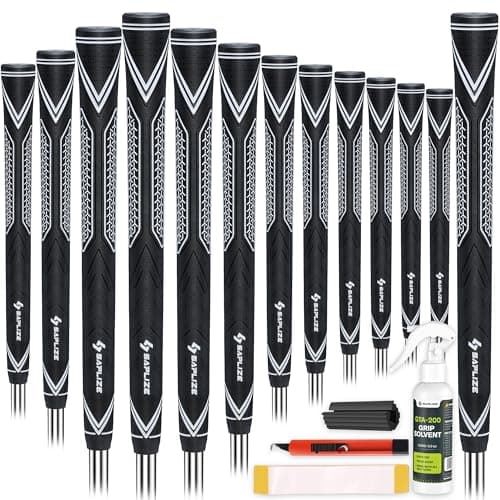
For the beginner with a second-hand or box set whose grips are all shiny — thirteen grips plus the tape and solvent to fit them, which is the whole-bag answer rather than a one-club one.
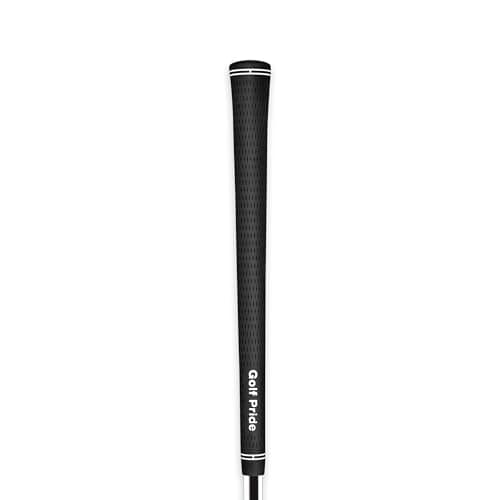
The verdict: if you are a beginner with a box set or second-hand clubs and the grips are shiny, buy the SAPLIZE G50 thirteen-grip set — it comes with the tape and solvent, and it treats the problem as what it actually is, which is a whole bag rather than one club. Budget pick: the Golf Pride Tour Velvet, the cheapest of the major-brand grips and the default that does nothing badly. Prices are live from our price layer, stamped November 18, 2026.
Here is why this is worth a page. The grip is the only part of the club you touch, and a worn grip is the most common equipment fault in amateur golf and the cheapest one to fix. A shiny, hardened grip makes you hold on tighter, and grip pressure is the single most reliable way to destroy clubhead speed and face control at the same time. A beginner who regrips a second-hand set is buying a genuine improvement for a fraction of what any new club costs — and almost nobody does it, because it is invisible and unglamorous.
Get the size right first. It matters more than the model
Before you choose between the grips below, choose a size, because fitting the wrong size well is worse than fitting the right size badly. Golf Pride’s own sizing guidance works from a hand measurement into standard, midsize and jumbo bands, and our grip size chart reproduces the method so you can check yourself in a minute with a tape measure.
The practical rule: a grip that is too small encourages your hands to be over-active and flip the face through impact, which for a beginner usually shows up as a hook or a wild two-way miss. A grip that is too large quiets the hands and can leave the face open, which shows up as a push or a slice. Neither is a disaster and neither is a cure — but if you already have one of those misses, the size is worth getting right rather than defaulting to whatever was on the club. One more note that catches people out: the number of layers of build-up tape changes the effective size, so if you pay someone to do this, say what you want rather than assuming.
The four things that separate these grips
- Cost to do the whole bag. Thirteen clubs, not one. That arithmetic is why the top pick is a set rather than the best individual grip: a bundle of thirteen grips plus consumables is the cheapest legitimate route to fresh rubber on every club, and including the tape and solvent removes the usual reason a DIY regrip never happens.
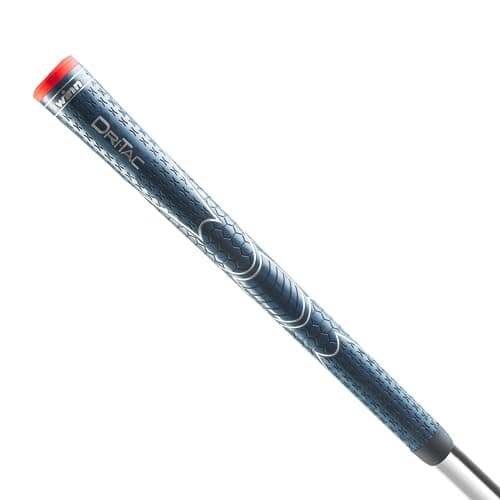
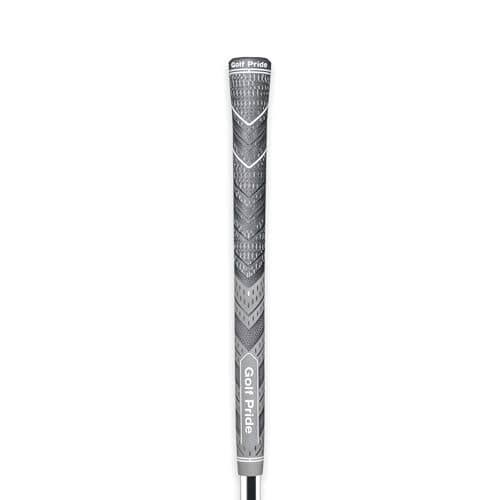
- What happens when your hands are wet. The thing beginners underestimate most. Golf Pride’s MCC Plus4 fuses moisture-wicking cotton cord into the upper hand, which is the standard answer to a grip that goes slick in humidity; Winn builds the Dri-Tac polymer to be slip-resistant in all weather without the abrasiveness of cord. If you play in heat or rain, this is the specification to buy on — and our sweaty-hands page goes deeper.
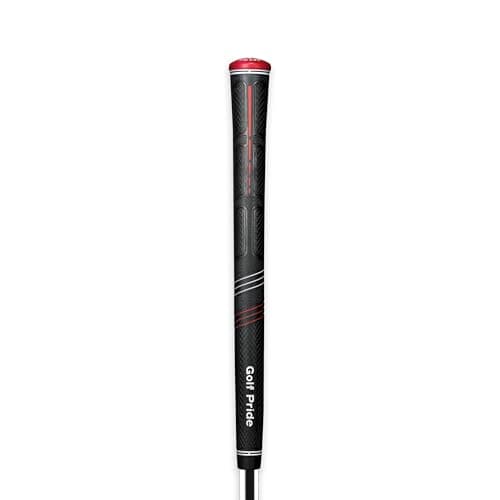
- How soft it is, and what softness costs. A softer, tackier grip is genuinely more comfortable and damps the sting of a thin iron shot in cold weather. The trade is a little stability: Golf Pride describes the CP2 Pro as one of their softest with a high-tack surface, and claims an inner stabilising core specifically to limit the torque that softness usually brings. If your hands hurt, softness wins the argument; if you value feel and feedback, it does not.
- A built-up lower hand. The quiet one. Golf Pride’s Plus4 profile makes the lower-hand diameter larger, which in their words simulates building the grip up with four extra wraps of tape — it encourages a lighter hold without going full midsize everywhere. For a beginner who grips too tightly, that is a more targeted fix than simply sizing up.
Do it yourself, or pay someone?
Do it yourself, almost certainly, and the arithmetic is not close. Regripping is the one club-repair job genuinely worth doing at home: it needs tape, solvent, a hook blade and something to hold the shaft, it takes a few minutes a club once you have done one, and a shop’s labour charge across thirteen clubs is usually more than the grips. Our regripping guide walks the whole job through step by step with the consumables listed and priced live.
The honest exceptions: if your shafts are graphite and you are nervous about the vice, or if you want a specific number of build-up wraps for a fitted size, paying a fitter is money well spent. And if you only have one worn grip, buy one grip — the set is the answer for a whole bag, not for a single club.
Skip this: waiting for a grip to look worn out
Grips do not fail visibly. They harden and go slick long before they look damaged, which is exactly why so many golfers play a whole season on dead rubber without noticing. The usual guidance is to regrip roughly once a year or every forty rounds, whichever comes first, and sooner if you play in heat or do not wear a glove — our when-to-replace-grips page covers the test properly. The one-second version: press a thumbnail into the grip. If it feels hard and polished rather than slightly tacky, it is done, whatever it looks like.
What a full-bag regrip actually involves
Four consumables and one tool, and that is the whole job: double-sided grip tape, a solvent to activate it, a hook blade to cut the old grip off, and something to hold the shaft steady. The sequence per club is cut off the old grip, strip the old tape, wrap new tape, soak it in solvent, and push the new grip on in one movement before the solvent dries — which is the only part that needs any nerve, because once the solvent flashes off the grip stops moving. Then the step everyone skips: let them cure for a few hours before you play, or you will twist a grip out of alignment on the first swing.
Our step-by-step regripping guide covers the method properly with the consumables priced live. The reason the top pick on this page is a set rather than a single grip is exactly this: the kit is the barrier, not the grips, and a bundle that includes the tape and solvent removes the reason most people never get round to it.
Do all thirteen, or wait until you can
The false economy to avoid is regripping the driver and a wedge and leaving the rest. Grips wear where you use them, so the clubs you hit most go first — which means a partial regrip leaves you with two diameters and two textures in the same bag, and your hands renegotiating the hold every time you change clubs. Because grips are among the cheapest things in golf, doing the whole bag costs very little more than doing it piecemeal, and it is the only way the set feels like a set. We do not print prices in prose; the live figures and the date they were checked are in the table above.