Skip to content
Divot&Draw

The Sticks · Golf Clubs

Wilson Harmonized Wedge Review

A budget 56-degree wedge that covers the basics for a fraction of a tour wedge's price. What you get, what you give up, and the golfer it's right for.

By Stephen V.Updated How we rank
#ad

We earn a commission when you buy through our Amazon links, at no extra cost to you. It never changes our rankings — and we'll tell you when the cheaper ball or club is the better buy. How this works.

The Wilson Harmonized is the wedge you buy when you need a proper 56° and don’t want to pay tour-wedge money for it. It’s a classic-shaped blade with a true-bounce sole and a budget price, and for a lot of golfers that’s exactly enough. It’s the value pick in our best golf wedgesroundup. Here’s the honest account of what it is and isn’t.

What it is

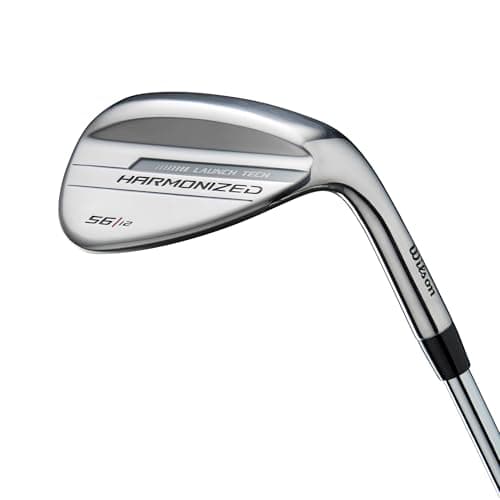
A single-loft, classic-blade wedge — this listing is the 56° sand wedge — with a conventional shape and a sole grind Wilson builds to work from normal lies. It’s a budget-tier club: one grind, a straightforward feel, and a price that sits well below the premium wedges. There’s no exotic groove technology or menu of grind options here, and Wilson doesn’t pretend otherwise. That plainness is the point.

Where it shines

Value, and doing the basics without fuss. If your bag is missing a 56° — a common gap after a beginner set, whose lofts often stop at a pitching or gap wedge — the Harmonized fills it for a fraction of what a tour wedge costs. The classic shape sits nicely behind the ball, the true-bounce sole works from most normal lies and fairway turf, and for the standard full and half sand-wedge shots most amateurs actually hit, it does the job. For a golfer whose scoring doesn’t yet lean on greenside spin and shot-making, paying up for tour grooves is money spent on performance you can’t use yet.

Where it falls short

Spin and longevity. A budget wedge’s grooves don’t grip or last like the sharp, durable grooves on a Cleveland RTX — you’ll get less bite on delicate greenside shots, and the grooves wear faster with use. There’s one sole grind, so you can’t match the bounce to your turf or swing the way a premium line lets you, and the feel is fine rather than special. None of that matters much if your short game is a work in progress; all of it matters if the short game is your strength.

Who should buy it

Beginners and improving golfers who need to fill a wedge gap cheaply, and anyone whose short game doesn’t yet depend on spinning the ball back. It’s a sensible, honest way to add a 56° without overspending, and it frees up money for parts of the game that’ll lower your scores faster. See where it lands against the field in the wedge roundup, and if you tend to chunk chips, the beginner wedge guide points to the more forgiving options.

Who should skip it

Golfers whose scoring leans on greenside spin and shot-making. If you flight wedges, spin the ball back and open the face on purpose, a budget wedge gives up too much — the Cleveland RTX 6 is the wedge to buy and keep. And if your specific problem is chunking chips, a forgiving cavity-back like the Cleveland CBX Full-Face 2 or an anti-chunk Square Strike will save you more shots than any classic blade.
The short answer

Quick picks

#ProductBest forScorePrice
01
Wilson Wilson Harmonized Wedge (56°)
Wilson Harmonized Wedge (56°)

A budget wedge that covers the basics — a classic-shaped 56° for far less than a tour wedge, if spin and grind options aren't your priority.

The best value wedge
6.8
$69.99Amazon

#ad · Live prices from the Amazon Product API, as of Jul 31, 2026. Where we have no verified live price, we show none — we would rather leave a gap than print a number that has rotted.

In detail

The picks, in full

01
Wilson Wilson Harmonized Wedge (56°)

The best value wedge

Wilson Harmonized Wedge (56°)

56° loftClassic blade shapeTrue-bounce soleBudget tier
6.8/10

A budget wedge that covers the basics — a classic-shaped 56° for far less than a tour wedge, if spin and grind options aren't your priority.

Forgiveness
6
Distance
7
Feel
6
Playability
6
Value
9

Pros

  • A proper single-loft wedge for a fraction of a tour wedge's price
  • Classic shape and a sole grind that works from most normal lies
  • A sensible way to add a 56° gap without paying for grooves you may not use yet

Cons

  • Won't spin or last like Cleveland's premium grooves
  • One sole grind and a basic feel — fine, not special

Skip this if…

your scoring leans on greenside spin and shot-making. A budget wedge's grooves fade faster and grip less than a tour wedge's; if the short game is your strength, buy the RTX and keep it.

$69.99View on Amazon

Price as of Jul 31, 2026. Prices change — Amazon's is the one that counts.

#ad · we may earn a commission from this link to Wilson Harmonized Wedge (56°)

How we ranked this

We don't run a testing lab — and we say so

We compiled published manufacturer specifications, official standards and aggregated owner reviews, computed the running costs the big test-labs leave out, and scored each pick against a published rubric. The scores are judgments from documented research — they are notlab measurements we took, because we don't have a lab and we're not going to pretend we do. You can check every number we publish.

Questions

Frequently asked

Is the Wilson Harmonized a good wedge for beginners?
It's a reasonable, cheap way to fill a 56-degree gap, yes. It does the standard sand-wedge shots fine and costs a fraction of a tour wedge. The one caveat is forgiveness: if you tend to chunk or thin your chips, a cavity-back game-improvement wedge like the Cleveland CBX Full-Face 2 will flatter your strike more than the Harmonized's classic blade shape.
How much spin do you give up versus a Cleveland RTX?
Enough to notice on delicate greenside shots. Cleveland's RTX uses sharper, more durable grooves designed for maximum greenside spin, and they hold that spin longer. The Harmonized's grooves grip less and wear faster. If you don't yet rely on spinning the ball back, that gap doesn't cost you strokes; if you do, it's the reason to buy the RTX.

Keep reading

Receipts

Sources

We do not run a testing lab, and we do not pretend to. Every spec number here comes from a manufacturer's published sheet or an official standard, cited above. Where we could not verify something, we say so on the page rather than quietly leaving it out. Read our full method.