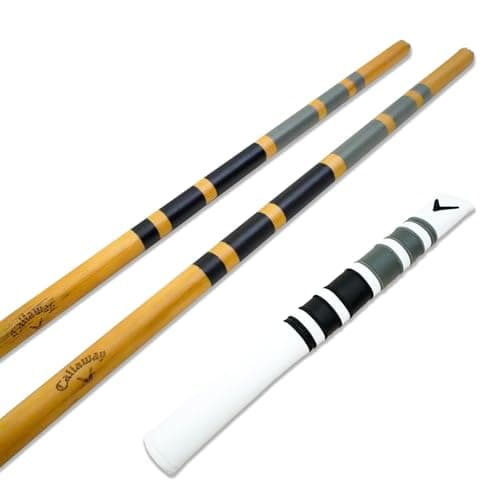
For anyone working on early extension: a pair of rods is the only tool here you can set up as a physical barrier behind your hips or your trail hip, which is the one drill that gives direct feedback on the fault itself rather than on its consequences.
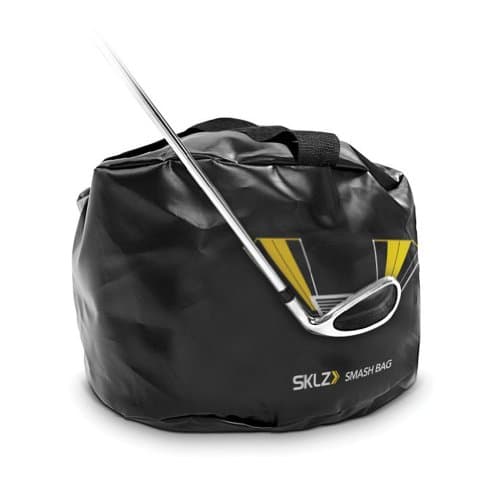
Budget pickSKLZ Smash Bag — the cheapest honest tool here - it will not tell you your hips moved toward the ball, but it will show you whether your hands got in front of the clubhead at impact, which is what early extension usually destroys $32.53 on Amazon
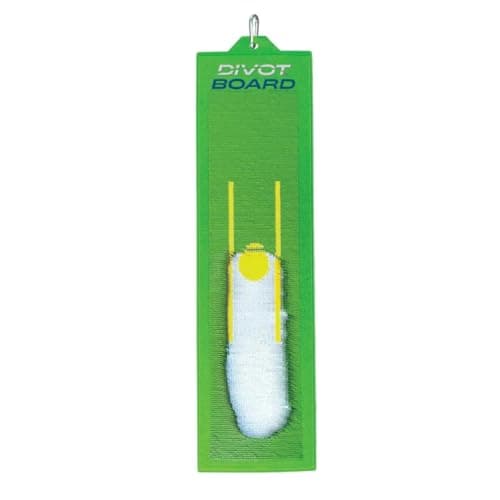
The verdict: a pair of Callaway alignment sticksis the first thing to buy, because it is the only product on this page you can turn into a physical barrier — a stick in the ground just behind your backside, or angled across your trail hip, so standing up through the ball makes contact you can feel. Everything else here reports the consequences of early extension rather than the movement. The best of those is the Divot Board, which shows your low point and club path on every swing, and early extension shows up on it as a low point that has moved backwards. Budget pick: the SKLZ Smash Bag. Prices are live from our price layer, stamped November 22, 2026.
Before anything else, the honest statement this page is built on: no product in our registry is marketed as an early-extension fix, and we have not found one on sale that credibly is.Early extension is a change in your distance from the ball through impact — your hips move toward the ball and your upper body lifts — and a training aid cannot hold your pelvis where it was. What a training aid can do is make the movement obvious, which is most of the battle, because early extension is almost invisible from the inside. That is what this page ranks.
What early extension actually is, in one paragraph
At address you set a distance between your hips and the ball. Early extension is losing that distance on the way down: the pelvis thrusts toward the ball, the spine straightens, and the hands have to find somewhere to go. Usually they go up and out, which blocks the shot right, or they flip, which hooks it. That is why early extension is diagnosed as a slice, a hook, a thin shot or a shank far more often than it is diagnosed as itself — and why this hub’s other pages (slice, hook, fat shot, shank) are often treating a symptom of what this page is about.
The three jobs a tool can do here
- 1. Be a barrier.The only mechanism that gives feedback on the movement itself. A rod in the ground behind you, or one set across the trail hip, makes contact the instant your hips travel forward. This is the drill coaches use with a chair back or a headcover, and a pair of fiberglass rods is the cheapest and most portable version of it. Alignment sticks are the pick, and they also do alignment, path and plane work — the drills are in alignment stick drills.
- 2. Show the strike. Early extension moves your low point backwards, which produces thin shots and a strike that creeps toward the toe. A board that marks where the club bottomed out tells you that in one swing, without a camera and without a coach. The Divot Board does exactly this, resets instantly, and is honest about its limits: it reads low point and path, and it says nothing about the clubface.
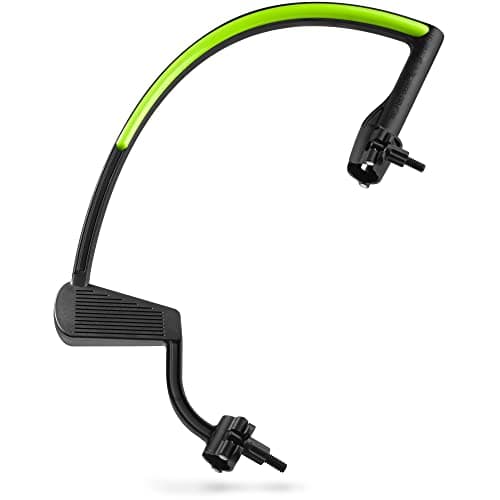
- 3. Show the hands. When the body lifts, the hands compensate. A tool that reports face orientation (The Hanger, which clamps to any iron and presses your lead forearm the moment the face is off) or hands-ahead impact (the Smash Bag) tells you which compensation you are making. That is useful information, but it is downstream of the fault — fix the posture and the compensation usually goes with it.
The connection tools, and why they are ranked where they are
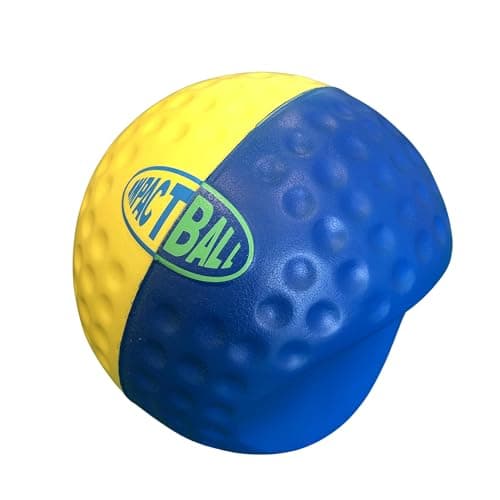
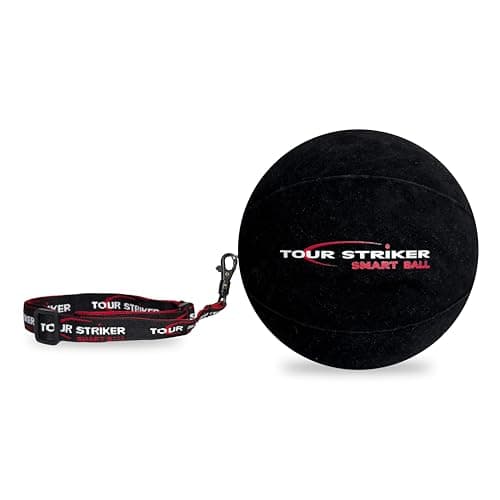
The Impact Ball and the Tour Striker Smart Ball both sit between the forearms and drop when your arms disconnect from your body. They are good products and they are genuinely relevant here, because a golfer whose body stands up often also throws the arms away from the chest to find the ball. But they train the arms, not the pelvis, and if you buy one expecting it to stop you standing up you will be disappointed. Buy one if you also have a disconnection or chicken-wing problem; the honest case for each is in the Impact Ball review and the Tour Striker Smart Ball review.
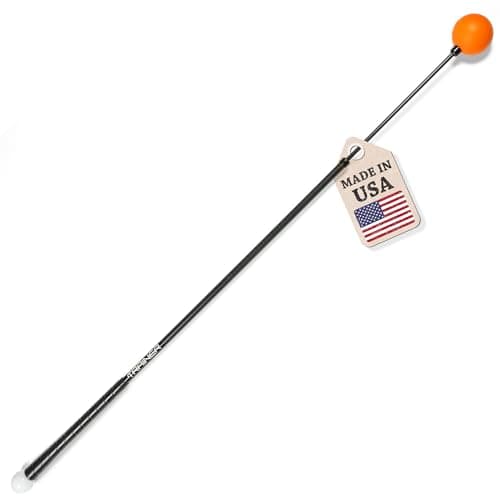
The Orange Whipis last, and it is the best-built product on the page. A counterweighted flexible trainer improves rhythm, balance and sequencing, and balance is not nothing here — a golfer who finishes on their toes is usually a golfer who stood up. But it gives no feedback on distance from the ball at all, and it is the most expensive item here. Buy it as a warm-up and tempo tool, which is what it is, and not as a posture fix.
What to buy, and in what order
Start with the sticks, because the barrier drill is the only thing on this page that addresses the movement. Add the Divot Board second, because it tells you whether the drill is working on a real swing with a real ball rather than in slow motion in a mirror. That is a two-item setup that costs less than one premium training aid and covers both halves of the problem: the input and the evidence.
Everything else is optional and should be bought against a fault you have actually identified. The general test we apply across this hub — does the tool give feedback you cannot get free, and will you still use it in six weeks — is in do golf training aids work, and the swing-plane field, which overlaps this one, is in best training aids for swing plane.
The arithmetic: a camera is free and you already own it
Before you buy anything on this page, do the thing that costs nothing. Set a phone on the ground, side-on, with the ball in the middle of frame and the lens roughly at hip height. Hit three shots. Scrub back to impact and compare your hip line to where it was at address. If it has moved toward the ball, you have early extension, and you now know it for free.
That matters because this is a fault you cannot feel. Almost every golfer with early extension believes they are staying in their posture, which is precisely why the barrier drill works — it replaces a belief with a touch. The products on this page are worth money for one reason: they give you that feedback on a full-speed swing, outdoors, without setting up a camera every time. If you will not use them, the phone is better than the aid you leave in the garage, and that is the honest test for every purchase in this category.
Why a barrier beats a sensor at club level
There are products that measure pelvis movement and report it to an app. None of them is in our registry, because we rank what we can buy through a verified live listing and price honestly, and we are not going to invent one to fill the slot. But it is worth saying why the cheap option is not merely the affordable option here: a barrier gives feedback during the swing, and a screen gives it afterwards. For a movement fault, immediate physical feedback is the thing that changes behavior. That is not a cost compromise, it is the mechanism.
The practical caution with any barrier is to set it where contact is informative rather than painful. A rod in soft ground a few inches behind your backside, or a rod held by a partner, is the version to start with. Do not set a rigid object where a full-speed swing will meet it.
The drill order that makes these tools pay
Barrier first, slow, with no ball: make twenty swings where you keep contact with the stick through impact. Then barrier with a ball, half speed, ten shots. Then remove the barrier and hit five shots over the Divot Board, checking whether the low point has moved forward. That sequence takes about fifteen minutes and it is the only way these two products do anything for each other — the barrier teaches the feel, the board tells you whether the feel survived at speed.
Repeat it twice a week for a month before you conclude anything. Early extension is usually mobility as much as technique, and a position your hips cannot reach will not be trained into place by a rod in the ground. If the barrier drill is physically impossible rather than just unfamiliar, that is useful information too, and it points at a coach or a physio rather than a purchase.
Why we do not print the price in the text
Every number on this page comes from the live Amazon listing through our price layer at the moment the page is served, behind a 48-hour freshness gate, stamped with the date above. Training aids are discounted constantly and the gaps between these seven move a lot, which is exactly why this page is organized by what each tool can show you rather than by a price order that would be wrong next month. Check the live figures in the table before you decide.