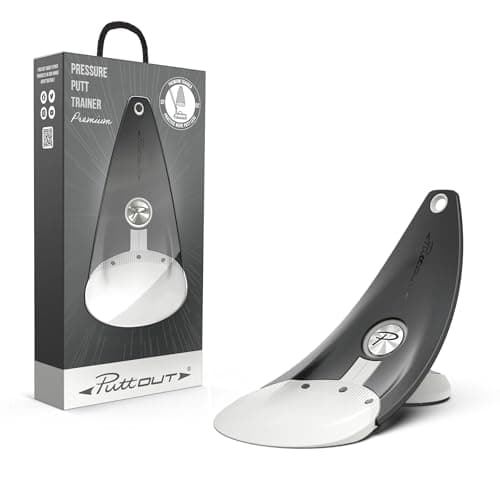
The honest verdict on home practice: it is better than the range at putting, alignment, impact position and tempo, and uselessat anything that depends on seeing where the ball goes. So the way to practice golf at home is to spend your time entirely on the first list and stop trying to approximate the second. If you buy one thing for it, buy a putting return trainer — the PuttOutbelow — because putting is around 40% of the strokes in a round, it is fully trainable on a flat carpet, and it needs no net, no space and no ball flight.
What home practice genuinely trains
Putting pace and start line. A flat indoor floor is a legitimate putting surface for everything except reading break. Pace control and starting the ball on your intended line are the two skills that decide three-putts, and both train perfectly at home.
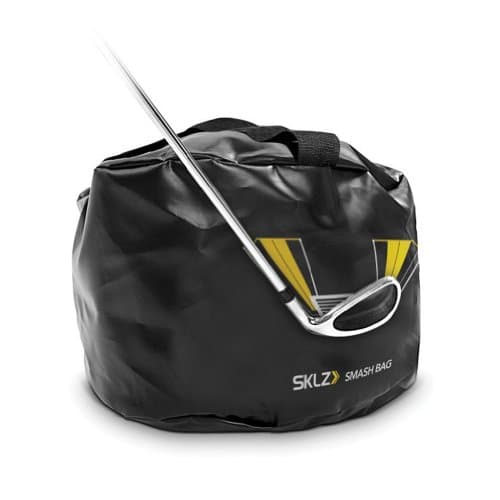
Impact position. What the clubface and the shaft are doing at the ball is the single most important moment in the golf swing, and you can train it at full speed without a ball and without a net by hitting something soft and immovable. That is the whole purpose of an impact bag.
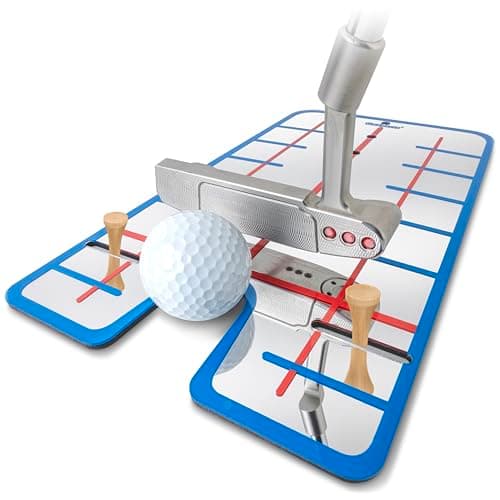
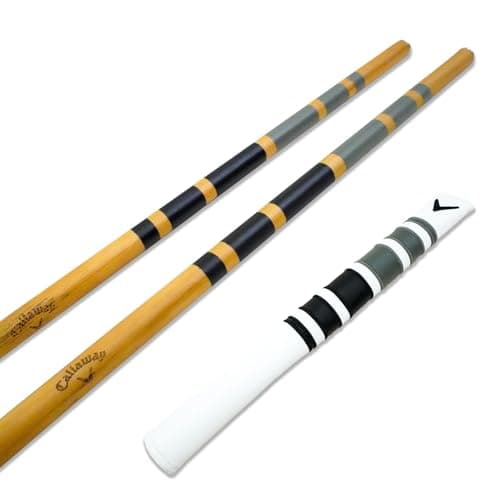
Alignment and setup. Almost every amateur is aimed somewhere other than where they think. This is the cheapest fix in golf and it needs a mirror and two sticks on the floor, not a driving range.
Tempo and rotation. Slow, smooth, repeated motion with no ball is how you change a sequence. Adding a ball adds the urge to hit it, which is precisely what prevents the change.
What it cannot train, and why that is fine
Home practice cannot train ball flight. You cannot learn to control a draw, dial a distance, or diagnose a slice from a living room, because all three require seeing the ball fly. It also cannot train strike quality off turf, and it cannot train the course management you only learn by playing. Accept that split rather than fighting it: use home sessions for the mechanical, repeatable half of the game, and use range and course time for the half that needs feedback from the ball. If you want ball data at home, that is a different purchase entirely — see home golf simulators and what a home setup actually costs.
Practicing without a net (and without hitting balls)
This is the most common version of the question, and the answer is better than people expect. Without a net you can still do all four of the things on the first list, because none of them requires a ball to leave the clubface. Putt on the carpet. Hit an impact bag at full speed. Rehearse setup against a mirror. Swing a weighted flexible shaft for tempo. The only thing a net adds is permission to hit a real ball indoors, which mostly trains the one thing — strike off a mat — that transfers least cleanly to grass. A net and a mat are a worthwhile purchase if you have a garage and will use them; they are not the entry requirement for home practice. The practice net roundup covers that upgrade when you are ready for it.
A fifteen-minute routine that actually fits a weekday
- Two minutes, tempo. Smooth swings with a weighted flexible shaft or a towel-wrapped club. No ball, no target, no speed.
- Three minutes, setup.Mirror in front of you, two sticks on the floor. Check eye line, shoulder alignment and ball position. Do not make swings — just build the position until it is boring.
- Five minutes, impact. Half speed into the bag first, then full speed. You are feeling for a flat left wrist and the hands ahead of the clubhead, and the bag tells you immediately when you got it.
- Five minutes, putting. Short putts into a return trainer, pace first and start line second. Finish on three in a row you were happy with rather than on an arbitrary count.
Fifteen minutes four times a week beats a two-hour range session on a Saturday, because every item in that routine is a mechanical pattern and patterns respond to frequency rather than duration. The four tools that cover the entire routine follow.
Floors, ceilings and the two practical constraints
Before you buy anything, check two things. Ceiling height: a full swing needs roughly nine to ten feet of clearance for most adults, and less than that means the impact-bag work in the routine above happens with a shorter club, or outdoors, or not at all. Half swings with a wedge need far less and still train impact. Floor: a putting return trainer wants a flat, firm, low-pile surface. Thick carpet makes pace feedback meaningless, and a cheap roll-out putting mat on top of a hard floor is a better surface than an expensive mat on top of deep pile.
Neither constraint stops you practicing. They decide which parts of the routine happen where, and it is worth knowing before you buy rather than after.
Why these four and not an aid cupboard
Everything in the list above shares one property: it gives you unambiguous feedback the instant you do the thing. The return trainer tells you your pace was wrong by exactly how far it feeds the ball back. The mirror shows you an eye line you cannot otherwise see. The impact bag will not move if you came in with a cupped wrist. The sticks make an aim error visible on the floor. That is the entire test we apply to this category in do golf training aids work, and the four tools here are the ones that pass it and fit in a cupboard.
What we would not buy for home use: anything that holds you in a position rather than telling you about one, and anything that needs a twenty-minute setup. Both get used twice. If you want the full ranked field with the same test applied, start at the aids that actually work, and if you are new to this, the beginner roundup is the better starting list.