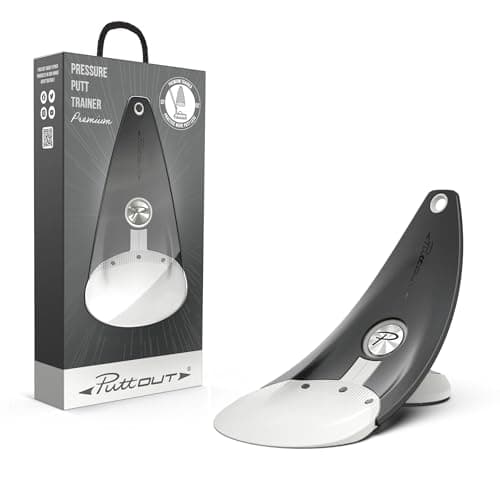
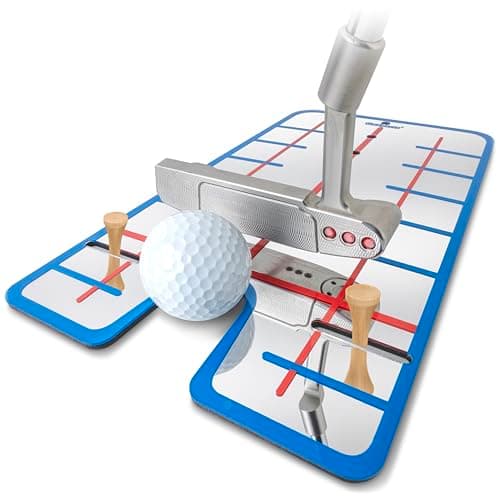
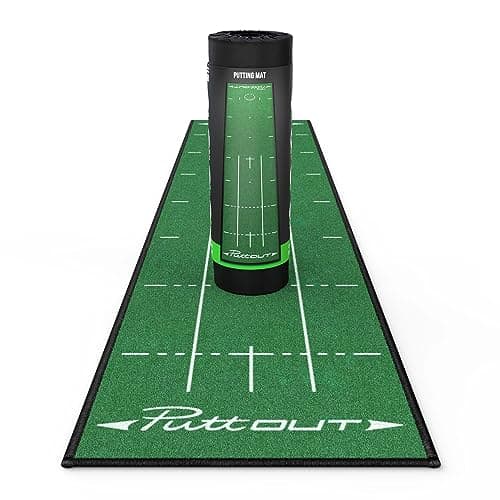
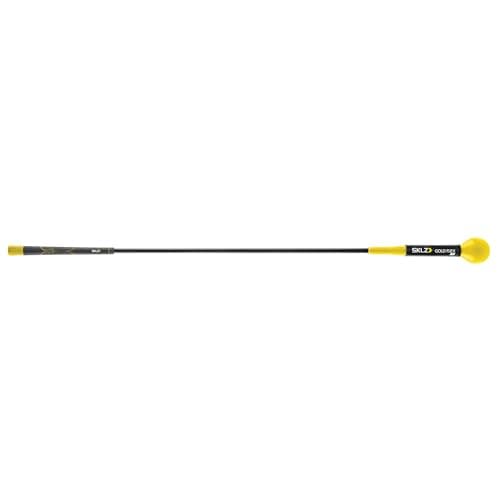
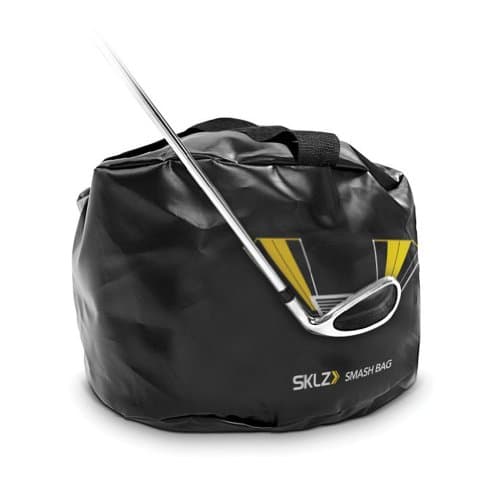
For the golfer who wants to make full-speed swings at home — it is the only full-swing tool here that takes a real strike with no ball to go anywhere.
The verdict: the SKLZ Smash Bag is the pick for home practice, because it is the only full-swing tool here you can hit at full speed with no ball going anywhere — and the mark your face leaves on it is honest feedback on how you are delivering the club. Budget pick: the GoSports putting alignment mirror, the cheapest tool on the page and the one that needs the least room: a carpet, a putter and a few feet. Prices are live from our price layer, stamped November 18, 2026.
Every other page on this hub ranks training aids by what fault they fix. This one applies a filter none of them do, and it is the filter that actually decides whether a tool gets used: can you do it in a room? That rules out most of the rack. It also reorders what is left completely, because the tools that work indoors are not the same ones that top a range-based list.
The three constraints a room imposes
- Ceiling height. The binding constraint, and the one people discover after buying. A full driver swing needs roughly ten feet of clearance; most domestic ceilings are eight. That is why a shortened weighted stick is on this page and a full-length speed system is not, and why the honest advice for a low-ceiling room is to practise with a wedge and a short club rather than to buy something taller.
- Ball flight, or the absence of it. Anything that sends a ball anywhere needs a net, and a net is a different purchase with a different budget — our net roundup covers it. Every pick below works either with no ball at all or with a ball that travels a few feet along the floor. That is not a compromise; it is what makes the tool usable on a Tuesday night.
- Noise and floor. A hard floor plus a club is loud and unkind to both the club and the floor. The putting picks are silent. The impact bag is a thud rather than a crack. If you are hitting anything at all indoors you want a surface under it — our cheap hitting-mat page covers the entry band and the wrist-shock problem that comes with putting a thin mat on concrete.
The honest truth about indoor practice
You cannot practise ball flight indoors, and ball flight is the feedback that matters most. No net, mat or aid tells you whether that one started left and drew back; you lose the shape of the shot entirely. So the right goal for home practice is not to simulate the range. It is to work on the things that do not need flight:
Putting transfers almost perfectly — a flat carpet rolls truer than most practice greens, and pace and start line are exactly what the putting picks here train. Impact position transfers well, because the feeling of a forward-leaning, square strike is a position rather than an outcome. Tempo and sequence transfer well for the same reason. Low point transfers, if you have something that records where you bottomed out. What does not transfer is face control, path shaping and distance control on full shots, and any product claiming otherwise in a living room is selling you something. Our home-practice guide builds the actual session plan around that split.
Build it in this order
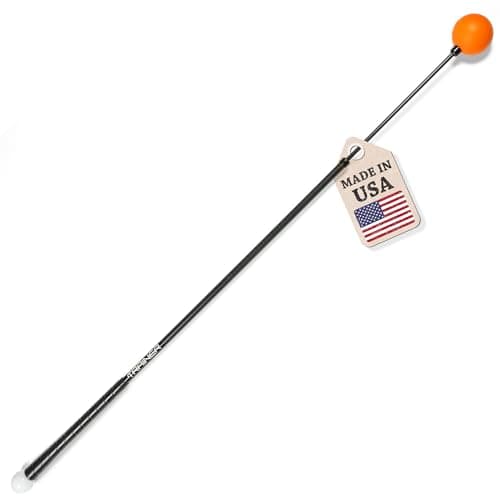
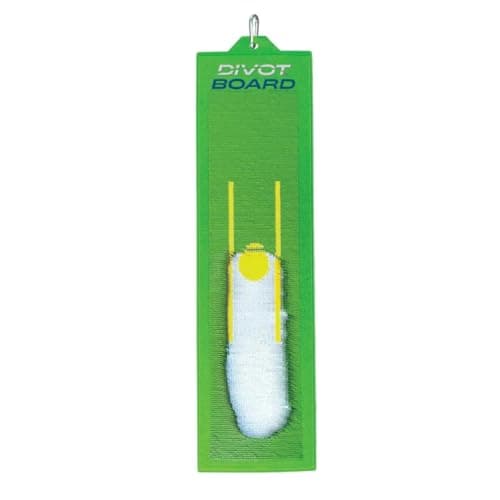
A home setup is cheapest and most used when it grows in the order of what you will actually do. Start with putting, because it needs no space, makes no noise, transfers best and covers roughly 40% of your strokes — the mirror and the pressure trainer together cost less than one premium club and address a third of your scorecard. Add an impact tool second, so you can make real swings without ball flight. Add a weighted stick third, as a warm-up and a tempo groove, knowing it is a feel tool and not a diagnostic. Add strike feedback last and only if you have a surface and the ceiling for proper swings, because a low-point board with nowhere to swing is an ornament.
Skip this: the full-swing gadget that needs a range to be honest
Two categories to walk past for a home setup specifically, and neither is a bad product. Overspeed systems need a full, unrestricted swing at maximum effort and a ceiling most rooms do not have — see the tempo and speed page for where they do belong. And anything that gives feedback on where the ball went rather than what you did is pointless indoors by definition, because the ball did not go anywhere. The tools that survive a room are the ones that read your body and your club, not your ball flight, and that is the whole reason the order on this page looks nothing like the order on our main roundup.
Fifteen minutes, four times a week
The reason a home setup is worth building at all is frequency, not duration. Everything on this page trains a mechanical pattern — a stroke path, an impact position, a sequence — and patterns respond to how often you repeat them far more than to how long each session lasts. Fifteen minutes four times a week in a hallway genuinely beats one long Saturday range session, and that is not a consolation prize for people with no range nearby. It is the better training schedule.
Which means the specification to buy on is not feedback quality. It is whether the tool stays out. A device that lives in a cupboard and takes five minutes to set up gets used twice; a putting mirror on the floor by the sofa gets used every evening. Weigh “can I leave this where it is” as heavily as anything in the table above, and buy the smaller thing if the bigger thing has to be packed away.
What a home setup costs, end to end
The tools on this page are the cheap part. If you want to hit real balls indoors you need a net and a surface as well, and that is a different order of spending — our what a home setup costs page breaks the whole thing down stage by stage with live figures. The sequence that wastes the least money is putting tools first because they need nothing else, an impact tool second because it needs no ball, then a net, then a mat, then anything that measures. We do not print prices in prose; the live numbers are in the table above with the date they were checked.