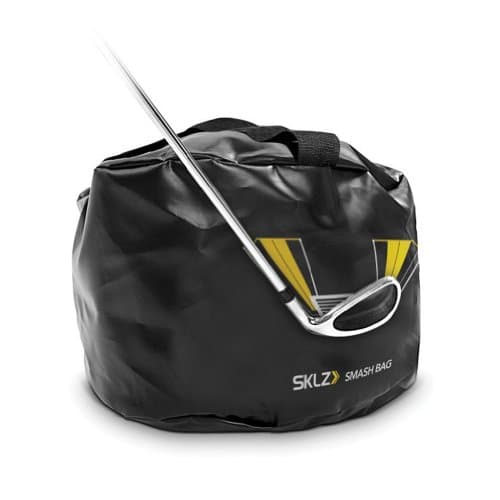
Impact is the only moment in the golf swing the ball ever feels. Everything before it — the takeaway, the transition, the positions the swing videos obsess over — matters only insofar as it delivers a good strike: the clubhead bottoming out ball-then-turf, the shaft leaning forward, the face square to the path it’s traveling on. The best impact training aids are the ones that teach that moment and, just as important, tell you honestly whether you found it. The SKLZ Smash Bag tops this list because it does exactly that about as directly as anything made — you swing into it at full speed and feel a solid, hands-forward, square hit, with the mark your face leaves as honest feedback on where you actually delivered the club.
How we ranked these
Impact aids are a category where it’s easy to buy motion and hard to buy change. So we ranked on the four questions that actually decide whether a tool moves your ball-striking, in this order:
- Does it give feedback you can act on?The whole point of an impact aid is to close the loop between what you did and what you felt. A tool that shows you — or presses you — the instant your strike is off, and lets you adjust and try again, teaches something. A tool that only produces a pleasant sensation with no read on whether you got it right does not. This decides the ranking more than anything else.
- Does it transfer to the course? An aid earns its place only if the feel it builds survives being taken off. We favor tools you can use into a real, or nearly real, strike over ones that groove a shape you can only produce with the gadget attached.
- What does it honestly cost?Impact tools run from pocket change to a modest spend. We weighed what each asks against what it teaches — and the cheapest tool here is often the most useful.
- How well does it hold up?An impact aid takes real force. Durability matters, and we flag where a tool needs a little care — filled correctly, hit with the right club — to last a season and beyond.
We did not test any of these in a lab — we don’t have one. We frame each maker’s own design claims and our judgment of how the tool is used, and we attribute a claim when we lean on one. Every source is listed at the foot of the page, and the way we score is set out in how we rank.
What a good strike actually is, in one paragraph
Before the picks, the target. A good iron strike has three things happening at once: the club’s low point is in front of the ball, so you catch ball-then-turf; the shaft leans forward at impact, hands ahead of the clubhead, which compresses the ball and delofts the face into a penetrating flight; and the face is squareto the path the club is traveling, so the ball starts on line and doesn’t curve off it. Miss the first and you chunk it or thin it; miss the third and you slice it or hook it. Every aid below trains one or more of those three, and the fuller anatomy is in the buyer’s guide under the picks.
The field: the bag, the board and the body
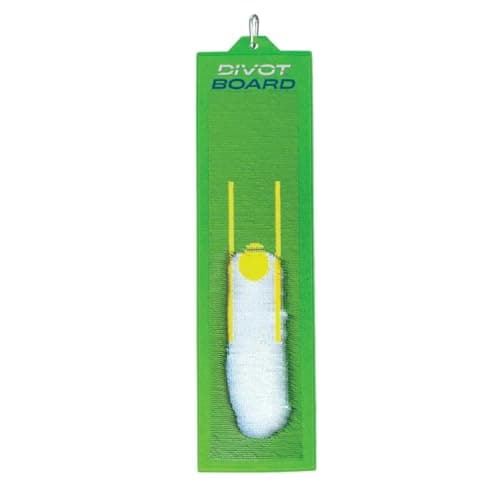
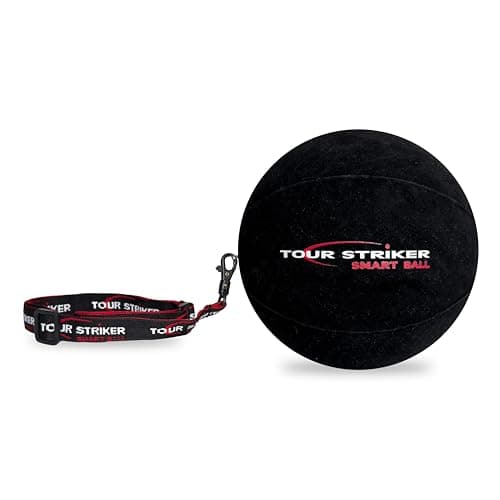
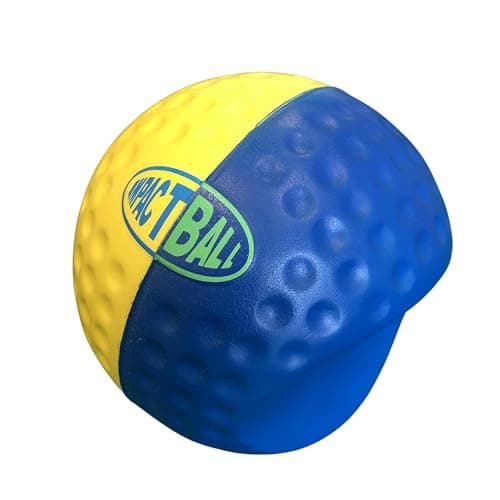
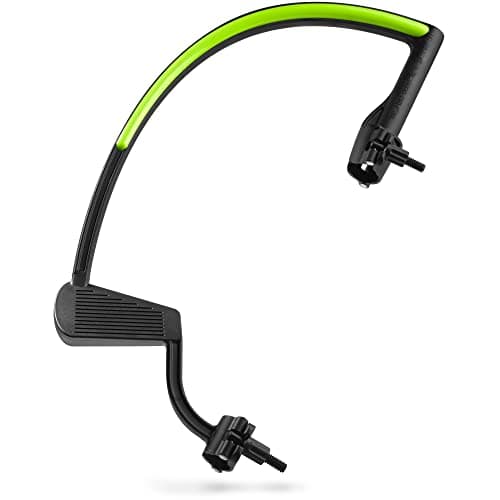
The five here come at impact from three directions. The SKLZ Smash Bagtrains the feelof it: because you can swing into it at full speed with no fear of hurting anything, it’s the fastest way to learn the sensation of a forward-leaning, square strike, and the imprint your face leaves is honest feedback on where you delivered the club. The Divot Board trains the pictureof it: swing over its surface and the mark shows exactly where your club bottomed out and which way it traveled, so a low point behind the ball — the root of a fat shot — becomes obvious in a single swing. The Tour Striker Smart Ball and the Impact Ball come at impact from the body: held between the forearms, they keep the arms and chest turning together, and the ball drops or resists the instant your arms run away from your rotation, which is the disconnection behind a lot of scoopy, inconsistent strikes. And The Hanger trains the lead wrist and face: it clamps to the club and presses your lead forearm the moment the face drifts open through the strike, so you feel a flat lead wrist and a square face rather than a cupped, open one.
Choose by your miss, not by the box. Chunk it and thin it? Start with the Divot Board to see your low point and the Smash Bag to feel a hands-forward strike. Come over the top and slice it? The Hanger targets the open face and the Divot Board shows the out-to-in path — read the full case in the Hanger review. Scoop and flip it, or fight a hands-led release? A connection ball — the Smart Ball or the Impact Ball — retrains the body-led delivery underneath it. None of these is a general “impact fixer”; each is a specific tool for a specific piece of the strike, which is exactly why this list ranks five instead of crowning one.
Skip this: an aid that only shows the problem, or grooves a fake feel
Two kinds of impact aid to walk past. The first only scoresyou — it lights up or beeps to announce the strike was bad, but does nothing to teach the fix and gives you no feel to chase. Seeing the problem for the hundredth time isn’t practice; a useful aid has to point you toward the correction, not just grade the miss. The second is worse: the trainer that grooves a feel you can’t take to a real ball — a rigid harness or a contraption you swing in slow motion that produces a lovely position with the gadget on and a completely different one the moment it’s off. If the feel doesn’t survive contact with an actual golf ball, you’ve trained the gadget, not the swing. Spend the money on a tool that gives feedback you can act on and that you can use into a real strike — and remember that a pair of alignment sticks and the free low-point and ball-position drills do more for impact than most single-purpose gadgets on the shelf.
What “impact” actually means
Strip the jargon away and impact is three things, and almost every fat shot, thin shot, slice and hook traces back to one of them. Train the thing, not the symptom:
- Low point. The lowest point of the arc your clubhead travels. In a good iron swing it sits in front ofthe ball, so the club is still descending at the ball and bottoms out into the turf just after it — ball first, then a divot. Bottom out behind the ball and you hit it fat; catch the ball as the club is already climbing out of its low point and you thin it. Fat and thin are the same fault pointing two ways, which is why a tool that shows your low point, like the Divot Board, is the fastest way to fix both.
- Forward shaft lean.At impact the hands lead the clubhead, so the shaft leans toward the target rather than straight up or leaning back. That forward lean compresses the ball and delofts the face a touch, which is where a crisp, penetrating iron flight comes from. The opposite — an early, scooping release where the clubhead passes the hands before impact — adds loft, thins and chunks, and robs distance. The Smash Bag teaches the feel of hands-ahead delivery because you can lean into it at full speed.
- Clubface.Where the face points relative to the path the club is traveling on. Square to the path and the ball flies straight; open to it and the ball slices; closed and it hooks. The face is the biggest single cause of a slice, and it’s the one thing the Divot Board can’tsee — which is why The Hanger, which presses your forearm the instant the face opens, is the face-and-wrist specialist on this list.
How to sequence these aids in a practice session
Owning the right tools helps only if you use them in the right order, because impact is a chain. Diagnose first: a few swings over a Divot Board tell you whether your problem is low point, path, or something the mark can’t see (in which case it’s the face, and The Hanger is next). Once you know the fault, build the feel with the tool that targets it — the Smash Bag for a hands-forward strike, a connection ball for a body-led release, The Hanger for a square face. Do that work in slow, deliberate reps first, then at speed. Crucially, finish every session by hitting real balls without the aid, so you prove the feel transferred rather than assuming it did. A good rhythm is short and honest: diagnose, groove the feel with the aid, then test it on a ball. Ten focused minutes done that way beats an hour of aimless swings into a bag.
Feedback you can act on versus noise
The line that separates a useful impact aid from an expensive one is whether its feedback tells you what to do next. A read you can act on is specific and immediate: the divot mark started an inch behind the ball, so move the low point forward; the bar pressed your forearm, so the face was open, square it up. You change one thing and swing again. Noise is feedback that only announces failure — a buzzer that says “bad” without saying why, or a number you can’t connect to a feel. The most honest impact tools here are almost crude in how directly they read: a mark in a board, an imprint on a bag, a ball that drops when you disconnect. That bluntness is the feature. If you find yourself staring at feedback and not knowing what to change, the tool isn’t teaching you — and no amount of reps against noise will build a better strike.
How much to spend, and what to buy first
The reassuring thing about impact aids is that the most useful ones are among the cheapest on the rack. A smash bag and a strike-feedback board both sit in the budget tier, a connection ball costs little, and even the pricier face trainer is a modest spend rather than a major one — live prices for each pick are on the cards above and refresh daily, so buy on today’s number rather than a remembered one. What to buy firstdepends entirely on your miss, not on price. If you don’t yet know your miss, start with the board, because seeing your low point and path in a mark is the cheapest way to diagnose what’s actually wrong. If you already know you catch it fat, add the bag to feel a hands-forward strike. If you know the face is open, the face trainer is the direct answer. Resist the urge to buy the whole shelf at once: one tool aimed squarely at your real fault, used honestly, does more than five gathering dust in the garage — and the money you save is better spent on a lesson to confirm the fault than on a second gadget you don’t need.