Skip to content
Divot&Draw

The Practice · Training Aids

Callaway Alignment Sticks Review

Two fiberglass rods that drill alignment, ball position, path and plane — the most useful ten dollars in golf, and the honest first purchase for almost every golfer.

By Stephen V.Updated How we rank
#ad

We earn a commission when you buy through our Amazon links, at no extra cost to you. It never changes our rankings — and we'll tell you when the cheaper ball or club is the better buy. How this works.

Alignment sticks are the rare training aid that almost everyone should own, and the Callaway pair is the sensible way to buy them: two fiberglass rods that drill alignment, ball position, swing path and plane, for about the price of a sleeve of balls. They pass the one test we hold every aid to — they show you a real reference you can’t argue with — and they earn their spot near the top of our best training aidslist. Here’s the honest account of what they do and don’t do.

What it is

Two plain fiberglass rods, and that’s the point. There’s no electronics, no app and nothing to break — the value is entirely in the drills you run with them. Lay one on the ground and you have an instant, honest picture of your feet, the ball and the target line; add the second and you can check ball position, build a path gate, or set a plane reference. They pack in the bag and they’re near-indestructible. Our alignment stick drills guide walks through the specific ones worth knowing.

Where it shines

Versatility and honesty at a trivial price. One cheap tool covers alignment, ball position, swing path and plane — more genuinely useful drills than any single-purpose gadget on the market — and every one of them gives you clear visual feedback: your aim, the club and the target line are all made obvious, so you can’t fool yourself. It’s the tool nearly every tour player has on the range for exactly this reason. As the first thing an improving golfer buys, nothing else offers this much return for the money, which is why it passes the test in our do training aids work piece with room to spare.

Where it stops

Alignment sticks have no moving parts, so they give you a reference, not an active correction: they show you where things should be, but you have to supply the discipline to work to them. They’re only as good as the drills you know — laid on the ground with no plan, they do nothing. And they don’t diagnose a clubface fault: they’ll show an out-to-in path plainly, but the open face behind a lot of slices won’t appear in a stick on the grass. That’s not a flaw so much as the limit of a passive tool.

Branded pair or a generic rod?

Honestly, alignment sticks are alignment sticks — a generic fiberglass rod does the same job as a branded one, and the drills matter far more than the logo. What the Callaway pair buys you is a known-good diameter and finish, a matched two-pack (you want two), and the durability to survive a bag for years. For a few dollars over a no-name rod, that’s a fair, low-stakes upgrade — but if you already own a pair of straight rods, you don’t need these.

Who should own a pair

Just about everyone. There’s no bad reason to own alignment sticks: they’re cheap, indestructible, and they drill the fundamentals that quietly wreck more rounds than any swing flaw. If you want a tool that actively corrects you rather than one you have to use knowledgeably, a feedback aid like The Hanger or the Divot Boarddoes more of the thinking — but those complement the sticks, they don’t replace them.
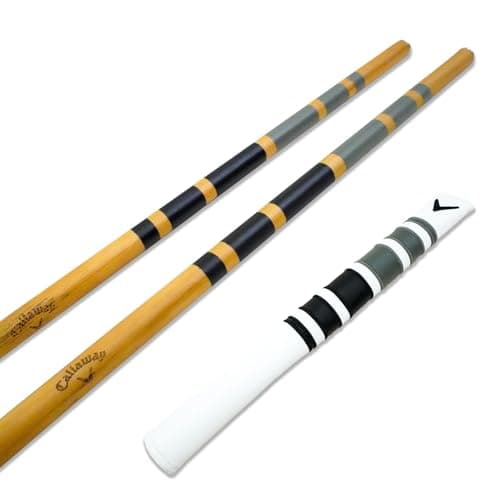
The short answer

Quick picks

#ProductBest forScorePrice
01
Callaway Callaway Alignment Sticks
Callaway Alignment Sticks

The most useful ten dollars in golf — two fiberglass rods that drill alignment, path, plane and half a dozen other faults.

The best value tool in the game
8.6
$69.99Amazon

#ad · Live prices from the Amazon Product API, as of Jul 31, 2026. Where we have no verified live price, we show none — we would rather leave a gap than print a number that has rotted.

In detail

The picks, in full

01
Callaway Callaway Alignment Sticks

The best value tool in the game

Callaway Alignment Sticks

Two fiberglass rodsAlignment, path & plane drillsGround or through-the-bag useEndlessly versatile
8.6/10

The most useful ten dollars in golf — two fiberglass rods that drill alignment, path, plane and half a dozen other faults.

Effectiveness
8
Feedback quality
8
Durability
9
Ease of use
8
Value
10

Pros

  • One cheap tool covers alignment, ball position, swing path and plane — more drills than any single-purpose gadget
  • Instant visual feedback: your feet, the club and the target line are all made obvious
  • Near-indestructible, packs in the bag, and used by nearly every tour player on the range

Cons

  • They're only as good as the drills you know — the sticks don't tell you what to do with them
  • No moving parts means no active feedback; they show you the reference, you supply the discipline

Skip this if…

there's honestly no bad reason to own a pair — but if you want a tool that actively corrects you rather than one you have to use knowledgeably, a feedback aid like The Hanger or the Divot Board does more of the thinking for you.

$69.99View on Amazon

Price as of Jul 31, 2026. Prices change — Amazon's is the one that counts.

#ad · we may earn a commission from this link to Callaway Alignment Sticks

How we ranked this

We don't run a testing lab — and we say so

We compiled published manufacturer specifications, official standards and aggregated owner reviews, computed the running costs the big test-labs leave out, and scored each pick against a published rubric. The scores are judgments from documented research — they are notlab measurements we took, because we don't have a lab and we're not going to pretend we do. You can check every number we publish.

Questions

Frequently asked

Are expensive alignment sticks worth it over a cheap rod?
Not really — the drills matter far more than the brand. A generic fiberglass rod does the same job. What a branded pair like Callaway's buys you is a reliable diameter and finish, a matched two-pack, and durability. It's a small, fair premium over a no-name rod, but if you already own two straight rods, you don't need to upgrade.
What can't alignment sticks do?
They can't correct you actively, and they can't show you a clubface fault. Because they have no moving parts, they give you a reference — where your aim, path and ball position should be — but you supply the discipline. And while a stick on the ground shows an out-to-in path clearly, it won't reveal the open clubface behind many slices. For that you want a feedback aid like The Hanger.
What's the single most useful alignment stick drill?
A simple aim check: lay one stick along your toe line and a second on the ball-to-target line, and you’ll usually find your feet aim well right or left of where you think. Fixing aim alone straightens a lot of shots. Our alignment stick drills guide covers that and the path and plane drills worth adding.

Keep reading

Receipts

Sources

We do not run a testing lab, and we do not pretend to. Every spec number here comes from a manufacturer's published sheet or an official standard, cited above. Where we could not verify something, we say so on the page rather than quietly leaving it out. Read our full method.