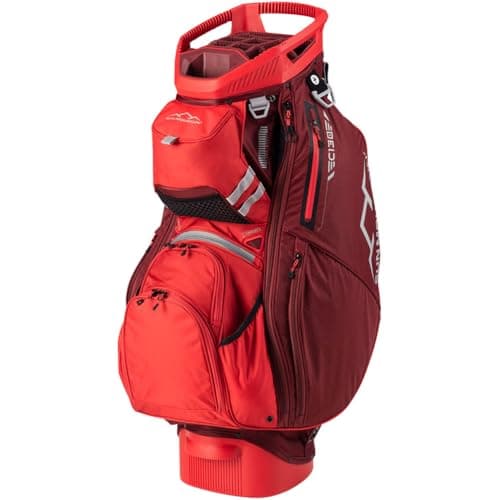
For the rider or push-cart user who wants the most storage and organization available at the top of this band — a 14-way top and a pocket layout that has been thought about.
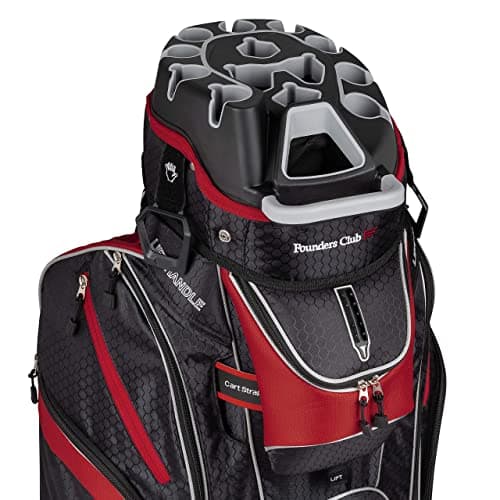
The verdict: the Sun Mountain C-130 is the pick under two hundred dollars, and it is for the golfer who rides or pushes and wants the bag to swallow everything and organize it — a 14-way top, a pocket layout that was clearly designed by someone who plays, and a cart-strap pass-through that does not sit over a pocket. Budget pick: the Founders Club Premium Cart Bag, which is the cheapest bag here that still gives you a 14-way top with full-length dividers; you pay for that in carried weight, which matters only if you ever walk with it. Prices come from our live price layer, stamped November 18, 2026, and the under-two-hundred cut is made against those numbers.
This page is about bags you play out of. If you are shopping for a case to put your clubs on a plane in, you want our hard-case travel bag roundup or the budget travel-bag page instead — different product, different failure modes, and we are not going to pad a bag ranking with suitcases to make the list longer.
The one spec that decides a bag under $200
Full-length dividers. Not the number on the top — the length of the walls underneath it. Almost every bag in this band advertises a 14-way top, and on the cheaper ones those fourteen slots are a moulded collar sitting over one big open cavity. The practical difference is immediate and permanent: in a true full-length-divider bag each shaft runs in its own tube from top to bottom, so nothing tangles, your grips do not wear against each other, and you can pull a wedge out of a moving cart one-handed. In a collar-only bag the shafts cross below the top and you end up lifting three clubs to get one, every hole, for as long as you own it.
That is the spec to insist on, and it is the reason the ranking below is not simply sorted by price. Two of these five publish full-length dividers; one of those two is the cheapest proper cart bag in our registry. The others make a different and perfectly honest trade, which brings us to the second question.
Riding, walking, or something in between
Bag shopping goes wrong when people buy for the golf they imagine rather than the golf they play. Three honest cases:
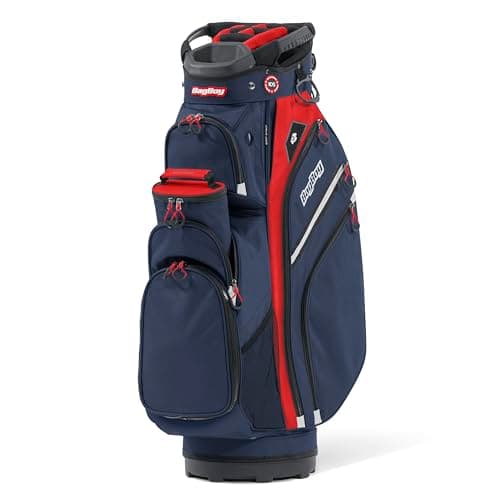
- You ride, or you push. Buy a cart bag and stop worrying about weight entirely — the cart carries it. What you want instead is organization, pocket volume, a cooler pocket that holds something real, and a cart-attachment system that stops the bag twisting on the back of a buggy. Three of the five below are built for exactly this, and the differences between them are storage, weight and whether the cooler is removable.
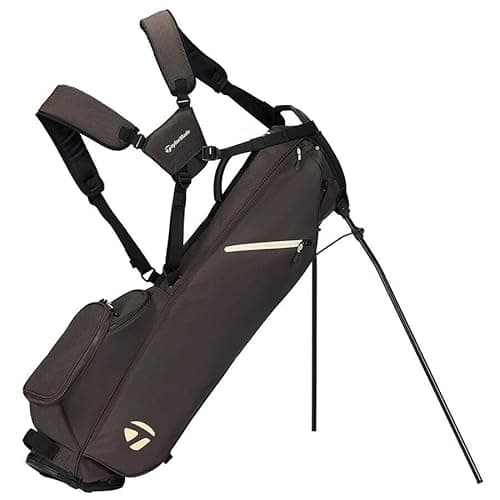
- You walk the whole round carrying. Weight becomes the only spec that matters, and you should accept fewer pockets and fewer dividers to get it. The stand bag below is the pick here, and our walking-bag page goes deeper on why carried pounds beat everything else for a walker.
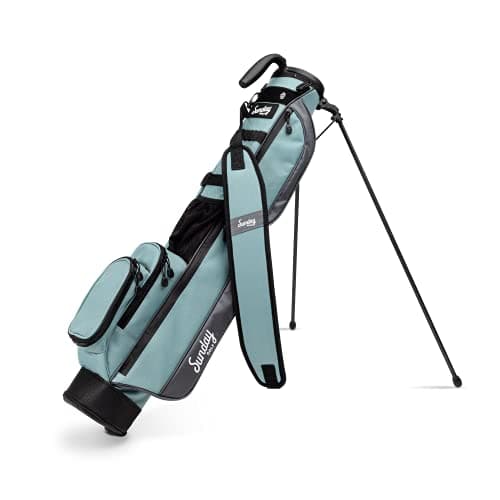
- You play nine after work, or par-3 courses. You do not need fourteen slots because you are not carrying fourteen clubs, and the honest answer is the smallest bag you can get away with. The ultralight at number five is the anti-cart-bag and it is on this page because for that round it is genuinely the best buy, not a compromise.
If you are still torn between the two main shapes, our cart bag vs stand bag comparison does the decision properly rather than in a paragraph.
What you give up by capping at $200
Less than you would think, and it is worth being specific. Above this band the money buys three things: carbon-fibre stand legs and premium fabrics that shave real pounds off a carry bag, waterproof-rated constructions, and the Titleist and Callaway staff-bag aesthetics. All three are genuine. None of them is organization — a two-hundred-dollar bag with full-length dividers organizes your clubs exactly as well as a three-hundred-dollar one, because the mechanism is the same piece of fabric. What you cannot buy under two hundred is low carried weight and full organization at once. That is the real ceiling of this band, and it is why a walker and a rider should buy completely different bags here rather than hunting for the one that does both.
Skip this: counting pockets
Pocket count is the headline spec in this category and it is close to meaningless. A bag with eleven pockets where four of them are the same size as each other is worse than a bag with seven that includes a full-length apparel pocket, an insulated sleeve and a velour valuables pocket. Look at what the pockets are for, not how many there are: can you get a rain jacket in one, is there somewhere a phone will not get soaked, and is there a cooler pocket that holds more than a single can. Two of the bags below publish exactly what their insulated pocket holds, which is the kind of specificity that tells you a manufacturer expected the question.
The arithmetic nobody does: cost per season, not cost per bag
A golf bag is one of the few pieces of equipment in this sport that does not become obsolete. A driver gets superseded every eighteen months and a ball is gone in a round, but a well-made bag with sound zips and an intact stand mechanism is still the right bag in five years, because the specification that matters — how many clubs it holds and how they sit — does not change. That makes the honest comparison cost divided by seasons, and on that basis the difference between the top and the bottom of this band is small enough to be noise.
Which leads somewhere counter-intuitive: this is a category where buying at the top of your budget is more defensible than usual, because you are not paying for a feature that will be outdated, you are paying for stitching and hardware that decide whether you buy again in three years or in ten. The two failure points to look at are the zips and the stand mechanism — a zip that splits ends a bag as surely as a torn strap, and a stand hinge that has gone lazy is a bag you quietly stop taking out. Neither appears on a spec sheet, which is why owner reports matter more here than published numbers.
Why we do not print the price in the text
Every number on this page comes from the live Amazon listing through our price layer at the moment the page is served, behind a 48-hour freshness gate, stamped with the date above. On a page whose whole premise is a price ceiling, a figure typed into a sentence is worse than useless: it goes wrong within weeks and then quietly misleads everyone who reads it. If one of these bags drifts above the band, the table will tell you before we can edit the prose. Check the live figure rather than our sentence about it.