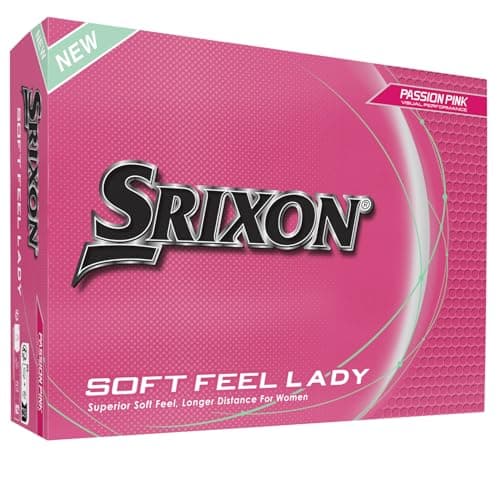
The best golf ball for most women golfers is the Srixon Soft Feel Lady— the standard Soft Feel built on the same FastLayer core, tuned a couple of compression points softer and to launch higher, at a value price. But the more useful headline on this page is the one the category will not print: a ball is not chosen by gender. It is chosen by swing speed, and the word “lady” on a box usually means a low-compression ball and different paint.
Usually — not always. Two balls here are genuinely different products: the Callaway REVA is physically oversize, and the Bridgestone Lady Precept was built from the company’s own fitting data on women golfers. Those are real engineering decisions with real trade-offs, and they get ranked on their merits below. So does one ball with no gendered marketing at all, because it would be dishonest to leave the best slow-swing-speed ball off a page about balls for moderate swing speeds just because it is sold in a plain sleeve.
What a “women’s golf ball” actually changes
There is no physiological reason a golf ball needs a gender. What a women’s model almost always is, in practice, is a low-compression ball— because women’s average swing speeds skew lower than men’s, and compression is the spec that matches a ball to a swing speed.
Compression is roughly how much the ball deforms at impact. A slower swing cannot meaningfully deform a firm tour ball, so it loses the energy return the construction is designed to give — the ball feels hard, flies lower than it should, and costs you distance you paid extra for. A softer ball deforms at lower speeds, launches more easily, and feels better doing it. Our compression explainer covers the mechanism properly, and the golf ball selector turns it into a two-question recommendation.
Which is why this page is useful in a way a label-shopping page is not: once you know you want low compression, the gendered sleeve becomes optional. Sometimes the women’s model is the best low-compression ball on the shelf (the Soft Feel Lady is tuned, not just repainted). Sometimes a non-gendered value ball is softer, cheaper and better (the Supersoft is both). Buying on the spec rather than the box is how you stop overpaying for either.
How we ranked these (the criteria)
We ranked on five things, in this order. Price sets expectations rather than buying a place in the order:
- Compression against a real swing speed. A published or listed compression figure, matched to the moderate speeds this page is written for. Where a maker publishes no number we say so and rank on its stated design intent instead of inventing one.
- How easily it launches.Carry distance for a moderate swing comes from getting the ball up, so higher-launch construction — a gradational core, an oversize body, a softer core tuned for launch — scores above raw ball speed.
- What the cover can and cannot do. Every ball on this page has an ionomer-type cover, which means straight flight and modest greenside spin. We mark that as a limit on all of them rather than pretending one of them bites like urethane.
- Whether you can find it. Visibility is a real, unglamorous feature: a matte or high-contrast ball you spot in rough saves strokes and time. It is also worth paying for only if you lose balls.
- Cost per dozen, honestly. Mid-handicap golfers lose balls. A ball that is 80% as good for 60% of the money is usually the better buy, and we rank it that way.
Scores are judgments from published manufacturer specifications, listing details and aggregated owner feedback against our rubric— not launch monitor testing. We have not hit these balls on a monitor; we do not run a lab, and we say so on every page.
Match the ball to your swing speed, not to the label
You do not need a fitting to get this roughly right, and you certainly do not need to guess from a box color. Two practical routes:
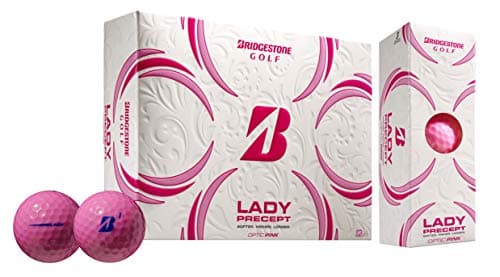
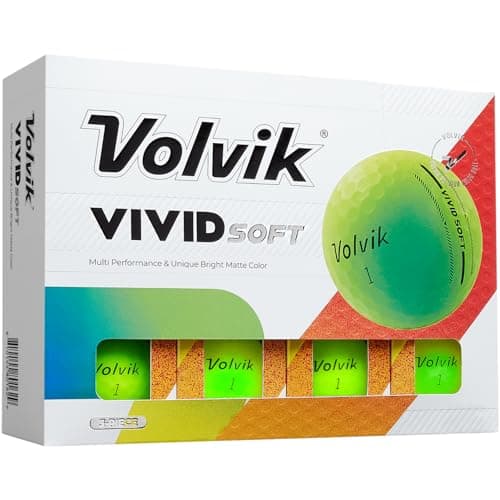
If you know your driver swing speed— from a lesson, a simulator bay or a retail fitting — use it. Volvik’s own listing aims the Vivid Soft at roughly 75–100 mph; Bridgestone describes the Lady Precept as built for moderate swing speeds; Srixon tunes the Soft Feel Lady below the standard Soft Feel’s listed 60 compression. Those are the makers’ stated intents, and they line up with the ranking below.
If you do not know it, use carry distance as a proxy, which is the honest shortcut: if your drives carry under about 180 yards, you are in low-compression territory and every ball on this page is a candidate. If you carry well past that, read our mid-handicap ball roundup instead — you have the speed to use a firmer, higher-spin ball and this page is leaving performance on the table for you.
One more thing worth saying plainly, because the category implies otherwise: a slower swing speed is not a worse golfer. It is a different set of specs. Golf’s equipment marketing has spent decades selling tour-firm balls to golfers who cannot compress them, and the fix is not a gendered sleeve — it is reading the compression number.
Where the oversize ball fits
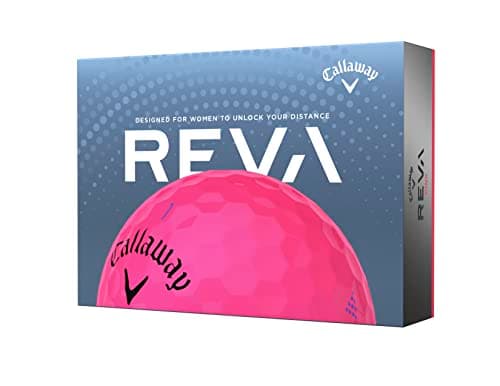
The Callaway REVA is the one genuinely unusual product in this category, and it deserves a clear explanation rather than a shrug. It is a physically larger ball: published reviews and retailer listings put it at about 1.73 inches in diameter against a standard ball’s 1.68 inches, which raises the ball’s center of gravity slightly and makes it easier to get airborne off the deck.
The first question everyone asks is whether that is legal. It is. The USGA’s Appendix III sets a minimumdiameter of 1.680 inches and no maximum, plus a maximum weight of 1.620 ounces — so a bigger ball conforms and a lighter ball conforms, while a smaller or heavier one does not. An oversize ball is a legitimate piece of equipment, not a novelty, and you can play it in competition.
The trade is aerodynamic: a larger ball has more drag, so you give up a little peak speed for easier launch. That is a good trade if your problem is a low, thin flight off the fairway and a bad one if you already launch high. Buy it for the launch, not for the color.
Skip this: the tour ball you cannot compress
The pick nobody sells you is the one not to buy. A premium urethane tour ball — a Pro V1, a TP5, a Chrome Tour — is the wrong ball for a moderate swing speed, and it is the most common expensive mistake in this part of the market, usually bought as a gift or on brand recognition.
The reason is mechanical, not snobbery in reverse. Those balls are built firm so that a fast swing can compress them and get energy back; a slower swing never reaches that point, so you pay three times the price for a ball that feels hard and flies lower. The greenside spin you are paying for also needs clubhead speed to generate. Our are expensive golf balls worth it runs the numbers on that trade honestly, and the best golf balls under $30 a dozen is where the money is better spent.
Read across, not down
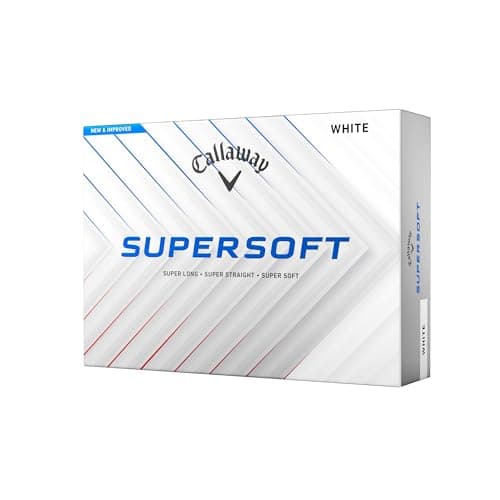
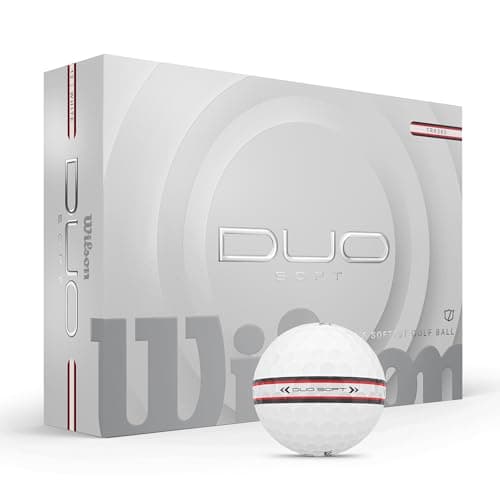
The order below is our overall ranking, but the “best for” line on each pick matters more than its number. If your problem is getting the ball in the air, the oversize REVA addresses it directly. If you lose balls in rough, the matte Volvik saves you more strokes than any compression difference will. If your swing speed is at the slowest end of the scale, the Wilson Duo Soft is about the lowest compression in golf and the right answer — our Supersoft vs Duo Soft comparison settles that head-to-head. And if you simply want the best ball for the money with no label at all, the Callaway Supersoft at number three is the one we would buy.
How much should you spend per dozen?
Three brackets cover this whole page, and the honest answer for most golfers is the middle one.
The value bracketis where the Supersoft, the Soft Feel Lady, the Lady Precept and the Duo Soft all live. Two-piece construction, ionomer cover, low compression, straight flight. For any golfer who still loses a few balls a round, this bracket is not a compromise — it is the correct purchase, and the performance difference up the range is smaller than the price difference by a wide margin.
The mid bracketadds a three-piece build or a specialty feature — the Vivid Soft’s matte visibility, for instance. You are buying one specific thing here, so make sure it is a thing you want: a little more spin separation, or a ball you can find.
The premium bracket is urethane tour balls, and this page has argued against them for a moderate swing speed. The exception is genuine: if you have a good short game, play the same course weekly and rarely lose a ball, a urethane cover gives you greenside control that nothing here can. That is a specific golfer. If it is not you, the money is better spent on a lesson or on more balls.
Compression, in one paragraph
Compression is a measure of how much a ball deforms under load — lower numbers mean a softer ball. The useful rule is that your swing speed should be able to compress the ball you play: slower swings want lower compression so the ball deforms and returns energy; faster swings want firmer balls so they do not over-compress and lose control. Published figures on this page run from the Soft Feel Lady’s listed 58 to the Vivid Soft’s listed 65, with two balls whose makers publish no number at all. That spread is small in absolute terms, which is exactly why you should not agonize over a few points — the gap that matters is between any of these and an 87-compression tour ball.
Are women’s and oversize balls legal in competition?
Yes, provided the model appears on the conforming ball list, and every ball on this page is a mainstream retail model from a major maker. The specifics are worth knowing because they explain the REVA: under the USGA and R&A equipment rules, a ball must be at least 1.680 inches in diameter — there is no upper limit — and must weigh no more than 1.620 ounces, with no lower limit. A larger, lighter ball conforms. A smaller or heavier one does not. Nothing in the rules distinguishes a ball by who it is marketed to.
When to replace the dozen you have
Modern balls do not go stale on a shelf the way the folklore says — an unopened sleeve stored at room temperature is fine for years. What actually ends a ball’s life is damage: a visible cut or a scuff through the paint changes how it flies, and a ball that has been hit by a cart or chewed by a mower is done regardless of how new it looks.
Two things do matter, and both are in our do golf balls go badguide: heat cycling in a car trunk over a summer is genuinely bad for a ball, and cold air makes any ball feel firmer and fly shorter, which is why a low-compression ball is the right choice in November — see best golf balls for cold weather for that version of the question. Play the ball that matches your speed, keep it out of the trunk, and replace it when it looks damaged rather than on a schedule.