Skip to content
Divot&Draw

The Ball · Golf Balls

Bridgestone e6 Soft vs e12 Contact

Two Bridgestone value balls with different jobs. One is built to straighten a slice, the other to chase distance — here's which fault each one fixes.

By Stephen V.Updated How we rank
#ad

We earn a commission when you buy through our Amazon links, at no extra cost to you. It never changes our rankings — and we'll tell you when the cheaper ball or club is the better buy. How this works.

Bridgestone’s e-Series has two value balls that get cross-shopped constantly, and the honest answer is that they’re built for different problems. Both are ionomer-covered value balls at a similar price, so this isn’t a spend-more-get-more decision — it’s a fit question. The e6 Soft is a soft, low-spin ball built to fly straight and take the sidespin off a slice. The e12 Contactis a three-piece distance ball built for straight, efficient carry with a slightly firmer, livelier feel. Pick the one that matches the fault you’re trying to fix.

What each one is built to do

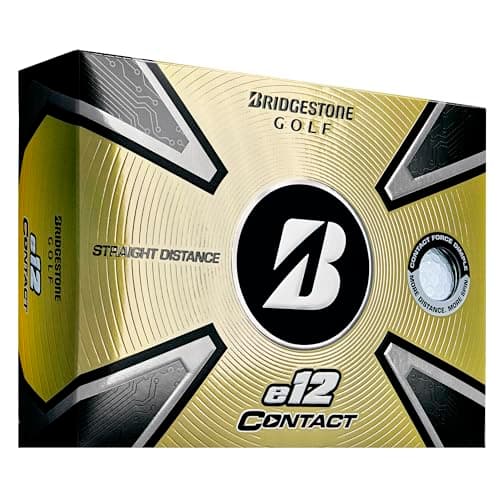
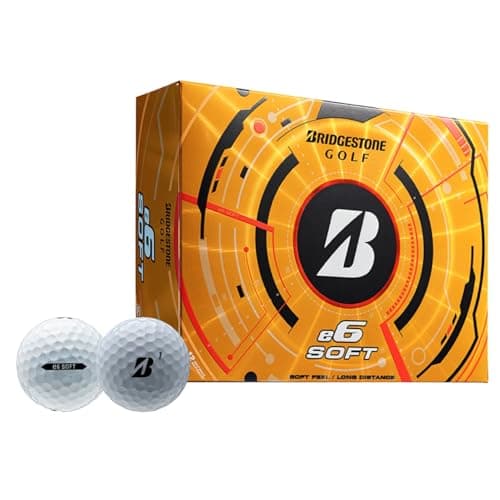
The e6 is a two-piece ball whose whole design goal is low spin. Less spin means less sidespin, and less sidespin means a slice or hook curves less and stays in play. It feels soft through the bag and carries a sensible value price. The e12 Contact is a three-piece ball aimed at straight distance; the extra layer usually buys a slightly better feel than a hard two-piece distance rock, and Bridgestone’s “Contact Force” dimple marketing dresses up what is, underneath, a solid distance ball. Treat that dimple story as marketing doing its job — the ball is good, the breakthrough claims are oversold.

Choose the e6 if…

Your miss is a slice or a hook and lost balls are wrecking your scorecard. The e6’s low-spin construction genuinely reduces the sidespin that turns a slice into an out-of-bounds, and its soft feel is pleasant off every club. It is the more forgiving, more “keep it in play” ball of the two. The trade is that the same low-spin design limits how much you can work the ball or stop it on a green — but if you’re fighting a curve, that’s a price worth paying, and straightness is the fix you actually need.

Choose the e12 Contact if…

You already hit it reasonably straight and you want a value ball tuned for distance with a bit more feel than a two-piece rock. The three-piece build gives it a slightly softer, livelier feel than a basic distance ball, and it’s aimed at straight, efficient carry for a moderate swing. It is the better pick for a player who doesn’t have a big slice to fix and would rather have the yardage and the firmer strike. Just don’t buy it expecting the dimple pattern to be a revolution — buy it as a good, straight distance ball.

What neither one does

Neither ball spins like a urethane tour ball around the green — both have firmer ionomer covers that release more on chips and pitches, which is the normal trade at this price. If your short game can genuinely use greenside spin, neither of these is the answer; step up to a urethane ball and read are expensive golf balls worth it first. And if maximum softness is what you’re after, a Callaway Supersoft or Srixon Soft Feel feels softer than either Bridgestone.

The honest verdict

This is a diagnosis, not a ranking. If you slice it, the e6 is the ball — its low-spin design is a real fix for a real fault. If you hit it straight and want distance with a little feel, the e12 Contact is the better fit. Both are honest value balls that do their specific job well; the mistake is buying the low-spin e6 when you don’t have a curve to fix, or the distance-first e12 when what you really need is help keeping the ball in bounds. Match the ball to your miss and either one earns its place. If you’re not sure which camp you’re in, the distance roundup and the beginner roundup frame the trade from both ends.
The short answer

Quick picks

#ProductBest forScorePrice
01
Bridgestone Bridgestone e6 Soft
Bridgestone e6 Soft

A soft, low-spin ball built to fly straight — aimed squarely at the slice.

Fighting a slice or hook
7.2
$23.97Amazon
02
Bridgestone Bridgestone e12 Contact
Bridgestone e12 Contact

A distance-first value ball with a dimple gimmick that happens to work fine.

Straight distance on a budget
7.2
$29.97Amazon

#ad · Live prices from the Amazon Product API, as of Jul 31, 2026. Where we have no verified live price, we show none — we would rather leave a gap than print a number that has rotted.

In detail

The picks, in full

01
Bridgestone Bridgestone e6 Soft

Fighting a slice or hook

Bridgestone e6 Soft

2-pieceSoft coverLow compressionLow sidespin design
7.2/10

A soft, low-spin ball built to fly straight — aimed squarely at the slice.

Distance
7
Greenside spin
5
Feel
8
Durability
8
Value
8

Pros

  • Low-spin construction genuinely reduces the sidespin that turns a slice into a lost ball
  • Soft feel through the bag
  • A sensible value-tier price

Cons

  • The same low-spin design limits how much you can work the ball or stop it on a green
  • Distance is fine, not remarkable

Skip this if…

you already hit it straight and want to shape shots or spin wedges. The low-spin design is a fix for a fault you don't have, and it'll feel unresponsive around the green.

$23.97View on Amazon

Price as of Jul 31, 2026. Prices change — Amazon's is the one that counts.

#ad · we may earn a commission from this link to Bridgestone e6 Soft

02
Bridgestone Bridgestone e12 Contact

Straight distance on a budget

Bridgestone e12 Contact

3-pieceIonomer coverMid-low compressionDistance design
7.2/10

A distance-first value ball with a dimple gimmick that happens to work fine.

Distance
8
Greenside spin
5
Feel
7
Durability
8
Value
8

Pros

  • A three-piece value ball, which usually means a slightly better feel than a hard two-piece distance rock
  • Aimed at straight, efficient distance for a moderate swing
  • Reasonable price

Cons

  • The 'Contact Force' dimple marketing is doing a lot of work; treat it as a solid distance ball, not a breakthrough
  • Ionomer cover, so the usual value-ball spin ceiling applies

Skip this if…

you want maximum softness or maximum greenside spin. This is tuned for distance and straightness; a Soft Feel feels softer and a urethane ball spins more.

$29.97View on Amazon

Price as of Jul 31, 2026. Prices change — Amazon's is the one that counts.

#ad · we may earn a commission from this link to Bridgestone e12 Contact

How we ranked this

We don't run a testing lab — and we say so

We compiled published manufacturer specifications, official standards and aggregated owner reviews, computed the running costs the big test-labs leave out, and scored each pick against a published rubric. The scores are judgments from documented research — they are notlab measurements we took, because we don't have a lab and we're not going to pretend we do. You can check every number we publish.

Questions

Frequently asked

What's the difference between the Bridgestone e6 and e12 Contact?
They're built for different jobs. The e6 is a soft, low-spin two-piece ball designed to fly straight and reduce the sidespin behind a slice. The e12 Contact is a three-piece distance ball built for straight, efficient carry with a slightly firmer, livelier feel. Pick the e6 to fight a curve, the e12 for distance if you already hit it straight.
Which Bridgestone is better for a slice?
The e6. Its low-spin construction genuinely reduces the sidespin that turns a slice into a lost ball, which is exactly the fault it's designed to help. The e12 Contact is straighter than a wild distance ball but isn't specifically a slice-fighter the way the e6 is.
Does the e12 Contact's dimple design actually work?
It’s a solid distance ball, but the “Contact Force” dimple marketing is doing a lot of work. Treat the e12 as a good, straight three-piece value ball rather than a breakthrough, and it delivers. If you want the softest feel or real greenside spin, look elsewhere — see the full field.

Keep reading

Receipts

Sources

We do not run a testing lab, and we do not pretend to. Every spec number here comes from a manufacturer's published sheet or an official standard, cited above. Where we could not verify something, we say so on the page rather than quietly leaving it out. Read our full method.