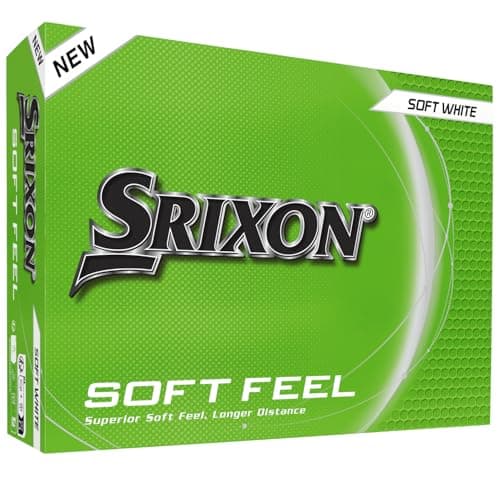
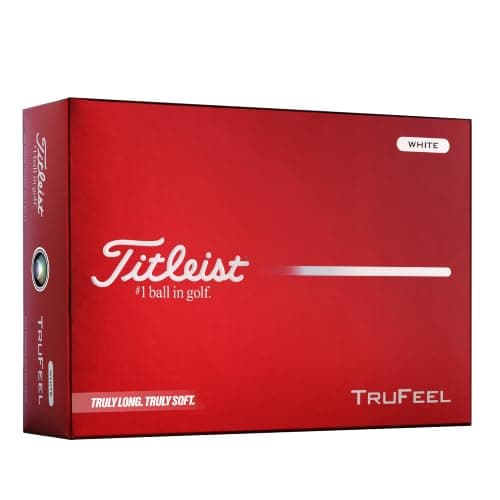
These two are the balls a huge share of golfers should actually be playing — soft, straight, durable, and cheap enough to lose without wincing. Both wear a firmer, more durable ionomercover, so neither spins like a urethane tour ball around the green; that’s the correct trade at this price, not a flaw. The Titleist TruFeel is the softest, cheapest ball Titleist makes, and it carries the brand a lot of players want on the side. The Srixon Soft Feelis the value ball we’d actually buy — a soft, low-compression all-rounder that’s consistently one of the best price-per-dozen in the category. Both are low (not ultra-low) compression, both fly straight, and the honest truth is the gap between them is small. This comes down to feel, price, and which name appeals to you the week you shop.
What they share
Both are two-piece, ionomer-covered value balls built to do the same unglamorous things well: fly straight, feel soft, resist scuffs, and cost little. Both keep driver spin low, which helps a slice or hook stay in play — the low-spin, forgiving flight is a feature for the budget buyer these are aimed at, not a compromise. Both are durable: an ionomer cover shrugs off the cart-path rash and thin wedge strikes that would scuff a softer urethane ball, so a dozen lasts real rounds. And both give up the same thing — greenside bite. Neither will grip a wedge and stop on the second bounce the way a urethane balldoes; they release more on chips and pitches. For a player who isn’t yet flighting wedges to a number, that’s a benefit you’re not paying for rather than a loss — and it means the difference between these two is far smaller than the difference between either of them and a tour ball.
Choose the TruFeel if…
You want the Titleist name at a value price, or you simply like the idea of playing the softest, cheapest ball the brand makes. The TruFeel is a genuine Titleist at value money, with a low compression and a straight, low-spin-off-the-driver flight that helps a slice stay in play. Functionally it competes with the Soft Feel and the Callaway Supersoft, and the script on the side is a real part of its appeal — there’s no shame in wanting the ball you trust the look of. If the badge is worth a dollar or two to you, the TruFeel earns that small premium and does the value-ball job just as well as anything here.
Choose the Soft Feel if…
You want the best price-per-dozen in the category, or a proven soft-feel all-rounder that suits a broad range of swing speeds. The Soft Feel is the value ball we’d actually buy: its low (not ultra-low) compression is a good middle ground that a moderate swing can flatten for real distance, with a slightly firmer, more responsive feel than the very softest balls. It’s consistently one of the cheapest quality value balls going, which is the whole point of shopping this tier. If you don’t care about the badge and you want the most ball for the least money, the Soft Feel is usually the sharper buy — and it anchors our value-ball head-to-head for exactly that reason.
How they actually differ
Be honest about how small the on-course gap is: both are low-compression, ionomer value balls that fly straight, feel soft and release around the green, and they play more alike than any spec sheet suggests. Feel is the most you’ll notice, and even there they’re close — both sit a touch firmer than the ultra-soft Supersoft, and which of the two you prefer off the putter is genuinely down to taste rather than a measurable gap. On durability there’s nothing to separate them; both ionomer covers hold up well. On straight distance they’re a wash too — both keep driver spin low for a forgiving, slice-friendly flight, and neither is a “distance ball” that’ll out-carry the other for a normal swing. That leaves two real differentiators: price and brand. The Soft Feel tends to win on price-per-dozen; the TruFeel wins if the Titleist name matters to you.
Straight distance, and the ceiling both share
It’s worth saying plainly that neither of these is going to out-drive the other in a way you’ll see on the course. Every conforming ball lives under the same USGA and R&A distance ceiling, so two value balls struck the same way finish a similar distance apart — the yardage comes from your strike and swing speed, not the sticker. What both do well is keep sidespin down so your misses curve less and stay in play, which for a slicer is worth more usable yardage than any ball-speed claim. If distance is genuinely your priority over feel, that’s a slightly different shopping trip — our value-ball roundup ranks the whole field for a new or budget-minded game, including the straighter-flying options.
The budget buyer’s honest call
For the budget buyer, the smart move is the least glamorous one: buy whichever of these is cheaper the week you shop, unless the Titleist badge is worth a small premium to you, and then play it every round. Prices on value balls move around with sales and multi-pack deals, so the per-dozen number in front of you the day you buy is a better tie-breaker than any spec difference between them. Because both are cheap enough to lose without wincing and durable enough to last, buy by the box rather than the sleeve so a ball in the water is a shrug, not a decision. Live prices for both sit on the cards above and refresh daily, so you can see the real per-dozen gap before you choose rather than trusting a remembered figure.
Skip the decision entirely if…
Your short game genuinely lives on greenside spin. If you’re a lower handicapper who spins wedges on demand and keeps most golf balls in play, both of these will feel like they’re releasing when you want them to bite — that’s the ionomer cover doing exactly what it’s built to do, and it’s the wrong tool for your game. Step up to a urethane ball; the mid-priced Srixon Q-Star Tour is the natural next rung. For everyone else — the slower, moderate or improving swing that isn’t spinning wedges yet — skip the agonizing entirely: pick the cheaper of these two, or use our golf ball selector to match one to your speed, and get on with it. And if you want to weigh the ultra-soft Supersoft against either of these first, we cover that soft-value question in TruFeel vs Supersoft and Supersoft vs Soft Feel.
The bottom line
There’s no wrong answer here, only a cheaper one and a Titleist one. Both are soft, straight, durable value balls that do exactly what a value ball should — fly forgiving, feel soft, and cost little enough that a lost one doesn’t ruin the round. The Soft Feel usually wins on price and is the all-rounder we’d default to; the TruFeel wins if the badge on the side is worth a dollar or two to you, which is a perfectly honest reason to buy a ball. Neither will bite a wedge like a tour ball, and for the budget buyer these are aimed at, that’s not a shortcoming — it’s the point. Buy the cheaper of the two most weeks, play it consistently, and put the money you saved toward the part of your game that actually needs it.