Skip to content
Divot&Draw

The Sticks · Golf Clubs

The Best Fairway Woods

The club golfers buy for the tee and then cannot hit off the grass. Ranked on the two things that decide it — how much loft you actually need and how light the club has to be — with a live price on every pick.

By Stephen V.Updated How we rank
#ad

We earn a commission when you buy through our Amazon links, at no extra cost to you. It never changes our rankings — and we'll tell you when the cheaper ball or club is the better buy. How this works.

The fairway wood is the most misbought club in golf. It gets picked because a 3-wood is what a golf bag is supposed to contain, it gets used off the tee on the holes where the driver frightens you, and then it sits there for the rest of the round because hitting 15 degrees of loft off tight grass is genuinely hard. The club that actually earns its slot is the one you can get airborne from the fairway, and that is a question about loft and weight long before it is a question about face technology. The Cleveland Launcher Halo XL tops this list because it is the best-built version of the standard answer — but read the “best for” line on every pick below, because for a lot of golfers reading this the right club is further down the page and costs a third as much.

How we ranked these

A fairway wood is judged on one shot: the full swing at a ball sitting on the ground. Every criterion below is about that shot, in the order it decides the outcome.

  1. Loft, first and by a distance. A 15° head needs speed and a clean, shallow strike to launch off grass. A 22° head does not. Most of the golfers who “can’t hit a fairway wood” are simply holding one with too little loft.
  2. What the sole does through the turf. This club is swung from the ground without a tee to help, often from a lie that is not perfect. A sole shaped to slide rather than dig turns a slightly heavy strike into a playable shot instead of a chunk.
  3. Total weight and shaft weight. Fairway woods are sold in stock shafts from about 43 g to about 65 g, and the total club weight in this field ranges from roughly 306 g to 335 g. That spread is bigger than it sounds and it is the single most useful spec for a slower swing.
  4. How much it forgives. A larger head resists twisting on a strike away from the center, and the strike pattern on this club is wide for almost everyone. We report the makers’ own MOI language and say plainly that it is theirs.
  5. What the money actually buys. This field runs from about the price of a dozen premium balls to more than most golfers spend on a driver, for clubs that all hit the same shot. We ranked what the spend gets you, not the badge on the crown.

What we deliberately did not rank on: tour usage, carry numbers from a manufacturer’s own robot, or ball-speed claims we cannot verify. We hit no shots and measured no MOI, because we do not have a lab — every technical claim below is the maker’s published wording, attributed in the prose and listed in the sources at the foot of the page. Our full method is in how we rank.

The one number that sorts this list: loft

Here is the decision the fairway-wood aisle never puts in front of you. The number stamped on the sole — 3, 5, 7, 9 — is a loft, and loft is what lifts a ball that is sitting on the ground with no tee under it. A 3-wood is typically 15°. A 5-wood is about 18°. A seven-wood is about 22°, which is roughly the loft of a 4-iron replacement hybrid, on a head that is far easier to launch than any iron.

The trade is real in both directions. Less loft flies further when you strike it well. More loft flies higher, lands softer and — this is the part golfers refuse to believe — frequently flies further in the air for a moderate swing speed, because a ball that never gets up cannot carry. If you have a 3-wood in your bag right now that you only ever hit off a tee, you have already run this experiment and the answer came back. The honest recommendation on this page is that a large share of amateurs should replace a 3-wood with a 5- or 7-wood and stop thinking of it as a downgrade.

That is why the field below is not six versions of the same club. Ranks one, two and five are 3-woods at 15–16° for golfers with the speed to use them. Rank three is the same head as rank one, lofted up 1.5° and built roughly 25 g lighter for a slower swing. Rank four is a 22° seven-wood, which is the club a great many readers of this page should be buying. Get that decision right and the difference between the heads becomes a detail.

The picks in brief

The Cleveland Launcher Halo XL is the pick for most golfers with a regular-speed swing: a 15°, 43.125-inch 3-wood with GlideRail rails cut into the sole to reduce turf drag, and Cleveland’s MainFrame XL variable-thickness face. The TaylorMade Qi10 Max is the forgiveness play — an oversized 200cc head with an Infinity Carbon Crown, which TaylorMade calls the highest-MOI fairway wood it has built — and it carries a degree more loft than the field at 16°. The Cleveland Halo XL Lite is the same family built for a slow swing: 16.5° of loft, a 43 g Aldila shaft and a published total weight of 306–310 g against the standard build’s 332 g. The Orlimar Escape HL #7 is the honest contrarian pick — 22°, shallow-faced, short, and a fraction of the price of the branded 3-woods. The Callaway Paradym Ai Smoke Max is the engineered option, with an eight-way adjustable hosel and 12 g of tungsten split front and back, and it is also the most expensive club here. And the Wilson Ultra BLK is the floor of the category: a real brand, a real club, and no published specification at all.

Skip this: a new 3-wood, if you cannot hit the one you own off the deck

The caveat this category never volunteers. If your current 3-wood only comes out on the tee, buying a newer 3-wood changes nothing — the problem is 15° of loft against your delivery, and no face technology on this page fixes that. You have three better moves, and two of them are cheaper than everything above. Buy more loft: a 5- or 7-wood from this same field will get airborne from the same lie. Buy a hybrid instead, which is shorter again and easier to control from the rough. Or keep the club you have, put the money into a lesson on strike, and spend the rest on something you use on every hole — where the whole bag budget should go is the subject of how much to spend on golf clubs. If you are building a first bag rather than replacing a club, start instead with what clubs a beginner actually needs.

The short answer

Quick picks

#ProductBest forScorePrice
01
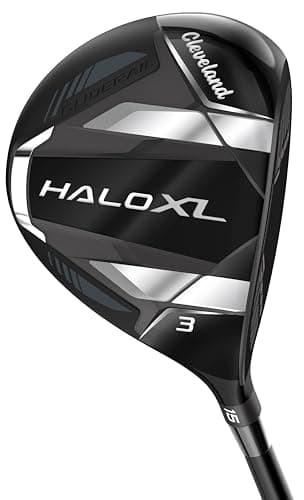
Cleveland Cleveland Launcher Halo XL Fairway Wood (3 Wood, Regular)
Cleveland Launcher Halo XL Fairway Wood (3 Wood, Regular)

The fairway wood we would hand most club golfers: an oversized head on a sole built to survive a heavy strike, in the one loft-and-length combination that still works off the deck.

The best all-round fairway wood
8.4
$199.99Amazon
02
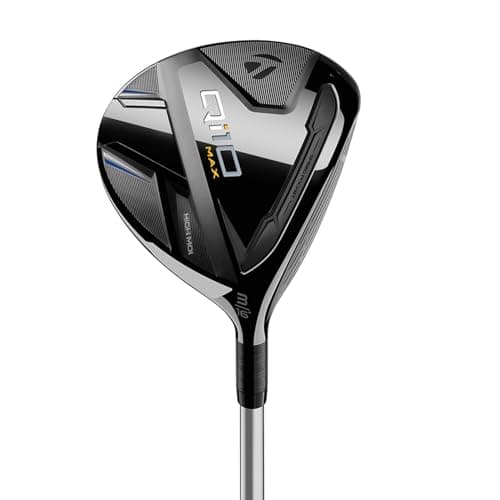
TaylorMade TaylorMade Qi10 Max Fairway 3 Wood (Regular)
TaylorMade Qi10 Max Fairway 3 Wood (Regular)

The biggest, most stable head here — a 200cc oversized shape with a carbon crown, for the golfer whose strike wanders across the face.

The most forgiving head
8.2
$225.99Amazon
03
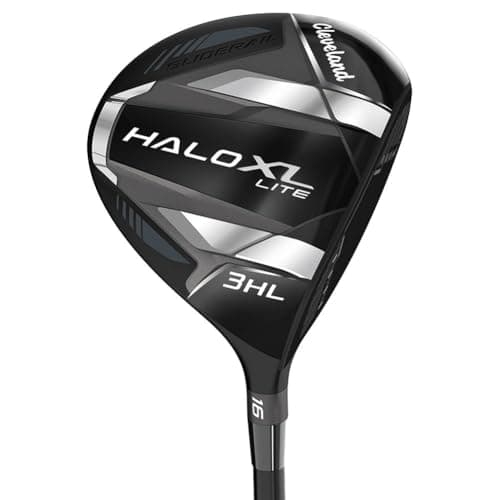
Cleveland Cleveland Halo XL Lite Fairway Wood (3HL, Senior)
Cleveland Halo XL Lite Fairway Wood (3HL, Senior)

The same GlideRail head built light and lofted up — the fairway wood to buy when swing speed, not technique, is what keeps your ball down.

Best for slow swing speeds
8.0
$177.54Amazon
04
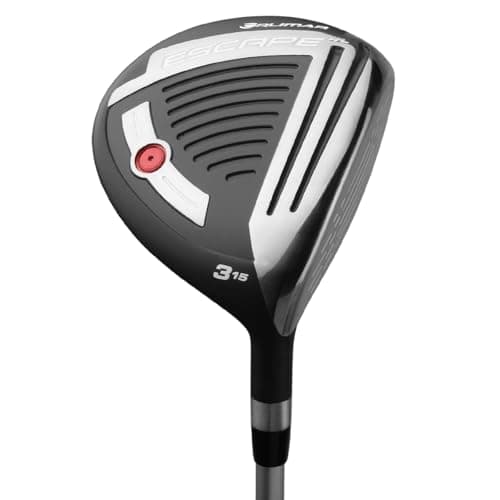
Orlimar Orlimar Escape HL #7 Fairway Wood (Regular)
Orlimar Escape HL #7 Fairway Wood (Regular)

The club most amateurs should buy and almost nobody does — a 22° seven-wood, shallow-faced and short, for a fraction of what the branded 3-woods cost.

Best high-loft pick
7.8
$89.49Amazon
05
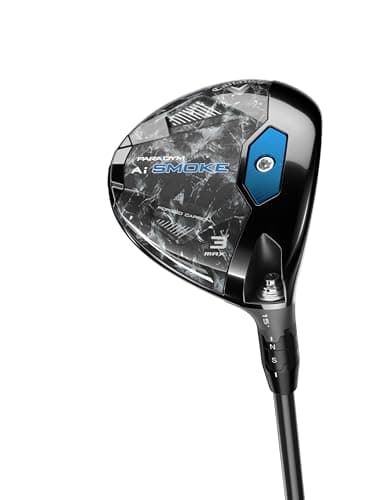
Callaway Callaway Paradym Ai Smoke Max Fairway Wood (3 Wood, Regular)
Callaway Paradym Ai Smoke Max Fairway Wood (3 Wood, Regular)

The most engineered head here — adjustable hosel, carbon chassis, tungsten split front to back — and the one whose extra money buys the least at club level.

Best adjustable premium option
7.6
$269.99Amazon
06
Wilson Men's Ultra BLK Fairway Wood (Right Hand)

The honest floor of the category — a century-old brand's budget fairway wood for less than a dozen premium golf balls, bought on price rather than on numbers.

The best budget pick
6.6
Check price →

#ad · Live prices from the Amazon Product API, as of Aug 31, 2026. Where we have no verified live price, we show none — we would rather leave a gap than print a number that has rotted.

In detail

The picks, in full

01
Cleveland Cleveland Launcher Halo XL Fairway Wood (3 Wood, Regular)

The best all-round fairway wood

Cleveland Launcher Halo XL Fairway Wood (3 Wood, Regular)

15° 3-wood, 43.125 in, 57.5° lieGlideRail sole — two railsMainFrame XL variable-thickness faceTensei AV Blue 55, D1 swing weight
8.4/10

The fairway wood we would hand most club golfers: an oversized head on a sole built to survive a heavy strike, in the one loft-and-length combination that still works off the deck.

Forgiveness
8
Launch
9
Turf interaction
9
Build
8
Value
8

Pros

  • The GlideRail sole is the reason this one is first: Cleveland builds rails into the sole specifically to cut turf drag, and a fairway wood's hardest job is the shot off tight grass with a slightly steep strike — exactly where a flat, wide sole digs
  • Cleveland publishes the MainFrame XL face as a variable-thickness pattern that flexes more at impact, paired with the Rebound Frame's alternating flex zones — the same face-and-frame recipe as the Launcher XL family this site already ranks in irons and hybrids
  • At 43.125 inches it is a little shorter than the class average, and a shorter fairway wood is easier to find the center of — which does more for real carry distance than any face technology

Cons

  • It is still a 15° 3-wood, and 15° is the loft most amateurs cannot launch off the ground; if you only ever hit this club off a tee, that is a sign you bought the wrong number
  • The head is fixed — no adjustable hosel — so if you decide later that you want more loft, you are buying another club rather than turning a screw

Skip this if…

your swing speed is genuinely slow, or your miss is a low, scuttling one. The 15° head and the 58 g Regular shaft need speed to work; the Halo XL Lite in this same family adds 1.5° of loft on a shaft roughly 15 g lighter and is the version built for you.

$199.99View on Amazon

Price as of Aug 31, 2026. Prices change — Amazon's is the one that counts.

#ad · we may earn a commission from this link to Cleveland Launcher Halo XL Fairway Wood (3 Wood, Regular)

02
TaylorMade TaylorMade Qi10 Max Fairway 3 Wood (Regular)

The most forgiving head

TaylorMade Qi10 Max Fairway 3 Wood (Regular)

16° 3-wood, 200cc headInfinity Carbon CrownTwist Face + Thru-Slot Speed PocketFujikura Speeder NX TCS 50
8.2/10

The biggest, most stable head here — a 200cc oversized shape with a carbon crown, for the golfer whose strike wanders across the face.

Forgiveness
9
Launch
8
Turf interaction
8
Build
9
Value
7

Pros

  • TaylorMade calls this the highest-MOI fairway wood it has produced, and the 200cc head is visibly the largest shape on this page — a big footprint is the honest, unglamorous way to make an off-center strike cost less
  • The Infinity Carbon Crown moves mass out of the top of the head, which TaylorMade uses to lower the center of gravity; a low CG in a fairway wood is what gets the ball up off grass rather than only off a tee
  • 16° is a degree more loft than the 15° 3-woods it competes with, and the Thru-Slot Speed Pocket is aimed squarely at the low-face strike that fairway woods produce constantly

Cons

  • A 200cc head is a lot of club to look at behind the ball, and golfers who like a compact, driver-ish 3-wood shape often dislike it on sight — a genuine preference, not a spec
  • A carbon crown changes the sound at impact to something higher and hollower than steel, and you cannot audition that through a listing photo

Skip this if…

you already strike your current fairway wood out of the middle. The whole case for this head is forgiveness on mishits — if you do not mishit it, you are paying a premium for stability you were never going to use, and a smaller head will sit better behind the ball.

$225.99View on Amazon

Price as of Aug 31, 2026. Prices change — Amazon's is the one that counts.

#ad · we may earn a commission from this link to TaylorMade Qi10 Max Fairway 3 Wood (Regular)

03
Cleveland Cleveland Halo XL Lite Fairway Wood (3HL, Senior)

Best for slow swing speeds

Cleveland Halo XL Lite Fairway Wood (3HL, Senior)

16.5° 3HL, 43.75 in, 57.5° lieAldila Ascent PL 40 (43.5–47 g)306–310 g total, D0 swing weightGlideRail sole, MainFrame XL face
8.0/10

The same GlideRail head built light and lofted up — the fairway wood to buy when swing speed, not technique, is what keeps your ball down.

Forgiveness
8
Launch
9
Turf interaction
8
Build
8
Value
7

Pros

  • Cleveland's own description of the Lite build is a lighter clubhead with modified weighting, 1.5° of added loft and a lightweight shaft — three changes that all push in the same direction, which is more carry from less speed
  • The whole club weighs 306–310 g against roughly 332 g for the standard Regular-flex build; that is a published, checkable weight difference, and it is the most useful number on this page for a senior golfer
  • It keeps the GlideRail sole and the MainFrame XL face from the standard Halo XL, so you are not trading technology away to get the lighter build

Cons

  • At 43.75 inches it is longer than the standard Halo XL 3-wood, and a longer club is harder to find the middle of — the lighter head is what makes that trade work, but it is still a trade
  • This listing is Senior flex only, so it fits a narrow band of golfers: put a moderate swing on it and the shaft feels loose and the ball goes left

Skip this if…

you swing at anything like full-Regular speed. Senior flex plus a 43 g shaft plus a light head is built for a slow swing, and a moderate swing on that combination produces a high, weak hook. The standard Halo XL is the same club for you.

$177.54View on Amazon

Price as of Aug 31, 2026. Prices change — Amazon's is the one that counts.

#ad · we may earn a commission from this link to Cleveland Halo XL Lite Fairway Wood (3HL, Senior)

04
Orlimar Orlimar Escape HL #7 Fairway Wood (Regular)

Best high-loft pick

Orlimar Escape HL #7 Fairway Wood (Regular)

22° #7 wood, square face angleShallow-face, high-launch profileStainless steel wrap-around faceEscape Ultralight graphite shaft
7.8/10

The club most amateurs should buy and almost nobody does — a 22° seven-wood, shallow-faced and short, for a fraction of what the branded 3-woods cost.

Forgiveness
8
Launch
9
Turf interaction
7
Build
6
Value
9

Pros

  • 22° of loft and a shallow face is the combination that gets a ball airborne off grass, and Orlimar's published length chart runs from 43 inches at the #3 down to 39.5 inches at the #15 — so a seven-wood is both more lofted and shorter than a 3-wood, two advantages at once for a golfer who struggles with long clubs
  • Orlimar publishes progressive internal heel weighting on this line, which they describe as helping square the face at impact for a draw-enhancing flight — useful if your long-club miss is a weak slice
  • It costs a fraction of the branded field, Orlimar lists a $99.99 MSRP per club, and a numbered headcover is included, so nothing about the deal is hidden

Cons

  • The heel weighting is a fixed draw bias you cannot dial out — if you already fight a hook, this is the wrong club and no shaft change fixes it
  • Orlimar publishes no head weight, no MOI figure and no swing-weight table for this line, so there is genuinely less to check before you buy than with Cleveland or TaylorMade

Skip this if…

you need distance more than height. A seven-wood is not a substitute for a 3-wood off the tee on a long par 4 — it flies shorter by design. Buy it as the club that gets you near a par 5 in two or three, not as your longest club.

$89.49View on Amazon

$99.9911% off

Price as of Aug 31, 2026. Prices change — Amazon's is the one that counts.

#ad · we may earn a commission from this link to Orlimar Escape HL #7 Fairway Wood (Regular)

05
Callaway Callaway Paradym Ai Smoke Max Fairway Wood (3 Wood, Regular)

Best adjustable premium option

Callaway Paradym Ai Smoke Max Fairway Wood (3 Wood, Regular)

15° 3-wood, 43.25 in stock lengthEight-way adjustable hoselCarbon chassis, 12 g tungsten front12 g rear weight, Tensei 65 g shaft
7.6/10

The most engineered head here — adjustable hosel, carbon chassis, tungsten split front to back — and the one whose extra money buys the least at club level.

Forgiveness
8
Launch
8
Turf interaction
7
Build
9
Value
6

Pros

  • Callaway splits the weight deliberately: 12 g of tungsten in a Speed Cartridge near the face to manage launch and spin, and 12 g at the rear for stability — a published, checkable spec rather than an adjective
  • The 15° and 16.5° heads carry an eight-way adjustable hosel, so if you later decide you want a higher flight you can change the loft instead of the club
  • It is the only head here you could plausibly keep through a swing change, because the adjustability lets it move with you

Cons

  • It is the most expensive club on this page by a clear margin, and most buyers set an adjustable hosel once, if ever — you are paying for a mechanism you probably will not use
  • The 65 g Tensei is the heaviest stock shaft here; that suits a moderate-to-fast swing and works directly against a slow one

Skip this if…

your swing speed is modest or your budget is finite. The tungsten split and the adjustable hosel are real engineering, but they do not add carry to a slow swing the way 1.5° more loft and a 20 g lighter build do — the Halo XL Lite costs less and does more for that golfer.

$269.99View on Amazon

Price as of Aug 31, 2026. Prices change — Amazon's is the one that counts.

#ad · we may earn a commission from this link to Callaway Paradym Ai Smoke Max Fairway Wood (3 Wood, Regular)

06

The best budget pick

Wilson Men's Ultra BLK Fairway Wood (Right Hand)

Aluminum head, low-CG weightingLightweight graphite shaftAll-weather TPO gripRight hand; loft not published
6.6/10

The honest floor of the category — a century-old brand's budget fairway wood for less than a dozen premium golf balls, bought on price rather than on numbers.

Forgiveness
6
Launch
7
Turf interaction
6
Build
5
Value
9

Pros

  • It is the cheapest way to put a fairway wood from a real golf brand in your bag, and for an occasional golfer that is the whole argument
  • The retail listing describes a compact aluminum head with low-CG weighting and a lightweight graphite shaft — a light club is genuinely easier to swing fast, which is most of what a beginner needs from this slot
  • At this price it is a sensible way to find out whether you will use a fairway wood at all before spending four times as much on one

Cons

  • Wilson publishes no loft, length, lie or head weight for this club, and the listing does not state the club number — you are buying blind on specs, which is why it ranks last here despite the price
  • An aluminum head is a cheaper construction than the multi-material heads above it; expect a firmer, tinnier feel and less help on a strike away from the center

Skip this if…

you play often enough to care what loft you are hitting. A club with no published specification cannot be fitted or gapped against your irons, and if golf is a weekly thing for you that will matter inside a season.

Check price on Amazon →

We don't have a verified live price for this right now, so we aren't showing one.

#ad · we may earn a commission from this link to Wilson Men's Ultra BLK Fairway Wood (Right Hand)

Shaft weight is the fitting nobody does — and it decides more than the head

Compare the two Cleveland builds on this page, because they make the point better than any argument can. The standard Halo XL 3-wood in Regular flex is published at roughly 332 g in total, on a 58 g Mitsubishi Tensei AV Blue shaft. The Halo XL Lite is published at 306–310 g on a 43 g Aldila Ascent PL 40. Same face, same sole rails, same brand — about 25 g of difference in the club and 15 g in the shaft. That is the equipment equivalent of a swing change, and it is the reason a slower swinger who buys the standard model concludes they “can’t hit fairway woods.”

The rule of thumb is unglamorous: the slower your swing, the lighter the club and the softer the flex should be, because both help you produce speed and get the shaft loading in time to square the face. The heaviest stock shaft in this field is the 65 g Tensei on the Callaway — excellent for a moderate-to-fast swing and actively wrong for a slow one. The material question sits underneath all of this and we cover it separately in graphite vs steel shafts; for fairway woods the answer is graphite for effectively everybody, and the only live decision is how many grams of it. If clubhead speed is your limiting factor across the whole bag, the same logic drives the drivers for a slow swing speed and even the ball you should be playing.

Off the tee and off the deck are two different jobs

Be honest with yourself about which shot you are buying this club for, because the answer changes the number you should be looking at.

Mostly off the tee? You are buying a shorter, straighter driver for tight holes and long par 3s. A ball on a tee removes the hardest part of the shot, so a 15° 3-wood is defensible and the length advantage is real. In that case, look at head size and shape first — and ask yourself whether the honest fix is a more forgiving driver instead, which is what the drivers roundup is for.

Mostly off the deck? Now loft, sole design and length do all the work. This is the shot that separates the field above: a shallower face and a sole built to glide make contact from a tight or slightly grassy lie repeatable, and every degree of loft buys you height that you cannot generate any other way. It is also why the shorter clubs on this page tend to outperform the longer ones in real rounds — a 42-inch seven-wood is simply easier to strike out of the middle than a 43.75-inch 3-wood, and a middle strike beats a longer club almost every time.

Fairway wood, hybrid or long iron

These three clubs overlap and most golfers carry the wrong mix. A fairway wood has the longest shaft and the widest, shallowest head, which makes it the longest of the three and the best from a decent lie or a tee. A hybrid is shorter and heavier with a more compact head, so it comes out of the rough and off tight lies more reliably and lands softer. A long iron is the hardest of the three for an amateur to launch and the easiest to control in wind, which is why so few mid-handicappers should own one. Our review of the Cleveland Launcher Halo XL hybrid works through the same decision from the hybrid side, and the TaylorMade SIM 2 Max Rescue review covers the premium end of it.

A workable default for a mid-to-high handicapper: one fairway wood with real loft (5- or 7-wood), one or two hybrids, and no iron longer than a 5. That is three easy-to-launch clubs covering the yardages where most amateurs currently carry three hard ones.

Gapping: the hole this club is supposed to fill

A fairway wood exists to cover the distance between your driver and your longest comfortable iron. Work out that gap before you shop, because it dictates the loft as clearly as your swing speed does. If your driver carries 210 and your 5-iron carries 150, you have a 60-yard hole and you need two clubs in it, not one — a fairway wood and a hybrid. If the gap is 30 yards, one club covers it and you should buy the one you can hit from the fairway rather than the one that goes furthest off a tee.

Two practical notes. Manufacturers strengthen iron lofts from generation to generation, so your 5-iron may not be the loft you assume — measure the gap in yards you actually carry, not in club numbers. And a fairway wood you can only use off a tee is not filling a gap at all; it is a second driver, and you already have one.

What the rules actually limit, and what they don’t

Very little here will trouble you, which is worth knowing before a marketing page implies otherwise. The Rules of Equipment set a minimum club length of 18 inches and a maximum of 48 inches for every club except a putter — the longest club on this page is 43.75 inches, so nothing in this field is close to the line. The same rules require a clubhead to be “generally plain in shape” with rigid, functional parts, which is what keeps the category looking like golf clubs.

The limit that will actually affect you is Rule 4.1b: fourteen clubs, maximum, from the first tee. Every fairway wood you add costs you a slot somewhere else, which is the real argument for choosing one lofted wood you can hit rather than a 3-wood and a 5-wood that both live in the bag out of habit. If money rather than slots is your constraint, a previous-generation head from a major brand is the best value in this category — the case for that is in should you buy used golf clubs.
How we ranked this

We don't run a testing lab — and we say so

We compiled published manufacturer specifications, official standards and aggregated owner reviews, computed the running costs the big test-labs leave out, and scored each pick against a published rubric. The scores are judgments from documented research — they are notlab measurements we took, because we don't have a lab and we're not going to pretend we do. You can check every number we publish.

Questions

Frequently asked

Should I carry a 3-wood or a 5-wood?
For most amateurs, the 5-wood — or even a 7-wood. A 3-wood is around 15° of loft on the longest shaft in the bag after the driver, which is a demanding combination off the ground. A 5-wood at roughly 18° and a seven-wood at roughly 22° launch higher, land softer and are shorter, so you strike them out of the middle more often. The test is simple and you have probably already run it: if your current 3-wood only comes out on the tee, buy loft.
What loft fairway wood is easiest to hit?
More loft is easier, in a straight line — a 7-wood (about 22°) is easier than a 5-wood (about 18°), which is easier than a 3-wood (about 15°). Loft is what gets a ball airborne when there is no tee under it, and the higher-numbered woods are also shorter, which makes centered contact more likely. The cost is distance on your best strikes, which for most amateurs is a smaller loss than the mishits they trade away.
Is a fairway wood or a hybrid better?
They do different jobs. A fairway wood is longer and wider-soled, so it goes further from a good lie and off a tee. A hybrid is shorter, heavier and more compact, so it is more reliable from the rough and off tight lies and it lands more softly. Most mid-to-high handicappers are best served by one lofted fairway wood plus one or two hybrids, and no iron longer than a 5 — the full case is in our hybrids roundup.
Do I need an adjustable fairway wood?
Almost certainly not. An adjustable hosel lets you change loft and face angle by a degree or two, which is genuinely useful if you are between lofts or mid-swing-change. In practice most buyers set it once, if ever, and the mechanism costs money and adds weight into the hosel. Buy the loft you need off the shelf and put the difference toward the shaft or a lesson.
What shaft flex and weight should I use in a fairway wood?
Match both to your speed rather than your ego. The stock shafts in this field run from about 43 g in Senior flex to 65 g in Regular, and that spread changes the club more than the head does — a lighter, softer shaft helps a slower swing produce speed and square the face, while a heavier, stiffer one steadies a fast one. Graphite is the standard in every fairway wood for good reason; if you want the whole argument, read graphite vs steel shafts.

Keep reading

Receipts

Sources

We do not run a testing lab, and we do not pretend to. Every spec number here comes from a manufacturer's published sheet or an official standard, cited above. Where we could not verify something, we say so on the page rather than quietly leaving it out. Read our full method.