Skip to content
Divot&Draw

The Sticks · Golf Clubs

The Best Fairway Woods for Seniors

Three numbers decide whether a fairway wood works for a slower swing: loft, total weight and shaft weight. Face technology is a distant fourth, and it is the only one the marketing talks about.

By Stephen V.Updated How we rank
#ad

We earn a commission when you buy through our Amazon links, at no extra cost to you. It never changes our rankings — and we'll tell you when the cheaper ball or club is the better buy. How this works.

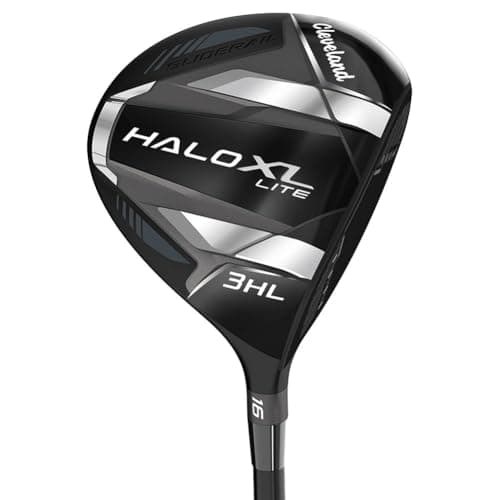
The best fairway wood for a senior golfer is the Cleveland Halo XL Lite in the 3HL build— 16.5 degrees of loft on an Aldila Ascent PL 40 shaft weighing 43 to 47 grams, with a total club weight Cleveland publishes at 306 to 310 grams. That is the pick for the golfer whose swing speed, rather than technique, is what keeps the ball down. Those three numbers are the whole argument, and they are the reason it beats far more expensive heads on this page for this buyer.

Why loft and weight, and not the face

A fairway wood off the deck is the hardest shot in the bag for a slower swing, and the reason is launch. You have a shallow face, a ball sitting on the ground, and not enough clubhead speed to generate the spin and launch angle that gets it airborne and keeps it there. Everything that helps is about getting the ball up:

  • Loft. The largest single lever. A 16.5-degree 3HL launches meaningfully higher than a 15-degree 3-wood, and a 22-degree seven-wood launches higher again. Loft is free forgiveness and the industry is strangely quiet about it.
  • Total weight.A lighter club is a faster club for a golfer whose speed has dropped, and speed is what creates both distance and the spin that holds the ball in the air. Cleveland publishes 306–310 g total on the Lite; a standard-build 3-wood is typically meaningfully heavier.
  • Shaft weight and flex. A 43 g senior-flex shaft loads at a speed a 65 g Regular never will. This is where most badly-fitted fairway woods go wrong.
  • Length. Longer is theoretically faster and practically worse. A 43.75-inch club you strike out of the middle beats a 44-inch one you do not.

Face technology — variable-thickness faces, AI-designed inserts, tungsten splits — is real engineering that mostly pays off at speed. It is not what is costing you carry at 80 mph of driver speed. That is why the most expensive adjustable heads are absent from this page and present on our main fairway wood roundup.

The seven-wood argument

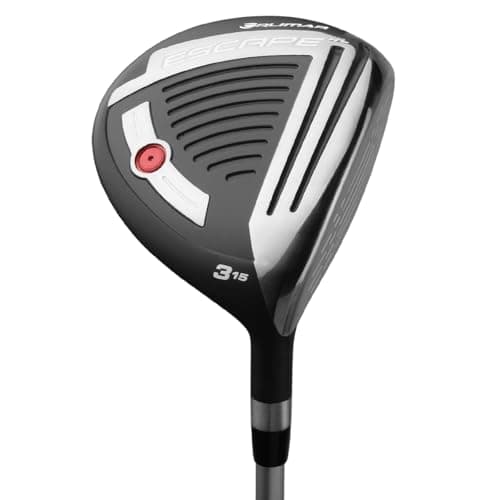
The second pick here is a 22-degree seven-wood, and it is the club we would most like more amateurs to try. A seven-wood is shorter than a 3-wood, shallower-faced, and lofted enough that the ball goes up almost regardless of strike quality. It flies shorter by design — that is the trade — but for a golfer who currently cannot get a 3-wood off the ground at all, a shorter shot in the air beats a longer one along the ground every time.

It also replaces something. If you carry a 3-wood you never hit off the deck and a long iron you cannot flight, a seven-wood does both jobs better. The same reasoning drives our hybrids for seniors page, and the two clubs overlap: a seven-wood and a 4-hybrid occupy nearly the same yardage for many players, and you want one of them, not both.

The four, on the numbers that matter

PickLoftShaft / weightWhy it is here
Cleveland Halo XL Lite 3HL16.5°Aldila Ascent PL 40 (43–47 g), 306–310 g totalThe lightest, highest-lofted build from a major brand
Orlimar Escape HL #722°Escape Ultralight graphiteThe highest-launching club on the page, cheaply
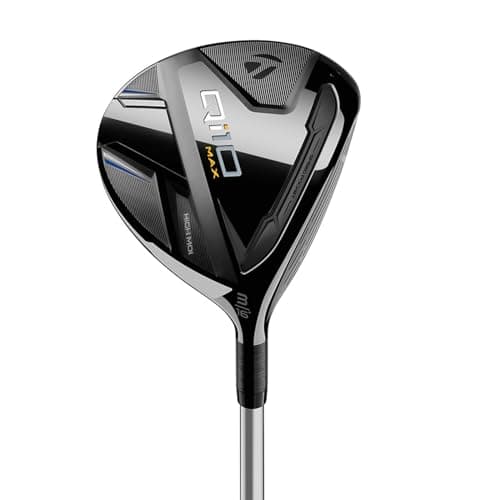
TaylorMade Qi10 Max16°Fujikura Speeder NX TCS 50A 200cc head — the most stable on an off-center strike
Wilson Ultra BLKNot publishedLightweight graphiteThe honest budget floor, bought on price

Scores are judgments from published manufacturer specifications, listing details and aggregated owner feedback against our rubric. We have not hit these on a monitor; we do not run a lab and we say so.

The short answer

Quick picks

#ProductBest forScorePrice
01
Cleveland Cleveland Halo XL Lite Fairway Wood (3HL, Senior)
Cleveland Halo XL Lite Fairway Wood (3HL, Senior)

The same GlideRail head built light and lofted up — the fairway wood to buy when swing speed, not technique, is what keeps your ball down.

The best fairway wood for a slower swing
8.0
$168.83Amazon
02
Orlimar Orlimar Escape HL #7 Fairway Wood (Regular)
Orlimar Escape HL #7 Fairway Wood (Regular)

The club most amateurs should buy and almost nobody does — a 22° seven-wood, shallow-faced and short, for a fraction of what the branded 3-woods cost.

The high-loft club that is easiest to hit
7.8
$93.98Amazon
03
TaylorMade TaylorMade Qi10 Max Fairway 3 Wood (Regular)
TaylorMade Qi10 Max Fairway 3 Wood (Regular)

The biggest, most stable head here — a 200cc oversized shape with a carbon crown, for the golfer whose strike wanders across the face.

A senior golfer whose strike wanders
8.2
$225.99Amazon
04
Wilson Men's Ultra BLK Fairway Wood (Right Hand)

The honest floor of the category — a century-old brand's budget fairway wood for less than a dozen premium golf balls, bought on price rather than on numbers.

The budget way to find out if you want one
6.6
Check price →

#ad · Live prices from the Amazon Product API, as of October 18, 2026. Where we have no verified live price, we show none — we would rather leave a gap than print a number that has rotted.

In detail

The picks, in full

01
Cleveland Cleveland Halo XL Lite Fairway Wood (3HL, Senior)

The best fairway wood for a slower swing

Cleveland Halo XL Lite Fairway Wood (3HL, Senior)

16.5° 3HL, 43.75 in, 57.5° lieAldila Ascent PL 40 (43.5–47 g)306–310 g total, D0 swing weightGlideRail sole, MainFrame XL face
8.0/10

The same GlideRail head built light and lofted up — the fairway wood to buy when swing speed, not technique, is what keeps your ball down.

Forgiveness
8
Launch
9
Turf interaction
8
Build
8
Value
7

Pros

  • Cleveland's own description of the Lite build is a lighter clubhead with modified weighting, 1.5° of added loft and a lightweight shaft — three changes that all push in the same direction, which is more carry from less speed
  • The whole club weighs 306–310 g against roughly 332 g for the standard Regular-flex build; that is a published, checkable weight difference, and it is the most useful number on this page for a senior golfer
  • It keeps the GlideRail sole and the MainFrame XL face from the standard Halo XL, so you are not trading technology away to get the lighter build

Cons

  • At 43.75 inches it is longer than the standard Halo XL 3-wood, and a longer club is harder to find the middle of — the lighter head is what makes that trade work, but it is still a trade
  • This listing is Senior flex only, so it fits a narrow band of golfers: put a moderate swing on it and the shaft feels loose and the ball goes left

Skip this if…

…you swing at anything like full-Regular speed. Senior flex plus a 43 g shaft plus a light head is built for a slow swing, and a moderate swing on that combination produces a high, weak hook. The standard Halo XL is the same club for you.

$168.83View on Amazon

Price as of October 18, 2026. Prices change — Amazon's is the one that counts.

#ad · we may earn a commission from this link to Cleveland Halo XL Lite Fairway Wood (3HL, Senior)

02
Orlimar Orlimar Escape HL #7 Fairway Wood (Regular)

The high-loft club that is easiest to hit

Orlimar Escape HL #7 Fairway Wood (Regular)

22° #7 wood, square face angleShallow-face, high-launch profileStainless steel wrap-around faceEscape Ultralight graphite shaft
7.8/10

The club most amateurs should buy and almost nobody does — a 22° seven-wood, shallow-faced and short, for a fraction of what the branded 3-woods cost.

Forgiveness
8
Launch
9
Turf interaction
7
Build
6
Value
9

Pros

  • 22° of loft and a shallow face is the combination that gets a ball airborne off grass, and Orlimar's published length chart runs from 43 inches at the #3 down to 39.5 inches at the #15 — so a seven-wood is both more lofted and shorter than a 3-wood, two advantages at once for a golfer who struggles with long clubs
  • Orlimar publishes progressive internal heel weighting on this line, which they describe as helping square the face at impact for a draw-enhancing flight — useful if your long-club miss is a weak slice
  • It costs a fraction of the branded field, Orlimar lists a $99.99 MSRP per club, and a numbered headcover is included, so nothing about the deal is hidden

Cons

  • The heel weighting is a fixed draw bias you cannot dial out — if you already fight a hook, this is the wrong club and no shaft change fixes it
  • Orlimar publishes no head weight, no MOI figure and no swing-weight table for this line, so there is genuinely less to check before you buy than with Cleveland or TaylorMade

Skip this if…

…you need distance more than height. A seven-wood is not a substitute for a 3-wood off the tee on a long par 4 — it flies shorter by design. Buy it as the club that gets you near a par 5 in two or three, not as your longest club.

$93.98View on Amazon

$99.996% off

Price as of October 18, 2026. Prices change — Amazon's is the one that counts.

#ad · we may earn a commission from this link to Orlimar Escape HL #7 Fairway Wood (Regular)

03
TaylorMade TaylorMade Qi10 Max Fairway 3 Wood (Regular)

A senior golfer whose strike wanders

TaylorMade Qi10 Max Fairway 3 Wood (Regular)

16° 3-wood, 200cc headInfinity Carbon CrownTwist Face + Thru-Slot Speed PocketFujikura Speeder NX TCS 50
8.2/10

The biggest, most stable head here — a 200cc oversized shape with a carbon crown, for the golfer whose strike wanders across the face.

Forgiveness
9
Launch
8
Turf interaction
8
Build
9
Value
7

Pros

  • TaylorMade calls this the highest-MOI fairway wood it has produced, and the 200cc head is visibly the largest shape on this page — a big footprint is the honest, unglamorous way to make an off-center strike cost less
  • The Infinity Carbon Crown moves mass out of the top of the head, which TaylorMade uses to lower the center of gravity; a low CG in a fairway wood is what gets the ball up off grass rather than only off a tee
  • 16° is a degree more loft than the 15° 3-woods it competes with, and the Thru-Slot Speed Pocket is aimed squarely at the low-face strike that fairway woods produce constantly

Cons

  • A 200cc head is a lot of club to look at behind the ball, and golfers who like a compact, driver-ish 3-wood shape often dislike it on sight — a genuine preference, not a spec
  • A carbon crown changes the sound at impact to something higher and hollower than steel, and you cannot audition that through a listing photo

Skip this if…

…you already strike your current fairway wood out of the middle. The whole case for this head is forgiveness on mishits — if you do not mishit it, you are paying a premium for stability you were never going to use, and a smaller head will sit better behind the ball.

$225.99View on Amazon

Price as of October 18, 2026. Prices change — Amazon's is the one that counts.

#ad · we may earn a commission from this link to TaylorMade Qi10 Max Fairway 3 Wood (Regular)

04

The budget way to find out if you want one

Wilson Men's Ultra BLK Fairway Wood (Right Hand)

Aluminum head, low-CG weightingLightweight graphite shaftAll-weather TPO gripRight hand; loft not published
6.6/10

The honest floor of the category — a century-old brand's budget fairway wood for less than a dozen premium golf balls, bought on price rather than on numbers.

Forgiveness
6
Launch
7
Turf interaction
6
Build
5
Value
9

Pros

  • It is the cheapest way to put a fairway wood from a real golf brand in your bag, and for an occasional golfer that is the whole argument
  • The retail listing describes a compact aluminum head with low-CG weighting and a lightweight graphite shaft — a light club is genuinely easier to swing fast, which is most of what a beginner needs from this slot
  • At this price it is a sensible way to find out whether you will use a fairway wood at all before spending four times as much on one

Cons

  • Wilson publishes no loft, length, lie or head weight for this club, and the listing does not state the club number — you are buying blind on specs, which is why it ranks last here despite the price
  • An aluminum head is a cheaper construction than the multi-material heads above it; expect a firmer, tinnier feel and less help on a strike away from the center

Skip this if…

…you play often enough to care what loft you are hitting. A club with no published specification cannot be fitted or gapped against your irons, and if golf is a weekly thing for you that will matter inside a season.

Check price on Amazon →

We don't have a verified live price for this right now, so we aren't showing one.

#ad · we may earn a commission from this link to Wilson Men's Ultra BLK Fairway Wood (Right Hand)

How to tell whether the shaft, not the head, is your problem

Two symptoms point at a shaft that is too heavy or too stiff for your current speed. The ball starts low and stays low, finishing on a flat trajectory that runs out rather than carrying. And your best strikes feel dead rather than powerful — the club is not loading, so you get none of the whip back. If both describe you, a lighter senior-flex shaft will do more for your carry than any new head at any price.

The counter-case matters too, and the Halo XL Lite’s own listing says it: if you swing at anything like full-Regular speed, a senior flex on a 43 g shaft under a light head produces a high, weak hook. Lightness is a fit, not an upgrade. If your speed is still moderate, buy the standard Halo XL or a Regular-flex equivalent.

Graphite is not optional here

Every pick on this page is graphite, which is deliberate rather than accidental. Steel shafts in a fairway wood are effectively extinct for good reason: the weight saving in graphite goes directly into clubhead speed, which is the resource a slower swing is short of. Our graphite vs steel guide works through where the choice is still live (irons) and where it is not (woods).

One club, not three

A final piece of honest advice. Most golfers in this position do not need a new fairway wood and a hybrid and a replacement long iron. They need one club that goes a predictable distance in the air from a fairway lie. Pick the loft that fills your biggest gap, buy that one club, and spend the rest on irons that actually suit you.
How we ranked this

We don't run a testing lab — and we say so

We compiled published manufacturer specifications, official standards and aggregated owner reviews, computed the running costs the big test-labs leave out, and scored each pick against a published rubric. The scores are judgments from documented research — they are not lab measurements we took, because we don't have a lab and we're not going to pretend we do. You can check every number we publish.

Questions

Frequently asked

What loft fairway wood should a senior golfer use?
More than you think. A 16.5-degree 3HL is a better starting point than a standard 15-degree 3-wood for most slower swings, and a 22-degree seven-wood is easier again. Loft is the single biggest lever on launch, it costs nothing, and it is the one variable the marketing talks about least.
Is a 3-wood or a 5-wood better for seniors?
Usually the higher-lofted one, and often higher still than a 5-wood. The shot that defeats most slower swings is a fairway wood off the deck, and loft is what gets it airborne. If you cannot reliably get your current 3-wood off the ground, moving to a 3HL, a 5-wood or a seven-wood will add carry even though the club is theoretically shorter.
How light should a senior fairway wood be?
Light enough that the shaft loads at your speed. Cleveland publishes 306 to 310 grams total for the Halo XL Lite 3HL on a 43 to 47 gram Aldila Ascent PL 40 shaft, which is the senior-build benchmark here. If your current club has a 65 gram Regular shaft and your ball flight is low and flat, that is where your carry is going.
Should a senior golfer carry a fairway wood or a hybrid?
One or the other for each yardage gap, not both. A seven-wood and a 4-hybrid cover nearly the same distance for many players; carrying both wastes a slot. A wood launches higher and sits better on a fairway lie, a hybrid is easier out of rough and off a tight lie. See our hybrids for seniors page for the other half of this decision.
Is an expensive adjustable fairway wood worth it for a slow swing?
Rarely. Adjustable hosels and tungsten weighting are real engineering, but they pay off mostly at speed — they do not add carry to a slower swing the way 1.5 degrees more loft and a 20 gram lighter build do. Spend the money on loft and weight, which is what the ranking on this page reflects.

Keep reading

Receipts

Sources

We do not run a testing lab, and we do not pretend to. Every spec number here comes from a manufacturer's published sheet or an official standard, cited above. Where we could not verify something, we say so on the page rather than quietly leaving it out. Read our full method.