Skip to content
Divot&Draw

The Sticks · Golf Clubs

The Best Drivers for a Slow Swing Speed

Distance at a slower swing comes from launch and lightness, not from a stiffer shaft and less loft. Five drivers ranked by how well each one actually suits a slow swing, with live prices.

By Stephen V.Updated How we rank
#ad

We earn a commission when you buy through our Amazon links, at no extra cost to you. It never changes our rankings — and we'll tell you when the cheaper ball or club is the better buy. How this works.

The best driver for a slow swing speed is the Callaway Big Bertha in the exact build we rank here — a high-loft, light-flex, genuinely forgiving head. But the pick matters less than the principle behind it, and almost every golfer with a slower swing gets this backwards: distance at a moderate speed comes from launch and lightness, not from a stiffer shaft and a lower loft. If you swing it around or under the speed where a stock “regular” driver starts feeling like hard work — roughly the sub-90 mph band the industry uses — the driver that adds yards is the one that is lighter, softer and more lofted than the one your ego wants. Below are five drivers ranked by how well each actually suits that swing, with a live price and an honest catch on every one.

What “slow swing speed” actually means here

Nobody needs a launch monitor to work out where they sit. If your drives fly low and fall out of the air rather than carrying, if a regular-flex shaft feels boardy and unresponsive, or if you notice you have to swing hardto get a normal result, you are in the band this page is written for — broadly the under-90 mph clubhead speeds the industry treats as moderate-to-slow. It is not a judgment about your game: plenty of golfers who break 90 regularly swing in this band, and it is the default for most players over 60 and for many smooth-tempo swingers of any age. What matters is that the equipment answer is genuinely different, not a lesser version of the fast-swing answer. If you also want the ball to match, the same logic drives our best golf balls for slow swing speeds.

The three things that actually add distance

Only three specs really move the needle on a driver for a slower swing, and all three run opposite to the way drivers are marketed:

  • Total weight — lighter is faster. Distance comes from clubhead speed, and the simplest way for a slower swinger to find speed is to swing a lighter club. A lightweight head, shaft and grip is not a compromise build; for this swing it is the performance build.
  • Loft — more, not less.A slow swing does not generate the ball speed and spin to carry a low-lofted driver, so a 9° head produces a flat, short, falling-out-of- the-sky flight. More loft launches the ball higher, keeps it in the air longer and adds carry — which is where nearly all of a slower player’s lost distance hides.
  • Flex — softer loads properly. A shaft that is too stiff for your speed never loads and unloads, so you get no kick at impact and a low, dead flight. A softer flex in the same head is often worth more yards than any new model year. Our graphite vs steel guide covers why lightweight graphite is effectively mandatory here.

Notice what is noton that list: the model year, the badge, or the tour player in the advertisement. A three-year-old driver in the right loft and flex will beat this season’s flagship in the wrong one, every time.

How we ranked these (the criteria)

We scored on four things, in this order:

  • Fit to a slow swing.The listing’s actual loft and flex, and the head’s overall weight, weighted above everything else. A great driver in a 9° stiff build is the wrong driver on this page.
  • Forgiveness. A slower swing rarely comes with a tour-centered strike pattern, so heads that hold ball speed and line on off-center hits rank higher than heads that reward a perfect one.
  • Whether it fights a slice.The dominant miss in this band is a weak fade that leaks right. Offset and draw-biased heads genuinely help it — but only if that is actually your miss, which is why we say so on each pick rather than treating it as a universal good.
  • Price for what you get. Forgiveness technology is real and costs money, but a budget offset head gets a slower swing airborne for a fraction of a premium one. We ranked value honestly rather than assuming the expensive club is the better buy.

Every ASIN below is one specific loft and flex, and we state which in the specs on each pick — because a driver’s loft is the single most important thing on this page, and quoting a price without saying which build it is would be the easiest way to mislead you. Scores are judgments from published manufacturer specs and aggregated owner reviews against our rubric, not lab measurements — we don’t run a lab and won’t pretend to.

Match the pick to your miss, not just your speed

Speed tells you the loft and flex; your miss tells you which head. If your slow swing also leaks the ball right — by far the most common combination — a draw-biased head like the Wilson DYNAPWR Max Lite or the offset budget Pinemeadow will straighten it in a way no amount of loft can. If you swing slow but reasonably straight, a neutral high-launch head like the Wilson Dynapower gives you the height without the risk of over-correcting into a hook. And if your speed is genuinely moderate rather than slow, the Cleveland Launcher XL 2 in a standard 10.5° regular build is the one to grow into. Get those two questions right — how fast, and which way does it miss — and the choice below is almost made for you.

Skip this: the stiff shaft and the strong loft

The most expensive mistake in this category costs nothing to avoid: buying a low-lofted head with a stiff shaft because that is what better players play. It is the single most common reason a golfer with a slower swing hits a new driver shorter than the old one. A stiff shaft you cannot load kills your launch, a 9° head you cannot compress kills your carry, and the two together produce the low, weak, right-drifting drive that makes people conclude they need lessons when they actually need a different spec of the same club. Take more loft than feels flattering, take the softer flex, and take the lighter build — then spend the money you saved on the short game, where the strokes really are. Our main driver roundup covers the faster-swing field if you are shopping the other end of the range.

The short answer

Quick picks

#ProductBest forScorePrice
01
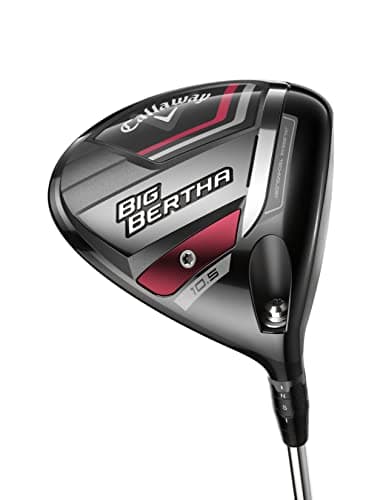
Callaway Callaway Big Bertha Driver (2023)
Callaway Big Bertha Driver (2023)

The most forgiving driver here and the one to buy if the budget stretches — a genuine game-improvement head in a high-launch, light-flex build.

Game-improvement distance and forgiveness
7.6
$399.99Amazon
02
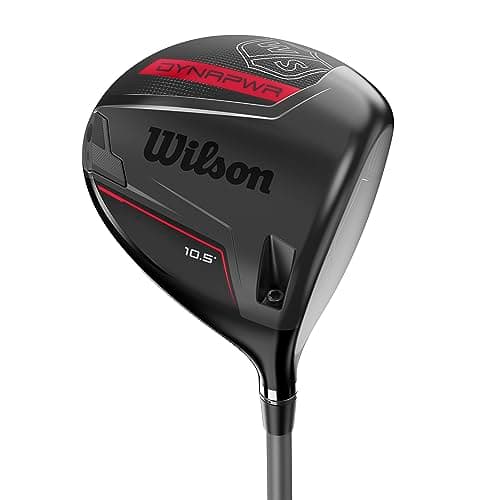
Wilson Wilson Dynapower Driver (13°, Regular)
Wilson Dynapower Driver (13°, Regular)

The high-launch pick — a forgiving, rear-weighted Wilson driver in its highest 13° loft, so a slower or steeper beginner swing gets the ball up and carrying without a fight, for less than the premium heads.

Beginners who need maximum launch
7.4
$289.99Amazon
03
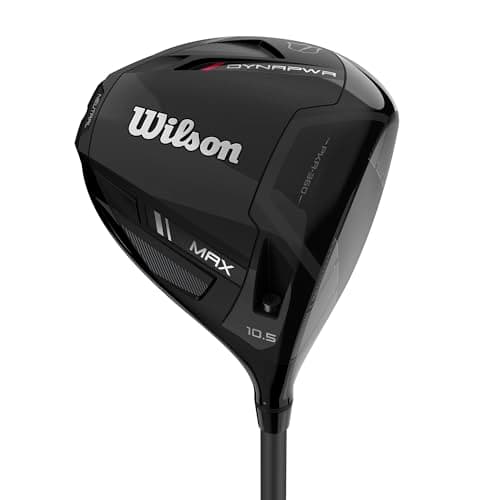
Wilson Wilson DYNAPWR Max Women's Driver Lite (12°)
Wilson DYNAPWR Max Women's Driver Lite (12°)

A featherweight, draw-biased driver built to fight a slice and help a slower swing find speed — Wilson's most forgiving head in its lightest ladies build.

Slower swing speeds fighting a slice
7.2
$349.99Amazon
04
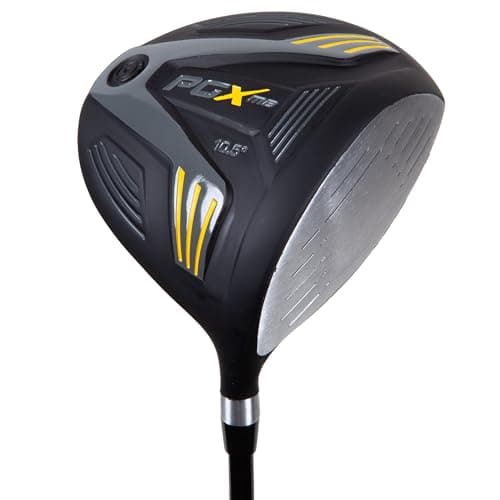
Pinemeadow Pinemeadow PGX Driver
Pinemeadow PGX Driver

A budget offset driver that does the one job a beginner needs — get it airborne and pointed straight — for a fraction of the brand-name price.

The best value driver
7.0
$90.68Amazon
05
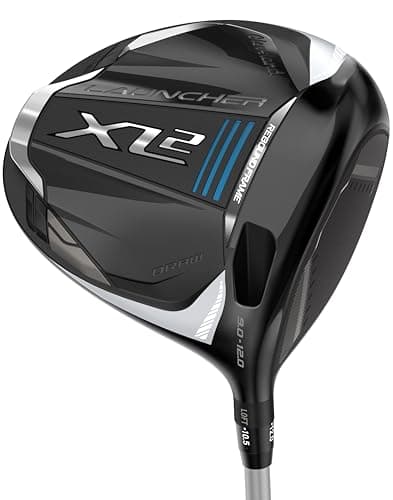
Cleveland Cleveland Launcher XL 2 Driver (Graphite, 10.5°, Regular)
Cleveland Launcher XL 2 Driver (Graphite, 10.5°, Regular)

The one most beginners should actually buy — a current-generation, major-brand game-improvement driver built around Cleveland's highest-ever driver MOI, so off-center hits still fly straight and far while you learn to find the middle.

Beginners who want one driver to grow into
7.8
$299.99Amazon

#ad · Live prices from the Amazon Product API, as of Aug 31, 2026. Where we have no verified live price, we show none — we would rather leave a gap than print a number that has rotted.

In detail

The picks, in full

01
Callaway Callaway Big Bertha Driver (2023)

Game-improvement distance and forgiveness

Callaway Big Bertha Driver (2023)

12.5° loft (this listing)Game-improvement driverLight-flex shaft optionHigh-launch, forgiving
7.6/10

The most forgiving driver here and the one to buy if the budget stretches — a genuine game-improvement head in a high-launch, light-flex build.

Forgiveness
9
Distance
8
Feel
8
Playability
7
Value
6

Pros

  • Big, forgiving footprint that holds ball speed on off-center hits better than anything else in this roundup
  • This listing's 12.5° loft and light flex launch it high and easy — well suited to moderate and slower swings
  • A current-generation Callaway head, not a decade-old design on clearance

Cons

  • Costs multiples of the budget drivers here — the forgiveness is real, but so is the price
  • The high-loft, light-flex build is a specific spec; a faster player would want a stiffer shaft and less loft

Skip this if…

you're on a tight budget or you swing it hard. This exact listing is a high-launch, light-flex 12.5°, built for moderate speed; a fast swinger will balloon it and should choose a lower loft and firmer flex, and a beginner can get airborne for far less.

$399.99View on Amazon

Price as of Aug 31, 2026. Prices change — Amazon's is the one that counts.

#ad · we may earn a commission from this link to Callaway Big Bertha Driver (2023)

02
Wilson Wilson Dynapower Driver (13°, Regular)

Beginners who need maximum launch

Wilson Dynapower Driver (13°, Regular)

13° loft, Regular flex (this listing)Rear-weighted high-MOI head (Wilson)AI-designed variable-thickness face (Wilson)Standard model — not the draw-biased Max
7.4/10

The high-launch pick — a forgiving, rear-weighted Wilson driver in its highest 13° loft, so a slower or steeper beginner swing gets the ball up and carrying without a fight, for less than the premium heads.

Forgiveness
8
Distance
8
Feel
7
Playability
6
Value
8

Pros

  • This is the 13° loft — the most in the Dynapower line — which makes it one of the easiest drivers here to get airborne for a slow or moderate swing, where a beginner's carry actually comes from
  • Wilson builds the Dynapower around a rear-weighted, high-MOI chassis and an AI-shaped face designed to hold ball speed on off-center strikes — a genuinely forgiving head that reviewers consistently find flatters a mishit
  • A lot of current major-brand driver for the money — it usually undercuts the premium game-improvement heads while giving up little in forgiveness

Cons

  • This listing is the standard Dynapower, not the draw-biased DYNAPWR Max — it's a neutral-flighted head, so it won't straighten a slice the way the draw-biased DYNAPWR Max Lite or the offset Pinemeadow will
  • 13° is a lot of loft: right for a slow swing that needs height, but a faster beginner may balloon it and lose distance — take a lower loft instead if you already flight it high

Skip this if…

your miss is a slice, or you already launch the driver high. The neutral 13° head is built to add height, not to fight a slice — a golfer who leaks it right wants the draw-biased DYNAPWR Max Lite or the offset Pinemeadow, and a faster swing that already flights it up wants less loft than this.

$289.99View on Amazon

Price as of Aug 31, 2026. Prices change — Amazon's is the one that counts.

#ad · we may earn a commission from this link to Wilson Dynapower Driver (13°, Regular)

03
Wilson Wilson DYNAPWR Max Women's Driver Lite (12°)

Slower swing speeds fighting a slice

Wilson DYNAPWR Max Women's Driver Lite (12°)

12° loft, Ladies flex (this listing)Draw bias + high MOI, low CG (Wilson)UST Helium NCT4 40g lightweight shaft6-way adjustable hosel, 19g flippable weight
7.2/10

A featherweight, draw-biased driver built to fight a slice and help a slower swing find speed — Wilson's most forgiving head in its lightest ladies build.

Forgiveness
9
Distance
7
Feel
7
Playability
7
Value
6

Pros

  • The 'Lite' build pairs a 40-gram UST Helium shaft with a ladies flex, and that low overall weight helps a slower swing generate clubhead speed — which is where distance actually comes from
  • Wilson's published aim for the Max head is a draw bias with 'enhanced stability': weight pushed front-to-back and heel-to-toe for high MOI and a low center of gravity, so it launches easily and leans the flight left of a slice
  • A 6-way adjustable hosel and a flippable 19-gram rear weight mean you can dial face angle and shot shape as your swing settles — tuning a fixed offset budget driver simply cannot offer

Cons

  • This is the ladies-flex 'Lite' build on a 40-gram shaft — tuned for a genuinely slow swing, not a neutral men's driver; match it to your speed or it will feel whippy and over-draw
  • The draw bias that fixes a slice gets in the way if you already draw the ball or want to work it, and unlike the offset driver it replaces it corrects with internal weighting rather than a visible offset hosel

Skip this if…

you have moderate-to-fast swing speed or you don't slice. The 40-gram, ladies-flex Lite build is tuned for a slow swing that leaks right — feed it real speed and you'll lose control and turn the draw bias into a hook. A brand-new golfer on a tight budget can also get airborne for a fraction of this with the Pinemeadow.

$349.99View on Amazon

Price as of Aug 31, 2026. Prices change — Amazon's is the one that counts.

#ad · we may earn a commission from this link to Wilson DYNAPWR Max Women's Driver Lite (12°)

04
Pinemeadow Pinemeadow PGX Driver

The best value driver

Pinemeadow PGX Driver

Oversized offset headDraw-biased designBudget tierGraphite shaft
7.0/10

A budget offset driver that does the one job a beginner needs — get it airborne and pointed straight — for a fraction of the brand-name price.

Forgiveness
7
Distance
7
Feel
6
Playability
6
Value
9

Pros

  • A fraction of the price of a name-brand driver, which is the whole point
  • Offset, draw-biased head helps a beginner's slice and gets the ball up
  • A sensible first driver, or a cheap gap-filler while you decide what you really want

Cons

  • Doesn't hold ball speed on mishits the way a modern game-improvement head like the Big Bertha does
  • Limited shaft and loft choice, and the feel is what you'd expect at the price

Skip this if…

you want the last few yards and the tightest dispersion. A budget head can't match a current game-improvement driver's forgiveness on off-center strikes — if you can stretch the budget and you play often, the Big Bertha is the better long-term buy.

$90.68View on Amazon

$99.959% off

Price as of Aug 31, 2026. Prices change — Amazon's is the one that counts.

#ad · we may earn a commission from this link to Pinemeadow PGX Driver

05
Cleveland Cleveland Launcher XL 2 Driver (Graphite, 10.5°, Regular)

Beginners who want one driver to grow into

Cleveland Launcher XL 2 Driver (Graphite, 10.5°, Regular)

10.5° loft, Regular flex (this listing)460cc adjustable head (12 loft settings)MainFrame XL AI variable face (Cleveland)Highest-ever Cleveland driver MOI (Cleveland claim)
7.8/10

The one most beginners should actually buy — a current-generation, major-brand game-improvement driver built around Cleveland's highest-ever driver MOI, so off-center hits still fly straight and far while you learn to find the middle.

Forgiveness
9
Distance
8
Feel
8
Playability
7
Value
7

Pros

  • Cleveland's oversized 'XL' head posts their highest driver MOI ever — big gains in heel/toe and high/low stability — so mishits hold their line and keep more ball speed than a smaller head, which is exactly what a developing swing needs
  • An AI-designed MainFrame XL variable-thickness face is built to keep ball speed up across the whole face, and low-and-deep weighting launches it high and easy without a tour swing
  • A real, current-generation major-brand driver with an adjustable hosel and resale value — you can tune the loft as your swing settles and trade it in later, which the no-name drivers can't offer

Cons

  • A big, forgiving game-improvement head is built for stability, not shot-shaping — you won't work it left and right like a compact players' driver, and a better ball-striker will find it a lot of head
  • It's one of the pricier drivers here — a value offset driver gets a beginner airborne for a fraction of it

Skip this if…

you already flight the driver well and want to shape shots, or the budget is tight. This is a lot of (very good) game-improvement driver — a better swing will prefer a more compact, workable head, and a brand-new golfer on a budget can get the ball airborne for far less with the Pinemeadow.

$299.99View on Amazon

Price as of Aug 31, 2026. Prices change — Amazon's is the one that counts.

#ad · we may earn a commission from this link to Cleveland Launcher XL 2 Driver (Graphite, 10.5°, Regular)

Loft is free distance — take it

If there is one paragraph to act on, it is this one. Golfers routinely buy less loft than they should because low loft reads as “better player,” and for a slower swing that instinct costs real yards. A slower swing produces less ball speed and less spin, and both are needed to keep a drive in the air; loft is how you get the launch back. Going up a couple of degrees on the same head is one of the very few changes in golf that is genuinely free distance for this swing — no lessons, no practice, no new brand. The picks on this page are ranked partly on the loft each listing actually ships in for exactly that reason, and the highest-lofted ones are near the top on merit rather than by accident.

Where a driver is not the answer at all

Be honest about the tee shot before you spend. If your driver is the club that puts you in trouble and your fairway finder is a 3-wood or a hybrid, more driver is not the fix — and a slower swing tends to lose fewer shots to distance than to dispersion. Two cheaper moves beat a new driver for a lot of players in this band: a hybrid to replace the long irons you cannot launch, which is where a slow swing loses the most shots per round, and a set of fresh, correctly sized grips so you are not squeezing the club. Both cost a fraction of a driver. Spend on the driver when the tee shot is genuinely costing you carry, not because the driver is the club you enjoy shopping for.

Should you just buy a senior flex, or a whole senior set?

“Senior flex” (often marked A or M) is simply a flex softer than regular, and if a regular shaft feels stiff and dead to you, it is worth trying — the label describes the shaft, not you. What it is not is a reason to replace the whole bag. If your swing has slowed across the board, the lightweight, high-launch answer applies to your irons and hybrids too, and we rank that whole-bag version in best golf clubs for seniors. If it is only the tee shot that has gone short, buy the right driver and leave the rest of the bag alone — and if you are new to the game as well as slower-swinging, start instead with the forgiving heads in our best drivers for beginners.
How we ranked this

We don't run a testing lab — and we say so

We compiled published manufacturer specifications, official standards and aggregated owner reviews, computed the running costs the big test-labs leave out, and scored each pick against a published rubric. The scores are judgments from documented research — they are notlab measurements we took, because we don't have a lab and we're not going to pretend we do. You can check every number we publish.

Questions

Frequently asked

What is the best driver for a slow swing speed?
Our pick is the Callaway Big Bertha in the high-loft, light-flex build we rank above — a forgiving game-improvement head with the loft and softer flex a slower swing needs. If you want maximum launch for less, the 13° Wilson Dynapower is the value answer; if your slow swing also slices, the lightweight, draw-biased Wilson DYNAPWR Max Lite is the better fit. Full reasoning and live prices are above.
What loft driver should I use with a slow swing speed?
More than you think — a slower swing generates less ball speed and less spin, so a low-lofted head produces a flat, short flight that falls out of the air. Higher-lofted drivers (the 12°-plus builds on this page) launch the ball higher and keep it airborne longer, which is where a slower swing's missing carry comes from. Taking extra loft is one of the few genuinely free distance gains in golf for this swing speed.
Will a lighter driver actually add distance?
For a slower swing, usually yes. Distance comes from clubhead speed, and a lighter head, shaft and grip is the simplest way to swing faster without swinging harder — which is why lightweight builds like the Wilson DYNAPWR Max Lite exist. Pair the light build with a softer flex so the shaft actually loads; a lightweight club with a shaft that is too stiff gives back most of the benefit. Our graphite vs steel guide explains the weight side in full.
Do I need a senior flex shaft?
Only if a regular flex feels stiff and dead to you — the label describes the shaft, not the golfer. Senior (often marked A or M) is simply a step softer than regular, and a shaft you can actually load will launch the ball higher and further than one you can't. If regular feels fine and you're flighting the ball well, there's no benefit in going softer for its own sake.
Is a draw-biased or offset driver a good idea for a slow swing?
It is if your miss is a slice, which it commonly is at slower speeds — offset and heel weighting genuinely help square the face and straighten a ball that leaks right. But it is not a universal upgrade: if you already draw or hook the ball, that same built-in bias turns a good shot into a snap-hook, and you want a neutral high-launch head instead. Match the head to your miss, not just your speed.

Keep reading

Receipts

Sources

We do not run a testing lab, and we do not pretend to. Every spec number here comes from a manufacturer's published sheet or an official standard, cited above. Where we could not verify something, we say so on the page rather than quietly leaving it out. Read our full method.