If your hands ache after a round, or arthritis makes gripping the club a genuine problem, the right grip can do more for your comfort than almost any other change in the bag — and it is the cheapest change you can make. Two things matter for a sore hand: a soft, shock-absorbing material that damps the sting of impact, and enough size that you are not squeezing the club to hold on. Get both right and the club sits in your hands instead of being clenched by them. The Winn Dri-Tac wins here because it is the softest, tackiest grip most golfers will ever hold, and softness is exactly what an arthritic hand needs.
How we ranked these
Grips for arthritis are not ranked the way grips for a tour player are. We scored these on the things a painful hand actually feels, in this order:
- Softness and shock damping.This is the single most important quality for a sore hand. A cushioned grip absorbs the vibration that a thin, firm grip sends straight into the joints — you feel it most on a thin strike in cold weather. This is what decides the winner.
- Tack, so you can hold on lightly. A grip that stays tacky lets you relax your hold, and a lighter hold means less grip pressure, less clenching and less pain. A grip you have to squeeze is the enemy of an aching hand.
- Size options. For arthritis, the ability to go midsize or jumbo matters as much as the compound, because a larger grip reduces how hard the hand has to work to hold the club. A grip that only comes in standard only half-solves the problem.
- The cost to re-grip all thirteen. A grip is never bought once, and the honest number is thirteen clubs, so we priced the whole job, not the part.
We did not rank on tour usage, texture patterns or feel preference, and we did not test these in a lab — we compiled the manufacturers’ own published material claims and Golf Pride’s sizing guidance, and said which hand each design suits. Every claim below is attributed; every source is listed at the foot of the page.
Soft polymer or soft rubber — the material that helps
For an aching hand, ignore cord entirely and choose between two families: soft polymer and soft, high-tack rubber. Both let you hold on lightly and both damp far more shock than a firm grip; the difference is how much cushioning you want versus how much stability and feedback.
| Material | What it feels like | Who it is for |
|---|
| Soft polymer (Winn Dri-Tac) | Very soft, tacky, cushioned; damps vibration | Sore or arthritic hands that want maximum comfort and shock absorption |
| Soft rubber, high-tack (CP2 Pro, SAPLIZE G50) | Soft and grippy with a firmer core underneath | Aching hands that still want some stability and feedback |
| All-round rubber (Tour Velvet) | Firmer, smooth-ish, dependable | Mild discomfort, or anyone who wants a soft-enough grip in every size and core |
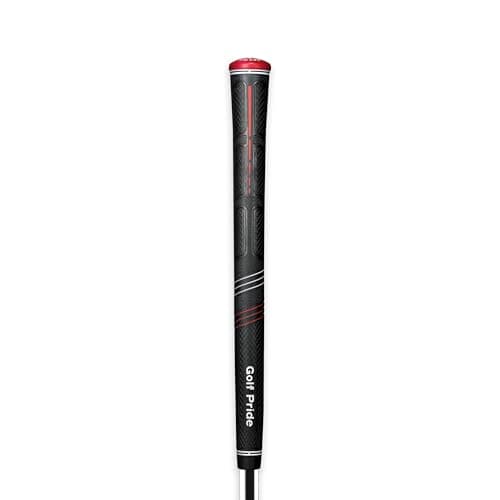
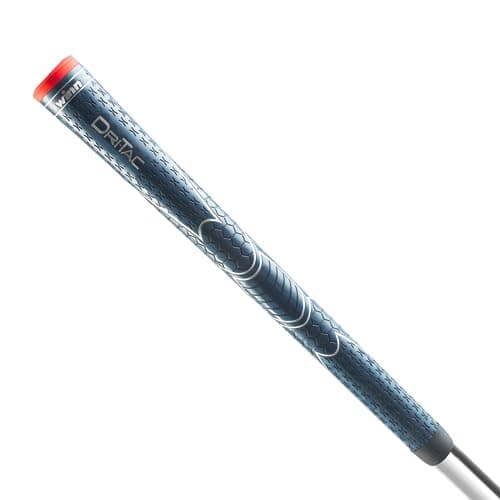
Winn, which pioneered polymer grips, builds the Dri-Tac to stay slip-resistant in all weather while damping vibration — the softest, most cushioned option here. Golf Pride calls the CP2 Pro one of their softest swing grips, a high-tack soft rubber with an inner Control Core stabilizer that is claimed to keep the softness from costing too much stability. Those are two genuinely different answers to a sore hand; pick the one that matches how much cushion versus control you want.
The picks, in order
The Winn Dri-Tacwins because nothing else here is as soft or as forgiving of a sore hand. Winn’s WinnDry polymer is built to be slip-resistant in all weather while cushioning the hands, so it damps the vibration that stings arthritic joints and lets you hold on lightly — it is the default recommendation for painful hands for good reason. The one honest catch is durability: soft polymer wears faster than rubber, so expect to re-grip sooner than you would with a firmer grip.
The Golf Pride CP2 Prois the pick if you want most of that comfort without going fully soft. Golf Pride describes it as one of their softest swing grips — a high-tack surface over soft rubber — but with an inner Control Core stabilizer meant to reduce torque, so the softness costs you less stability than a pure polymer does. It is smooth and kind to gloveless hands, and it is priced close to a Tour Velvet, which makes it the cheapest genuine comfort upgrade here.
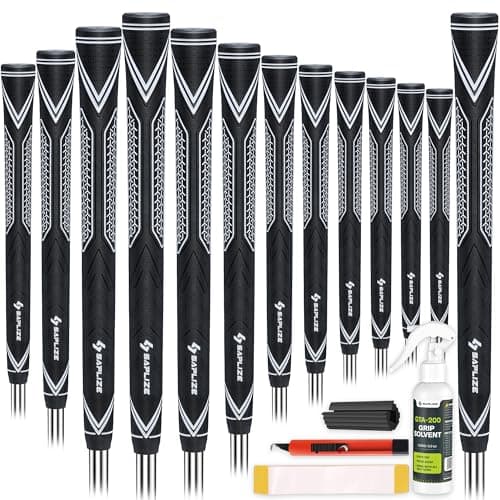
The SAPLIZE G50is the whole-bag value answer. It is sold as a thirteen-grip set with the tape and solvent to fit them, for less than a handful of premium grips would cost, and the compound is a soft, high-tack rubber (that is the listing’s own claim, which we treat as a claim rather than a tested spec). If your priority is putting fresh, soft grips on every club in the bag without a big bill, this is the sensible route — especially for a beginner set or clubs you expect to replace. The trade is the consistency and lifespan you would expect from a value brand, and one size and compound across all thirteen.
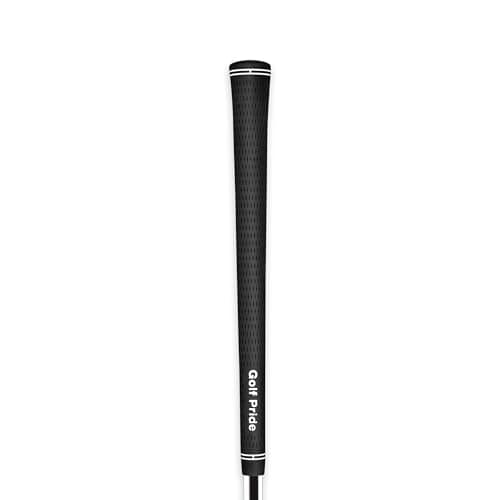
The Golf Pride Tour Velvetis the baseline, and it earns its place for one arthritis-specific reason: it is available in every size and core, so you can order it midsize or jumbo to size up the whole bag affordably. It is not as cushioned as the polymer or the soft-rubber picks — it is a firmer, all-round grip — but it is softer than any cord grip, utterly dependable, and the cheapest of the major brands, which makes it the easy way to go oversize across thirteen clubs without a premium bill. It is also our overall winner in the wider best golf grips roundup.
Skip this: a cord grip
The grip to skip if your hands ache is any cotton-cord or hybrid-cord grip — the Golf Pride MCC Plus4 is the obvious one. Cord earns its traction through an abrasive, textured surface, and abrasive texture is precisely what an arthritic or sensitive hand does not want rubbing against it for eighteen holes. It is a brilliant grip for sweaty hands and rain, and the wrong grip entirely for a sore one, however good it is. If you have been fighting slick grips and reached for cord, understand the trade: you are buying wet-weather traction with texture your hands will feel. For an aching hand the answer is a soft polymer or a soft, high-tack rubber that grips by being tacky, not by being rough — the same conclusion we reach comparing the two most-fitted grips in Tour Velvet vs the MCC Plus4. There is no best grip in the abstract, only the grip that suits the hands holding it — and for arthritis that means soft and, often, bigger.
Why grip size matters as much as material for arthritis
For a healthy hand, grip size is a fine-tuning decision. For an arthritic one, it can matter as much as the compound. A grip that is too small forces the fingers to close further and the hand to work harder to hold the club, and that extra effort is exactly what loads a sore joint. Sizing up — to midsize or even jumbo — means the hand closes less and grips with less force, which is why oversize grips are so often recommended for arthritis. Golf Pride’s own sizing method is to measure your top hand from the crease of the wrist to the tip of the middle finger: roughly 8 to 9 inches points to midsize, and 9 inches or more to jumbo, with standard below that. If your hands ache, it is usually worth going at least one size up from what that measurement suggests. The one caution is that a grip which is too big can deaden feel and, for some, leave the clubface a touch open through impact — so size up for comfort, but not past the point where you lose all touch. Remember, too, that the layers of tape underneath change the finished diameter, so you can build a standard grip up with extra wraps if a full oversize grip is more than you need.
A lighter hold is half the cure
The reason a soft, tacky, well-sized grip helps is that it lets you hold the club more lightly, and grip pressure is where a lot of hand pain comes from. A worn or slick grip makes you clench to stop the club moving; a tacky one stays put with a relaxed hold. The same is true of size — a bigger grip you do not have to strangle spares the joints the squeeze. So the goal of every choice on this page is the same: get the club to sit in your hands so you can hold it gently. That is better for a sore hand and, as a bonus, better for your swing, because tension in the hands is the enemy of a free, released swing. Softer material, a size up and a lighter hold work together, and none of them costs much.
Soft grips wear faster — plan for it
The one honest cost of chasing comfort is durability. The softest, most cushioned grips — the polymers especially — wear and glaze faster than a firm rubber or a cord grip, so a Dri-Tac will not last as long as a Tour Velvet. For an arthritic golfer that is usually a trade worth making, because a slightly shorter grip life is a small price for hands that do not ache, but it does mean building re-gripping into your routine rather than treating it as a once-a-decade job. Keep an eye on the tack: the moment a soft grip starts to feel slick or glazed, it has begun asking you to hold on tighter, which is exactly the grip pressure you fitted it to avoid. When that happens it is time to re-grip — and because you will likely do it a little more often than a firmer grip demands, a soft grip that is easy on the wallet, or a full-set kit, starts to make even more sense.
Re-grip the whole bag, or just the clubs you play
The ideal is to re-grip all thirteen clubs at once, so every club feels the same in your hands. Mixing a fresh soft grip on the driver with worn, firm ones on the irons means your hands renegotiate the hold every time you change clubs, which is uncomfortable and inconsistent. Because grips are the cheapest thing in golf, doing the whole bag rarely costs much more than doing half of it, and it is the only way the set feels like a set. If cost or effort is a real constraint, the sensible compromise is to grip the clubs you actually swing most — the putter, the wedges, the short irons and whichever woods you hit — and leave the long clubs you rarely pull. The cheapest way to do the whole bag in one go is a full-set kit like the SAPLIZE G50, which includes the tape and solvent; a set of premium grips like the Dri-Tac or CP2 Pro costs more but gives you the softest, most arthritis-friendly result. Either way, fresh soft grips beat worn firm ones every single time. For the wider grip picture, our best golf grips roundup ranks every family by hands and weather, and when to replace your grips tells you how often the job is actually due.