Skip to content
Divot&Draw

The Sticks · Golf Clubs

The Best Golf Irons for Beginners

Forgiveness and launch beat looks and workability while you learn. Game-improvement iron sets ranked by who each is for — plus the cheap way in — with live prices.

By Stephen V.Updated How we rank
#ad

We earn a commission when you buy through our Amazon links, at no extra cost to you. It never changes our rankings — and we'll tell you when the cheaper ball or club is the better buy. How this works.

The best irons for a beginner are the ones easiest to get airborne and most forgiving of a bad strike — not the clean, compact irons the low-handicappers play. That is the whole decision, and it is the opposite of what the marketing sells. The Cleveland Launcher XL Halo wins here because it is a genuine game-improvement set from a real brand: huge, high-launching heads with hybrid-like long irons that turn the hardest clubs in the bag into the easy ones, with enough feel and resale value that you are not throwing money away as you improve.

A quick scope note first, because it saves you money. If you have no clubs at all, you do not start by buying irons on their own — you start with a complete beginner set, which gives you a driver, a fairway or hybrid, irons, a putter and a bag for one honest price. This page is for the next decision: when you have decided to buy a dedicated iron set — because you have outgrown a boxed set’s irons, or you want better irons than a package throws in — which forgiving iron set is right, and how little you can honestly spend.

How we ranked these

Iron marketing talks about tour players, forged feel and lofts jacked for “distance.” None of that is the beginner’s buying decision. Three things are, and we ranked on them in this order:

  1. How forgiving is the miss?A beginner’s good shots are already fine. The score is decided by the bad ones, so the only forgiveness that matters is how far off-line and how far short a heel or toe strike ends up. Big heads, wide soles and perimeter weighting are the answer, and they are the first thing we weighed.
  2. How easily does it launch? The single most common beginner fault is not getting the ball up. A low, deep centre of gravity, a hollow or hybrid-style long iron and a light shaft all help the ball climb without a perfect strike. An iron you can launch is an iron you will actually enjoy.
  3. What is the real cost to start? A full game-improvement set from a real brand runs into the mid-hundreds of dollars; a single value iron is a small fraction of that. Both are legitimate ways to begin, and they suit very different budgets, so we priced the whole spectrum rather than pretending everyone should spend the same.

We did not rank on looks, “feel,” forged construction or what a tour pro games, because none of those survive contact with a beginner’s actual round. And we did not test these in a lab — we do not have one. We compiled each maker’s own published design claims and the equipment rules, said which golfer each set is built for, and every claim in the picks below is attributed on the card and in the sources at the foot of the page.

Game-improvement or super-game-improvement — the only choice that matters

Ignore the model names and the loft numbers. For a beginner, irons come in two useful families, and picking the right one gets you most of the way to the right set.

TypeWhat it doesWho it is for
Game-improvement (Cleveland Launcher XL Halo, Cobra Air-X 2)Big, forgiving heads with real distance and a little feel; you can grow into themMost beginners and high handicappers who want one set for a few years
Super-game-improvement (Wilson Launch Pad 2)The maximum in launch and anti-chunk forgiveness; muted feedback, little workabilityThe very slowest swings, the weakest ball-strikers, and anyone who chunks or thins constantly

Cleveland builds the Launcher XL Halo around a variable “MainFrame” face and an oversized head, with a “Gliderail” sole and hollow long irons designed to keep the face straight and glide over the turf — a game-improvement set you can settle into. Wilson builds the Launch Pad 2 to do one thing to the extreme: launch the ball high and forgive everything, with the widest soles and the lowest, deepest weight here. If you top and chunk more than you strike, that is the set that helps most; if you make halfway-decent contact already, the Cleveland gives you more to enjoy.

The slice question, and the anti-slice iron

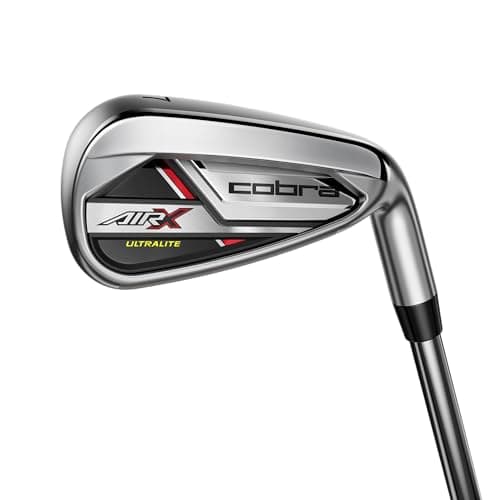
The other near-universal beginner miss is the slice — the ball starting left and curving hard right (for a right-hander). If that is your shot, an iron with a built-in draw bias is a genuine, cheap fix. The Cobra Air-X 2 is exactly that: Cobra weights the heel and adds offset specifically to straighten a slice, and builds the whole club light so a smoother, slower tempo still finds speed. It is the pick for the golfer whose miss leaks right — but it is the wrong pick for anyone who already draws or hooks it, because the same bias that fixes a slice will over-cook a shot that is already turning left. Match the iron to your miss, not to the badge.

Steel or graphite shafts?

For most beginners, and especially slower and older swings, graphite is the easy answer: lighter overall weight helps clubhead speed, launch and comfort, which is why several of the sets here are sold in graphite. Steel is heavier, a touch more consistent, and usually cheaper, and it suits a stronger, faster swing that wants a little more control. If you are unsure, go graphite while you build speed and tempo; you can always go to steel later. If you want to see your real launch and speed numbers before you decide, a launch monitor tells you more than any fitting-bay guess.

Skip this: blades and “players” irons

The set to avoid as a beginner is the one that looks best in the bag: a compact, thin-soled blade or “players” iron. They are built to give a good ball-striker feedback and shot-shaping, and they do the opposite of everything above — small sweet spot, low launch, brutal punishment on any strike that is not centred. Buying one to “learn properly” or because a better player in your group games one is the most expensive confidence-killer in golf. There is no vanity prize for a hard-to-hit set. Buy the forgiving irons that flatter your real strike, and revisit blades in a few years if your handicap ever asks for them. If you are tempted by second-hand players’ irons to save money, read our used vs new guidefirst — used game-improvement irons are a far smarter bargain.

The short answer

Quick picks

#ProductBest forScorePrice
01
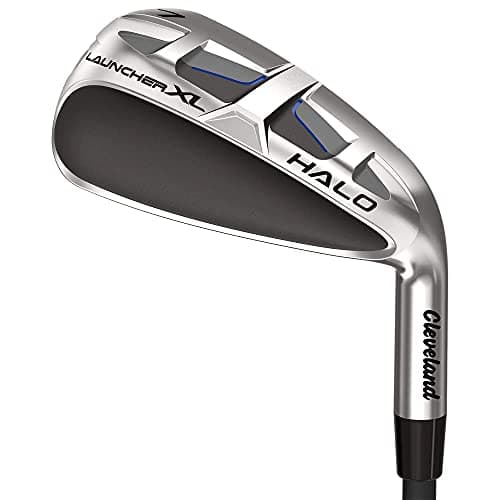
Cleveland Cleveland Launcher XL Halo Irons (Men's, Graphite, 5-DW)
Cleveland Launcher XL Halo Irons (Men's, Graphite, 5-DW)

The set most beginners should actually buy — major-brand, hybrid-like game-improvement irons with huge forgiveness and enough feel to grow into.

Beginners who want one set to grow into
7.6
$699.99Amazon
02
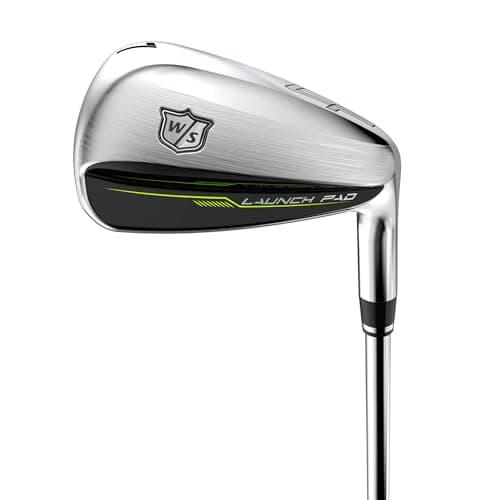
Wilson Wilson Launch Pad 2 Irons (Men's, Graphite, 5-PW+GW)
Wilson Launch Pad 2 Irons (Men's, Graphite, 5-PW+GW)

Super-game-improvement irons built to launch high and forgive everything — the easiest-hitting iron set for a struggling ball-striker.

High handicaps who need height and forgiveness
7.4
$659.98Amazon
03
Cobra Cobra Air-X 2 Irons (Men's Iron Set)
Cobra Air-X 2 Irons (Men's Iron Set)

A lightweight, offset, draw-biased set built to straighten a slice — the beginner iron for the golfer whose miss leaks right.

Beginners who slice it
7.0
$498.79Amazon
04
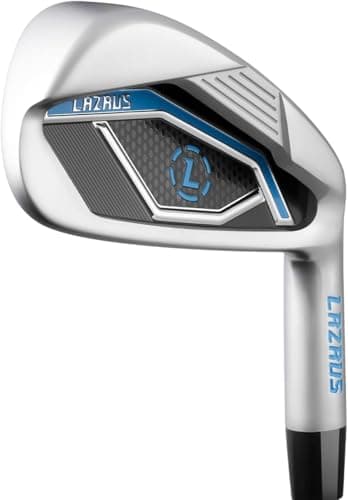
Lazrus Lazrus LAZ2 Premium Golf Iron (Single Iron)
Lazrus LAZ2 Premium Golf Iron (Single Iron)

The cheap, sensible way to test the water — a forgiving value-brand iron you can buy one of to learn on, or as a matched set for a fraction of a brand-name price.

The tightest budget, or one iron to learn on
6.8
$89.00Amazon
05
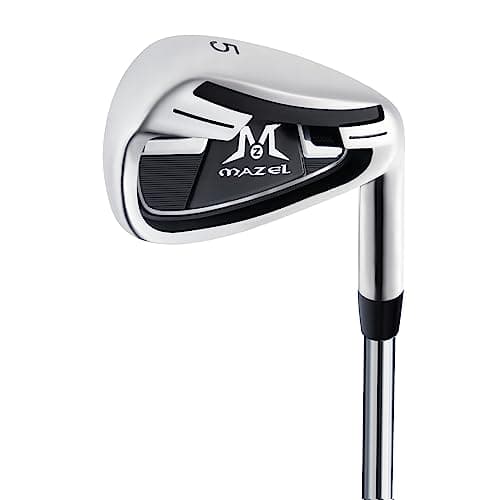
MAZEL MAZEL Golf Individual Iron (Single)
MAZEL Golf Individual Iron (Single)

The cheapest iron on this page — a single, wide-soled budget club that earns its place as a practice iron, a gap-filler, or a first club for a junior, and little more.

A single practice, gap or junior iron
5.8
$48.80Amazon

#ad · Live prices from the Amazon Product API, as of Jul 26, 2026. Where we have no verified live price, we show none — we would rather leave a gap than print a number that has rotted.

In detail

The picks, in full

01
Cleveland Cleveland Launcher XL Halo Irons (Men's, Graphite, 5-DW)

Beginners who want one set to grow into

Cleveland Launcher XL Halo Irons (Men's, Graphite, 5-DW)

5-iron through dual wedge (this listing)Game-improvement, hollow long ironsMainFrame AI variable face (Cleveland)Gliderail sole, oversized XL head
7.6/10

The set most beginners should actually buy — major-brand, hybrid-like game-improvement irons with huge forgiveness and enough feel to grow into.

Forgiveness
9
Distance
8
Feel
7
Playability
7
Value
7

Pros

  • Cleveland builds these around an AI-designed 'MainFrame' variable face and an oversized 'XL' head — their published aim is more ball speed with maximum forgiveness across the face, and it shows on off-centre strikes
  • The 'Gliderail' sole and hollow, hybrid-like long irons are designed to keep the face straight through impact and glide over the turf, so the hardest clubs to hit become the easy ones
  • A real brand with resale value, fitting options and support — you can trade these in when you improve, which the no-name sets can't offer

Cons

  • A full new-brand game-improvement set is one of the pricier ways into irons — you pay for the badge and the tech
  • Big, offset, thick-topline heads look like what they are; better ball-strikers will find them bulky and want more shot-shaping

Skip this if…

you already flight your irons and want workability, or the budget is tight. This is a lot of (very good) game-improvement iron; if you strike it well you'll prefer a more compact head, and if money is short a single value iron gets you practising for a tenth of the price.

$699.99View on Amazon

Price as of Jul 26, 2026. Prices change — Amazon's is the one that counts.

#ad · we may earn a commission from this link to Cleveland Launcher XL Halo Irons (Men's, Graphite, 5-DW)

02
Wilson Wilson Launch Pad 2 Irons (Men's, Graphite, 5-PW+GW)

High handicaps who need height and forgiveness

Wilson Launch Pad 2 Irons (Men's, Graphite, 5-PW+GW)

5-PW + GW, graphite (this listing)Super-game-improvement ironsHollow-body / high-launch designDraw-biased, oversized
7.4/10

Super-game-improvement irons built to launch high and forgive everything — the easiest-hitting iron set for a struggling ball-striker.

Forgiveness
9
Distance
8
Feel
7
Playability
6
Value
7

Pros

  • Hollow-body, super-game-improvement heads that get the ball up for players who struggle to launch a normal iron
  • Light graphite shafts and a draw bias help slower swings and a slice
  • Very forgiving across the face — mishits still go somewhere useful

Cons

  • Strong lofts and a draw bias mean little workability and a hot, sometimes unpredictable, long-iron flight
  • As with any super-game-improvement iron, the feedback that helps you improve is deliberately muted

Skip this if…

you already strike your irons well or you want feel and control. Super-game-improvement irons trade shot-shaping and feedback for launch and forgiveness — a better ball-striker will find them clicky and hard to flight down.

$659.98View on Amazon

Price as of Jul 26, 2026. Prices change — Amazon's is the one that counts.

#ad · we may earn a commission from this link to Wilson Launch Pad 2 Irons (Men's, Graphite, 5-PW+GW)

03
Cobra Cobra Air-X 2 Irons (Men's Iron Set)

Beginners who slice it

Cobra Air-X 2 Irons (Men's Iron Set)

Full iron set incl. gap wedgeLightweight head, shaft and grip (Cobra)Offset + heel weighting (draw bias)H.O.T. AI face insert (Cobra)
7.0/10

A lightweight, offset, draw-biased set built to straighten a slice — the beginner iron for the golfer whose miss leaks right.

Forgiveness
8
Distance
8
Feel
6
Playability
6
Value
7

Pros

  • Cobra weights the heel and adds offset specifically to fight a slice — their published aim is a straighter, draw-biased flight, which is the exact miss most beginners fight
  • The whole club is built light — head, shaft and grip — so a smooth or slower tempo still generates clubhead speed and distance
  • An AI-designed 'H.O.T.' face is designed to hold ball speed on mishits, so off-centre strikes still travel

Cons

  • The draw bias and offset that fix a slice will over-draw or hook the ball for a golfer who already swings it straight or works it left
  • Light, offset, strong-lofted game-improvement irons trade feel and control for speed and forgiveness — this is help, not finesse

Skip this if…

your miss is a hook or a pull, or you already shape your shots. The built-in draw bias is a fix for a slice; give it to a straight or right-to-left player and it can turn a good shot into a snap-hook.

$498.79View on Amazon

Price as of Jul 26, 2026. Prices change — Amazon's is the one that counts.

#ad · we may earn a commission from this link to Cobra Air-X 2 Irons (Men's Iron Set)

04
Lazrus Lazrus LAZ2 Premium Golf Iron (Single Iron)

The tightest budget, or one iron to learn on

Lazrus LAZ2 Premium Golf Iron (Single Iron)

Single iron (this listing; sets also sold)Cavity-back, perimeter-weightedMilled square grooves (listing claim)Direct-to-consumer value brand
6.8/10

The cheap, sensible way to test the water — a forgiving value-brand iron you can buy one of to learn on, or as a matched set for a fraction of a brand-name price.

Forgiveness
7
Distance
6
Feel
6
Playability
6
Value
9

Pros

  • A genuine cavity-back, perimeter-weighted iron at a price that makes buying a single 7-iron to groove your swing almost an afterthought
  • Lazrus sells the LAZ2 as individual irons AND as matched sets, so you can start with one club and add the rest, or kit out the whole bag for less than one brand-name club
  • A real following among budget buyers — for a range iron, a practice club, or a first set on a shoestring, it does the job

Cons

  • This is a value, direct-to-consumer brand — the forgiveness, groove and MOI descriptions are the listing's own wording, not an independently tested spec, and the components are built to the price
  • No fitting, thinner resale and less club-to-club consistency than a major-brand set — you get what you pay for

Skip this if…

you want a fitted, matched, resellable set you'll keep for years. As a cheap way to start or a practice iron it's smart money; as your only long-term set it asks for a compromise a major-brand game-improvement set doesn't.

$89.00View on Amazon

Price as of Jul 26, 2026. Prices change — Amazon's is the one that counts.

#ad · we may earn a commission from this link to Lazrus LAZ2 Premium Golf Iron (Single Iron)

05
MAZEL MAZEL Golf Individual Iron (Single)

A single practice, gap or junior iron

MAZEL Golf Individual Iron (Single)

Single iron, sold 1-9 / PW / SW (this listing)Wide anti-dig sole (listing claim)Large face, CNC grooves (listing claim)Budget / no-name brand
5.8/10

The cheapest iron on this page — a single, wide-soled budget club that earns its place as a practice iron, a gap-filler, or a first club for a junior, and little more.

Forgiveness
6
Distance
5
Feel
5
Playability
5
Value
8

Pros

  • About as cheap as a real iron gets, so buying one number to practise a single distance, or to replace a lost club, barely registers on the wallet
  • The wide sole MAZEL describes is meant to resist digging — genuinely useful for a beginner who hits behind the ball on the range
  • Sold as individual numbers, so you can buy exactly the one iron you want rather than a whole set

Cons

  • It's an unbranded single club: the anti-dig and forgiveness claims are the listing's own, and the feel, finish and consistency are basic
  • Buying a bagful one iron at a time costs more and matches worse than a proper set — this is a specific-use club, not a way to build one

Skip this if…

you need a full, matched set to actually play with. One MAZEL iron is a fine range or gap club; nine mismatched ones are not a set, and a real beginner set — or even the Lazrus route — will serve you far better on the course.

$48.80View on Amazon

Price as of Jul 26, 2026. Prices change — Amazon's is the one that counts.

#ad · we may earn a commission from this link to MAZEL Golf Individual Iron (Single)

What a beginner iron set actually costs

Here is the honest spread, and it is the reason this page ranks five very different products. A full game-improvement iron set from a real brand — the Cleveland or the Cobra here — sits in the mid-hundreds of dollars, and that buys you matched clubs, a warranty, fitting options and resale value. A super-game-improvement set like the Wilson is in the same neighbourhood. At the other end, a single value-brand iron is a small fraction of that: a fine way to buy one club to learn a single distance, or to build a bag one iron at a time on the tightest budget. Live prices for every pick are on the cards above and refreshed daily — we do not print a remembered number, so when a price cannot be verified you will see “check price” instead of a stale one.

Set that against the rest of the bag and the priorities sort themselves out. For most new golfers the irons and a forgiving set of them matter more than a new driver, because you hit far more iron shots that decide a hole. Our guide to how much to spend on golf clubs puts irons against every other purchase, and the honest answer is usually: buy forgiving irons, spend less on the driver, and put the difference into lessons and a sensible ball.

Do you actually need a separate iron set?

If you own nothing, no. Start with a complete beginner set, learn with it, and replace the pieces you outgrow. Almost everyone outgrows the driver and the long irons first, which is exactly when a dedicated game-improvement iron set earns its place. Buying a standalone iron set makes sense when a boxed set’s irons are holding you back, when you want graphite shafts or a specific fit a package does not offer, or when you are replacing a lost or damaged set. If you are none of those, keep the money.

How many irons you actually need

Fewer than a full set implies. A beginner is well served by a 6-iron or 7-iron through pitching wedge, plus a gap wedge — the long irons (3, 4, sometimes 5) are the hardest clubs in golf to hit and are better replaced by hybrids, which most game-improvement sets and all the beginner complete sets already do. That is why a single value iron can be a smart first buy: pick a 7-iron, learn to strike it, and you have the club you will hit most on the range for the price of a few sleeves of balls. Add the others as your swing earns them.

When to upgrade — and when not to

Do not buy new irons chasing distance. The strong lofts on game-improvement sets already flatter the numbers, and a fresh set will not straighten a slice or stop a chunk — the right set for your miss will, which is the whole point of ranking these by fault rather than by badge. Upgrade when you have genuinely outgrown the forgiveness (you strike it consistently and want more control and feedback), not when a new model is advertised. And before you spend on irons at all, remember the cheapest upgrade in the bag is fresh grips— worn ones make you hold on tighter and fight every iron you own.
How we ranked this

We don't run a testing lab — and we say so

We compiled published manufacturer specifications, official standards and aggregated owner reviews, computed the running costs the big test-labs leave out, and scored each pick against a published rubric. The scores are judgments from documented research — they are notlab measurements we took, because we don't have a lab and we're not going to pretend we do. You can check every number we publish.

Questions

Frequently asked

What are the best golf irons for a beginner?
A forgiving game-improvement set like the Cleveland Launcher XL Halo suits the largest number of beginners: big, high-launching heads, hybrid-like long irons and enough feel to grow into, from a brand with real resale value. Move to a super-game-improvement set like the Wilson Launch Pad 2 if you have a very slow swing or chunk and thin the ball constantly, or to the anti-slice Cobra Air-X 2 if your miss is a slice. If you own no clubs yet, start with a complete beginner set instead.
Should a beginner buy game-improvement or super-game-improvement irons?
Most beginners want game-improvement irons — very forgiving, but with real distance and enough feel to enjoy and grow into. Super-game-improvement irons go further still on launch and anti-chunk forgiveness, at the cost of feel and any shot-shaping. Choose them if you have a genuinely slow swing, struggle to get the ball airborne, or chunk and thin your irons constantly. If you already make halfway-decent contact, a game-improvement set is the better long-term buy.
Do beginners need a full set of irons, or can you buy a single iron?
You do not need a full set to start. A 7-iron through pitching wedge plus a gap wedge covers most of what a beginner hits, and the long irons are better replaced by hybrids. Buying a single value iron — a 7-iron to learn on — is a genuinely smart, cheap way to groove a strike before you commit to a set, and both the Lazrus and MAZEL picks above are sold as individual irons for exactly that.
Are cheap golf irons any good for beginners?
For a specific job, yes. A value-brand single iron or a budget set is a sensible way to start on a tight budget, to practise with, or to fill a gap. Just be honest about the trade: value brands publish their own forgiveness claims rather than independently tested specs, you get no fitting and thinner resale, and consistency club-to-club is lower than a major-brand set. As a cheap way in they are smart money; as your only long-term set, a real game-improvement set serves you better.
Steel or graphite shafts for a beginner's irons?
Graphite is the easy default for most beginners, and especially for slower or older swings: it is lighter, which helps clubhead speed, launch and comfort. Steel is heavier, a little more consistent and usually cheaper, and it suits a stronger, faster swing that wants more control. When unsure, choose graphite while you build speed and tempo — you can always switch to steel later.

Keep reading

Receipts

Sources

We do not run a testing lab, and we do not pretend to. Every spec number here comes from a manufacturer's published sheet or an official standard, cited above. Where we could not verify something, we say so on the page rather than quietly leaving it out. Read our full method.