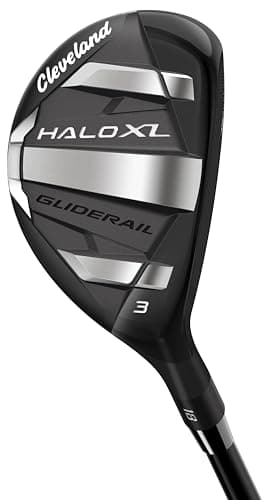
The best hybrid for a senior golfer is the Cleveland Launcher Halo XLin the 21-degree build — a game-improvement head with Cleveland’s three-rail Gliderail sole and a stepped crown that lowers the center of gravity, which is the combination that gets a slower swing airborne from an ordinary fairway lie. It is the pick for almost everyone reading this. The three below it are the answers to three specific situations: a slice, a genuinely slow swing speed, and a single gap you want filled without spending much.
What makes a hybrid work for a slower swing
The same three variables as a fairway wood, weighted slightly differently, plus one that is unique to this club.
- A low, deep center of gravity. This is what a stepped crown and a wide sole buy you, and it is what launches the ball without needing speed. It is the whole reason hybrids replaced long irons.
- Total and shaft weight. Lighter loads faster. The Cobra Air-X build is the extreme of this on the page.
- Offset and heel weighting.Both fight a slice. If your miss is a weak fade that leaks right, a draw-biased head is a genuine correction rather than a marketing line — and if your miss is a hook, it is the wrong club.
- Sole width and turf interaction. A wide, rail-equipped sole stops the club digging on a heavy strike, which is the most common way a long-club shot is lost.
One pick carries a label worth explaining
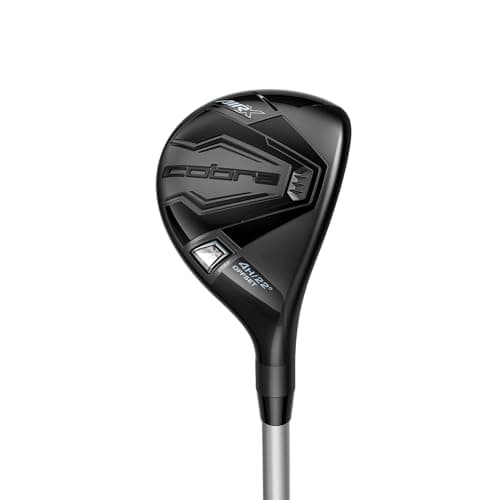
The third pick is Cobra’s Air-X 2 hybrid, sold as the women’s model. We rank it here because the build — a featherweight head, shaft and grip, weight concentrated in the heel for a draw bias, an offset head — is exactly what a genuinely slow swing needs, and the shaft flex sold with it matches that speed. The label on the box is a retail decision; the specification is the specification. If your driver swing speed is in the low 70s or below, this is a better fit than a men’s Regular build and we are not going to recommend a worse club because of what the listing calls it.
The caveat is the same one the product’s own record carries: feed it moderate or fast speed and the lightweight, offset, draw-biased design turns into a hook. It is a fit, not an upgrade.
Which long irons should a hybrid replace?
The practical answer for most golfers over 60: your 3, 4 and 5 irons, in that order, and you stop when the hybrid no longer flies further than the iron it replaced. Most people get to two hybrids and stay there. A few go to three. Replacing a 6-iron is unusual and usually means the irons themselves are the problem rather than the long end — our irons for seniors page covers that case.
| Pick | Listed build | Bias | The buyer it is for |
|---|
| Cleveland Launcher Halo XL | 21°, Regular, graphite | Neutral, very high launch | Most senior golfers, as a 4-iron replacement |
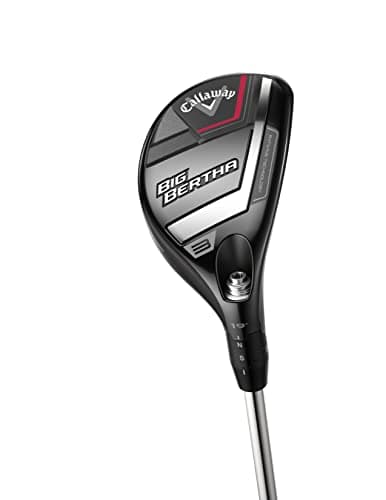
| Callaway Big Bertha (2023) | 5H, Regular, graphite | Enhanced offset, draw-leaning | A slower swing that also leaks right |
| Cobra Air-X 2 | Lightweight, ladies flex | Heel-weighted draw bias, offset | Genuinely slow speeds fighting a slice |
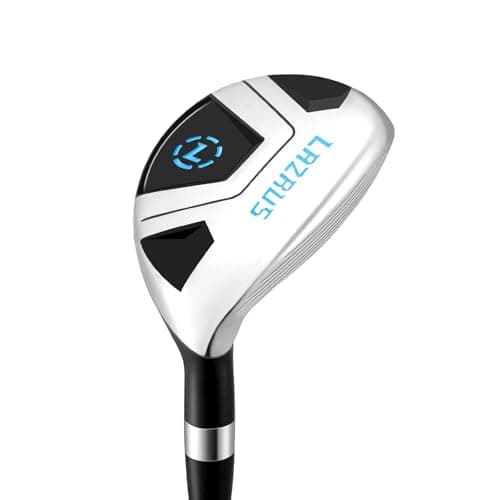
| Lazrus Premium | Single hybrid, pick your loft | Neutral, wide sole | One gap, filled cheaply |
Buy the loft, not the number
Hybrid numbering is not standardized and never has been. One brand’s 4-hybrid is 22 degrees and another’s is 19, which is why two clubs with the same number on the sole can be fifteen yards apart. Find the yardage gap in your bag first — the distance between your longest comfortable iron and your fairway wood — then buy the loft that fills it. The Lazrus pick is on this page partly for that reason: it is sold as a single club in the loft you choose, which makes gap-filling cheap.
Hybrid or fairway wood for the same gap?
They overlap heavily and you want one, not both. A fairway wood launches higher off a clean fairway lie and goes further. A hybrid is shorter, steeper and far better out of rough, off a tight lie, and from a sidehill. For a golfer who plays ordinary municipal conditions, the hybrid is usually the more useful club; for someone on firm, well-kept fairways, the wood. Our fairway woods for seniors page takes the other side of this.
The shaft is still the thing
As with every long club, the fastest way to waste money here is to buy a forgiving head on a shaft that is too heavy or too stiff for your speed. A hybrid in Regular flex with a 75 g shaft will not load for a golfer whose driver speed has dropped into the 70s, and the resulting low, flat flight will get blamed on the head. If you are unsure, err light. Our graphite vs steel guide and how much to spend on clubs cover the fitting economics.