Skip to content
Divot&Draw

The Sticks · Golf Clubs

The Best Golf Putters for Beginners

You do not know what stroke you make yet, and that is the whole problem. Five putters ranked on the specs that forgive a stroke you have not settled - plus the one to skip.

By Stephen V.Updated How we rank
#ad

We earn a commission when you buy through our Amazon links, at no extra cost to you. It never changes our rankings — and we'll tell you when the cheaper ball or club is the better buy. How this works.

Odyssey Odyssey DFX V-Line Fang Putter (Oversize Grip)
$169.99View on Amazon

Price as of November 22, 2026. Prices change — Amazon's is the one that counts.

#ad · we may earn a commission from this link to Odyssey DFX V-Line Fang Putter (Oversize Grip)

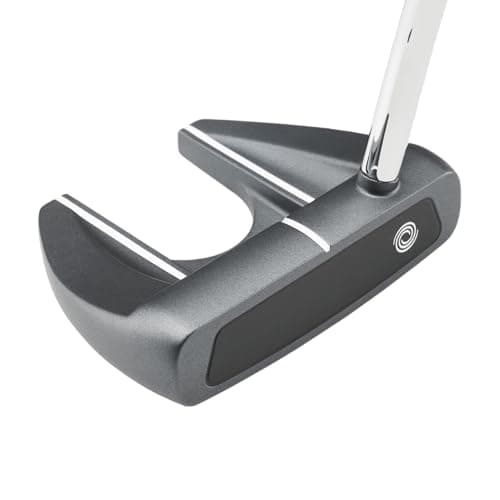
For a new golfer who has not worked out their stroke yet: Odyssey publishes this head as face balanced with 0 degrees of toe hang, which it says suits strokes with minimal arc and face rotation - and that is the stroke most club golfers actually make. The oversize grip takes the wrists out of a short putt.

Budget pick

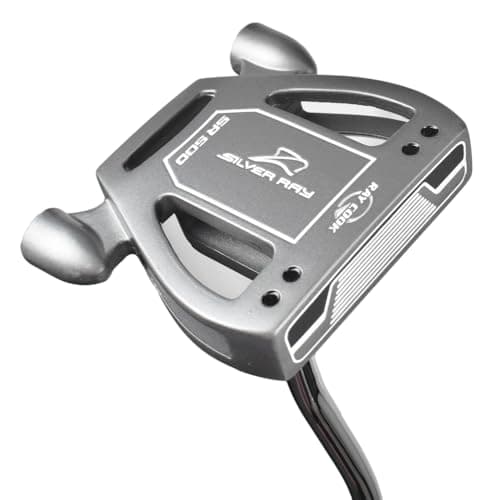
Ray Cook Silver Ray SR500 Putter (35") — the cheapest putter here we would let you buy - a real branded mallet with a published loft and lie and a top-line sight aid, for roughly a third of the mainstream mallets $69.99 on Amazon

The verdict: buy the Odyssey DFX V-Line Fang. Odyssey publishes it as a face-balanced head with 0° toe hang, described in its own fitting language as best suited to strokes with minimal arc and face rotation — which is the stroke the overwhelming majority of club golfers make, including almost every beginner. It has a fang shape that frames the ball, Odyssey’s softest insert, and this listing ships with the Odyssey Oversize grip, which quiets the hands on the three-footers that cost beginners the most strokes. Budget pick: the Ray Cook Silver Ray SR500, a genuine branded mallet for roughly a third of the money. Prices are live from our price layer, stamped November 22, 2026.

This page is ranked on one axis, and it is not price. Our best golf putters page ranks the whole field by category, and best golf putters under $200ranks it against a budget. Both assume you know what you want. This page assumes the opposite — that you have not putted enough to know whether your stroke arcs — and ranks on the specs that forgive that uncertainty.

The three specs that decide a beginner’s putter

  • 1. Face balance and published toe hang.Hold a putter level across your finger. If the face points at the sky, it is face balanced, and it suits a stroke that goes roughly straight back and straight through. If the toe droops, it has toe hang, and it suits a stroke that arcs inside and rotates through the ball. Get this wrong and you will fight the putter every round without knowing why. Two heads on this page publish a figure: the Odyssey at 0° toe hang, and the TaylorMade Spider RED with a Small Slant #3 neck that TaylorMade builds for an arcing stroke. A beginner should start face balanced, because the straight stroke is easier to repeat and easier to diagnose.
  • 2. Alignment help.Most missed short putts are aimed wrong before the stroke starts, so a head that frames the ball and the line is doing real work. The most aggressive aid here is Wilson’s, which it describes as a thick middle line with two thinner support lines either side. The least is the single thin sight line on the Cleveland blade. For a golfer who cannot yet tell whether they aimed badly or stroked badly, more line is better.
  • 3. Grip size, which nobody mentions.A thicker grip reduces how much your fingers and wrists can contribute, and wrist action on a short putt is the single most common beginner fault. Two picks here ship with the help built in: the Odyssey with its Oversize grip and Wilson with a counterbalanced grip that shifts the balance point toward the hands. Counterbalancing is a taste rather than an upgrade — some golfers lose feel for pace on long putts — but an oversize grip on a face-balanced mallet is as close to a default beginner setup as this category has.

Mallet first, and here is the honest reason

A mallet resists twisting far more than a blade, because its mass is spread wide and back rather than along a thin bar. That matters for a specific reason that applies to beginners more than anyone: a beginner misses the center of the face often, and on a blade a heel or toe strike turns the face more and leaves the putt short and offline. A mallet gives some of that back. The head-shape argument in full, including when a blade becomes the right answer, is mallet vs blade putter.

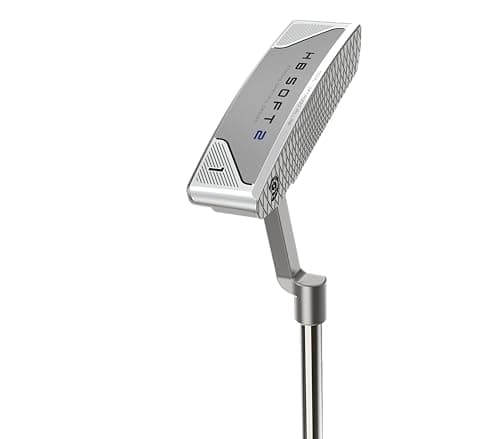
The Cleveland Huntington Beach Soft 2 bladeis ranked last here for exactly that reason, and it is not a criticism of the putter — it is our best blade on the parent page, it has a genuinely clever milled face whose density varies across the strike zone, and Cleveland publishes it as built for a slight-arc stroke. It is simply the wrong first putter. If you already know you love the look of a blade, buy it and enjoy it; if you are reading this page to find out what to buy, it is the one to skip.

Why the most expensive putter here is fourth

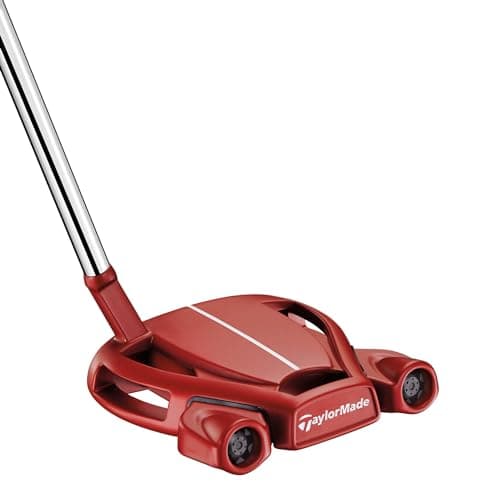
The TaylorMade Spider RED #3is the most stable head on this page by construction — TaylorMade builds it around a lightweight aluminum core with a heavy stainless perimeter, which is the standard recipe for a high-MOI head, and the Pure Roll surlyn insert with 45° grooves is a real design rather than a sticker. It is ranked fourth because of its neck, not its head: the #3 is a small slant built for an arcing stroke, and a beginner making a straight-back-and-through stroke will be fighting it. TaylorMade sells a Double Bend version for that stroke; this listing is not it.

That is the whole lesson of this page in one pick. The expensive putter is not the better buy when the spec does not match your stroke, and at this stage you probably do not know your stroke — which is the argument for starting face balanced and cheap, learning what you do, and buying the stroke-matched putter second.

Length, and the one rule worth knowing

Two of the putters here are listed at 35 inches and one at 34, and length is the spec most likely to be wrong for you off the shelf: too long and your hands sit away from your body with the toe off the ground, too short and you crouch. A putter that does not sit flat at address points the face somewhere you did not intend before you move it.

The rule worth knowing beyond fit is the anchoring rule: you may not hold the club against your body or forearm to create an anchor point when you putt. That does not affect any putter on this page — none is a long or armlock build — but it is why the counterbalanced grip on the Wilson is legal while the gripping style some golfers associate with it is not. The rest of the equipment rules relevant to a bag are in what clubs does a beginner need.

The short answer

Quick picks

#ProductBest forScorePrice
01
Odyssey Odyssey DFX V-Line Fang Putter (Oversize Grip)
Odyssey DFX V-Line Fang Putter (Oversize Grip)

The mallet we'd hand most golfers first — a face-balanced fang mallet from the biggest name in putters, with Odyssey's softest insert and an oversize grip that quiets busy hands.

The best all-round mallet
8.2
$169.99Amazon
02
Ray Cook Ray Cook Silver Ray SR500 Putter (35")
Ray Cook Silver Ray SR500 Putter (35")

The cheapest putter here we would actually let you buy — a real branded mallet with a proper alignment line and a headcover, for roughly a third of the mainstream mallets.

The best budget putter
6.6
$69.99Amazon
03
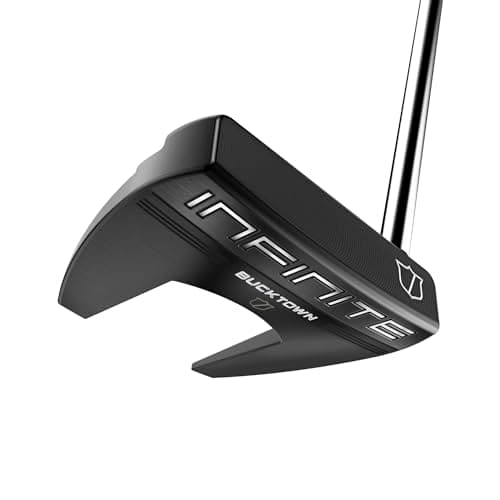
Wilson Wilson Infinite Bucktown Putter (Men's, 35")
Wilson Infinite Bucktown Putter (Men's, 35")

The most alignment help per dollar — a fang mallet with three sight lines, a double-milled face and a counterbalanced grip, from a real brand, for middle money.

The best value from a major brand
7.8
Check price →
04
TaylorMade TaylorMade Spider RED #3 Putter
TaylorMade Spider RED #3 Putter

The stability pick — a multi-material, high-MOI Spider with a slant neck, for an arcing stroke that wants the head to stay square through impact.

Maximum stability for an arcing stroke
8.0
$249.99Amazon
05
Cleveland Cleveland Huntington Beach Soft 2 #1 Blade Putter
Cleveland Huntington Beach Soft 2 #1 Blade Putter

The blade for people who like a blade — a milled-face, plumber's-neck classic from a major brand, at a price the boutique blades never come near.

The best blade
7.6
$158.25Amazon

#ad · Live prices from the Amazon Product API, as of November 22, 2026. Where we have no verified live price, we show none — we would rather leave a gap than print a number that has rotted.

In detail

The picks, in full

01
Odyssey Odyssey DFX V-Line Fang Putter (Oversize Grip)

The best all-round mallet

Odyssey DFX V-Line Fang Putter (Oversize Grip)

Mid-size fang mallet, double bendFace balanced, 0° toe hang (Odyssey)DFX insert — Odyssey's softest3° loft, 70° lie, 360g head (Odyssey)
8.2/10

The mallet we'd hand most golfers first — a face-balanced fang mallet from the biggest name in putters, with Odyssey's softest insert and an oversize grip that quiets busy hands.

Forgiveness
8
Alignment
8
Feel
9
Build
9
Value
7

Pros

  • Odyssey publishes this as a face-balanced head with 0° toe hang, 'best suited for strokes with minimal arc and face rotation' — which is the stroke most club golfers actually make
  • The DFX insert is the softest Odyssey lists, and a soft insert is what turns a long putt on a slow green into something you can judge by feel rather than by hit
  • This listing ships with the Odyssey Oversize grip, which takes the wrists out of a short putt — the most common source of a missed three-footer

Cons

  • Face balanced is the wrong answer for a genuinely arcing stroke: if you swing the putter inside and rotate the face through impact, a slant-neck head fits you better
  • It is the second-priciest putter here, and a softer insert is a preference rather than a performance upgrade — part of what you pay for is the name on the sole

Skip this if…

…your stroke has a real arc to it. Odyssey's own fitting language says the double-bend, face-balanced build is for strokes with minimal arc and face rotation — force an arcing stroke onto a face-balanced head and you will fight the face open all day. The Spider RED #3 or the Cleveland blade is the pick for you instead.

$169.99View on Amazon

Price as of November 22, 2026. Prices change — Amazon's is the one that counts.

#ad · we may earn a commission from this link to Odyssey DFX V-Line Fang Putter (Oversize Grip)

02
Ray Cook Ray Cook Silver Ray SR500 Putter (35")

The best budget putter

Ray Cook Silver Ray SR500 Putter (35")

Budget mallet, right or left handed3° loft, 70° lie (Ray Cook)Top-line alignment aidMidsize grip, headcover included
6.6/10

The cheapest putter here we would actually let you buy — a real branded mallet with a proper alignment line and a headcover, for roughly a third of the mainstream mallets.

Forgiveness
7
Alignment
7
Feel
5
Build
5
Value
9

Pros

  • A genuine golf-brand putter at a price that competes with the no-name mallets — Ray Cook has been making putters since the 1960s, and the SR500 carries a published loft and lie rather than none at all
  • The top-line sight aid does the one job a new golfer needs from a putter: point the face where you are looking
  • Headcover in the box, and cheap enough to be a sensible club to learn on before you know what stroke you make

Cons

  • There is no published face insert or milling technology — the face is simply the face, so feel and roll are basic next to a milled Cleveland or an insert-faced Odyssey
  • Ray Cook lists the 34-inch version as right-hand only, and resale on a budget putter is effectively zero — buy it to use, not to trade in

Skip this if…

…you already know putting is where your scoring lives and you intend to keep one putter for years. The SR500 is the honest low-cost option, but a milled face, a fitted length and a stroke-matched hosel are worth real money to a committed golfer, and this putter has none of the three.

$69.99View on Amazon

Price as of November 22, 2026. Prices change — Amazon's is the one that counts.

#ad · we may earn a commission from this link to Ray Cook Silver Ray SR500 Putter (35")

03
Wilson Wilson Infinite Bucktown Putter (Men's, 35")

The best value from a major brand

Wilson Infinite Bucktown Putter (Men's, 35")

Fang-style malletDouble-milled face (Wilson)Counterbalanced Infinite grip (Wilson)Two-tone PVD anti-glare finish
7.8/10

The most alignment help per dollar — a fang mallet with three sight lines, a double-milled face and a counterbalanced grip, from a real brand, for middle money.

Forgiveness
8
Alignment
9
Feel
7
Build
7
Value
8

Pros

  • Wilson's aiming aid — 'a thick middle line, with two thinner support lines to either side' — is the most aggressive on this page, and aim is the thing most amateurs get wrong before they ever make a stroke
  • The stock counterbalanced Infinite grip shifts the balance point toward your hands, which Wilson says steadies the stroke; in practice the head feels easier to swing on a pendulum
  • A milled face, a PVD anti-glare finish and a fang head for a price that undercuts the equivalent Odyssey and TaylorMade mallets by a clear margin

Cons

  • Counterbalancing is a taste rather than an upgrade — some golfers find the heavier butt end dulls their feel for pace on long putts
  • Wilson publishes less spec detail than the rest of this field (no toe-hang figure on the product page), so matching it to your stroke is guesswork unless you can roll one first

Skip this if…

…you already putt well with a conventional pistol grip and a light butt end. The counterbalanced grip is the thing you are buying here, and if you don't want it you are better served by a standard mallet like the DFX or by the far cheaper Silver Ray.

Check price on Amazon →

No buyable offer at the last price check (November 22, 2026). We show nothing rather than a stale number.

#ad · we may earn a commission from this link to Wilson Infinite Bucktown Putter (Men's, 35")

04
TaylorMade TaylorMade Spider RED #3 Putter

Maximum stability for an arcing stroke

TaylorMade Spider RED #3 Putter

High-MOI multi-material mallet6061 aluminum core, 304 steel framePure Roll surlyn insert, 45° groovesSmall Slant #3 neck — arc stroke
8.0/10

The stability pick — a multi-material, high-MOI Spider with a slant neck, for an arcing stroke that wants the head to stay square through impact.

Forgiveness
9
Alignment
8
Feel
8
Build
9
Value
6

Pros

  • TaylorMade builds the Spider around 'a lightweight 6061 aluminum core with a heavy 304 Stainless Steel perimeter' — the classic recipe for a high-MOI head that resists twisting on a heel or toe strike
  • The Pure Roll insert is soft surlyn with 45° grooves, which TaylorMade's own robot testing claims adds topspin and forward roll against a solid face — the sort of thing you notice most on fast greens
  • The center-stripe alignment sits on a head shape that has won on tour for a decade, and the #3 small-slant neck gives an arcing stroke the toe hang it wants

Cons

  • The most expensive putter on this page by a wide margin, and the extra money buys stability and tour pedigree rather than more holed putts
  • The #3 slant neck is the wrong build for a straight-back-and-through stroke — that stroke needs the Double Bend version, which is a different club at a different price

Skip this if…

…your stroke is straight back and straight through, or your putter budget would do more good as a lesson. A face-balanced mallet like the DFX or the Bucktown suits that stroke, costs less, and gives up nothing you would notice at club level.

$249.99View on Amazon

Price as of November 22, 2026. Prices change — Amazon's is the one that counts.

#ad · we may earn a commission from this link to TaylorMade Spider RED #3 Putter

05
Cleveland Cleveland Huntington Beach Soft 2 #1 Blade Putter

The best blade

Cleveland Huntington Beach Soft 2 #1 Blade Putter

Classic blade, plumber's neckSpeed Optimized Face Technology millingSingle sight lineBuilt for a slight-arc stroke (Cleveland)
7.6/10

The blade for people who like a blade — a milled-face, plumber's-neck classic from a major brand, at a price the boutique blades never come near.

Forgiveness
6
Alignment
6
Feel
9
Build
9
Value
8

Pros

  • Cleveland's Speed Optimized Face Technology varies the milling density across the face — tight grooves in the center opening outward toward heel and toe — with the published aim of normalizing ball speed so an off-center strike still finishes near the right distance
  • The plumber's neck gives the toe hang a slight-arc stroke wants, and Cleveland lists this head as the most traditional shape in the HB Soft 2 family
  • A milled face from a major brand for well under mallet money, headcover included

Cons

  • A blade resists twisting far less than any mallet on this page — miss the middle and the face turns more, which is exactly the miss a high-handicapper makes most often
  • One thin sight line is the least alignment help here; the fang mallets frame the ball and the target line for you

Skip this if…

…you miss the center of the face often, or you struggle to aim the putter. A blade rewards a repeatable strike and gives back very little when you don't make one — if that is your putting, a fang mallet's forgiveness and sight lines will save you more shots than any face milling can.

$158.25View on Amazon

Price as of November 22, 2026. Prices change — Amazon's is the one that counts.

#ad · we may earn a commission from this link to Cleveland Huntington Beach Soft 2 #1 Blade Putter

The arithmetic: a third of your strokes, for the price of a driver head cover

A club golfer takes somewhere between thirty and forty putts a round. That is more strokes than any other club in the bag takes, by a wide margin, and the cheapest putter on this page costs a fraction of the cheapest driver. Cost per stroke, it is the most efficient purchase in golf, and it is the one most beginners make last and least carefully — usually by inheriting whatever came in a box set.

That is the real case for spending something here, and also the limit on it. The step from a box-set putter to a branded, face-balanced mallet with a real alignment aid is a genuine improvement you can feel. The step from that to a tour-pedigree mallet at three times the price buys stability and finish, not holed putts, and we say so on the pick itself. Spend to get a stroke-matched head with an alignment aid and a comfortable grip; stop there until you know your stroke well enough to have a preference.

How to find out what stroke you make, for free

Put a phone on the ground behind the ball, pointing down your line, and putt ten from ten feet. Watch the putter head: if it moves back and through on a line that looks almost straight, you make a straight stroke and you want a face-balanced head. If it travels noticeably inside on the way back and the face rotates with it, you arc it, and a slant or plumber’s neck with toe hang will suit you better.

Do that before you buy the second putter, not the first. Beginners change strokes as they learn, and buying a toe-hang putter to match a six-week-old habit is how people end up with four putters in a garage. Start face balanced, which is the more repeatable stroke and the easier one to coach, and re-test in a season.

What an insert does, and what it does not

Two picks here have a face insert and two have a milled face, and the difference is feel rather than performance. A soft insert — the Odyssey DFX insert is the softest Odyssey lists — makes a long putt on a slow green easier to judge by feel, which is a real benefit on a practice green in April. A milled face, like the Cleveland’s variable-density milling, aims at normalising ball speed across the face so an off-center strike finishes nearer the right distance.

Neither is a fix for a stroke, and no face technology on this page will hole a putt you aimed two degrees right. Treat face feel as the tie-breaker between two putters that already match your stroke, not as a reason to choose a putter that does not.

Why we do not print the price in the text

Every number on this page comes from the live Amazon listing through our price layer at the moment the page is served, behind a 48-hour freshness gate, stamped with the date above. Putters are discounted unevenly and the order of these five by price moves with them — which is exactly why this page is organized by stroke match and alignment help rather than by a price ranking that would be wrong next month. Where a putter has no verified live offer, we show no number rather than a stale one.
How we ranked this

We don't run a testing lab — and we say so

We compiled published manufacturer specifications, official standards and aggregated owner reviews, computed the running costs the big test-labs leave out, and scored each pick against a published rubric. The scores are judgments from documented research — they are not lab measurements we took, because we don't have a lab and we're not going to pretend we do. You can check every number we publish.

Questions

Frequently asked

What putter should a beginner buy?
A face-balanced mallet with a real alignment aid and a thicker grip. The Odyssey DFX V-Line Fang is the pick: Odyssey publishes it as face balanced with 0° toe hang, suited to strokes with minimal arc and face rotation, and this listing ships with an oversize grip. The Ray Cook Silver Ray SR500 is the budget route to the same idea. Live prices are in the table above.
Mallet or blade for a beginner?
Mallet. A mallet spreads its mass wide and back, so it resists twisting on the heel and toe strikes a beginner makes often; a blade turns more on the same miss and leaves the putt short and offline. The full argument, including when a blade becomes the right answer, is mallet vs blade putter.
What does face balanced mean, and do I need it?
Hold the putter level across a finger: if the face points at the sky it is face balanced, and if the toe droops it has toe hang. Face balanced suits a stroke that goes roughly straight back and through; toe hang suits a stroke that arcs and rotates. A beginner should start face balanced, because the straight stroke is the more repeatable of the two and the easier one to diagnose when it goes wrong.
Is an expensive putter worth it for a beginner?
No, and the ranking on this page says so: the most expensive putter here is fourth, because its slant neck is built for an arcing stroke that most beginners do not have. Spend enough to get a stroke-matched head, a real alignment aid and a comfortable grip, and stop. The price-ceiling version of this field is best golf putters under $200.
What length putter do I need?
Short enough that the sole sits flat with your eyes over or just inside the ball, and your hands under your shoulders. The putters here are listed at 34 and 35 inches. A putter that does not sit flat points the face somewhere you did not intend before you move it, which is why length matters more than most beginners expect. Note also that the Rules prohibit anchoring the club against your body or forearm when you putt.

Keep reading

Receipts

Sources

We do not run a testing lab, and we do not pretend to. Every spec number here comes from a manufacturer's published sheet or an official standard, cited above. Where we could not verify something, we say so on the page rather than quietly leaving it out. Read our full method.