Skip to content
Divot&Draw

The Sticks · Golf Clubs

The Best Golf Putters Under $200

Under two hundred dollars you can buy a milled face, a proper alignment system and a major-brand head. Five ranked by stroke type, with live prices and the budget pick named.

By Stephen V.Updated How we rank
#ad

We earn a commission when you buy through our Amazon links, at no extra cost to you. It never changes our rankings — and we'll tell you when the cheaper ball or club is the better buy. How this works.

Odyssey Odyssey DFX V-Line Fang Putter (Oversize Grip)
$169.99View on Amazon

Price as of November 18, 2026. Prices change — Amazon's is the one that counts.

#ad · we may earn a commission from this link to Odyssey DFX V-Line Fang Putter (Oversize Grip)

For the golfer with a straight-back-straight-through stroke and busy hands — a face-balanced fang mallet with Odyssey's softest insert and an oversize grip.

Budget pick

Ray Cook Silver Ray SR500 Putter (35") — a real branded mallet with a proper alignment line and a headcover, for roughly a third of the mainstream mallets $69.99 on Amazon

The verdict: the Odyssey DFX V-Line Fang is the pick under two hundred dollars, and it is for the golfer whose stroke runs fairly straight back and straight through and whose hands get busy over short putts — a face-balanced fang mallet from the biggest name in putters, with Odyssey’s softest insert and an oversize grip that quiets the hands. Budget pick: the Ray Cook Silver Ray SR500, a genuine branded mallet with a proper top-line alignment aid and a headcover for roughly a third of what the mainstream mallets cost. Prices are live from our price layer, stamped November 18, 2026.

There is a reason this band is worth a page of its own. Putters are the one club where the money above two hundred dollars buys the least measurable golf: a milled face is a milled face, an alignment line is an alignment line, and the physics of a face-balanced mallet do not improve when the head is made in smaller batches. What the premium tier genuinely buys is fitting options, finish, and the specific feel of a particular insert. Under two hundred you give up some of that. You do not give up the two things that actually decide whether a putter helps you.

The two things that decide it: head shape and stroke

Match the head to your stroke and almost everything else is preference. The test is simple and you can do it without equipment: putt twenty balls on a flat surface and watch whether the club wants to travel in a gentle arc, with the face opening and closing naturally, or whether it tracks more or less on a line.

  • Straight stroke → a face-balanced mallet. A fang or wide-body mallet with zero toe hang resists twisting and gives you the largest alignment canvas in golf. It is the forgiving default, which is why the first and third picks below are both mallets and why the top pick is the one we would hand most golfers first.
  • Arcing stroke → a blade with toe hang. A plumber’s-neck blade hangs the toe down, which lets the face rotate the way your stroke already wants it to. Fight that with a face-balanced mallet and you will feel like you are holding the club off. Picks two and four are the blades here.
  • Hands that will not stay quiet → a bigger grip. An oversize or counterbalanced grip takes the small muscles out of the stroke. Two of the five below ship with one, and it is a specification worth paying attention to rather than a cosmetic.

Our mallet vs blade comparison works through the same decision in full if you are genuinely unsure which stroke you have.

What alignment help is actually worth

More than almost anything else on a sub-two-hundred-dollar putter, and it is the cheapest performance feature in golf. Three of the picks below publish a multi-line alignment system — a thick centre line with thinner lines either side, so the line of the putt is framed rather than merely marked. That framing is why a mallet is easier to aim than a blade: you are matching a shape to a target instead of matching a single line to a target.

Here is the honest caveat. Alignment aids help you point the putter where you are looking, and most amateurs misread the break long before the putter face gets involved. A better alignment system will not fix a green you read wrong, and no putter in any price bracket controls your pace. Pace is practice, and the cheapest route to it is a putting mat and a pace drill, not a new head.

Milled, insert, or neither

You will see three face types in this band and the differences are smaller than the marketing suggests. A milled face is cut from a solid billet, which gives a firmer, clickier feel and a consistent surface — two of the picks below publish a double-milled face. An insert is a softer polymer set into the head, which damps the strike and feels less harsh on fast greens; our top pick uses Odyssey’s softest. Neither is better. They feel different, and feel on a putter is the one place where preference is a legitimate deciding factor, because a putter you dislike the sound of is a putter you will not trust from six feet.

The one rule that is not preference: do not buy a putter you cannot return without rolling putts with it, and do not buy a length because it is the one on the shelf. A putter that is too long pushes your eyes inside the ball and your aim right of target before you have made a stroke, and that is a far bigger error than any face material.

Skip this: the tour-issue price tier, unless you are being fitted

The step above this band is real, but it is mostly a fitting step. Premium putters justify themselves through length, loft and lie built to your posture, through head weights matched to green speed, and through finishes that hold up. If you are getting fitted, that money works. If you are buying off a shelf or off a listing, you are paying for the badge and the finish, and the five putters below give you the same stroke-matched head shape, the same alignment framing and the same milled or insert face for substantially less. Put the difference into green time.

The short answer

Quick picks

#ProductBest forScorePrice
01
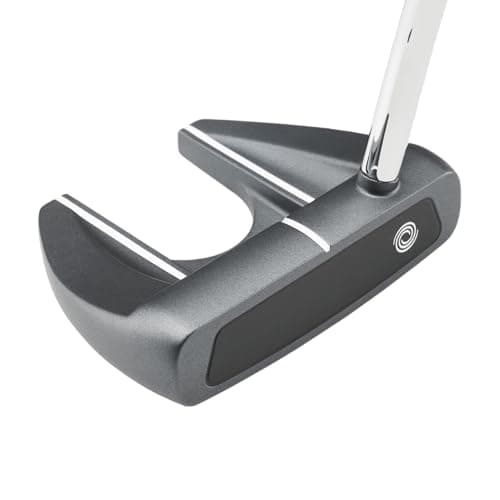
Odyssey Odyssey DFX V-Line Fang Putter (Oversize Grip)
Odyssey DFX V-Line Fang Putter (Oversize Grip)

The mallet we'd hand most golfers first — a face-balanced fang mallet from the biggest name in putters, with Odyssey's softest insert and an oversize grip that quiets busy hands.

The best all-round mallet
8.2
$169.99Amazon
02
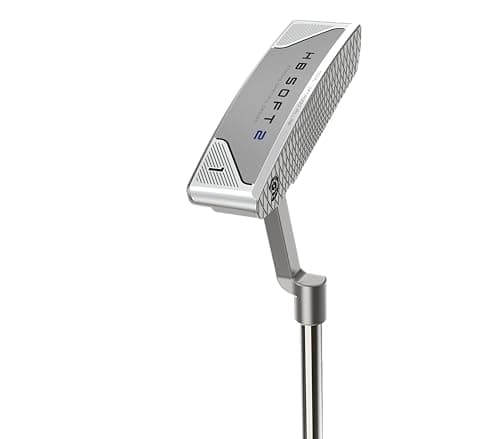
Cleveland Cleveland Huntington Beach Soft 2 #1 Blade Putter
Cleveland Huntington Beach Soft 2 #1 Blade Putter

The blade for people who like a blade — a milled-face, plumber's-neck classic from a major brand, at a price the boutique blades never come near.

The best blade
7.6
$158.25Amazon
03
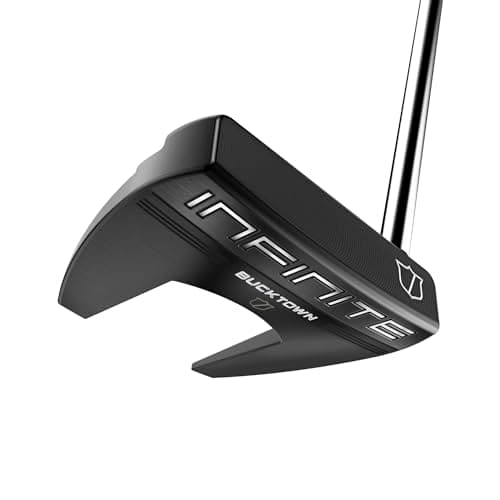
Wilson Wilson Infinite Bucktown Putter (Men's, 35")
Wilson Infinite Bucktown Putter (Men's, 35")

The most alignment help per dollar — a fang mallet with three sight lines, a double-milled face and a counterbalanced grip, from a real brand, for middle money.

The best value from a major brand
7.8
$139.99Amazon
04
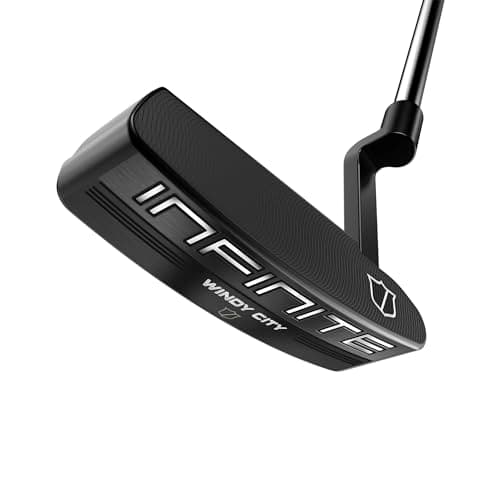
Wilson Wilson Infinite Windy City Putter (Men’s, 34")
Wilson Infinite Windy City Putter (Men’s, 34")

The blade half of the Infinite line — the same double-milled face and three-line alignment as the Bucktown mallet, in a head that fits an arcing stroke instead of a straight one.

A blade with mallet-grade alignment
7.4
$139.99Amazon
05
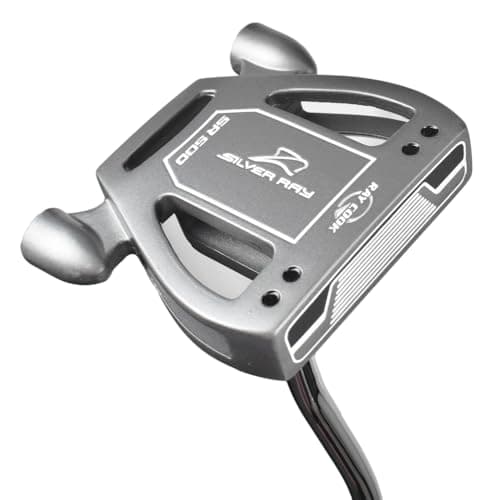
Ray Cook Ray Cook Silver Ray SR500 Putter (35")
Ray Cook Silver Ray SR500 Putter (35")

The cheapest putter here we would actually let you buy — a real branded mallet with a proper alignment line and a headcover, for roughly a third of the mainstream mallets.

The best budget putter
6.6
$69.99Amazon

#ad · Live prices from the Amazon Product API, as of November 18, 2026. Where we have no verified live price, we show none — we would rather leave a gap than print a number that has rotted.

In detail

The picks, in full

01
Odyssey Odyssey DFX V-Line Fang Putter (Oversize Grip)

The best all-round mallet

Odyssey DFX V-Line Fang Putter (Oversize Grip)

Mid-size fang mallet, double bendFace balanced, 0° toe hang (Odyssey)DFX insert — Odyssey's softest3° loft, 70° lie, 360g head (Odyssey)
8.2/10

The mallet we'd hand most golfers first — a face-balanced fang mallet from the biggest name in putters, with Odyssey's softest insert and an oversize grip that quiets busy hands.

Forgiveness
8
Alignment
8
Feel
9
Build
9
Value
7

Pros

  • Odyssey publishes this as a face-balanced head with 0° toe hang, 'best suited for strokes with minimal arc and face rotation' — which is the stroke most club golfers actually make
  • The DFX insert is the softest Odyssey lists, and a soft insert is what turns a long putt on a slow green into something you can judge by feel rather than by hit
  • This listing ships with the Odyssey Oversize grip, which takes the wrists out of a short putt — the most common source of a missed three-footer

Cons

  • Face balanced is the wrong answer for a genuinely arcing stroke: if you swing the putter inside and rotate the face through impact, a slant-neck head fits you better
  • It is the second-priciest putter here, and a softer insert is a preference rather than a performance upgrade — part of what you pay for is the name on the sole

Skip this if…

…your stroke has a real arc to it. Odyssey's own fitting language says the double-bend, face-balanced build is for strokes with minimal arc and face rotation — force an arcing stroke onto a face-balanced head and you will fight the face open all day. The Spider RED #3 or the Cleveland blade is the pick for you instead.

$169.99View on Amazon

Price as of November 18, 2026. Prices change — Amazon's is the one that counts.

#ad · we may earn a commission from this link to Odyssey DFX V-Line Fang Putter (Oversize Grip)

02
Cleveland Cleveland Huntington Beach Soft 2 #1 Blade Putter

The best blade

Cleveland Huntington Beach Soft 2 #1 Blade Putter

Classic blade, plumber's neckSpeed Optimized Face Technology millingSingle sight lineBuilt for a slight-arc stroke (Cleveland)
7.6/10

The blade for people who like a blade — a milled-face, plumber's-neck classic from a major brand, at a price the boutique blades never come near.

Forgiveness
6
Alignment
6
Feel
9
Build
9
Value
8

Pros

  • Cleveland's Speed Optimized Face Technology varies the milling density across the face — tight grooves in the center opening outward toward heel and toe — with the published aim of normalizing ball speed so an off-center strike still finishes near the right distance
  • The plumber's neck gives the toe hang a slight-arc stroke wants, and Cleveland lists this head as the most traditional shape in the HB Soft 2 family
  • A milled face from a major brand for well under mallet money, headcover included

Cons

  • A blade resists twisting far less than any mallet on this page — miss the middle and the face turns more, which is exactly the miss a high-handicapper makes most often
  • One thin sight line is the least alignment help here; the fang mallets frame the ball and the target line for you

Skip this if…

…you miss the center of the face often, or you struggle to aim the putter. A blade rewards a repeatable strike and gives back very little when you don't make one — if that is your putting, a fang mallet's forgiveness and sight lines will save you more shots than any face milling can.

$158.25View on Amazon

Price as of November 18, 2026. Prices change — Amazon's is the one that counts.

#ad · we may earn a commission from this link to Cleveland Huntington Beach Soft 2 #1 Blade Putter

03
Wilson Wilson Infinite Bucktown Putter (Men's, 35")

The best value from a major brand

Wilson Infinite Bucktown Putter (Men's, 35")

Fang-style malletDouble-milled face (Wilson)Counterbalanced Infinite grip (Wilson)Two-tone PVD anti-glare finish
7.8/10

The most alignment help per dollar — a fang mallet with three sight lines, a double-milled face and a counterbalanced grip, from a real brand, for middle money.

Forgiveness
8
Alignment
9
Feel
7
Build
7
Value
8

Pros

  • Wilson's aiming aid — 'a thick middle line, with two thinner support lines to either side' — is the most aggressive on this page, and aim is the thing most amateurs get wrong before they ever make a stroke
  • The stock counterbalanced Infinite grip shifts the balance point toward your hands, which Wilson says steadies the stroke; in practice the head feels easier to swing on a pendulum
  • A milled face, a PVD anti-glare finish and a fang head for a price that undercuts the equivalent Odyssey and TaylorMade mallets by a clear margin

Cons

  • Counterbalancing is a taste rather than an upgrade — some golfers find the heavier butt end dulls their feel for pace on long putts
  • Wilson publishes less spec detail than the rest of this field (no toe-hang figure on the product page), so matching it to your stroke is guesswork unless you can roll one first

Skip this if…

…you already putt well with a conventional pistol grip and a light butt end. The counterbalanced grip is the thing you are buying here, and if you don't want it you are better served by a standard mallet like the DFX or by the far cheaper Silver Ray.

$139.99View on Amazon

Price as of November 18, 2026. Prices change — Amazon's is the one that counts.

#ad · we may earn a commission from this link to Wilson Infinite Bucktown Putter (Men's, 35")

04
Wilson Wilson Infinite Windy City Putter (Men’s, 34")

A blade with mallet-grade alignment

Wilson Infinite Windy City Putter (Men’s, 34")

Classic blade headDouble-milled face (Wilson)Three-line alignment: thick center, two thin (Wilson)Midsize no-taper grip, two-tone PVD finish
7.4/10

The blade half of the Infinite line — the same double-milled face and three-line alignment as the Bucktown mallet, in a head that fits an arcing stroke instead of a straight one.

Forgiveness
6
Alignment
8
Feel
8
Build
7
Value
8

Pros

  • It is the rare blade that does not make you give up alignment help: Wilson puts the same thick-center-line-plus-two-support-lines aiming aid on it as on its fang mallet, which is more than most blades at any price offer
  • The double-milled face is the same one Wilson uses on the Bucktown, so the feel and roll off the face are a known quantity rather than a guess
  • A real brand's blade with a milled face, a midsize no-taper grip and an anti-glare finish, at a price that undercuts the mainstream blades from Odyssey and TaylorMade by a clear margin

Cons

  • A blade head has far less resistance to twisting than any mallet here — a heel or toe strike turns the face more and leaves the putt short and offline, and that is the most common amateur miss
  • Wilson publishes no head weight, no MOI and no toe-hang figure for it, so matching it precisely to your stroke means rolling one rather than reading a spec sheet

Skip this if…

…you miss the center of the face regularly, or your stroke is straight back and straight through. A blade asks for a repeatable strike and an arcing stroke; if you have neither, the Bucktown is the same club in a shape that forgives you, for the same money.

$139.99View on Amazon

Price as of November 18, 2026. Prices change — Amazon's is the one that counts.

#ad · we may earn a commission from this link to Wilson Infinite Windy City Putter (Men’s, 34")

05
Ray Cook Ray Cook Silver Ray SR500 Putter (35")

The best budget putter

Ray Cook Silver Ray SR500 Putter (35")

Budget mallet, right or left handed3° loft, 70° lie (Ray Cook)Top-line alignment aidMidsize grip, headcover included
6.6/10

The cheapest putter here we would actually let you buy — a real branded mallet with a proper alignment line and a headcover, for roughly a third of the mainstream mallets.

Forgiveness
7
Alignment
7
Feel
5
Build
5
Value
9

Pros

  • A genuine golf-brand putter at a price that competes with the no-name mallets — Ray Cook has been making putters since the 1960s, and the SR500 carries a published loft and lie rather than none at all
  • The top-line sight aid does the one job a new golfer needs from a putter: point the face where you are looking
  • Headcover in the box, and cheap enough to be a sensible club to learn on before you know what stroke you make

Cons

  • There is no published face insert or milling technology — the face is simply the face, so feel and roll are basic next to a milled Cleveland or an insert-faced Odyssey
  • Ray Cook lists the 34-inch version as right-hand only, and resale on a budget putter is effectively zero — buy it to use, not to trade in

Skip this if…

…you already know putting is where your scoring lives and you intend to keep one putter for years. The SR500 is the honest low-cost option, but a milled face, a fitted length and a stroke-matched hosel are worth real money to a committed golfer, and this putter has none of the three.

$69.99View on Amazon

Price as of November 18, 2026. Prices change — Amazon's is the one that counts.

#ad · we may earn a commission from this link to Ray Cook Silver Ray SR500 Putter (35")

The two fitting numbers that beat every feature on this page

Length first. A putter that is too long for your posture pushes your hands out and your eyes inside the ball, and eyes inside the ball aim you right of target before the stroke has started. The usual symptom is a persistent push that the golfer blames on their stroke for years. You can check it in a mirror in thirty seconds: set up comfortably and your eyes should sit over the ball or very slightly inside it, with your forearms hanging rather than reaching. Most off-the-shelf putters are built for a taller golfer in a more upright posture than most people actually adopt.

Loft second, and almost nobody mentions it. A putter needs a few degrees of loft to lift the ball out of its own small depression in the green and get it rolling rather than skidding. The published figure on most of these heads is around three degrees, and it assumes your hands arrive roughly level with the ball. Press your hands well forward and you are de-lofting the face, so the ball skids before it rolls — which costs you distance control rather than line. Both checks are free, and both matter more than any choice between an insert and a milled face.

Why we do not print the price in the text

Every number here is pulled from the live Amazon listing through our price layer when the page is served, behind a 48-hour freshness gate and stamped with the date above. A price typed into prose goes stale within weeks, and on a page built around a price ceiling that is not a cosmetic error. If a pick drifts above the band, the figure in the table says so before we can edit a sentence.
How we ranked this

We don't run a testing lab — and we say so

We compiled published manufacturer specifications, official standards and aggregated owner reviews, computed the running costs the big test-labs leave out, and scored each pick against a published rubric. The scores are judgments from documented research — they are not lab measurements we took, because we don't have a lab and we're not going to pretend we do. You can check every number we publish.

Questions

Frequently asked

What is the best putter under $200?
The Odyssey DFX V-Line Fang if your stroke is fairly straight — a face-balanced mallet with a soft insert and an oversize grip. If your stroke arcs, the Cleveland Huntington Beach Soft 2 blade is the pick instead, because its plumber’s neck hangs the toe and lets the face rotate naturally. The budget option is the Ray Cook Silver Ray SR500. Live prices are in the table above.
Is an expensive putter worth it?
Only if you are being fitted. The physics of a face-balanced mallet and the surface of a milled face do not improve with price; what improves is fitting options, finish and the specific feel of a particular insert. Off the shelf, a sub-$200 putter that matches your stroke will outperform a premium putter that does not.
Mallet or blade?
Mallet if your stroke travels on a line and you want maximum forgiveness and the biggest alignment canvas. Blade if your stroke arcs and the face wants to open and close naturally, because toe hang works with that motion instead of against it. Our mallet vs blade putter comparison walks through how to tell which stroke you have.
Does a bigger putter grip help?
It helps a specific fault: hands that get active and manipulate the face over short putts. An oversize or counterbalanced grip takes the small muscles out of the stroke and makes the motion more shoulder-driven. If your miss is pace from range rather than face control from close in, a grip change will not touch it.

Keep reading

Receipts

Sources

We do not run a testing lab, and we do not pretend to. Every spec number here comes from a manufacturer's published sheet or an official standard, cited above. Where we could not verify something, we say so on the page rather than quietly leaving it out. Read our full method.