Skip to content
Divot&Draw

The Numbers · Launch Monitors

PRGR HS 130-A vs Garmin Approach R10

A pocket speed monitor with no app against a full-data radar. One does speed and smash for a fraction of the price; the other does the whole launch picture. Here's which you need.

By Stephen V.Updated How we rank
#ad

We earn a commission when you buy through our Amazon links, at no extra cost to you. It never changes our rankings — and we'll tell you when the cheaper ball or club is the better buy. How this works.

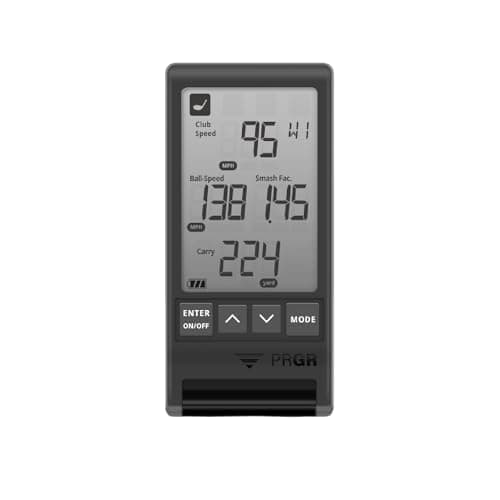
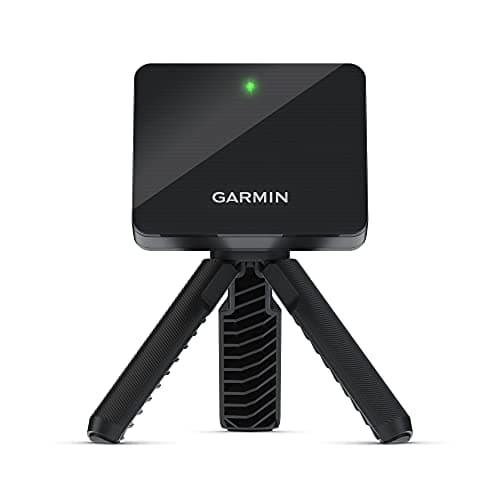
These two solve very different problems at very different prices, so the decision is refreshingly clear once you name what you want. The PRGR HS 130-Ais a pocket doppler that shows ball speed, club speed, smash factor and an estimated distance on its own screen — no app, no subscription, nothing to set up. The Garmin Approach R10 is a fuller radar that adds launch angle, carry mapping, a free-app data experience and an optional home simulator. Check the live prices above: the PRGR costs a fraction of the R10, and that gap is the heart of the decision.

Choose the PRGR HS 130-A if…

You only want speed. If you’re training clubhead speed, checking ball speed and smash factor, or confirming a speed protocol is working, the PRGR gives you the number the instant you swing — and it reads clubhead speed even without a ball. It has zero running cost, nothing to pair, and lives in the bag. For a speed-focused practicer or anyone who refuses to deal with an app or a fee, it’s the smarter, cheaper tool. Full detail in our PRGR review.

Choose the Garmin R10 if…

You want the whole launch picture. The R10 adds launch angle, estimated carry and total distance, shot-by-shot history in the Garmin Golf app (free for the core data), and the option to play simulated courses at home on a paid tier. It’s the better tool for mapping your real carry distances, working on more than speed, or building a budget home setup. You pay several times the PRGR’s price and you deal with an app — but you get far more than a speed number. Our R10 review makes the full case.

The honest deciding factor

It’s the job, not the spec sheet. If the job is “how fast am I swinging and is my strike efficient,” the PRGR does it for less money and less faff, and the R10 is overkill. If the job is “what are all my carry distances, and can I practise into a net with real data,” the PRGR simply can’t, and the R10 is the answer. A surprising number of golfers end up owning both — the R10 for practice sessions, the PRGR living in the bag for a quick speed check anywhere. Neither is a five-figure professional unit, and we don’t lab-test; this is drawn from published specs and how each device captures a shot.

The short answer

Quick picks

#ProductBest forScorePrice
01
Garmin Garmin Approach R10
Garmin Approach R10

The portable radar that made launch data affordable — and its basic app is genuinely free.

Most golfers who want data without a subscription
8.0
$499.99Amazon
02
PRGR PRGR HS 130-A
PRGR HS 130-A

A pocket doppler that does one thing — speed and smash — with no app, no subscription, no fuss.

Speed and smash factor, subscription-free
8.0
$199.99Amazon

#ad · Live prices from the Amazon Product API, as of Jul 26, 2026. Where we have no verified live price, we show none — we would rather leave a gap than print a number that has rotted.

In detail

The picks, in full

01
Garmin Garmin Approach R10

Most golfers who want data without a subscription

Garmin Approach R10

Doppler radarUp to ~10 hr batteryFree Garmin Golf basic appOptional paid sim (Home Tee Hero)
8.0/10

The portable radar that made launch data affordable — and its basic app is genuinely free.

Accuracy
7
Data depth
7
Ease of use
8
Portability
9
Value
9

Pros

  • About the lowest-cost way into real launch numbers, and the basic Garmin Golf app is free to use
  • Small, battery-powered and tripod-mounted — set up in about a minute indoors or at the range
  • Covers the metrics most improving golfers actually use: ball speed, club speed, launch and estimated carry

Cons

  • Radar estimates some numbers (spin in particular) rather than measuring them directly, so treat those as guidance
  • The at-home simulator courses need a paid subscription — the free tier is data, not a full simulator

Skip this if…

you want measured spin and a library of simulator courses without ever paying a subscription. The R10 leans on estimated spin and gates the sim behind a yearly fee — a camera unit or a bundled-sim monitor may suit you better.

$499.99View on Amazon

Price as of Jul 26, 2026. Prices change — Amazon's is the one that counts.

#ad · we may earn a commission from this link to Garmin Approach R10

02
PRGR PRGR HS 130-A

Speed and smash factor, subscription-free

PRGR HS 130-A

Doppler radarBall & club speed, smash, distanceNo app or subscriptionPocket-sized, battery-powered
8.0/10

A pocket doppler that does one thing — speed and smash — with no app, no subscription, no fuss.

Accuracy
7
Data depth
5
Ease of use
9
Portability
10
Value
9

Pros

  • Zero running cost — no app account, no membership, nothing locked away behind a fee
  • Point it down the line and swing; the on-unit screen shows ball speed, club speed, smash and estimated distance instantly
  • Small and cheap enough to live in the bag and check your speed anywhere

Cons

  • It reads speed metrics only — no launch angle, no spin, no simulator — so it's a speed trainer, not a full monitor
  • No shot video, no course play, and no data history beyond the last few shots

Skip this if…

you want carry-mapping, spin numbers, or a simulator to play courses at home. The PRGR is deliberately narrow — excellent for speed work, useless if you wanted the full launch picture.

$199.99View on Amazon

$229.9913% off

Price as of Jul 26, 2026. Prices change — Amazon's is the one that counts.

#ad · we may earn a commission from this link to PRGR HS 130-A

How we ranked this

We don't run a testing lab — and we say so

We compiled published manufacturer specifications, official standards and aggregated owner reviews, computed the running costs the big test-labs leave out, and scored each pick against a published rubric. The scores are judgments from documented research — they are notlab measurements we took, because we don't have a lab and we're not going to pretend we do. You can check every number we publish.

Questions

Frequently asked

Is the PRGR or Garmin R10 better?
Neither — they do different jobs. The PRGR HS 130-A is a cheap, no-app pocket monitor that reads speed and smash factor only; the Garmin R10 is a fuller radar that adds launch, carry mapping, a free-app data experience and an optional home simulator, for several times the price. Buy the PRGR for speed training, the R10 for the full launch picture.
Does the PRGR do everything the Garmin R10 does?
No. The PRGR reads ball speed, club speed, smash and an estimated distance, and that’s it — no launch angle, no spin, no carry mapping, no simulator, and only a short on-device history. The R10 adds all of that (spin estimated, like any radar) through its app. If you want more than speed, the R10 is the tool — see the R10 review.
Which is better value for a beginner?
If a beginner just wants to build speed and check strike efficiency cheaply, the PRGR is excellent value. If they want to learn their real distances and practise into a net with data, the R10 is worth the step up. Decide whether speed alone is enough — our are launch monitors worth it guide helps.

Keep reading

Receipts

Sources

We do not run a testing lab, and we do not pretend to. Every spec number here comes from a manufacturer's published sheet or an official standard, cited above. Where we could not verify something, we say so on the page rather than quietly leaving it out. Read our full method.