The best golf ball for a high handicapper is almost never the one the pros play. A high-handicap game is defined by two facts — you lose a few golf balls a round, and your short game releases the ball onto the green rather than spinning it to a stop — and the right ball is the one built around those facts rather than against them. That means soft, straight and cheap enough to lose without ruining your afternoon. The Callaway Supersoft leads this list because it does all three better than anything else here, but read the criteria below, because the smart buy for your game might be a couple of spots down.
What we ranked for (and what we ignored)
We ranked these balls on the things a high handicapper actually feels on the course, in this order. First, straightness and forgiveness: a low-spin, low-compression ball curves less, so a slice or a hook stays in play instead of sailing out of bounds — and for a high handicapper, a ball kept in play is worth more strokes than anything a premium ball offers. Second, low compression: a soft ball flattens more easily at a moderate or slow swing speed, and that compression is where your distance actually comes from; a firm tour ball just sits there and robs you of yards. Third, cost per ball: you will lose golf balls this season, so a ball you can shrug off losing is the honest buy — every pick here is a value ball under $30 a dozen. Fourth, durability: a tougher ionomer cover survives cart paths and thin wedge strikes without scuffing.
The one thing we deliberately did notweight heavily is greenside spin. Tour balls are sold on one-hop-and-stop wedge spin, but a high handicapper isn’t yet flying wedges to a target and asking them to check — so paying a premium for spin you can’t generate is spending money on a benefit that never reaches your scorecard. Every ball on this list has a durable ionomer cover rather than a soft urethane one, and for this game that is the correct trade, not a compromise. If you want to understand the cover material behind that choice, the best golf balls roundup lays out urethane versus ionomer in full, and the compression explainer covers why a soft ball is free distance for a slower swing.
The Callaway Supersoft: the pick
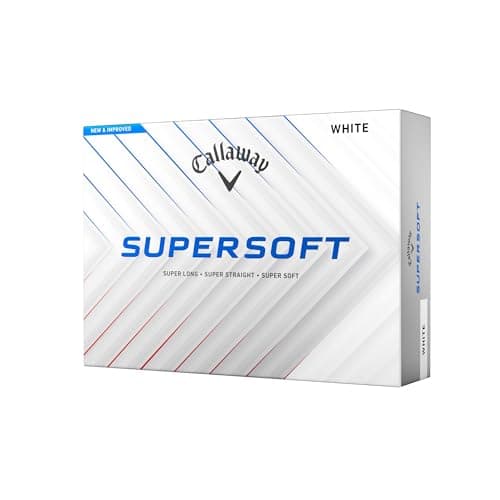
The Supersoft tops the list because it nails the brief. It has one of the lowest compressions in golf, which a moderate or slow swing flattens easily for real distance; it flies straight enough to flatter a slice; and it costs little enough that losing a few doesn’t sting. It is soft off the putter, forgiving off the tee, and about as universally sensible a value ball as exists. The honest con: the soft ionomer cover can’t produce tour-level greenside spin, so chips and pitches release more than they bite — but that is spin a high handicapper isn’t using yet, which is exactly why it doesn’t cost you anything here. We cover it end to end in the Callaway Supersoft review.
The Srixon Soft Feel: the smart everyday buy
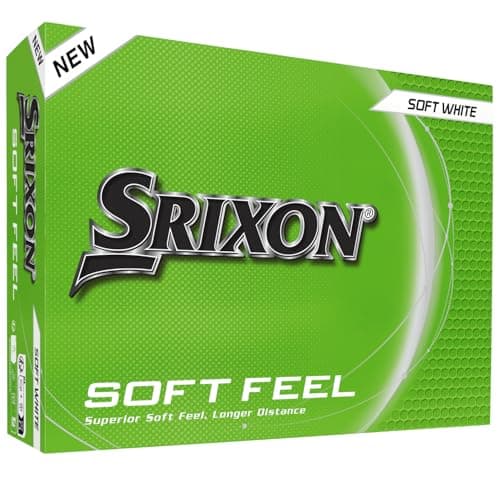
The Soft Feel is a close second and, for a lot of players, the more satisfying ball to play. It runs a touch more compression than the Supersoft, which gives it a firmer, more responsive feel that many golfers prefer over the very softest balls, while still being easy for a moderate swing to flatten. It is also consistently one of the cheapest good balls per dozen, which makes its cost-to-lose about as low as a quality ball gets. The honest con is the same ionomer spin ceiling every value ball has — but nothing about it is exciting, and for a value ball that is exactly right. Our Srixon Soft Feel review makes the full case.
The Bridgestone e12 Contact: distance with a bit more feel
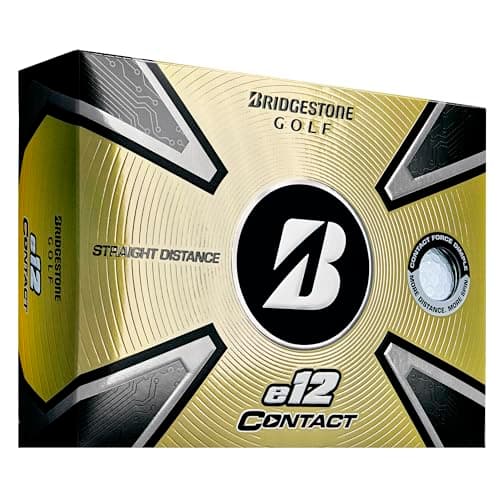
The e12 Contact is the distance-leaning pick here. It’s a three-piece value ball — which usually means a slightly better feel than a hard two-piece distance rock — aimed at straight, efficient carry for a moderate swing. If your priority is yardage and a livelier strike rather than maximum softness, it’s the ball. The honest con: the “Contact Force” dimple marketing is doing a lot of work, so treat it as a solid distance ball rather than a breakthrough, and accept the usual ionomer spin ceiling. It’s a good, straight distance ball bought with clear eyes.
The Titleist TruFeel: soft feel with the swoosh
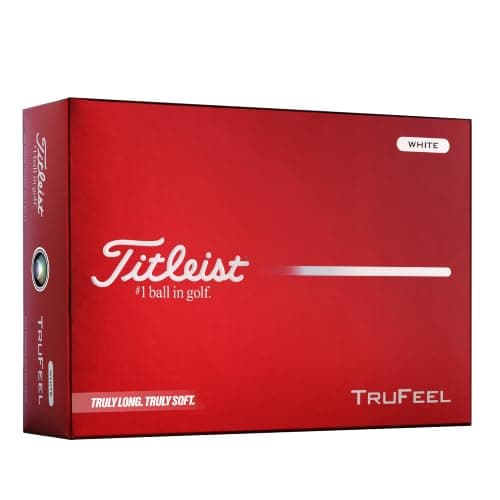
The TruFeel is the softest, cheapest ball Titleist makes, and it’s here for the player who wants the brand name at a value price. It’s a two-piece, low-compression ball with a straight, low-driver-spin flight that helps a slice — the same job the Supersoft and Soft Feel do. The honest con is exactly that: it doesn’t do anything those two don’t, and sometimes costs more, so the only real reason to prefer it is that you like the Titleist script on the side. If that matters to you, it’s a perfectly good buy; if it doesn’t, buy on price.
The Wilson Duo Soft: for the genuinely slow swing
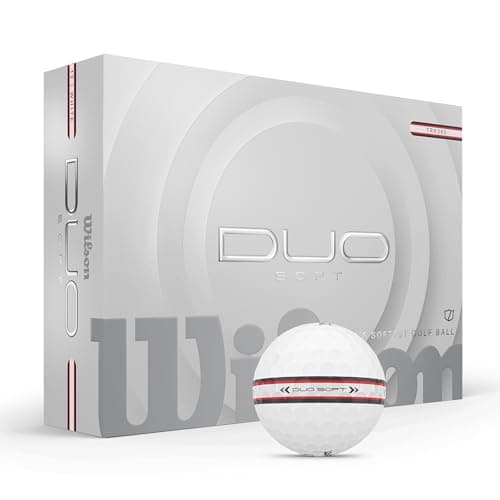
The Duo Soft is the specialist of the group: about the lowest compression in golf, and the softest-feeling ball for the slowest swings. If your swing speed is genuinely low — a driver comfortably under about 85–90 mph — it flattens where a firmer ball just sits there, turning effort into carry, and it feels wonderfully soft off every club. The honest con: the same soft, low-spin design that helps a slow swing costs you greenside control, and a faster swing can over-compress it and lose the benefit. Match it to a genuinely slow speed and it’s superb; reach for it at average speed and you’re on the wrong ball.
Skip this: the Warbird, unless you’re genuinely losing a sleeve a round
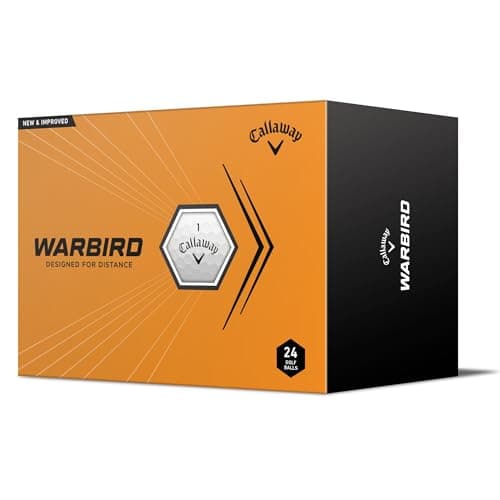
The Callaway Warbird is on this list for one specific job: the season when you genuinely lose a handful of balls a round. It’s a hard two-piece distance ball sold in large multi-ball packs, which drops the per-ball cost about as low as a new ball gets — the right call for a scramble, a lesson bucket, or a course that eats golf balls. But it is the pick to skipfor everyday play. Its hard feel and near-zero greenside spin mean nobody’s short game improves with it, and if you keep most of your golf balls in play, a soft value ball like the Supersoft or Soft Feel feels better and scores better for barely more money. Buy the Warbird to lose it — not to play it.
What a high handicapper should not buy (yet)
The one buy to avoid is a $50 urethane tour ball like a Pro V1. It is a superb ball for a fast swing and a sharp short game, and it is wasted on a high-handicap game that can’t yet compress it or spin it — and it stings three times as much when it finds the water. You’d be paying roughly double per dozen for greenside spin you aren’t generating and then losing it at the same rate as any other ball. A value ball scores the same or better for a high handicapper, and the money you save is genuine. We run the full arithmetic in are expensive golf balls worth it, which for a lot of golfers is the most important page on this site.
When to graduate to a better ball
You’re ready to think about stepping up when two things are true: you keep most of your golf balls in play across a round, and you’ve started hitting wedges you want to stopon the green rather than run out. Until both are true, the extra spin a premium ball offers has nowhere to show up on your scorecard. When you do make the jump, you don’t have to go straight to a tour ball — a mid-price urethane ball like the Srixon Q-Star Tour gets you most of the benefit without the top-tier price, and the mid-handicapper roundupis built for exactly that transition. Until then, pick one value ball from this list, buy it by the dozen, and play the same one every round — consistency is worth more to your scores than any spec on the box. Not sure how soft to go? Our golf ball selector matches a ball to your swing in three questions.
How much should a high handicapper spend on golf balls?
Think in price brackets, not brand loyalty. The soft value balls on this list — Supersoft, Soft Feel, TruFeel, Duo Soft, e12 Contact — all sit in the same value tier per dozen, and any of them is the right money for a high-handicap game. A urethane tour ball costs roughly double per dozen for greenside spin you can’t yet produce, which is exactly the wrong place for this game to spend. If you’re losing a lot of balls, the Warbird’s large pack drops the per-ball cost about as low as a new ball gets. We show the live price on every pick below so you can buy on today’s number, not a stale one — the cheapest of these value balls the week you shop is usually the smart buy.
Straightness beats spin for this game
The single biggest scoring lever for a high handicapper isn’t greenside spin — it’s keeping the ball in play off the tee. A low-spin, low-compression value ball curves less, so the big miss stays in bounds and you’re playing your next shot from the short grass instead of reloading. That’s why every ball here leans straight and soft rather than spinny, and why the urethane balls the marketing pushes hardest are the wrong tool for this stage of your game. Fix the lost balls first; the finesse comes later.
Pick one ball and stick with it
The most useful habit a high handicapper can build is playing the sameball every round. Different balls fly, spin and feel differently around the green, and swapping models round to round adds a variable you don’t need while you’re still grooving a swing. Choose one value ball from this list you like the feel of, buy it by the dozen, and let it be a constant. And if your misses are still curving badly, spend the money on the right clubs before you spend it on the ball — the ball is the last five percent, not the first.