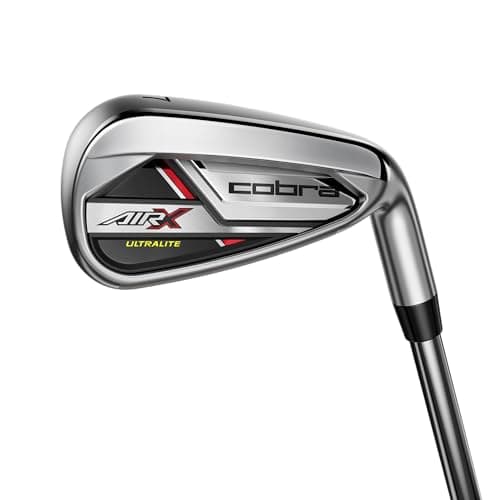
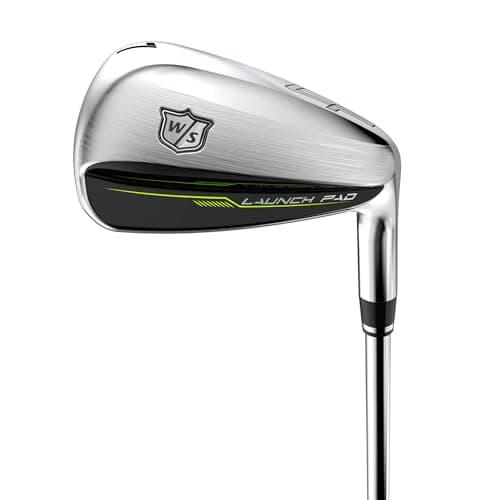
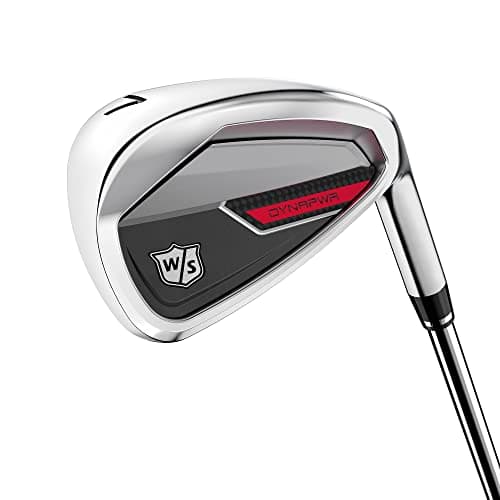
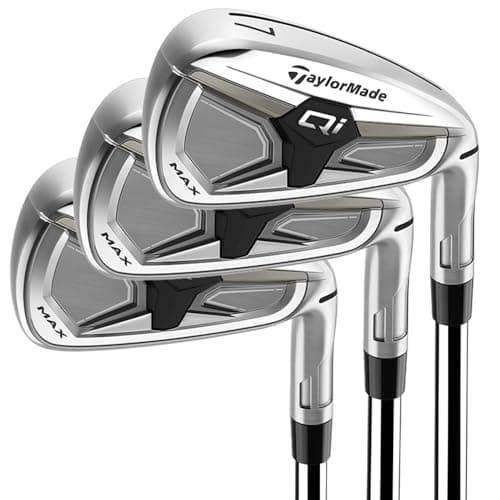
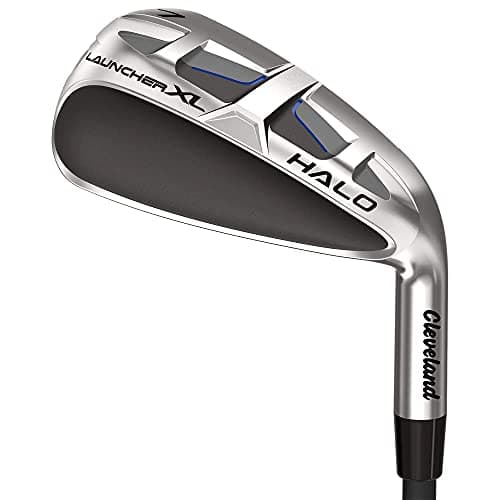
The best iron set for most senior golfers is the Cleveland Launcher XL Halo in the graphite 5-iron-to-dual-wedge configuration— a major-brand game-improvement set with hollow long irons, a Gliderail sole that resists digging, and the graphite shaft that is the actual reason it is first on this page. Here is the thing the category gets backwards: for a slower swing, the shaft decides more than the head. A lighter total club weight lets you swing the same club faster with the same effort, and more speed at the same loft is more carry. Everything below is ranked on total weight and launch first, forgiveness second, and brand last.
Why shaft weight, not head design, is the senior decision
Every iron in this category is forgiving. Game-improvement heads have been wide-soled, perimeter-weighted and strong-lofted for two decades, and the differences between them at the same price are real but small. What is not small is the difference between a 120-gram steel shaft and a 60-gram graphite one across a seven-club set, plus the lighter grip that usually comes with it. That is the component you can actually feel, and it is the one that changes clubhead speed for a golfer who has lost some.
The second-order effect matters as much. A slower swing needs height to carry the ball a useful distance, and height comes from launch angle and spin, not from a stronger loft. This is why strong-lofted distance irons frequently go shorter for senior golfers: the 7-iron says 28 degrees, the ball comes out low, and it lands flat and runs out of the green instead of stopping on it. Graphite shafts, higher-launching heads and a sensible loft spread fix that. Our graphite vs steel shafts guide covers the trade in detail.
How we ranked these (the criteria)
- Total club weight, shaft first. Graphite options rank above steel ones at the same price. Where a set is steel, the shaft weight is stated.
- Launch and landing angle. Height that stops the ball on a green beats a yardage number on a launch monitor. Hollow-body and high-launch constructions score well here.
- Sole design. A wide, cambered or railed sole that skids rather than digs is worth more to a golfer with a shallower, slower delivery than any face technology.
- What is in the box. A set that includes the gap or dual wedge saves you buying one separately and gaps properly into your short game. We count clubs.
- Honest loft spread.We publish each listing’s stated lofts where the listing publishes them, because a 7-iron is not a unit of measurement.
Scores are judgments from published manufacturer specifications, listing details and aggregated owner feedback against our rubric— not launch monitor numbers we gathered. We do not run a lab, we have not hit these sets side by side, and we are not going to claim otherwise.
The sets, side by side
Straight from each listing’s published specification. Where a loft is not published on the listing, the cell says so rather than guessing:
| Set | Clubs in this listing | Shaft | Published lofts |
|---|
| Cleveland Launcher XL Halo | 5-iron through dual wedge | Graphite | Not published on the listing |
| Cobra Air-X 2 | Full iron set incl. gap wedge | Lightweight (head, shaft and grip — Cobra) | Not published on the listing |
| Wilson Launch Pad 2 | 5-PW + GW | Graphite | Not published on the listing |
| Wilson Dynapower | 7 clubs, 5-iron to gap wedge | KBS Max Ultralite 80 g steel | 21° 5-iron to 47° gap wedge |
| TaylorMade Qi Max | 7 clubs, 5-iron to approach wedge | KBS Max 85 MT steel, regular | 21° 5-iron, 28° 7-iron, 42.5° PW, 48° AW |
Note what that table shows about the last two: both are steel, and both are deliberately lightsteel — 80 and 85 grams, against 110 to 130 for a traditional iron shaft. If you have tried graphite and disliked the feel, that is the compromise worth looking at, and it is why they are on the page rather than being excluded for not being graphite.
Should a senior golfer buy a full set or replace the long irons?
Before you buy seven irons, consider buying three hybrids. The clubs that hurt a slower swing most are the 4, 5 and 6 iron, because those are the ones that need clubhead speed to get airborne at all. A set of irons from 7 down plus hybrids above it is a genuinely better configuration for a lot of senior golfers than a full iron set, it costs less in total, and it is the single most effective change available in this part of the bag. Our hybrid roundup covers the replacements, and the Cleveland Launcher Halo XL hybrid review is the natural companion to this page’s top pick.
Regular, senior or light flex — and why the label means little
Flex designations are not standardized between manufacturers, so an A-flex from one brand can be stiffer than an R from another. What is comparable is the published shaft weight in grams, which is why we put it in the table above. As a rough orientation: a golfer whose driver carry has dropped under about 200 yards is usually better served by a lighter, softer-tipped shaft than by the regular flex they have always played. The only reliable way to settle it is to hit two weights back to back, which is a free thirty minutes at any decent golf retailer and worth more than any article.
What not to spend money on
Three things. A stronger-lofted distance iron set, unless you have the speed to launch it — the number on the sole is not the carry you will get. A forged players set, however good it feels in the shop; the smaller head and thinner sole punish the shallow, slower delivery this page is written for. A full fourteen-club replacement in one go, when the long irons and the grips are usually where almost all of the improvement actually lives. Read how much to spend on golf clubs and used vs new before you commit to a full set, and grips for arthritisif your hands are part of the problem — new grips on your current irons cost a fraction of a new set and sometimes fix more.