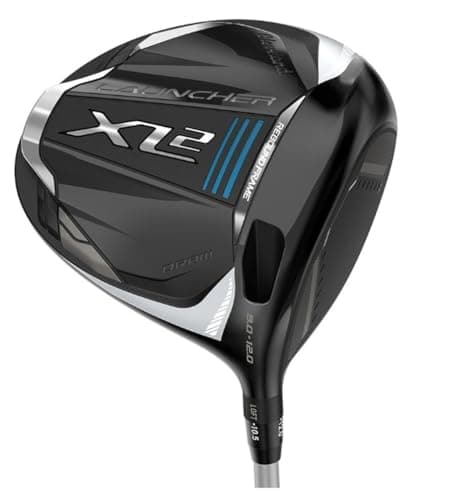
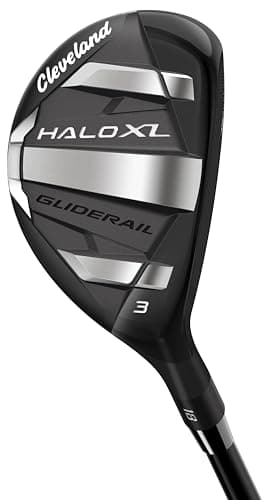
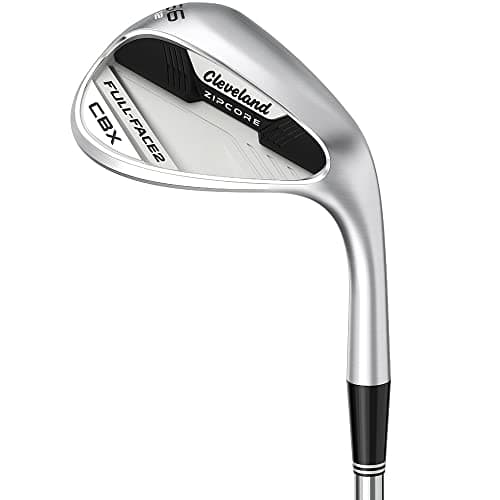
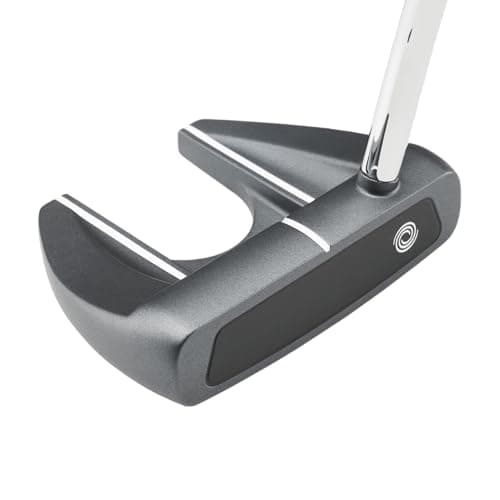
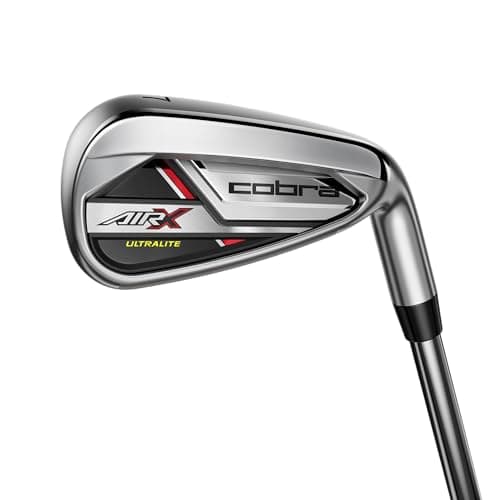
For the high handicapper whose miss leaks right — a light, offset, draw-biased iron set, and the slot where you hit the most shots and lose the most strokes.
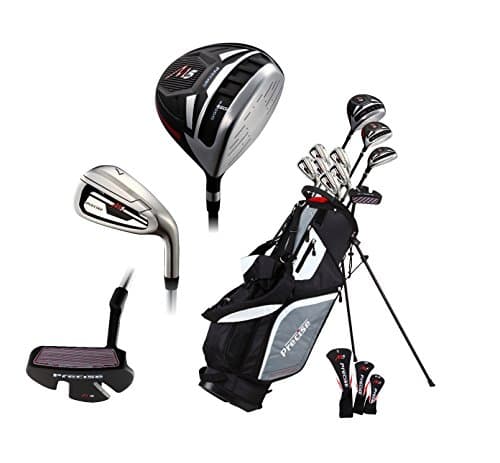
The verdict: if you are a high handicapper replacing one thing, replace the irons, and the Cobra Air-X 2 set is the pick — light, offset and draw-biased, built for the miss that leaks right, which is the miss most high handicappers actually have. Budget pick: the Precise M5 complete set, the cheapest way to cover every slot on this page in one purchase, with the one caveat that it ships in fixed hand and height builds so you must order the configuration that matches you. All prices are live from our price layer, stamped November 18, 2026.
Most pages with this title are an iron ranking with a different headline. This one is built differently on purpose: one club per bag slot, chosen for forgiveness, so you can see where your money actually buys shots. Because the honest answer to “what clubs should a high handicapper buy” is almost never “all of them”, and it is almost never the driver first, even though the driver is what everyone wants to talk about.
The order to replace in, and why
Forgiveness is worth the most in the slot you use most and the least in the slot you use for show. That ordering is the whole page:
- Irons, first and by a distance. You hit more full shots with irons than with anything else, and the gap between a modern game-improvement iron and an older or unforgiving set is the largest gap in the bag. Wide soles, perimeter weighting, offset and a light overall build genuinely help a slower or less consistent swing. This is where the strokes are.
- A hybrid, to delete your longest iron. The single cheapest improvement available to a high handicapper. A 4- or 5-iron is the hardest club in most bags to launch; a hybrid of the same loft launches higher off a worse strike and is far kinder out of a poor lie. Our hybrid roundup covers the full field, and what clubs you need covers how few you can get away with.
- A forgiving wedge. Around the green is where the strokes leak quietly. A cavity-back, full-face wedge flatters a thin or toe-side strike; a tour blade punishes it. This slot is cheap and underrated.
- The putter. A third of your shots and almost always the last thing anyone upgrades. A face-balanced mallet with a big alignment canvas is the forgiving default, and our under-$200 putter page is where to shop it.
- The driver, last. Fourteen swings a round, the most expensive club in the bag, and the one where forgiveness helps you least if your real problem is a path-and-face fault rather than the club. If your drives curve hard right, a draw-biased head is a genuine help — see drivers for slicers — but it is a help, not a cure.
What “forgiving” actually means on a spec sheet
Four published properties, and they are checkable rather than atmospheric. Offset sets the leading edge behind the shaft, which gives the face a fraction longer to square up — it directly fights a slice. Perimeter weighting moves mass to the outside of the head, which resists twisting on an off-centre strike so a toe or heel hit loses less ball speed. A wide sole with a low centre of gravity helps the club glide rather than dig and launches the ball higher, which is what a shallow or slower swing needs. And a light overall build — head, shaft and grip — lets a smoother tempo still generate clubhead speed.
Cobra publishes the first and fourth of those as the explicit design aim of the Air-X line, and Cleveland publishes the third for the Launcher family. That is why those two brands dominate the picks below: it is not a preference, it is which manufacturers build and document clubs for this specific golfer.
The honest counter-argument: a draw bias can go too far
Every pick on this page that fights a slice does it by biasing the club left, and that is a trade rather than a free win. If you already hit the ball straight, or you work it right to left, an offset draw-biased iron set and a draw-chassis driver will over-draw and hook for you. Buying anti-slice equipment when you do not slice is one of the more common and more expensive mistakes in this category.
So check your actual miss before you buy. Hit ten balls and watch where they start and which way they curve: starting left and curving right is an over-the-top path with an open face, which these clubs help; starting right and staying right is a different fault. If you are not sure, the cheapest diagnostic in golf is a pair of alignment sticks and a phone on a tripod — our swing-plane aids page covers the tools that tell you which fault you have before you spend four figures on equipment that assumes one.
Skip this: buying a full set of individual clubs one at a time
If you need most of a bag, buy a complete set and not five separate clubs. A set is dramatically cheaper per club, the lofts are gapped to each other by design, and you get a bag thrown in. The point of the slot-by-slot picks above is for a golfer who already has a bag and wants to know which single purchase buys the most shots — it is a replacement map, not a shopping list to work through top to bottom. If you are starting closer to zero, our beginner complete-set roundup is the right page, and the step up from a box set covers what to replace first once you outgrow one.
The 14-club limit is a budget, and you are allowed to underspend it
The Equipment Rules cap you at fourteen clubs. They do not require fourteen, and for a high handicapper carrying fewer is often strictly better. Every club you own but do not trust is a club you will pull under pressure and a gap you have not actually filled: a 3-iron you cannot launch, a 3-wood you top off the deck, a 60-degree wedge you have never successfully opened up. Taking those out of the bag does not cost you shots, because you were not hitting them well, and it removes the decision that was producing the bad swing.
A ten- or eleven-club bag with properly gapped lofts beats a full fourteen with three clubs you avoid, and it is cheaper to assemble. It is also why the hybrid recommendation above is the best value purchase on the page: it does not add a club, it replaces one you were already not using. Our what clubs do you need page works through the honest minimum.
Where the money stops buying shots
There is a point in every bag where equipment spending stops competing with other uses of the same money, and for a high handicapper it arrives early. A forgiving iron set and a hybrid are genuine, visible help. A premium driver over a value draw driver is a far smaller difference than a lesson, and a premium iron set over a game-improvement one is usually negative for this golfer, because players’ irons are less forgiving by design. Our how much to spend guide puts honest numbers against each slot. We do not print prices in prose — they are in the table above, live, with the date they were checked.