If you have played a season or two with a beginner set and you are starting to make contact, the honest answer to “what should I buy next” is one club, not fourteen. A box set is a sensible first purchase and a poor second one: you already own a bag, a putter and a driver that function, and the gap between a beginner set and a good set is not spread evenly across the clubs. It is concentrated in two or three of them. Replace those, in order, and you get most of the benefit of a new set for a fraction of the money — which is the whole argument of this page.
Our best golf clubs for beginners roundup ranks the complete sets you start with. This page is what happens next. The six picks below are ordered by how much they pay you back, not by price, and the last two exist partly to argue that you should delay them.
The criteria: three questions, in this order
Every ranking decision below comes out of the same three questions, asked about each club in your bag. They are deliberately boring, because the interesting questions — face technology, tour validation, ball-speed claims — do not help a golfer at this stage.
- How many shots a round does it hit? A 7-iron and a putter get used every hole. A 3-wood might get used twice. Spending equally across the bag spends most of your money on clubs you barely swing.
- How far does the box-set version fall short? This is the question that reorders the list. Some components of a beginner set are genuinely close to a standalone club; others are built to a package price in ways you can feel. The gap, not the category, is what you are buying out of.
- Will your swing still want it in two years? A game-improvement iron set you can grow into is a different purchase from a putter bought before you know what stroke you make. One of those can wait.
Why irons come first
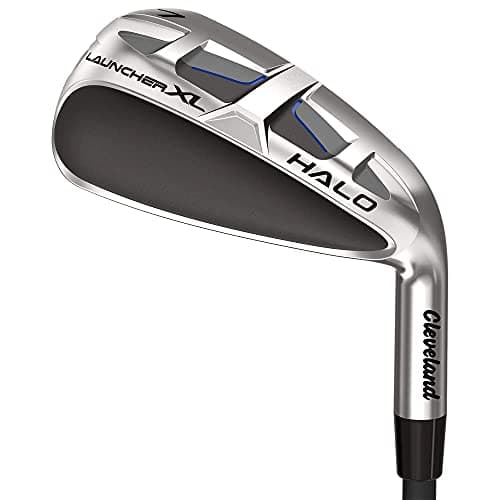
Irons are where the first two questions agree. They are the clubs you hit most after the putter, and they are the part of a boxed set most obviously built to the package price: basic stock shafts, no fitting, and a long-iron design that asks more of your strike than anything else in the bag. Moving to a real game-improvement set — hollow, wide-soled, with long irons engineered more like hybrids — changes the clubs you hit six or seven times a round, not twice.
It is also the upgrade with the longest shelf life. A set like the Cleveland Launcher XL Halo is forgiving enough for a mid-handicap swing and honest enough to grow into, which is why it also features in our game-improvement ironsranking. Be clear-eyed about one thing: Cleveland has since launched the Halo XL Full-Face, so this generation is the discounted outgoing one. For this buyer that is a feature rather than a problem — but check the live price of both before you commit.
Why the driver is second and not first
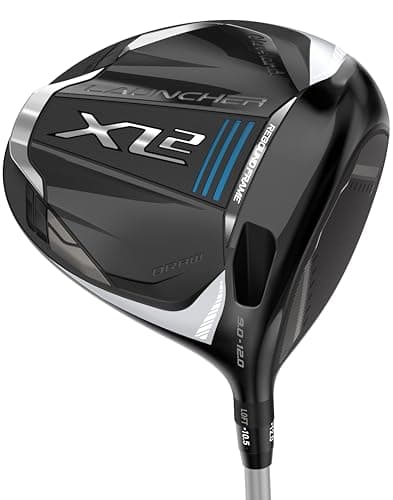
The driver is the club where the specification gap is widest, because the thing that makes a modern driver forgiving — a large, deep, high-MOI head built right up to the 460 cc volume ceiling the equipment rules allow — is exactly what a box-set driver economizes on. A real game-improvement head holds its line on a heel strike in a way a cheap, small-volume head does not.
So why second? Because you hit it perhaps fourteen times a round, and because a developing swing changes a driver’s fit faster than it changes an iron’s. An adjustable hosel takes some of that risk out — you can move the loft as your delivery settles — which is part of why the pick here has one. If your miss off the tee is specifically a slice rather than a general lack of forgiveness, buy from our drivers for slicers list instead: a draw-biased head is a different tool from a high-MOI one, and buying the wrong one of the two is the most common mistake at this stage.
The hybrid: one club that retires two
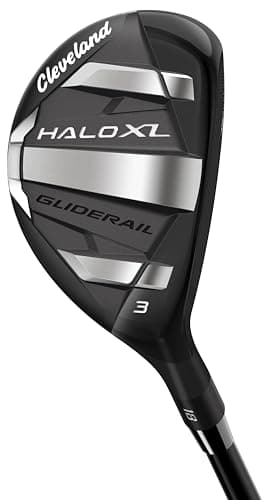
Here is the upgrade almost nobody plans and almost everybody benefits from. Most box-set graduates are carrying a 3-wood they cannot hit off the deck and a 4-iron they quietly avoid. A single mid-loft hybrid does both jobs better, which means this purchase does not add a club to your bag — it removes two you do not trust.
Buy the loft, not the number. Hybrid numbering is not standardized between brands, so one maker’s “4H” and another’s can be two degrees apart. Work out which yardage gap you actually have and fill that one. Our hybrids roundup covers the whole field, and what clubs does a beginner need works through the 14-club limit and why most improving golfers should carry fewer.
The wedge: the gap a box set does not fill
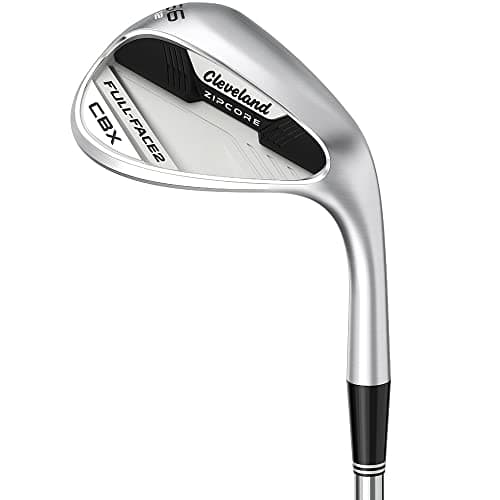
Count the wedges in a beginner set. You usually get a pitching wedge, sometimes a sand wedge, and a loft gap of ten degrees or more above them. That gap is where up-and-downs live. Adding one genuine 56 or 58 degree wedge with modern grooves is the cheapest stroke saving on this page, and a cavity-back, full-face design is the version that forgives the strike you currently have rather than the one you want.
It is fourth and not first for one reason only: it needs practice to pay. A new wedge in the hands of a golfer who never chips is a new wedge that does nothing. If you are willing to spend twenty minutes a week on it, move it up the list. Our wedges for beginners guide covers the loft math.
Grips, and the putter last
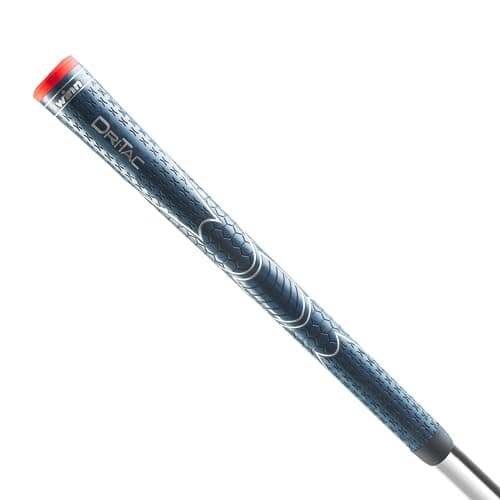
Grips are the odd item on this list: they are not an upgrade so much as maintenance nobody does. Golf Pride’s own guidance is to replace grips on a rounds-played basis rather than when they finally look worn, and a two-season-old box set is almost always past that line. New grips cost a rounding error next to a club, they take an evening with a kit, and they make every club in the bag feel like it has been serviced. Do this while you save for the rest. The method is in how to regrip golf clubs, and when to replace grips has the schedule.
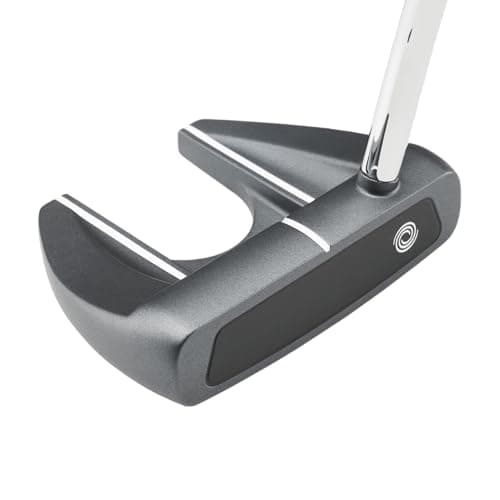
The putter is deliberately last, and that is a position rather than a cop-out. You use it more than any other club, so it looks like it should be first — but a putter is fitted to a stroke, and the stroke of a golfer still learning to strike the ball is the thing most likely to change. Odyssey publishes the DFX V-Line Fang as a face-balanced head with 0 degrees of toe hang, “best suited for strokes with minimal arc and face rotation”. That is a real fitting statement, and you want to know it describes you before you buy it. Balance your current putter on a finger: face to the sky means face-balanced suits you, a drooping toe means you want toe hang. Our mallet vs blade putter guide runs that test properly.
The six, and what each one buys you
| Order | What you replace | Why it sits at this position |
|---|
| 1 | Irons (Cleveland Launcher XL Halo, 5-DW) | Most-hit clubs in the bag, biggest build gap, longest shelf life |
| 2 | Driver (Cleveland Launcher XL 2) | Widest specification gap; adjustable loft covers a changing swing |
| 3 | Hybrid (Cleveland Launcher Halo XL, 21°) | Retires the 3-wood and the long iron you already avoid |
| 4 | Wedge (Cleveland CBX Full-Face 2, 58°) | Fills the loft gap a box set leaves; only pays if you practice |
| 5 | Grips (Winn Dri-Tac) | Overdue maintenance, trivial cost, improves all fourteen clubs |
| 6 | Putter (Odyssey DFX V-Line Fang) | Fitted to a stroke that is still changing — wait, then buy once |
Scores are judgments from published manufacturer specifications, listing details and aggregated owner feedback against our rubric. We have not hit these on a monitor; we do not run a lab and we say so.
The arithmetic that makes this the cheaper route
The reason to upgrade piecemeal is not thrift for its own sake. It is that the second set you buy is the one you will keep for years, and you do not yet know enough about your own swing to choose it well. Buying a club at a time does three things a second box set cannot: it spends your money on the clubs you hit most, it spreads the cost over seasons instead of one invoice, and it lets each purchase be informed by the last. The driver you buy after a season with new irons is a better-chosen driver.
There is also a resale argument, and it is usually the one that decides it. Major-brand clubs hold value and trade in; the no-name components in a cheap set do not. Every pick on this page is from a brand with a secondhand market, which means a wrong choice costs you the spread rather than the whole price. Our used vs new guide covers buying the other side of that trade, and how much to spend on golf clubs puts numbers on the whole question.
Three upgrades that are not clubs at all
Be honest about the competition for this money, because for a lot of golfers at this stage the best club purchase is not a club.
- A lesson. If your miss is a slice, no driver on this page fixes the path that causes it. A draw-biased head masks it; an hour with a coach addresses it.
- A distance device. Committing to the right number is worth strokes to a golfer who currently guesses. The cheapest honest version is in our budget rangefinders ranking.
- Practice you will actually do. A pair of alignment sticks and a putting trainer cost less than a single iron. That gear is ranked in best golf accessories.
When to ignore this order entirely
Two cases. First, if one club in your bag is broken— a cracked driver face, a rusted wedge with rounded grooves, a shaft you have already re-shafted once — replace that one first regardless of where it sits on this list. Second, if your swing speed has dropped or your hands have started to hurt, you are no longer this page’s buyer: the fitting priorities change, and our clubs for seniors ranking is the better list for you.
What not to buy at this stage
Blades and compact players’ irons, for the obvious reason. A tour-spec driver with a low-spin head, for a less obvious one: it is built for a delivery you do not yet have and it will cost you carry. And a full fourteen-club bag, which is a ceiling rather than a target — most improving golfers score better with eleven clubs they trust than with fourteen where three are dead weight. Cavity back vs blade irons explains the first of those properly.