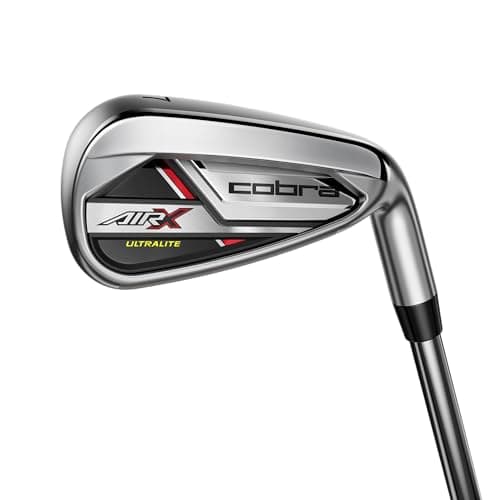
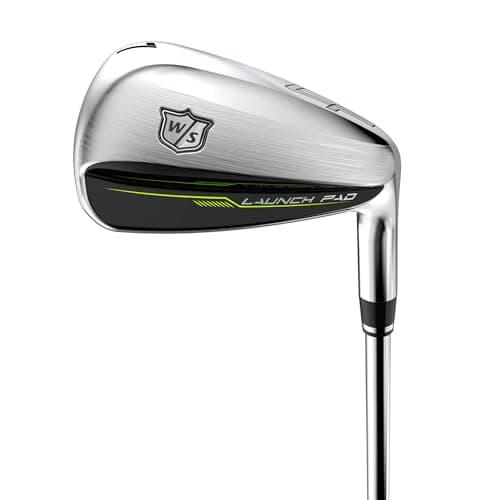
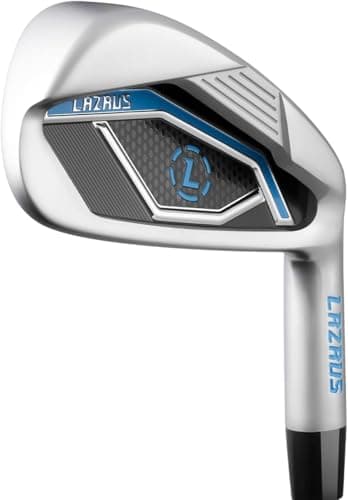
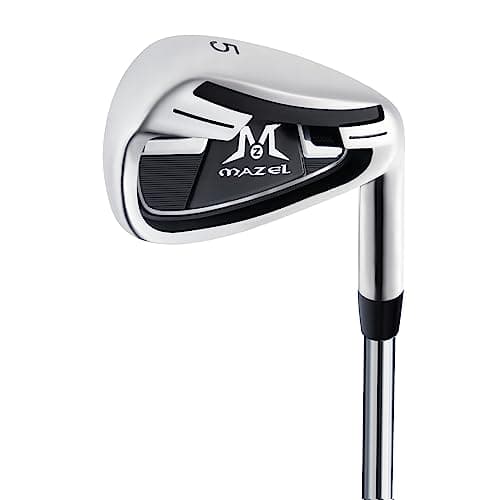
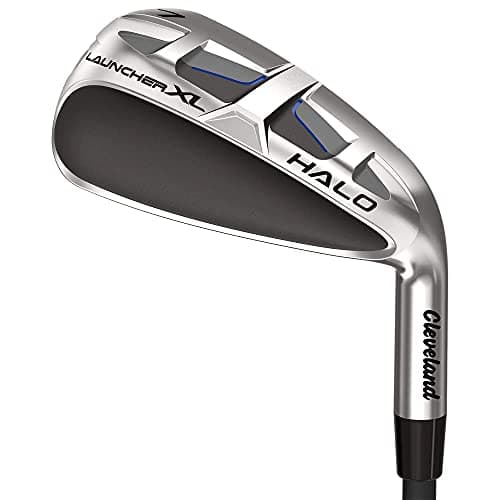
“Game-improvement” is the honest name for the irons most golfers should actually play. They trade the thin toplines and shot-shaping of a players’ iron for wide soles, perimeter weighting, offset and strong lofts — all of which add up to one thing: the ball gets in the air and stays closer to your target line when you don’t catch it flush. If you’ve outgrown a boxed beginner setbut you’re nowhere near ready to give up forgiveness, this is your category. Below are the sets we rank highest, the specific miss each one is built for, and the one to skip.
How we ranked these
We ranked forgiveness and launch first, because that is the entire point of the category, then weighed how honestly each set is sold, whether it matches a real miss, and what it costs to own from a brand with resale value. Every technology claim below — AI faces, hollow bodies, draw bias — is the manufacturer’s own published wording, not something we measured in a lab we don’t have. Our full method is set out in how we rank, and the deeper “why” behind forgiveness versus feedback is in cavity-back vs blade irons.
The one decision that sorts this list: your miss
Game-improvement irons split cleanly by the fault they hide. A super-game-improvement set like the Wilson Launch Pad 2 is built to launch— hollow bodies and light shafts for a golfer who can’t get the ball up. A draw-biased set like the Cobra Air-X 2 is built to straighten— offset and heel weighting for a golfer who leaks it right. And an all-round game-improvement set like the Cleveland Launcher XL Halo does a bit of both, with enough feel to grow into. Buy the one that matches the shot you actually hit, not the one with the best marketing. If your long irons are the specific problem, note that a hybrid replaces them more easily than any iron can — the best golf hybrids covers that fix.
The picks in brief
The Cleveland Launcher XL Halo wins for most golfers: a major-brand set with a MainFrame AI face and hollow, hybrid-like long irons that turn the hardest clubs in the bag into the easiest, and enough feel and resale value to keep as your game grows. Reviewed on its own, and put head-to-head with the Cobra, in Launcher XL Halo vs the Air-X irons. The Cobra Air-X 2is the pick if your miss is a slice — the lightweight, offset, draw-biased build is engineered to turn the ball over, and it’s reviewed in full in our Cobra Air-X 2 irons review. The Wilson Launch Pad 2goes furthest on pure forgiveness and launch — the set for a golfer who genuinely struggles to get an iron airborne — and is covered in our Wilson Launch Pad 2 review.
Where the value picks fit
The Lazrus LAZ2 and the MAZELsingle irons are here for a specific, honest reason: they are the cheapest legitimate way to start or to practice. Both are sold as individual clubs, so you can buy one 7-iron to groove a swing for the price of a bucket of range balls, or build a bag one number at a time. They are value, direct-to-consumer clubs, and the forgiveness claims on them are the listing’s own wording — not an independently tested spec — so we rank them below the major-brand sets on everything but value. If money is tight, they are smart money to begin with; as a long-term set, a fitted major-brand set will serve you far better. Where any of this money is best spent overall is the subject of our how much to spend guide.
What actually makes an iron “forgiving”
Three things, and none of them are magic. First, perimeter weighting: pulling mass to the heel and toe of a cavity-back head raises its resistance to twisting, so a strike off the center loses less ball speed and stays straighter. Second, a low, deep center of gravity, often helped by a hollow body or a wide sole, which launches the ball higher for a given swing — height is where a moderate swing’s carry comes from. Third, offset and a draw bias, which give your hands a fraction more time to square the face and lean the flight left, counteracting the slice most amateurs fight. Strong lofts are the fourth lever manufacturers pull for “distance,” and they’re worth understanding: a set with a 30° 7-iron will hit it further than one with a 34° 7-iron, but that’s loft, not free speed, and it can leave gaps at the top of the bag.
Graphite or steel, and why it matters more here
Game-improvement irons are frequently sold in graphite, and for this buyer that’s usually right: lighter graphite shafts help a slower or smoother swing add speed and launch, which is exactly what the category is for. A stronger, faster swing may prefer steel for consistency. It’s a bigger decision than the badge on the head — we lay out the club-by-club answer in graphite vs steel shafts.
The honest ceiling
A game-improvement iron will flatter your mishits and get you scoring sooner. What it won’t do is give you the shot-shaping and shot-by-shot feedback a better ball-striker eventually wants — that feedback is deliberately muted, which is a feature while you’re improving and a limitation once you’ve improved. When you find yourself wanting to work the ball and flight it down on purpose, that’s the signal to look at a players’-distance set. Until then, forgiveness is not a compromise; it’s the fastest path to lower scores, and there’s no vanity prize for a set you can’t hit.